by anouradha bakshi | Jun 21, 2017 | Stories
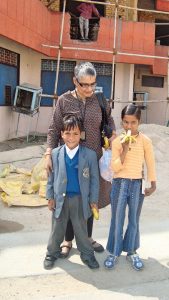
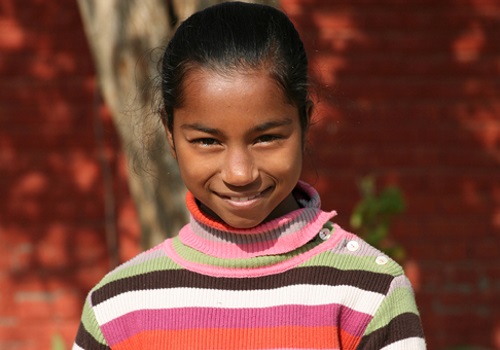
When Babli first came to Project WHY in 2004, she was a bright-eyed, feisty girl; what some Indians would call Bindaas, meaning carefree and confident. She loved books and seemed to always have a smile. It took Project WHY’s resource persons some time to realize that every breath she drew was an effort. Babli had a hole in her heart from birth and needed corrective surgery. Her family was unable to come up with the required funds. They had simply accepted that she would not live long.
In India, little girls are sometimes considered dispensable, their hearts not worth mending. The Census of India 2011 demonstrates a decrease in the population ratio of female children (age group 0-6 years) of India compared to 2001. For every 1000 male children, there were now 914 female children, a drop from 945 – so where are our girls? Investigations show that female infants experienced a significantly higher mortality rate than male infants in all major states.
Thanks to our wonderful friends, Project WHY was able to raise the funds for Babli by 2005 and the operation was performed successfully. It was scary and painful for this innocent little girl, but Babli’s bindaas spirit saw her through it all.
After her recovery, Babli was expected back in school but, to everyone’s shock, it emerged that she would not be able to continue her education. Her mother, being the sole earning member of the family, didn’t have time to take Babli to school. She also needed her to take care of her younger sister. The father was busy playing cards, and it eventually fell to Babli to manage the father’s work cart that sold tobacco and biscuits.
One step forward and two steps back. The Project WHY resource persons soon found Babli sitting on the cart selling chewing tobacco, cigarettes and biscuits instead of being in school, and her little sister standing in the background. She told them about how her name had been struck off from the rolls of the school and why she was working. But Babli’s words, spoken when she had trouble breathing, still resonated: “I want to be a police,” she had said, without hesitation, when asked about her dreams.
Project WHY found the situation unacceptable, and took steps to change it. After a meeting with her parents and a visit to the nearby government school, Babli was back in school.
Today, thanks to a kind sponsor, Babli studies in Class 9 at English Medium Boarding School in New Delhi, where she often tops her class. True, she won’t become a ‘police’ as the aftermath of her surgery resulted in scoliosis, but she will shine. Her education, which had fallen into peril this year because of a major donor backing out, will continue thanks to another kindhearted donor who has stepped in to fill the gap. This is Project WHY’s attempt to prove that given equal opportunities, children from the slum can do as well as those from the privileged classes.
by anouradha bakshi | Jun 21, 2017 | Stories
Whilst literacy is essential to breaking social barriers, the problems faced by Muslim women in India extend beyond this. A quality, broad education is required to combat the issues of poverty and political marginalization faced by these girls, and it is essential that parents encourage this. It has been observed that after the first few years of the primary education afforded to the Muslim girl, one of two things usually happens. Either the girl is plucked out of formal education by the time she reaches puberty and for all practical purposes lapses into virtual illiteracy, or she continues in school but does climb up the education ladder due to virtual exclusion.
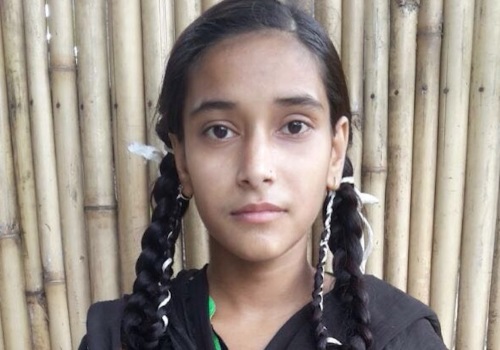
Shehnaz’s story shows how a young girl came looking for that quality support in her pursuit of an education and she found it at Project WHY.
Shehnaz lived in Bihar with her two sisters, her brother and their parents. Unfortunately, when Shehnaz was just two years old, her mother passed away. Her father soon remarried and got a job in a factory in Okhla, not far from where the family lived. Shehnaz was therefore stuck at home with her stepmother, who was abusive, unpleasant and wholly unsupportive.
Shehnaz was keen to attend a government school but, by 2015, she was well behind on the syllabus. Her father did not believe in education for women and refused to pay for any kind of tuition. Rinka, a friend of Shehnaz, told her about Project WHY, which she had been attending since 2013, and Shehnaz was immediately keen on the idea. She approached us on her own, as her father was too busy to help her, and explained that she had missed out on a school career and wanted to catch up. We were happy to take her on, encourage her, and prepare her to return to school.
Through her own determination, Shehnaz has now taken admission to the local government school and continues to attend Project WHY. Her stepmother was not happy with these decisions, but simply sees it as an inconvenience. With no help or support, Shehnaz walks two kilometers to and from school every morning. She spends the evenings doing chores, which she says keeps her father happy. This way, she is able to avoid being taken out of school and forced into marriage.
“I feel comfortable and happy at the Project WHY, this is the only place where I can be myself and express my feelings,” says Shehnaz. Her dream is to complete her studies and become a teacher like the Project WHY resource persons who have helped change her life. She wants to go on to help change the lives of similar children in her community. Every day is a struggle for Shehnaz, but she is slowly catching up with the other children. With her appetite for knowledge, we are convinced that she will be successful.
by anouradha bakshi | Jun 21, 2017 | Stories
Indian society continues to treat disability with indifference, pity or revulsion. Low literacy, school enrolment and employment rates are making mentally disabled people among the most excluded in Indian society. These people are deterred from taking an active part in most families or even communities. Moreover, there is a stigma attached to children with disabilities, especially in rural India, and often even loving parents can do nothing to help their disabled child because they themselves are not aware of the disease or how to take care of the child.
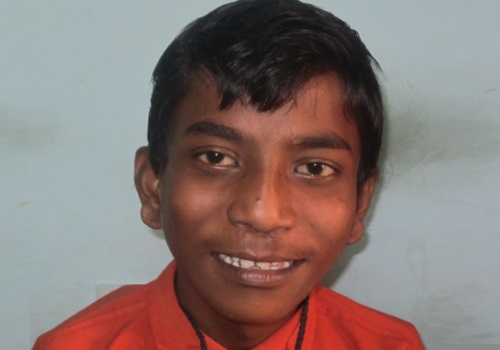
The story of Muna therefore begins in 2005, when he first arrived at Project WHY. It was clear that he had never been adequately looked after. Upon further investigation, it was revealed that, whilst his parents cared about him dearly, they simply did not understand his intellectual impairments. Muna’s parents did not have the time nor the resources to give him due attention, as they had to care for his other four siblings.
Interacting with Muna, Project WHY found that he had little concept of personal hygiene. He would regularly soil himself and had never been taught to have a shower/bath. He had no understanding of social interaction and rules of engagement. This was demonstrated in 2014 when Muna left a shop without realising he needed to pay for his juice and was severely beaten by the shopkeeper.
Having grown up in the industrial neighbourhood of Okhla, Muna would spend his days begging outside temples, occasionally stealing when money was unavailable. Residents of the neighbourhood would befriend him simply to bully and take advantage of his simple mind. Without the ability to communicate clearly, he was reduced to performing illegal errands around the community such as collecting and selling alcohol for under-aged children.
Project WHY began by teaching Muna the basic concepts of hygiene and to be self-reliant. He was taught to use a lavatory, to dress himself and to shower regularly. From there, we were able to build his confidence through speech therapy classes and develop his basic social interaction skills. Project WHY also initiated the process of educating Muna’s parents, who now understand his disability and the kind of care that he requires. They acknowledge his kind heart and sense of compassion even if he cannot communicate this in the same way as other children.
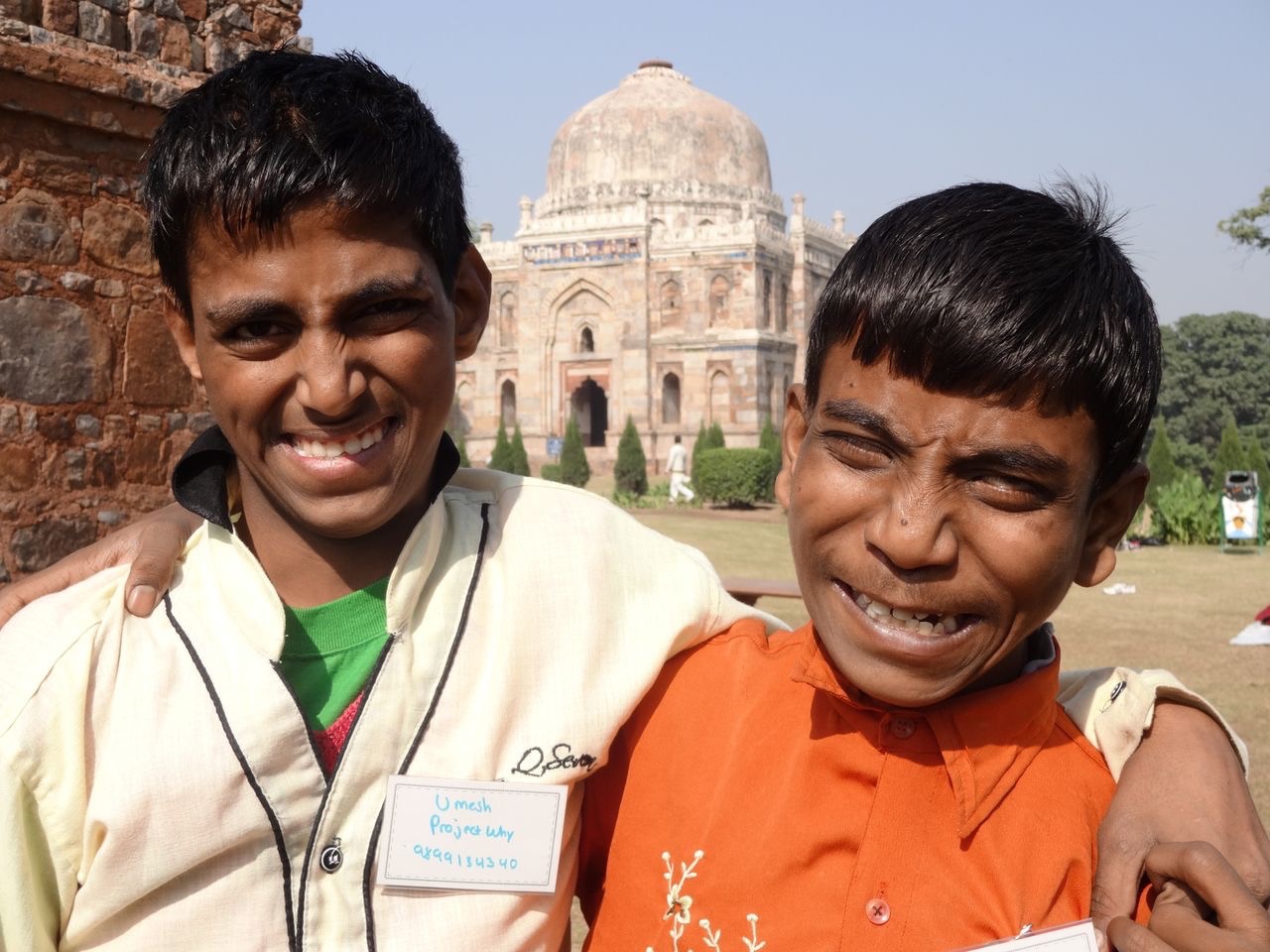
Today, at the age of 19 years, Muna is one of the stars of Project WHY’s special needs class. He is the first to welcome and befriend any new volunteers, including foreign students who do not speak the Indian language. He is very fond of activities such as art, ball games and dancing and, in spite of his difficult childhood, he shows an overall passion for life.
by anouradha bakshi | Jun 21, 2017 | Stories
Muslim women are among the most educationally disenfranchised, economically vulnerable, and politically marginalized group in India. Their poor socio-economic status reflects a lack of social opportunity that, though not a feature exclusive to Muslim women, is exacerbated by their marginal status within an overall context for most Indian women.
Muslim women in India have a low literacy rate compared to the Hindu women. About 59 per cent of Muslim women have never attended school. A relatively low male education amongst the Muslims in rural India creates a pressure to impose ceilings on girls’ education, so as not to render them “unmarriageable”. In addition, the low age of marriage is a major inhibiting factor, which reduces women’s autonomy and agency in the marital home and creates conditions of patriarchal subservience that get perpetuated through life. This thereby reduces a woman’s self-worth.
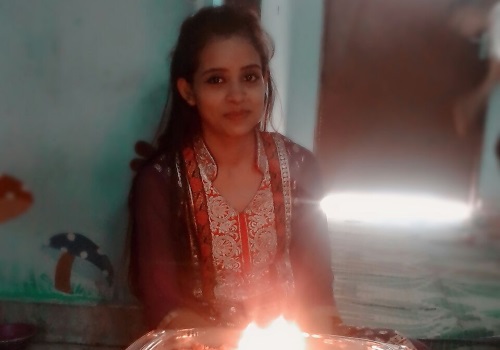
This point is well illustrated by the story of Sehroonisha, a teacher in the special needs section of Project WHY, Govindpuri. Sehroonisha, has always been interested in education. From a very young age she would love going to school. Her dream was to pursue higher education and to have a good stable profession. However, her father did not share this vision and was against her pursuing higher studies as he thought it was a waste to spend money educating girls.
Before her marriage, Sehroonisha lived near Connaught place with her parents, two sisters and three brothers. In spite of her father’s attitude, her mother was supportive of her and would work in people’s homes doing dishes in order to contribute to her education. Sehroonisha eventually graduated with a Bachelor of Arts degree in 2009.
Upon graduation in 2009, Sehroonisha’s father got her married at the age of 20 years to a man who had only been educated until Class 3. “I had to accept my father’s decision at the time” rues Sehroonisha. She held out hope that, through marriage, she could improve her life and explain her interests to her husband. However, her husband did not share the same passion for education and she found that his thinking was on similar lines to her father’s – that is, education is a waste for women.
Sehroonisha had a daughter and a son through the marriage, and soon realised she was the sole provider for them. In spite of her difficulties, she wanted to do something different in her life and stand on her own two feet. She came to know about Project WHY as we had put up a requirement for teachers; it seemed like the perfect platform to change her life. Today she emphasises the impact that the Project has had on her life, saying “Project WHY gave me an opportunity to teach and slowly I was able to rebuild my confidence and take my own decisions with their support.”
With the conducive environment of Project WHY, Sehroonisha has been able to articulate and define her dreams. She acknowledges “All my problems are yet not solved but Project WHY has taught me how to address them with my own abilities”. Today, Sehroonisha enjoys her role as a teacher at the special section of Project WHY, Govindpuri. She has been with us since 2015 and has now taken on the responsibility of looking after the children’s daily activities.
by anouradha bakshi | Jun 21, 2017 | Stories
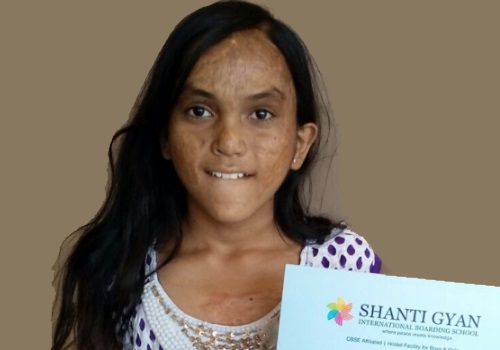
At the time of this photo, in January 2009, Meher was three years old and lived in Khader, near the outskirts of New Delhi. Her father was a migrant worker who came to New Delhi to work part of the year, and her family spent the rest of the year in their village in Nepal.
When Meher was eight or nine months old, a mosquito net over her bed caught on fire. Miraculously, she survived the terrible burns, but the experience left her face and scalp badly scarred and her left hand permanently closed and deformed. Meher’s father is a daily wage labourer. Her family could not afford to seek additional treatment for her, although they were concerned about her future prospects in Indian society.
Meher had been enrolled in Project WHY from a young age. She is extremely bright, verbal, and social and had picked up a little English from her time at Khader. She interacts confidently with visitors from all over the world. When an American elementary school teacher, Nina Sethi, came to give our staff some training, she took an immediate liking to Meher. We explained to her the social issues that plague a girl with such burns in Indian society and Nina was keen to help. Whenever Nina would arrive to work with the teachers, Meher would greet her and help to oversee her English class. Nina describes an “immediate connection and a special bond,” and notes that she “recognised something in Meher: a great capacity for leadership and an amazing spirit.”
In January of 2009, Nina asked her friends and family and a non-profit organisation in the United States, Chess Without Borders, to help her raise enough money to cover the cost of reconstructive plastic surgery on Meher’s hand and face. This would have to include staying in the hospital, multiple operations, medicine, physical therapy, and much more. She was also keen to extend the fund to raise money for Meher’s education, as she is very intelligent and had had limited opportunities in her past.
The response that Nina received was overwhelming. Through her dedication and commitment, she was able to raise over $45,000 (USD), which was more than enough money for Meher’s surgeries and education, and is likely to last her until her higher education. Thankfully, her surgeries were completed successfully at a private hospital near her home.
Meher now attends Shanti Gyam International School in New Delhi with some other children she knows from Project WHY. She is flourishing and is consistently the top student in her class. Nina often visits her in New Delhi and enjoys speaking to Meher in English. Meher is now outgoing, confident and intelligent and loves Nina like family!
by anouradha bakshi | Jun 21, 2017 | Uncategorized
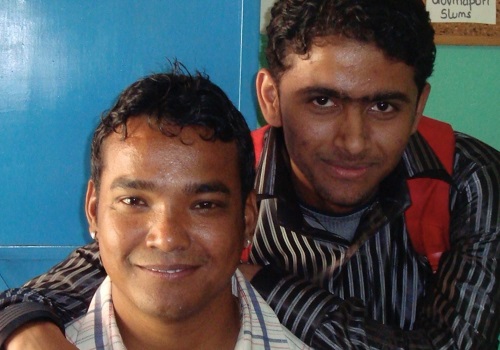
Project WHY opened its first spoken English class for secondary students in 2001 in Giri Nagar. It was the same time that Naresh had just completed his Bachelor’s degree in Arts and was looking for a job. He was a whizz mathematician and loved to teach, and to fulfill this passion he was giving tuitions to the neighborhood children, often for free. But in a poor home, one cannot afford to dream, for dreams do not put food on the table. Naresh tried his hand at various jobs, even as a vendor in a shoe shop, which just lasted two-days. His heart was not in it.
One day, in November 2001, a Class 10 student, Aadarsh, came to class with large welts on his arms. He had been brutally beaten in the government school he attended. Corporal punishment still prevails in many Indian schools despite a law against it. Project WHY resource persons visited the government school. The experience was Dickensian. The headmaster kept whirling the stick in his hand to make his point. The boy and other Project WHY students were humiliated. The boys were called guttersnipes and the Principal contemptuously informed us that these boys would never pass their Class 10 Board Examinations (a state level examination).
Project WHY took up the challenge of providing these boys with support to clear their Class 10 examination. With no funds, no space and no teacher to take this forward, Project WHY was in need of a miracle to get the bunch of lads ready for an exam in two short months.
A miracle came in the form of Naresh, who happened to be the elder brother of a teacher, Rani. He had just finished his degree and was looking for a job in the Giri Nagar area, where Project WHY had started. The only space available was the dusty pavement in front of our center and the only time available to tutor the students was between 7.30am to 9.30 am in the morning before they went to school. Every morning ten students assembled in front of the center, some mats were laid out and Naresh and his boys sat in a circle to study. The cold was kept at bay by cups of tea graciously offered by Naresh’s family.
That year, the challenge was won. The boys cleared their Class 10 examinations and this marked the beginning of Project WHY’s secondary outreach programme. Since then, Naresh has single-handedly ensured the success of hundreds of boys and girls who have successfully cleared their Board exams. The boy with the welts is now father of a little boy and all set to immigrate to Australia after having completed his higher education.
To Naresh, teaching a student is a mission he cannot fail. When exams approach, he schedules extra classes and teaches at the crack of dawn or late into the night. This is quite a feat for someone who likes a morning lie-in and a late session with his pals! On exam days, he is as nervous as his students, if not more, and waits for their return so he can find out how it all went. Come results day, his nails are bitten to the base as he scours the Internet, his students in tow.
Recently, when he went visited the Project Why Okhla Center and found out that the senior secondary students were in need of some extra tutoring, he rescheduled his timetable and took them under his wings. He never seeks extra compensation. Naresh often tells his students that he wishes there had been a Project WHY when he was growing up.
by anouradha bakshi | Jun 20, 2017 | Stories
by anouradha bakshi | May 23, 2017 | Anou's Blog, Uncategorized
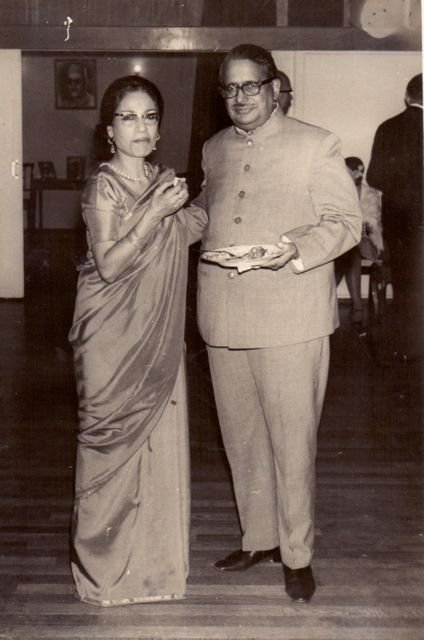
Live so that when your child thinks of fairness, caring, integrity she thinks of you. These words sum Ram and Kamala’s life. Today a more than a quater of a century after I lost them, and in the seventh decade of my life, I know I could not have been who I am if not for them.
They would have celebrated their 68th wedding anniversary today. I know they are popping the champagne bottle in heaven and I raise my glass to their happiness.
You may wonder why a blog about anniversaries and personal memories on what should be a post on Project Why. The answer is simple. Project Why is the logical outcome of an only child eagerly following her parents’ example day after day and not their advice. Advice is tinted by social mores, and politically correct guidance, example is from the heart. Advise would have been a lucrative career, a heavy bank balance, luxury holidays and three starred dinners. They gave me all that while I was still a child. I had my fill and sought more, but did not know what ‘more’ was as that never came as ‘advise”!
That came after they left and I sat looking desperately for the legacy they had left behind. It was not in the boxes and trunks and memorabilia that was strewn around me. I was terribly lost. All I had to hold on to were my father’s last words: don’t lose faith in India! It was November 1992.
It would take six long years of loneliness and pain to finally discover what the legacy was. Six long years of remembering their lives, the bittersweet memories, the stories often unfinished and bereft of any moral precept. And slowly it all came to me, in no order at all but somehow fitting the puzzle that would become Project Why. From Kamala’s side it was education, women’s right, patriotism, gender equality, standing for what is right, self-respect, courage and unconditional love. From Ram’s it was humanity, compassion, tolerance, social equality, generosity, giving unabashedly, giving when you did not have and of course culture, savoir-faire, integrity, probity and simple living.
It was left to me to honour this legacy.
And to honour them I set up Project Why with the hope that all the lessons learnt at their knee would be reflected in what I have been striving to do for the past 18 years!
by anouradha bakshi | May 16, 2017 | Anou's Blog, Uncategorized
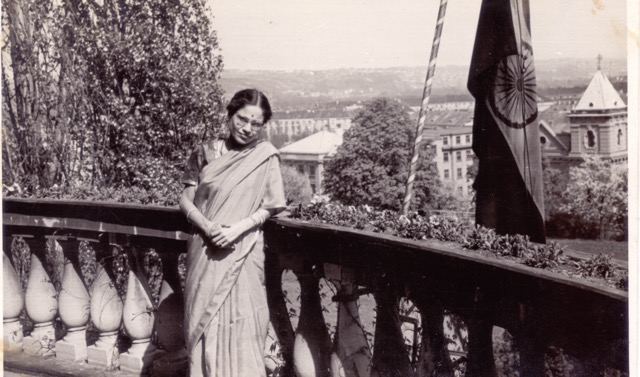
Every organisation has beginning. Project Why did not begin with a funding proposal ora a strategic plan – it began with the values passed down by my parents especially my mother Kamala Goburdhun. Her determination to pursue education against all odds and her quiet compassion shaped not only my life but also the work of Project Why. This is the story of the woman who guides everything we do
The Trust does not bear her name. Once again it was the flamboyant husband who won the match! But the real inspiration and the quiet and gentle motivating force as always in my life was Kamala Goburdhun née Sinha. Her lessons were not exuberant like those of her better half. They were subdued and tender, cameos of her life she shared with her only child. In the week mother’s are celebrated the world over, I would like to share some of these stories as each is echoed in Project Why.
Kamala the child was determined to go to school and her doting father did not stop her from getting enrolled in the first school for girls that opened its doors in the sleepy town of Meerut where the family lived. The school was established in 1929. She was already 12 years old but that did not detract her. There was no looking back. For education she would break all the rules. And she had two formidable women in her corner: her paternal grandmother and her mother! The three would devise ways to win over the Gandhian father. Kamala went on several hunger strikes to be able to continue her studies beyond class VI, go to Banaras Hindu University for her BA, do her MA and LLB. Her final degree would be a PHD at Charles University Prague, after the loss of her first born. Kamala was your never give up woman.
But there is more in the life of this small town freedom fighter’s daughter who went on to become an Ambassador’s wife. When she reached the age when girls would be married, she made a pact with her father, a pact both would honour. She was adamant about not having a child in a land that was not free and hence would not marry before India’s becoming independent, and should she still be of age, would marry whoever her father chose.
But that was not all. Her concern for fellow women was so deep, that she agreed to work for the British in order to reach out to war windows in the villages of Western UP to ensure that that their pension was not usurped by some male member of the family. She drove a truck to reach the far fledged villages. She lived alone in Mandi House Delhi and commuted every week to her home in Meerut in her little Baby Austin. In the villages she reached out to women in more ways than one. A real trouper!
India became Independent. Her father found a man, a man that would take her away on a real magical mystery tour. But the transition from freedom fighter’s daughter to diplomat’s wife was not easy. The first challenge came soon after marriage. A dinner at home where one of the invitees was the British Ambassador. Kamala was appalled at the thought of having to receive him in her home. How could she get past the memories of a little child applying balm to the lacerated backs of her father and his companions when they came back from yet another non-violent protest. This was her task as in those days there was purdah, and women did not mingle with men.
It took her husband oodles of patience and love to explain to her that India was free, and it was the Indian flag that flew on the house she lived in. She was to the manor born and understood what was expected of her. Again she never looked back and was the perfect diplomat’s wife.
So when I look at Project Why, at the years gone by, at the work we have achieved, I realise that though the Trust bears my father’s name, it is her lessons that are imbued in every breath I take, in every step I walk. My unequivocal and obsessive love for India and my pain at seeing how things are going, my determination to educate as many as I can, my desire to make women stand on their own feet. Everything is what she taught me.
So today I understand that if not for you, Kamala, there would be no Project Why!
by anouradha bakshi | May 9, 2017 | Anou's Blog, Uncategorized
(Posting a series of success stories from the compilation The Project Why Stories 2000-2016)
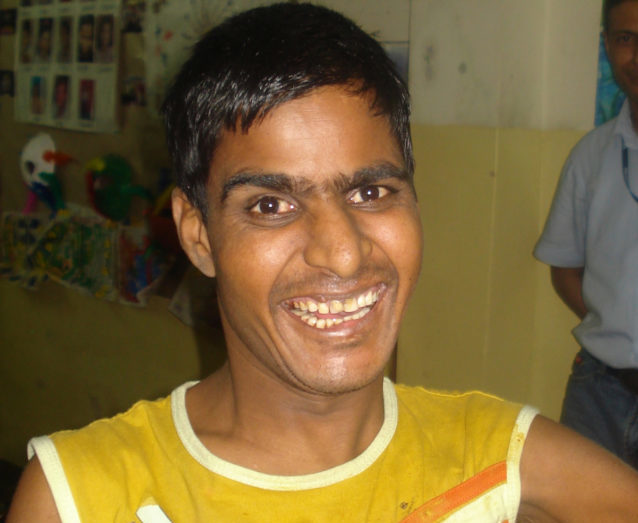
Project WHY’s journey starts with the story of Manu, a boy with special needs who the founder of Project WHY, Anouradha Bakshi, came across one fateful summer day in 2000. Manu was clad in rags, disheveled and filthy, limping and begging on the streets, crying out for help at being bullied and abused.
Manu wasn’t born a beggar. He came from a family that lived within its humble means – his siblings went to school, his father had a Government job and his mother loved him. An alcoholic father and his special needs were his only challenges. But after his mother’s death, and his sisters moving away after marriage, he was pushed to the streets, and often spent his days without anything to eat. His brother’s wife use to send him begging for a few coins. People fed him and treated him like a street animal, his father’s friends abused him, and kids pelted him with stones.
When Anouradha Bakshi answered his call for help that day in May 2000, in the streets of Giri Nagar, a journey began for both of them that would last ten years. The initial efforts were in finding an institution to take care of him, but with no success in that endeavor, a rented place in Manu’s locality was arranged – a larger plan slowly enfolded called Project WHY. Manu was the reason that really made Anouradha take the road less travelled.
Anouradha made herself a promise she would only reveal much later: Manu would have a home, a bed to sleep in, friends to share a meal with and even a TV.
Project WHY grew as a space to support underprivileged school children. Every day, the organization gained trust and working became better every year, especially for Manu. He was bathed, fed and had his own bed in the verandah of what was then our Project WHY office. And in 2002 when we launched our class for special kids, he was Roll number 1!
Some would perhaps think that was game over…Manu was given a TV and a place to stay. But not for the vision Manu provided or set for Project WHY. The challenges that had been addressed gave Project WHY the audacity to start dreaming big, …very BIG!!! Dreams of a long-term, sustainable future for children like Manu – The dream of Planet WHY. The first plan in this was to give Manu and his friends a place in which they could grow old and die in dignity. The idea of a green building, with terracotta bricks and old style flooring and many widows to let light and breeze in. It would be Manu’s home and workplace as he would be able enough to learn gardening or a skill. Land was bought, architectural plans made and Project WHY started looking for funds.
On January 7, 2011, Manu tiptoed out of Project Why’s and Anouradha’s life after having had a cup of tea and his favorite biscuits. It is only after his death that the true meaning of Manu’s life emerged. As Anouradha puts it, the biggest lesson Manu taught the family of Project WHY is to “never judge a child by their appearances and also believe that each and every child is special”. No life, however miserable, wretched or seemingly hopeless, is meaningless. Every life has a purpose.
Manu’s legacy is huge. If not for him, there would not have been a Project WHY. If not for him, so many lives would never have been transformed, be it the now thousands of children who have had access to education, the scores of kids with repaired hearts, the many hopeless souls who now have dignified employment, the bunch of disabled kids who now spend their day happy and so on. Manu was born to conjure miracles.
In true homage to Manu, Project Why lives on.
![A sticth in time #GivingTuesday#India]()
by anouradha bakshi | May 2, 2017 | Anou's Blog, Uncategorized
(Posting a series of success stories from the compilation The Project Why Stories 2000-2016)

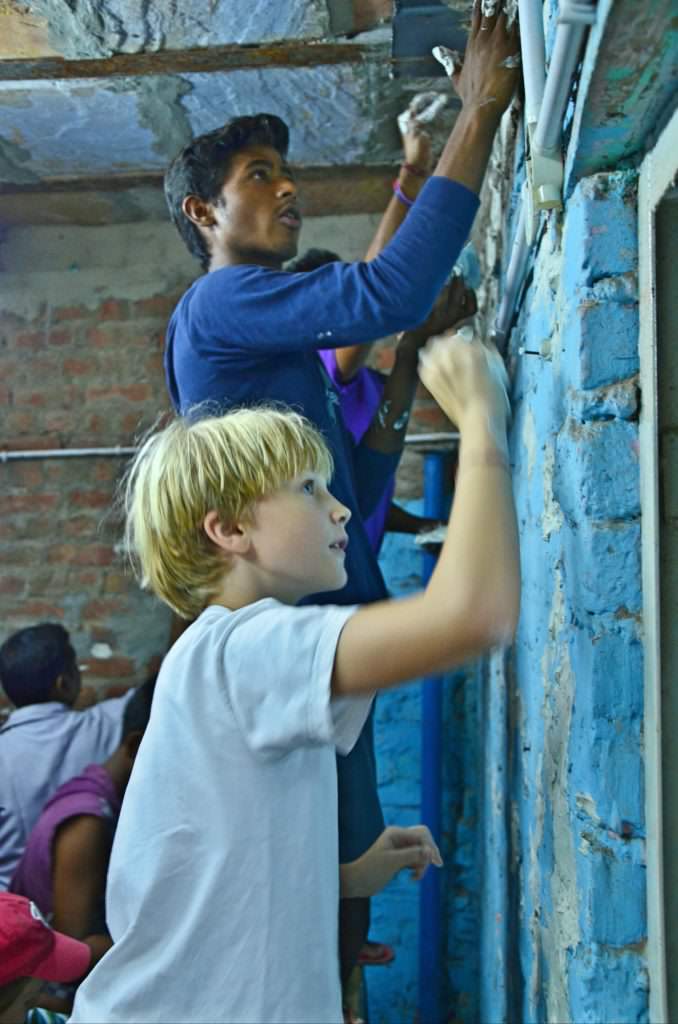
Born to a poor family in Bihar, Gyanti Devi never had the opportunity to learn as a child. Soon after her marriage, her husband, who is severely handicapped, required treatment. This meant moving her life and her two children to Delhi in 2006, where they lived on rent in the village of Madanpur Khader. The area houses mostly migrant families and has a high dropout rate from government schools as well as issues of safety and nutrition.
Gyanti Devi’s case was brought to our attention by a friend of the Project, Sunita, at the beginning of 2014. With her husband unable to work due to his handicaps, Gyanti Devi needed income for her family but, with no skill whatsoever, was unable to find a job.
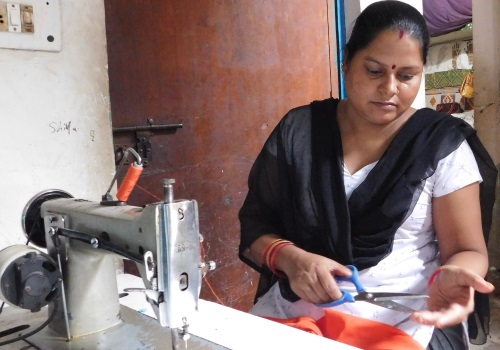
At Project WHY, we felt that our sewing or beautician classes could give Gyanti Devi the opportunity to start a career. However, we soon realised that, being entirely illiterate, she would need more than just vocational skills. Dharmender, the manager of our Khader centre, proposed that she spend the mornings learning to stitch with the vocational group, but also attend literacy lessons with the children for 40 minutes in the afternoon. She agreed to this and became one of our most motivated and diligent students, slowly building up her literacy skills with the children whilst also finding solace in her knitting.
Now, Gyanti Devi is a proud graduate of the Project WHY system and able to read, write and sew with ease. She has started a small business within her village stitching other people’s clothes, with which she is able to provide income to her family. She is also able to read the local newspaper and understand what is going on in the world. She points to an increased sense of freedom and opportunity with the skills that she now has. Previously afraid to take the bus alone, she notes that “I can now make my house budget and also can read the bus signboard.”
Armed with a new sense of financial responsibility, Gyanti Devi has spent the last three years building a new house for the family. She would get up early in the morning and take the interstate bus from Delhi to Palwal (Haryana) by herself, returning late at night. There, she would bargain and purchase the construction materials required. She kept detailed records of all labour payments in a notebook and is proud of her achievements. “I have successfully built my home for my family. So, I can say today that what every man can do, I can also do”.
Project WHY believes that every person should be able to change his or her life, and it provided the support for Gyanti Devi to do this and achieve her dream. She has created a better future for her children and she hopes that the skills she has learnt will allow her family to prosper for generations.
by anouradha bakshi | Apr 25, 2017 | Blog
The only thing that truly disturbed Malte during his years in Delhi was the poverty he saw on its streets.
Every afternoon, on his way home from his privileged school in Chanakyapuri, his car stopped at the same busy traffic light where young children begged for money. Seeing children his own age barefoot, hungry and without access to clean water filled him with questions. Why had he been given such a fortunate life while they had been denied even the most basic necessities?
Together with his sister, Malte decided to do something. They prepared small packets of dry fruits and handed them out to the children at the traffic lights. The smiles they received made them happy, but only for a moment. The packets disappeared within minutes, and nothing changed. Malte realised that while kindness could ease a day’s hunger, it could not change a child’s future.
That changed when his mother began volunteering with Project Why in 2014. Through her, he learned about children from Delhi’s slums who, despite enormous hardships, had been given a chance to learn, dream and build a different future.
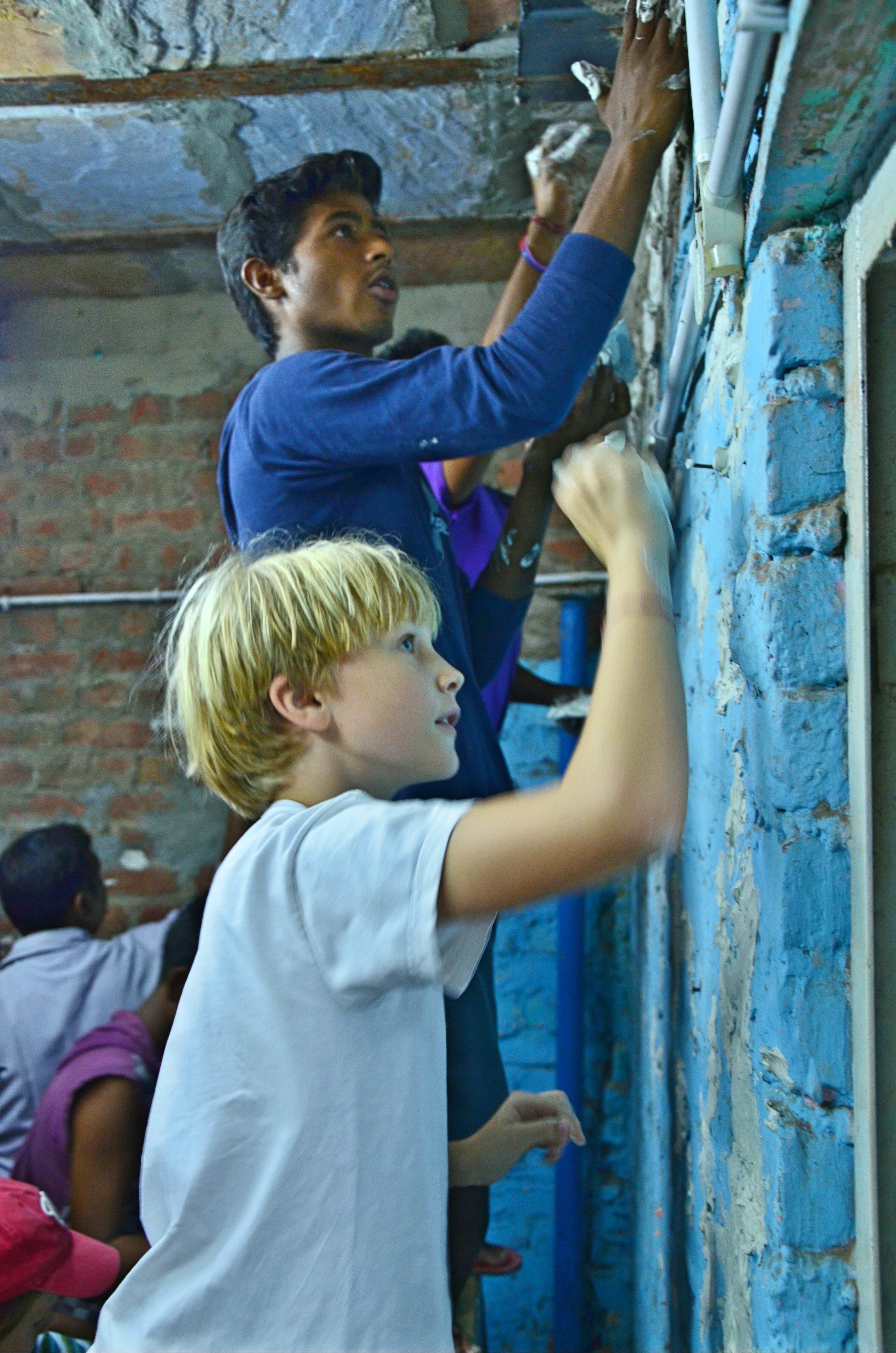
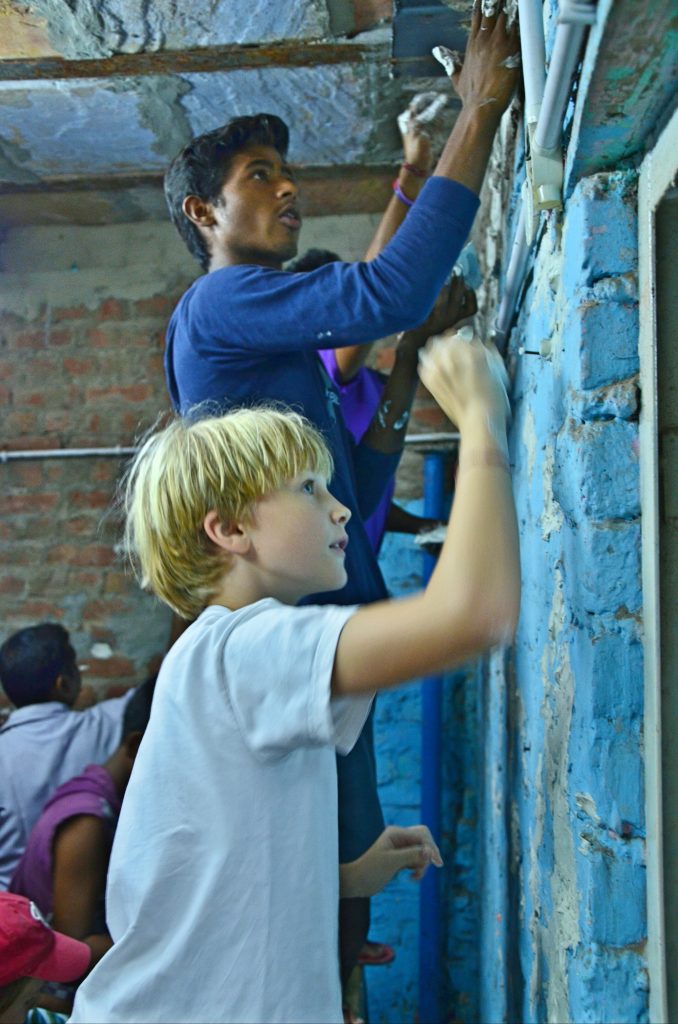
One Saturday morning in October 2015, Malte came to Project Why for the first time. He met the children, saw their eagerness to learn and was struck by the joy that filled the small learning centre. A few weeks later, he returned with his Cub Scout group to help whitewash the newly renovated Okhla Centre. Working side by side with the Project Why children, they transformed the building into a colourful and welcoming place. For Malte, it was a revelation. Here was a place where poverty was not accepted as destiny but seen as a challenge that could be overcome. And here, even a ten-year-old boy could make a difference.
But Malte wanted to do more.
Together with his friends Stefan and Scottie, he organised a fundraising campaign in their school. They designed colourful posters explaining the work of Project Why and invited the Project Why children to decorate traditional piggy banks, or gulaks, to collect donations. Then, for an entire week during the cold December mornings of 2015, the three boys stood at the school entrance, encouraging students, teachers and parents to contribute. Their enthusiasm proved infectious. Even the school principal and the American Ambassador stopped to make a donation.
By the end of the campaign, Malte and his friends had raised ₹12,000. The money enabled Project Why to build a bamboo roof over the Okhla Centre, giving the children a sheltered classroom that protected them from Delhi’s scorching summers and chilly winters.
Years have passed, but Malte has remained part of the Project Why family. He still asks about the children he met, enjoys returning whenever he can, and often donates his pocket money to buy school supplies for the centres. Whenever the scale of poverty in India overwhelms him, he looks for another way to help.
Perhaps that is the greatest lesson of all. One child cannot change the whole world. But one child can change a small part of it. And for the children whose lives are touched, that small part can mean everything.
by anouradha bakshi | Apr 18, 2017 | Anou's Blog, Uncategorized
(Posting a series of success stories from the compilation The Project Why Stories 2000-2016)
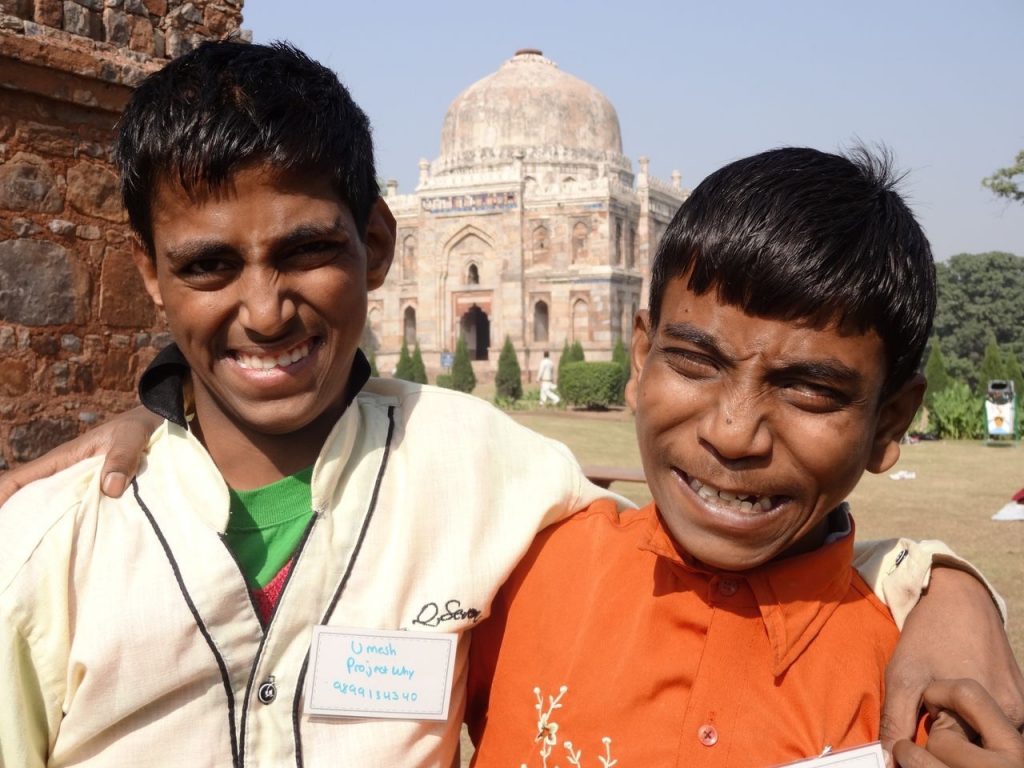
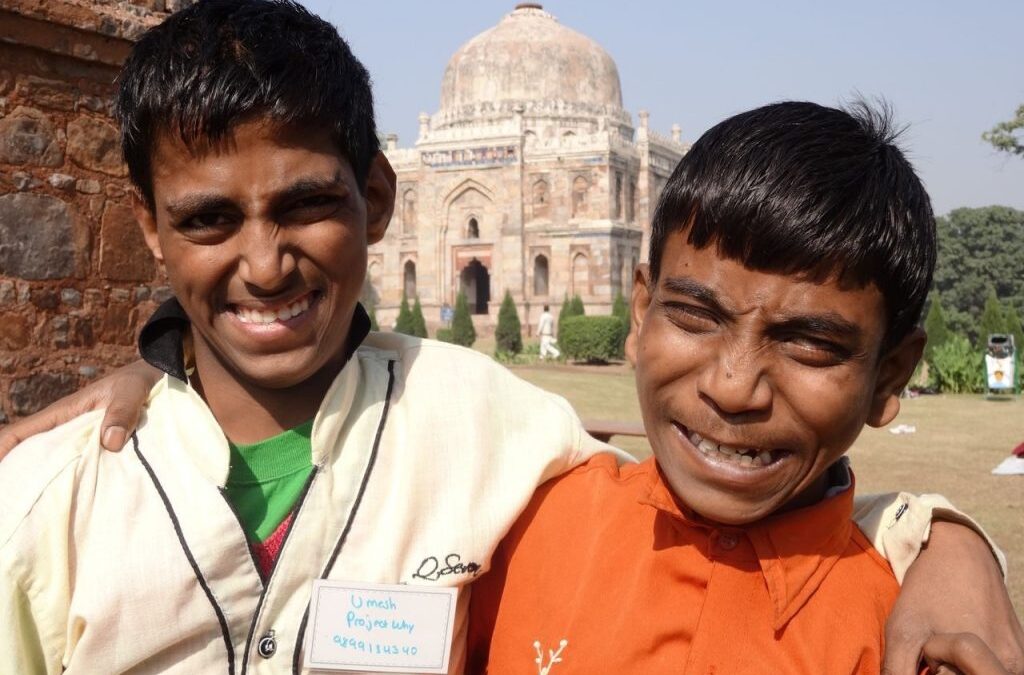
Indian society continues to treat disability with indifference, pity or revulsion. Low literacy, school enrolment and employment rates as well as widespread social stigma are making mentally disabled people amongst the most excluded in Indian society. These people are deterred from taking an active part in most families or even communities. Moreover, there is a stigma attached to children with disabilities, especially in rural India, and often even loving parents can do nothing to help their disabled child because they themselves are not aware of the disease or how to take care of their child.
The story of Muna therefore begins in 2005, when he first arrived at Project WHY. It was clear that he had never been adequately looked after. Upon further investigation, it was revealed that, whilst his parents cared about him dearly, they simply did not understand his intellectual impairments. Muna’s parents did not have the time nor the resources to give him due attention, as they had to care for his other four siblings.
Interacting with Muna, Project WHY found that he had little concept of personal hygiene. He would regularly soil himself, and had never been taught to have a shower/bath. He had no understanding of social interaction and rules of engagement. This was demonstrated in 2014 when Muna left a shop without realising he needed to pay for his juice and was severely beaten by the shopkeeper.
Having grown up in the industrial neighbourhood of Okhla, Muna would spend his days begging outside temples, occasionally stealing when money was unavailable. Residents of the neighbourhood would befriend him simply to bully and take advantage of his simple mind. Without the ability to communicate clearly, he was reduced to performing illegal errands around the community such as collecting and selling alcohol for under-aged children.
Project WHY began by teaching Muna the basic concepts of hygiene and to be self-reliant. He was taught to use a lavatory, to dress himself and to shower regularly. From there, we were able to build his confidence through speech therapy classes and develop his basic social interaction skills. Project WHY also initiated the process of educating Muna’s parents, who now understand his disability and the kind of care that he requires. They acknowledge his kind heart and sense of compassion even if he cannot communicate it in the same way as other children.
Today, at the age of 19 years, Muna is one of the stars of Project WHY’s special needs class. He is the first to welcome and befriend any new volunteers, including foreign students who do not speak the Indian language. He is very fond of activities such as art, ball games and dancing and, in spite of his difficult childhood, he shows an overall passion for life.
![A sticth in time #GivingTuesday#India]()
by anouradha bakshi | Apr 12, 2017 | Anou's Blog, Uncategorized

This picture is not the LOC. It is not an incarceration centre. It is not a prison. It is not a loony bin. This is my home! This the wall that separates us from our new neighbours!
I seek your indulgence today for writing a very personal post. I ask it in the name of all I have done and stood for and in the name of my mother who fought for the freedom of our beautiful country and was even willing to live as an old maid rather than give birth to a child in an enslaved land. God did give her one child: me. Kamala, my incredible and beautiful mother ensured that her only child take her first breath in an India that was free.
Today, sixty five years later I wonder if it was all worth it.
I have over the years felt saddened at many things but set them aside and never lost hope. I preferred taking the road less traveled and dog what I could to fulfil the dreams of all those who fought for our freedom. It was a fulfilling journey. There were hiccups but it was all par to the course and was taken as such. Ours is not a perfect world.
When things got bad, I drew strength from the home we built almost half a century ago where every wall is filled with memories of unconditional love and abundant gratitude. My home, now old and crumbling was my security blanket. I just needed to walk in and felt at peace.
But even that has been taken away from me.
The old house next door was brought down and in its place a new building was erected with many flats. Even that was OK. For many months the din and rattle made by the workers and their families was comforting. It was my India. The wailing of babies, the shouting, the laughter and even the fights, everything was welcome. But that too ended. Now we have neighbours!
I looked forward to meeting them as my generation welcomed neighbours and often bonded with them. But that was not to be.
I was woken from an afternoon sleep by strange jarring noises. I wet out and discovered workers on the wall that separates the house drilling holes and placing iron angles. When I asked what was happening I was told that this was for barbed wires, the lethal kind. My blood ran cold. This was the place where Utpal and my grandchild play in summer, the wall they climb when their ball gets stuck in the tree or on the parapet. This was the wall across which in the good old days when the old house existed we handed over a cup of sugar or some other silly item the neighbour needed, the wall where we stood and simply exchanged a greeting.
The idea of looking at barbed wire was preposterous and filled me with sadness and rage and total incomprehension. What had we become? When had we lost all that was good and beautiful? When had we allowed the invisible barriers we had erected to become visible and so in the face. This wall is just between their house and my house. When did they and I become enemies.
I did try to reason with the young person who will now be my neighbour. But to no avail. The fear was so deeply instilled that no words could assuage them. Those fears were a reflection of the society we have become. It seems like no one knows what the cause is. That has got lost in translation.
The anger gave way to sadness and the sadness to the realisation that the barbed wire was here to stay and that it was for me to find a way of protecting myself and my children and grandchild from its ugly sight.
Today I will get some kind of shield placed in front. I will make sure it is bright and filled with colours. I will make sure that my little ones will be able to climb that wall and that tree and get at the ball they hit often purposely so that they can climb that tree and that wall.
I refuse to be greeted by barbed wires every morning!
Remember, I am the child of the mother who was willing to sacrifice motherhood at the alter of freedom.
by anouradha bakshi | Apr 11, 2017 | Anou's Blog, Uncategorized
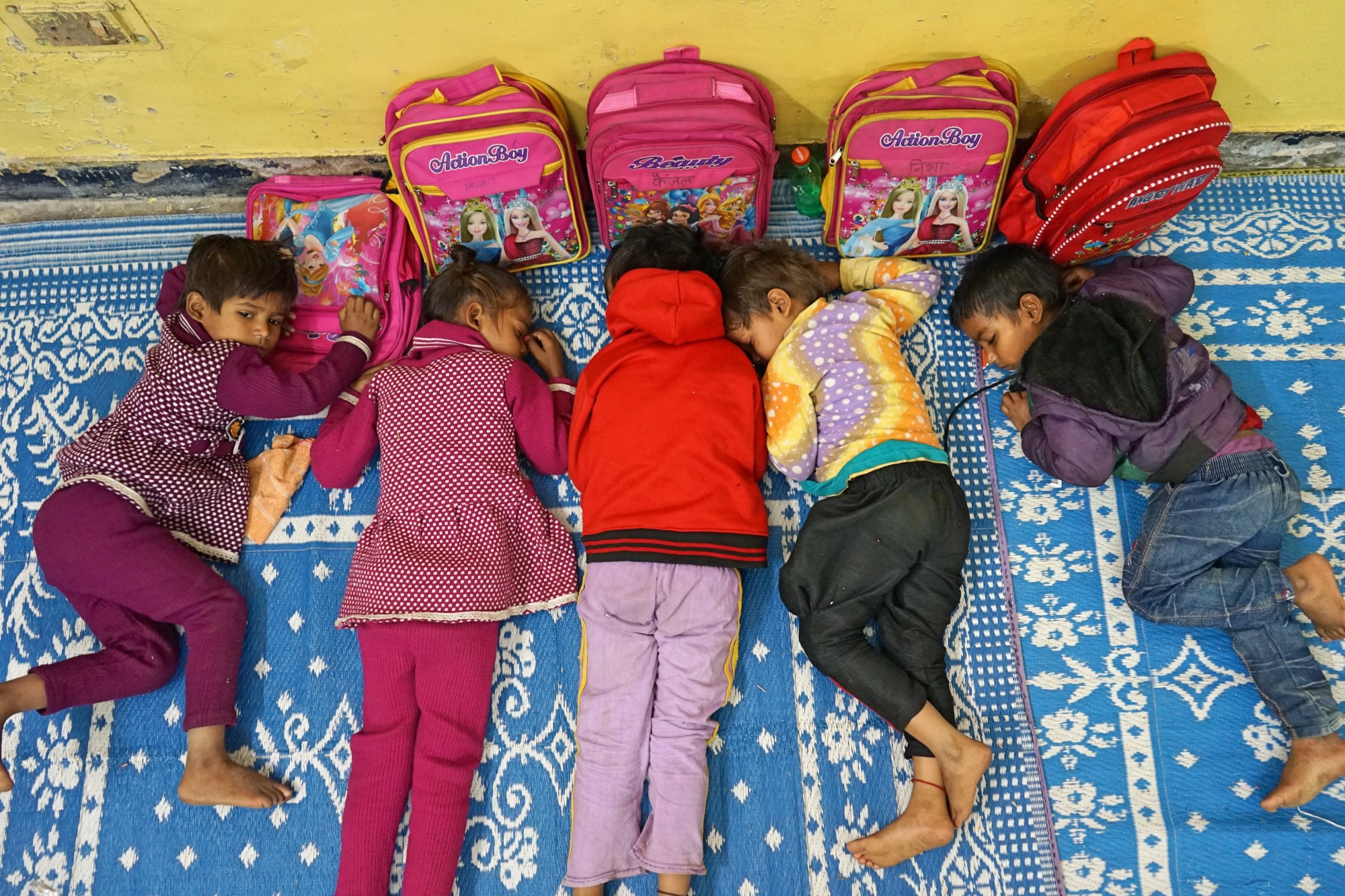
The Delhi government, while inviting applications for admissions to nursery, kindergarten and Class I, has imposed an upper age limit of 4, 5 and 6 years, respectively, on applicants. It is so easy to make ‘laws’ for children who have neither voice nor vote! And it is also so easy to find picture perfect justifications that seem logical. “We cannot admit a 12-year-old to Class I, the child needs to go to Class VIII only,” said an adviser to the education minister. Yes true. That is the ideal situation and we all wish we could ensure that ALL children in India could access Nursery at age 4! But sadly that is not the case so a law like this pushes millions out of school. The Education Act allows late entry upto class VI. True a 12 year old does not look ‘good’ in class I but can you take away her right to Education with one stroke of the pen.
One of the most cherished mission of Project Why has been to push back children to school and mainstream them. If we were to look back under this new prism a large percentage would have been pushed right back to the streets. Most if not all children out of school belong to what we call underprivileged homes, the other side of the fence! They do not have parents who are obsessed with getting their kid in a school. They do not have parents who know the value of education. Their parents are often illiterate and busy surviving from day to day. Their kid is not sent to pre and pre pre nursery schools. They often do not even keep track of their child’s age.
The parents we work with have to be pushed and reminded and egged on and often it is Project WHY that takes on the parental role till the moment when a crucial signature is needed. Now I guess we will have the added responsibility of keeping track of their ages.
Why is it that when decisions are taken about children, the ones on the other side of the fence are far too often forgotten.
We push them in; please don’t push them out!
by anouradha bakshi | Apr 4, 2017 | Anou's Blog, Uncategorized
(Posting a series of success stories from the compilation The Project Why Stories 2000-2016)
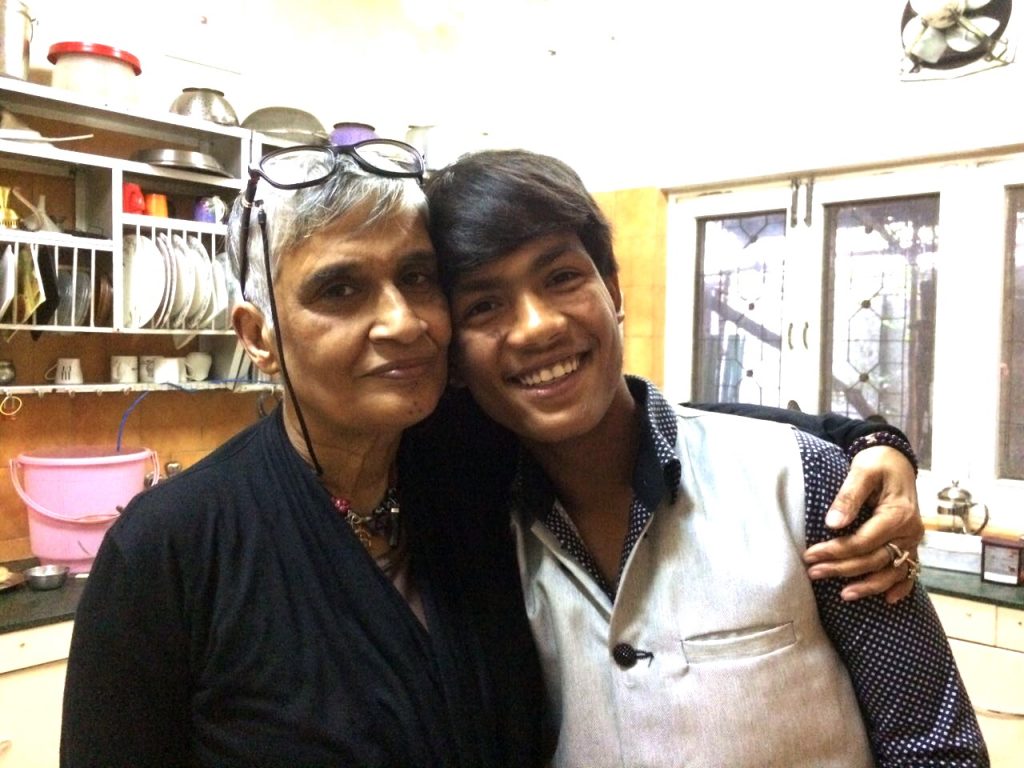
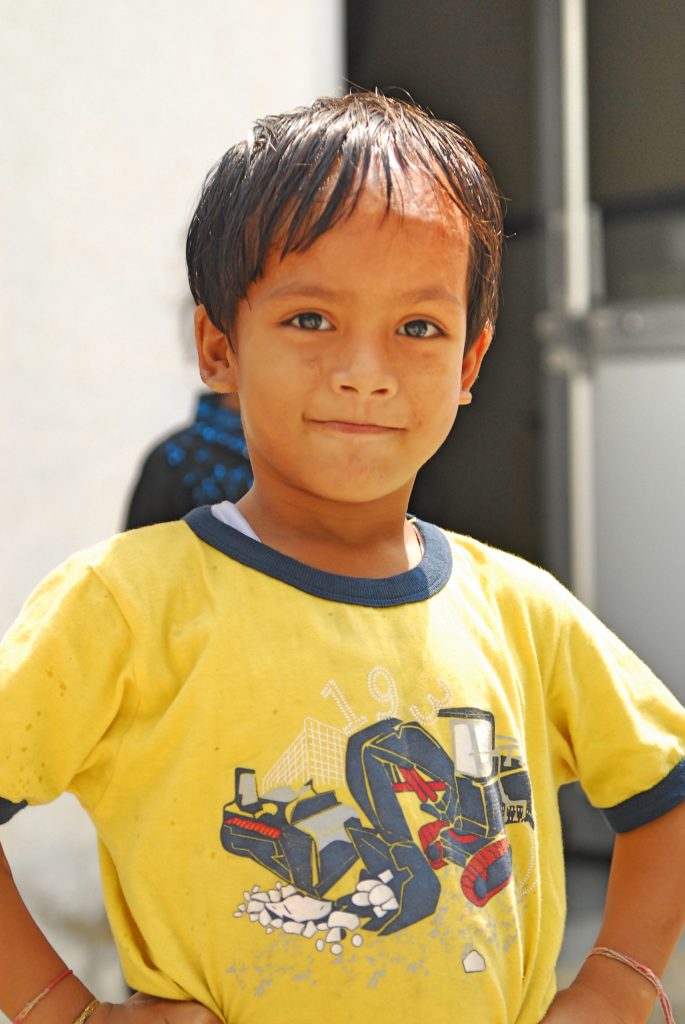 “All God’s angels come to us disguised” said James Russell Lowell. Utpal a.k.a Popples, and Outpal to all his friends is a force to reckon with, and a great lesson in survival. From a young age, he suffered third degree burns, double pneumonia, acute hepatitis A, and he never gave up.
Utpal and his family moved into the tiny hovel adjacent to the Project WHY office, Giri Nagar in February 2003. In March 2003, the day after Holi, the ‘little boy next door’ had fallen in a boiling pot. The tiny boy sustained third-degree burns. The hospital gave up hope for the child’s survival when the discharge slip read – “Chances of survival – Nil”
Project WHY, along with the help of Sophie, a volunteer nurse from Paris assisted in nursing Utpal back to health. In time Utpals scars healed, and the frightening reality of his existence emerged – alcoholic parents, violence, abuse and no clear plan ahead. His family was completely dysfunctional and not a healthy environment for a child to grow.
Utpal negotiated both worlds the best he could. In 2003, Utpal started attending Project WHY in the day time and at night stayed with his parents. If the days were safe as both mother and son were under Project WHY’s care, conversely the nights were unpredictable – with nothing to eat at home and the possibility of ending up at the police station. He was an endearing child and wise beyond his years. Should anyone want to visit his home he would run ahead on his chubby legs to hide the alcohol bottles consumed by his mother at night, saying: “Mama was naughty.”
As Utpal’s mother’s alcoholism became unsafe for the child. Project WHY stepped up and sent the mother to rehab for women and Utpal in boarding school. At that time Utpal was just 4 years old. The separation was hard for Utpal, but as he accompanied Project WHY resource person to the rehab centre; he bid farewell to his mom with a smile as he knew he is safe but above all his mom is safe.
The intermittent years were not easy. Utpal learned to integrate into his new life at the Boarding school but would still come to his family on holidays, where the situation continued to worsen. Another incident compelled Project WHY to step in again – that of securing his legal guardianship, as it was feared that the family might take him out from boarding school and vanish. Project WHY’s founder, Anouradha Bakshi was made his legal guardian.
As the years rolled by, Utpal taught us many things but most of all the meaning of dignified acceptance in the wake of any adversity: from excruciating pain that third degree burns bring, to the abject humiliation you suffer when those you love the most let you down.
Looking back, Utpal was an ideal candidate for begging at a red light. Drunk parents, a nicely scalded body and yet an incredibly beautiful personality. With a little help from a network of friends who held on to the dream, of a better life for Utpal with Project WHY, made it possible for Utpal to survive and slowly transform his life. Each day goes by with making small memories which is captured in the little book called “dear Popples. with love Maam’ji” which will stand in for all the memories that Utpal may need as he grows into a man.
Today, Utpal is 15 years of age and attends grade X at the boarding school. He is making up for all the lost years and the wise little chap of yesteryear has given way to a delightful adolescent with all flaws that come with the teen-age. He has made friends with his scars that had made him the butt of a lot of bullying and riling. He’s now a natty lean young lad, a mean skater, who teaches skating to smaller children in his school, plays tennis and football. He’s extremely fond of ‘engineering’: he takes apart a multitude of objects and rebuilds them when he’s at his guardian’s home for the holidays. He loves music and dancing like any other 15-year-old waiting for his dreams to unfold.
by anouradha bakshi | Mar 28, 2017 | Anou's Blog, Uncategorized
(Posting a series of success stories from the compilation The Project Why Stories 2000-2016)
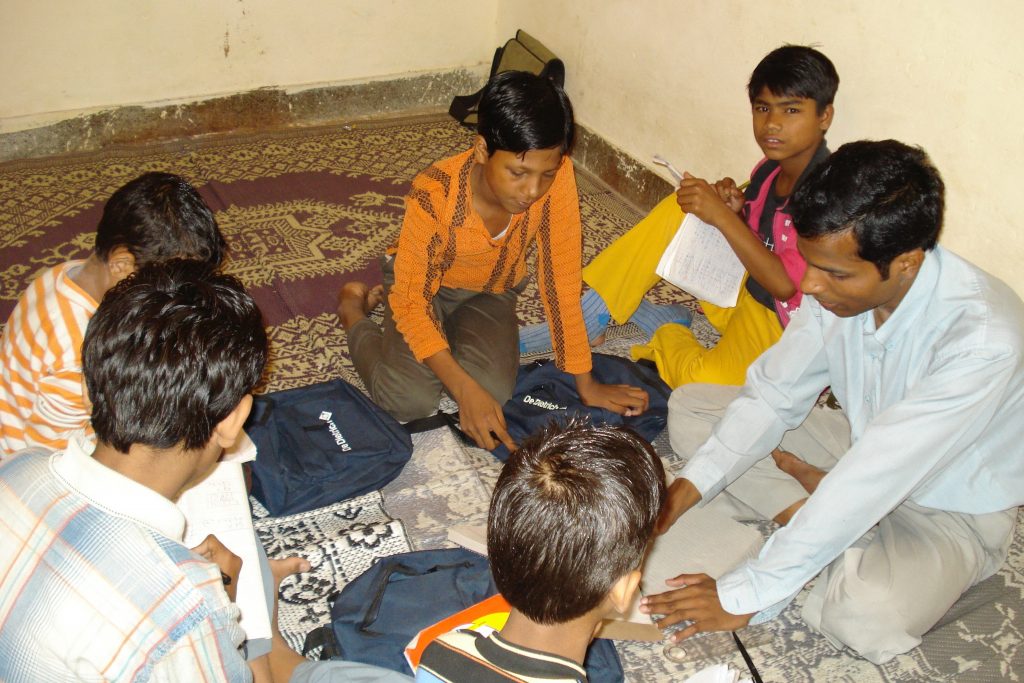
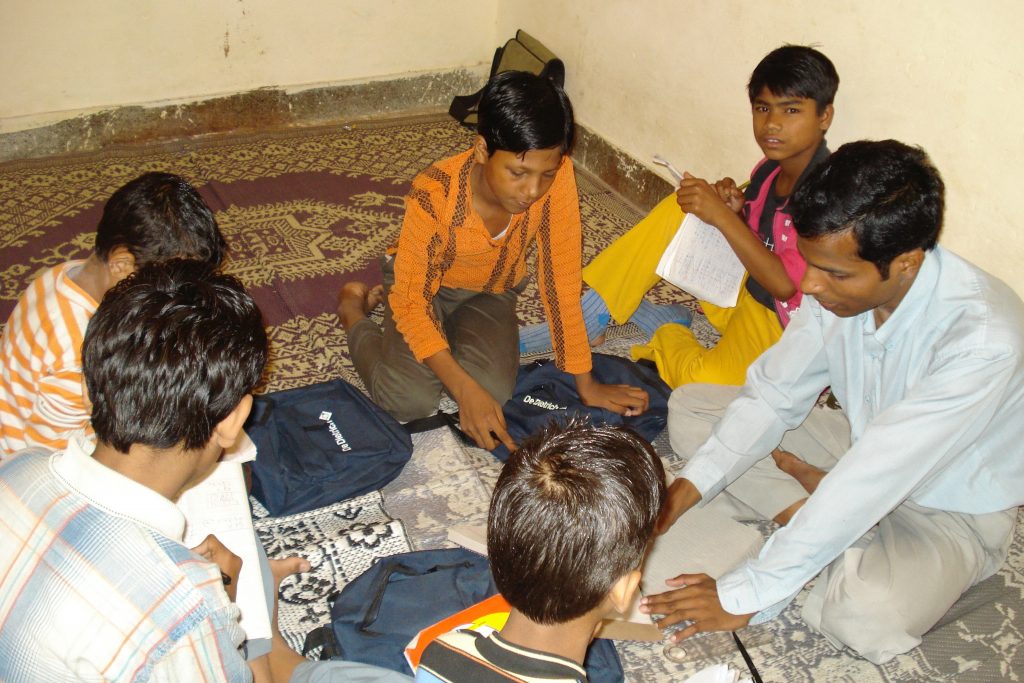
Chandan came to Project WHY in 2002 as an electrician. He lived in the community of Giri Nagar, where our original centre was based. The Project was in search of an electrician to do the odd repairs around the centre. Vinod Chaudhary, a friend of the Project WHY told us about his nephew, Chandan, who was willing to assist.
After a few months of such work, Chandan explained to us that he wanted to do more than just fixing lights; he wanted his career to progress and he wanted to leave a real impact on this world. As he was interested in teaching, and demonstrated raw talent in maths and science, Project WHY hired him as a Primary teacher in 2003. Chandan worked as a full-time teacher by day and an electrician by night in order to supplement his income.
Chandan was an excellent teacher but, having been brought up in a society rife with casteism, his behaviour raised issues for the Project. In India, no matter how educated one is, an upbringing in the rural village of Bihar renders the caste system a way of life, making it a difficult philosophy to eliminate.
India’s caste system is among the world’s oldest forms of surviving social stratification. The system divides Hindus into rigid hierarchical groups based on the occupation of the family into which one is born. Traditionally, the system bestowed privilege upon the upper castes whilst sanctioning the repression of the lower castes by privileged groups. Often criticized for being unjust and regressive, the system persists in many rural and urban cities.
As a non-discriminatory mission, Project WHY employs staff from all walks of India, regardless of community and caste. Unfortunately, people like Chandan were taught from a young age to avoid any group situation that involved both high and low class. Initially, we did not pay much attention to Chandan’s behaviour in the hope that he would naturally integrate into our way of thinking. He would occasionally avoid the Project’s group activities that involved groups from mixed castes, but otherwise did not pose a problem. However, in 2004, when our local tea seller lady Seema picked a fight with Chandan for having refused to drink her tea, the Project WHY team had to step in to calm the situation. Seema reported Chandan to a village elder that night and the ensuing violence between communities required intervention. We found ourselves using Chandan to explain to the community that violence was not the answer and that all issues could be resolved in time.
After working with Project WHY over time, seeing its progressive approach to hierarchy and understanding the value of each member of society, Chandan slowly changed his mindset and began accepting all castes equally. By welcoming him into a career that he believed to be above his reach, we taught him to do the same for others, and he now finds himself relaying the same message back to his village in Bihar.
In 2004, Chandan wanted to do more and learn more. He took extra classes with Project WHY’s resident mathematician, Naresh, in the hope of teaching secondary classes in the future. In 2005, he began teaching our Junior Secondary classes, but continued to teach electricals for those looking for careers in the field. It also transpired that he was a talented artist and the children enjoyed learning to draw under his guidance.
After eight successful years with the Project, Chandan, along with another teacher, Pravin, wanted to take the vision and concept of Project WHY and apply it to their own community of Bihar by creating a new NGO. In 2010, Chandan therefore created the “Deepjyoti Charitable Trust” which works in a similar way to Project WHY, but targets education and social mobility in his home state of Bihar. Chandan has replicated our concept, initially taking small groups of children into education, and going on to expand into an all-round support centre. Project WHY provided its expertise to the trust and acted as an adviser, as well as providing financial assistance for its first two years. We continue to maintain close relations with Chandan and his team, but the organisation is now able to stand on its own two feet. Chandan and his Pravin are now proud owners of an NGO that makes a genuine difference in Bihar and playing it forward!
by anouradha bakshi | Mar 21, 2017 | Anou's Blog, Uncategorized
(Posting a series of success stories from the compilation The Project Why Stories 2000-2016)
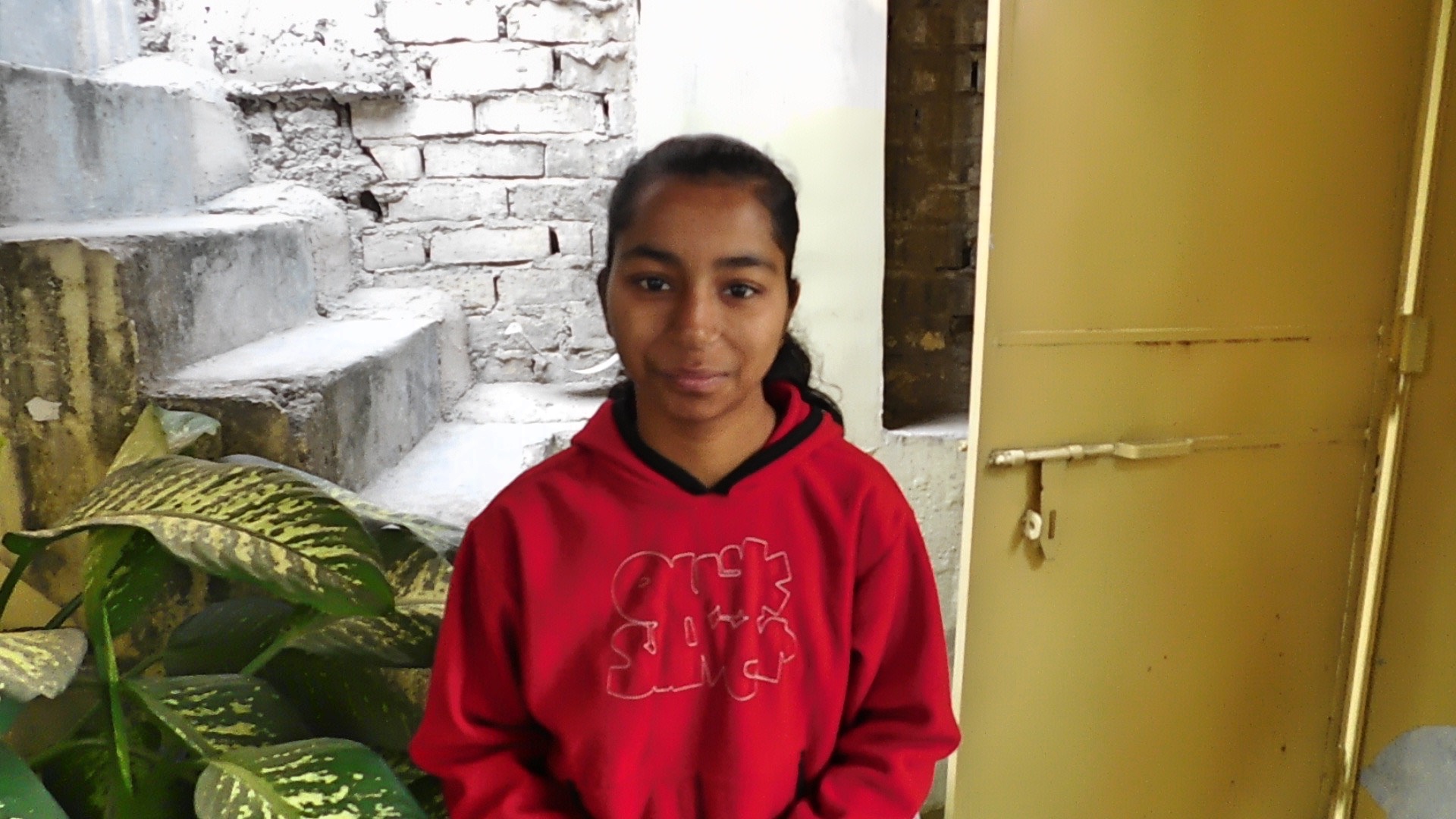
When Babli first came to Project Why in 2004, she was a bright-eyed, feisty girl; what some Indians would call Bindaas, meaning carefree and confident. She loved books and seemed to always have a smile. It took Project WHY’s resource persons some time to realize that every breath she drew was an effort. Babli had a hole in her heart from birth and needed corrective surgery. Her family was unable to come up with the needed funds. They had simply accepted that she would not live long.
In India, little girls are sometimes considered dispensable, their hearts not worth mending. The Census of India 2011 demonstrates a decrease in the population ratio of female children (age group 0-6 years) of India compared to 2001. For every 1000 male children, there were now 914 female children, a drop from 945 – where are our girls? Investigations show that female infants experienced a significantly higher mortality rate than male infants in all major states.
Thanks to our wonderful friends, Project Why was able to raise the funds for Babli by 2005 and the operation was performed successfully. It was scary and painful for this innocent little girl, but Babli’s bindaas spirit saw her through it all.
After her recovery, Babli was expected back in school but, to everyone’s shock, it emerged that she would not be able to continue her education. Her mother, being the sole earning member of the family, didn’t have time to take Babli to school. She also needed her to take care of her younger sister. The father was busy playing cards, and it eventually fell to Babli to manage the father’s work cart that sold tobacco and biscuits.
One step forward and two steps back. The Project WHY resource persons soon found Babli sitting on the cart selling chewing tobacco, cigarettes and biscuits instead of being in school, and her little sister standing in the background. She told them about how her name had been struck off from the rolls of the school and why she was working. But Babli’s words, spoken when she had trouble breathing, still resonated: “I want to be a police,” she said, without hesitation, when asked about her dreams.
Project Why found the situation unacceptable, and took steps to change it. After a meeting with her parents and a visit to the nearby government school, Babli was back in school.
Today, thanks to a kind sponsor, Babli studies in Class 9 at English Medium Boarding School in New Delhi, where she often tops her class. True, she won’t become a ‘police’ as the aftermath of her surgery resulted in scoliosis, but she will shine. Her education, which had fallen into peril this year because of a major donor backing out, will continue thanks to another kindhearted donor who has stepped in to fill the gap. This is Project WHY’s attempt to prove that given equal opportunities, children from the slum can do as well as those from the privileged classes.