by anouradha bakshi | Oct 23, 2018 | Anou's Blog
One of the challenges we face at Project Why is to provide quality and meaningful education. In the present educational scenario in India where only marks count, this challenge becomes even more daunting as though it is important to try and ensure that our children get ‘good’ marks in order to get admission in an affordable college, it is also imperative to prepare them for the rapidly changing work scenario. According to a report by the World Economic Forum 65 percent of the jobs elementary school students will be doing in the future do not even exist yet!
The question that comes to mind is: what then are the skills required for the future and how can they be taught to the children now.
Education specialist Tony Wagner has identified 7 such skills and they are a far cry from what is being taught specially in India.
The first skill is: critical thinking and problem solving. We need to teach children how to ask questions. This is what will bring innovation as only by being critical of what is, can we be able to bring about change. Now in a scenario where rote learning is essential, this is indeed a huge challenge.
Next is the ability to collaborate across networks and lead by influence. With the growth of remote and non-permanent workers leading will not be the commanding from the top, but the ability to lead by influence or example. Indeed a big challenge again
Now comes the ability to adapt and continually re-learn. Again a far cry from what education teaches today.
Next come initiative and entrepreneurship and of course the ability to communicate orally and in writing followed by assessing and analysing information a daunting task indeed.
And last but not the least is curiosity and imagination, rekindling the child like awe that is lost far too early, more so in India when the 3 Rs begin at the tender age of 4!
Most of these skills are contradictory to what is taught in schools today and yet if we want our children to succeed in the future it is essential to inculcate them slowly but surely.
At Project Why, we are taking baby steps in this direction by giving our children time to be innovative, to think out of the box, to develop their imagination and creativity and to better their communication skills. We hope that our efforts will go a long way in shaping their tomorrows.
by anouradha bakshi | Oct 16, 2018 | Anou's Blog
A photograph can sometimes take you on a journey through time.
I came across a picture of Kiran recently and found myself smiling.
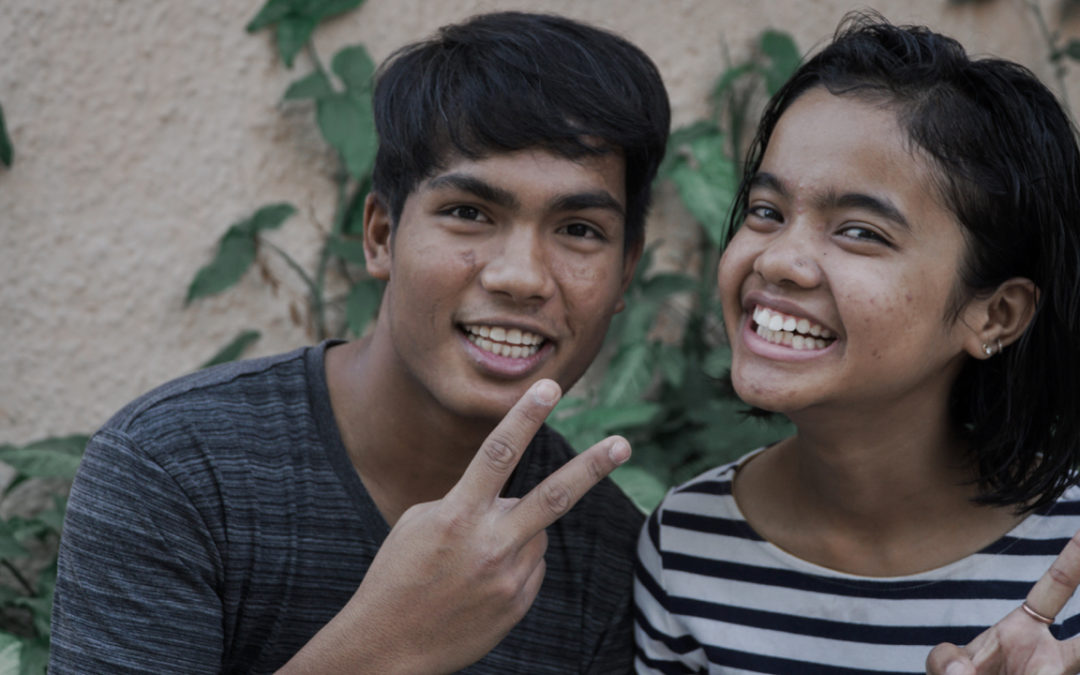
There she was, standing among the children at our Yamuna centre, having just completed her Class XII examinations and already volunteering her time to teach them English.
The girl in the picture was no ordinary volunteer.
She was Kiran.
Our Kiran.
Kiran was born in the same month that Project Why was born.
And, as if that were not special enough, she was born on my mother’s birthday.
That gave her a very special right.
She has always called me Anu.
And she does so with such confidence that no one has ever dared to question it.
I first held Kiran in my arms when she was just a few days old.
A year or so later, Utpal came into our lives.
And somehow, the three of us became inseparable.
Looking at that photograph, I realised that Kiran had grown up alongside Project Why.
In fact, in many ways, they had grown up together.
Kiran was always a serious and quiet child.
She seemed much older than her years and had a way of surprising you with her mature, almost adult manner.
But there was also a mischievous and wonderfully individual side to her.
While other children were drinking ordinary soft drinks, Kiran’s preferred drink was ginger ale.
She was clearly born to be different.
In those early years, I would tuck Kiran under one arm and Utpal under the other, and the three of us would set off on our various expeditions.
They attended the same playschool, and every afternoon it was my responsibility to collect them.
But we did not always go straight home.
In those days, momos were still something of a rarity, and whenever we passed the momo shop, the three of us would stop and gorge ourselves before continuing on our way.
There was also the time we were walking to Project Why and passed a huge pile of food thrown onto the ground after a wedding.
Kiran was upset.
She looked at the wasted food, looked up at me and said:
“They could have fed it to the cows!”
That was Kiran.
Quiet.
Serious.
Thoughtful.
And already, in her own little way, noticing the world around her.
When it was time to admit her to school, we went through the admission nightmare together.
I experienced, first-hand, what millions of parents go through every year.
And Kiran, of course, survived it all.
Her favourite place at Project Why, however, was always the special-needs section.
From a very young age, she was drawn to these children.
They became her friends.
And every summer, while other children were worrying about holiday homework, Kiran would come and spend her holidays volunteering in the special-needs class.
That connection stayed with her.
Perhaps, in some way, it was already preparing her for the journey she would eventually make.
When Utpal left for boarding school at the age of four, Kiran was heartbroken.
She had lost her little soul mate.
She missed him terribly and made it a point to attend every Parent-Teacher Meeting at his school.
I am not sure what she understood of the proceedings, but I do know that she was delighted simply to be there with him.
So, when the time came for Kiran to leave school after completing Class X, we decided to send her to the same boarding school.
She was over the moon.
And for the next two years, the two friends were together again.
By then, of course, they were no longer the two little children I had once carried on my hips.
They were growing up.
Kiran was becoming a young woman, and Utpal was becoming a young man.
But something remained unchanged.
They were still part of the same little family that had begun all those years ago.
And Project Why remained the thread that ran through all our lives.
After completing Class XII, Kiran began pursuing her college education through correspondence.
Like most young people, she was beginning to think about her future and what she wanted to do with her life.
But then she made a decision that surprised me—and yet, in retrospect, perhaps should not have surprised me at all.
Kiran decided to come back to Project Why.
She began by working with our special-needs children.
It seemed somehow fitting.
These were the children she had loved and spent time with since she was a little girl.
The child who had once come to the centre during her summer holidays was now returning as a young woman ready to work.
Then she became an English teacher.
And slowly, as the years passed, her role grew.
Today, Kiran is the centre manager of the very centre where she once volunteered.
Sometimes life comes full circle in the most beautiful way.
The little girl who once walked into Project Why as a child is now one of the people helping to run it.
She has gone from being a child in the Project, to volunteering in the Project, to teaching
in the Project..
And now she helps lead it.
Kiran has always been a bright child.
Not just because she is intelligent, though she certainly is.
There is something else about her.
A quiet strength.
A deep sense of responsibility.
And a kindness that has always seemed to come naturally to her.
I have watched her grow from the serious little girl who worried about wasted food, drank ginger ale and loved the special-needs children, into a young woman who has chosen to make those children part of her life’s work.
She could have gone anywhere.
She could have chosen any path.
Instead, she chose to come back to the place that had been part of her life since she was born.
Project Why and Kiran have grown up together.
She was born in the same month that Project Why began.
And today, she is helping to carry it forward.
That is something that makes me incredibly proud.
Kiran will always be my little girl.
She will always be the child I carried on my hip, the little friend who missed Utpal terribly, and the only person who calls me Anu with such absolute confidence.
But she is also so much more.
She is a teacher.
A mentor.
A colleague.
A centre manager.
And, in her own quiet way, one of the people who make Project Why what it is.
She is our Kiran.
Our little ray of sunshine.
And I know that wherever life takes her, she will find her place in the sun.
She was born a few weeks before Project Why saw the light of day and has been our ray of sunshine all the way along. Kiran is undoubtedly an intrinsic part of Project Why. She turned 18 yesterday. What a journey it has been.
I remember carrying her in my arms as I set upon crafting my dream. Somehow, in early days she was always by my side, joined a year later by Utpal who would become her lifelong friend.
Today she is in class XII, a lovely young woman at the threshold of fulfilling her destiny.
Looking at her takes me down memory lane as her life mirrors Project Why’s journey. Like her we too find ourselves at the threshold of a new chapter as we take our first but determined steps towards sustainability.
We have come a long way since early times when we were both in our infancy and when everything seemed possible. Step by step and day by day we grew and gave wings to our dreams. We faltered at times but always picked ourselves up, dusted our bruised selves and carried on with grit and determination.
Today I look back and share some of the moments we lived to together. How can I forget the day I was introduced to the word jometry, the moniker used by many children in slums for the ubiquitous pencil box; or the day when we both fell upon mounds of thrown food after some religious feeding frenzy and the little wise 6 year old quipped: why don’t they give it to cows! How can I forget the anxious times when we were seeking admission and the nightmare we had to go through at the hands of wily predators looking for a quick buck. How can I forget the days this little girl spent ‘volunteering’ with her friends in the our special section or the cake we baked as part of her holiday homework as her home did not have an oven! Holiday homework was a hardship we shared year after year.
Kiran is without doubt our little ray of sunshine!
Happy birthday girl! May all your dreams come true.
by anouradha bakshi | Oct 9, 2018 | Anou's Blog
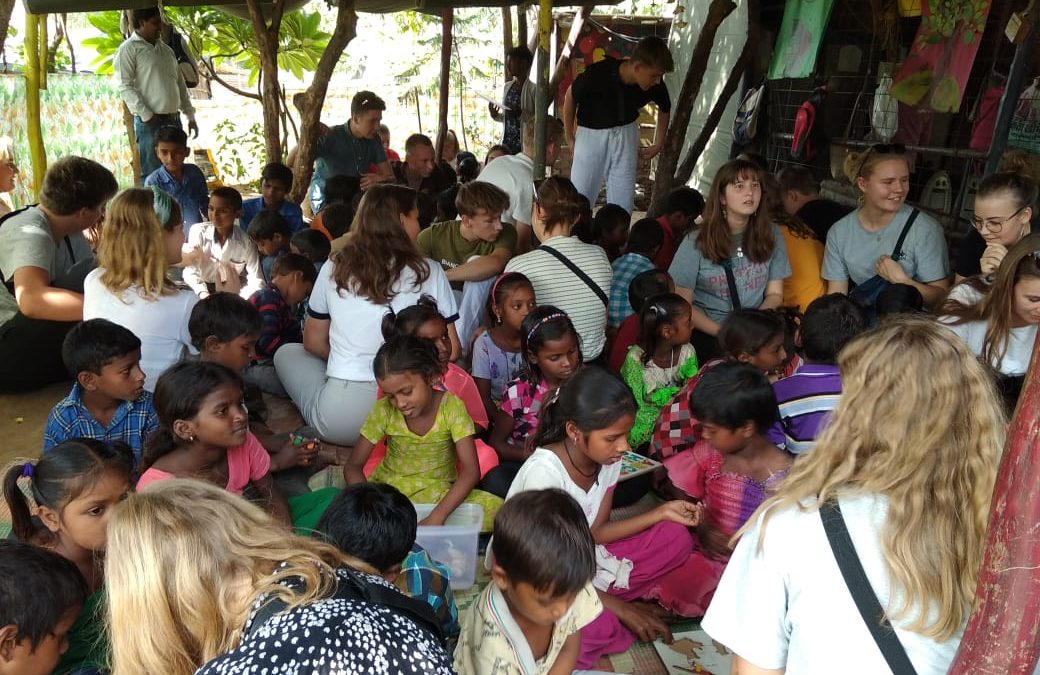
For the past years, come October a group of class XI students from Gefion Gymnasium Copenhagen and their stellar teachers Mette and Ask visit Project Why and share some precious time with our children. This is part of their annual study tour to India. They come laden with gifts, smiles and a generous donation that is the fruit of their labour,
This year again they visited our Yamuna centre and gave wings to the dreams of their Indian friends. For a few hours blond heads mingled with dark ones and all barriers were broken. The world became one.
They prepare for their journey all year along working in different places: from baby sitting to cleaning houses, from working in super markets to serving in cafes, from working in shops to running dance workshops, giving true meaning to values like compassion and giving. Their donation is undoubtedly priceless. We feel deeply grateful and humbled.
I have great admiration and respect for this school that has truly understood the meaning of education and imparts the right values to their children. They teach them to build bridges and not walls, something all education system should do.
On behalf of the Project Why children and team I would like to than Lasse, Estelle, Nicholas, Sophie, Olivia, Daniel, Esther, Naja, Siw, Helena, Line, Lija, Ida, Niklas, Laerke, Svend, Addie, Caroline, Tobias, Johannes, Elvis, Freja, Luna, Sarah and Karla for their generosity and love. May you always be successful and may your dreams come true.
Anou’s blog
The highest result of education is tolerance #GivingTuesday#India
by anouradha bakshi | Oct 2, 2018 | Anou's Blog
The highest result of education is tolerance wrote Helen Keller. These words came to mind at a time when once again the future of Project Why is at stake. One of our main source of funding is coming to an end in March 2019 and should we not be in a position to find an alternative, we may have to think of curtailing many activities come March 2019. True we are busy looking for alternatives and also praying for miracles, but once again the Damocles sword hangs upon our head and we need to brace ourselves for whatever be the outcome.
I have been finding myself going down memory lane and wondering whether we have achieved what we set out to. Defining Project Why has always been a challenge as it does not fit in any box, so I simply asked myself what is the one thing that defines education to me and whether we have been able to impart it to all the children who have been part of our story. That is how Helen Keller’s words came to mind. Tolerance is undoubtedly the yardstick to measure any meaningful education, and if we have been able to impart that one value we can say that we have achieved our goal.
In today’s world tolerance is by far what we need to instil in every young mind. Tolerance is what builds bridges. Tolerance begets compassion. Tolerance teaches respect . In a land of so many divides, it is crucial that children be taught tolerance. I hope that Project Why children will always be tolerant and spread the message of tolerance where ever they go.
Anou’s blog
My heart missed a beat #GivingTuesday#India
by anouradha bakshi | Sep 25, 2018 | Anou's Blog
Last Saturday my heart missed a beat. A call informed me that our Yamuna centre was in danger of being closed as authorities were clearing the banks of the river and ominous looking bulldozers and tractors accompanied by large posses of policemen and officials had descended on the flood plain and were busy razing fields and structures.
Not knowing what would transpire, we decided to move the more expensive items that were in the centre. One by one all that had brought the outside world to these free spirited children was packed and taken away: the computers, the solar panels, the water filter, the music system… everything that the children had so loved for the past years. It was their hopes for a better tomorrow, their dreams for a brighter future, their aspirations and their right to be children. It was heart wrenching. We decided to leave the structure and basic learning aids in place. We were not ready to give up yet. We would play the waiting game.
On Sunday, Dharmendra our centre manager visited the centre and children and many parents came to him asking for the centre to remain opened. They being survivors felt that things would fall in place. I guess they had encountered many such occurrences in the past. For us it was a fist and I must admit scary!
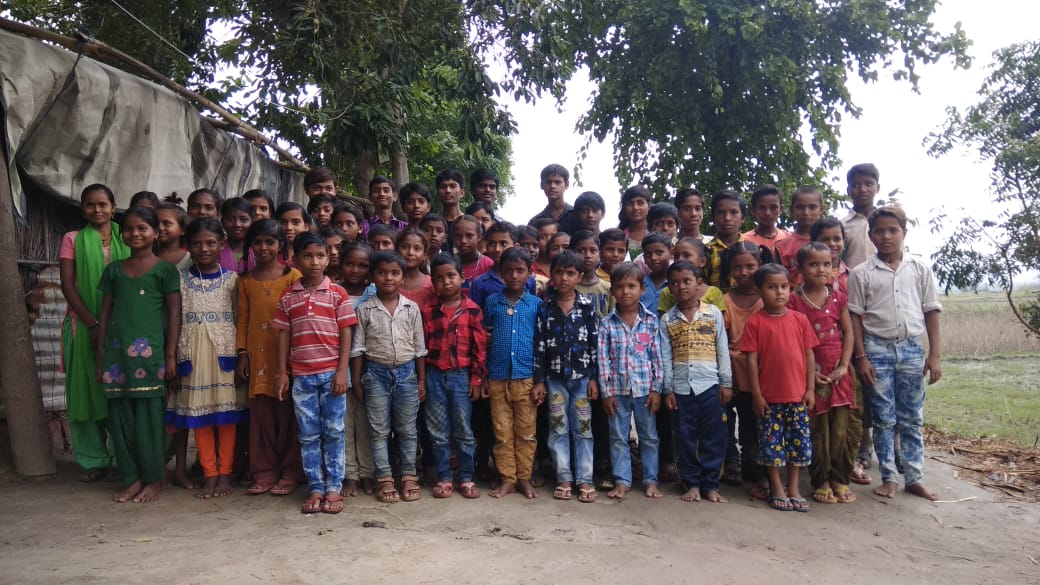
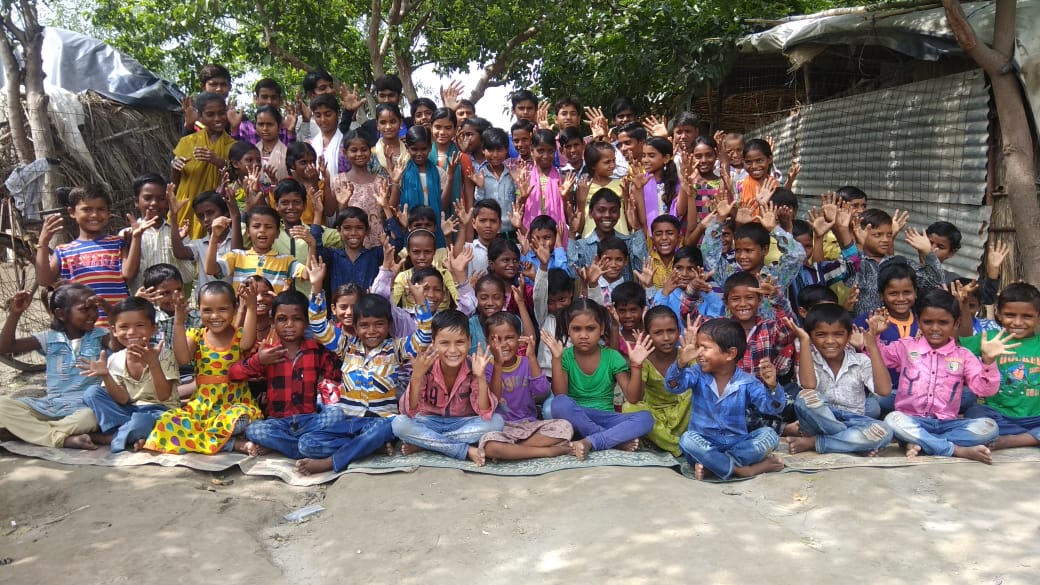
Come Monday and over 60 kids turned bright and early with a smile on their face. You can see them in the picture above. I visited them and felt a pinch in my heart as they sat books opened studying attentively in spite of there not being any light or fan or their favourite computers and music system! The centre did look a little desolate but for the moment we had no option but to wait and see what happened before bringing everything back.
The Yamuna children are undoubtedly our most spirited and lovely ones. They are generous and large hearted, always smiling and willing to do anything you ask them. They are bright and have an unfathomable hunger to learn. Five of them have made up for lost years and are ready to sit for their class X exams this year. We have to stand by them in every way possible.
But Saturday’s incident had brought to light the fragility of this centre. True some people have papers but the Damocles sword hangs on their heads and should it fall then they have no option but pack up their belongings and move on. The question is where? Back to their villages or somewhere else in the city? No one knows.
We will continue our work as long as we can.
Anou’s blog
To stand out in the crowd #GivingTuesday #India
by anouradha bakshi | Sep 18, 2018 | Anou's Blog
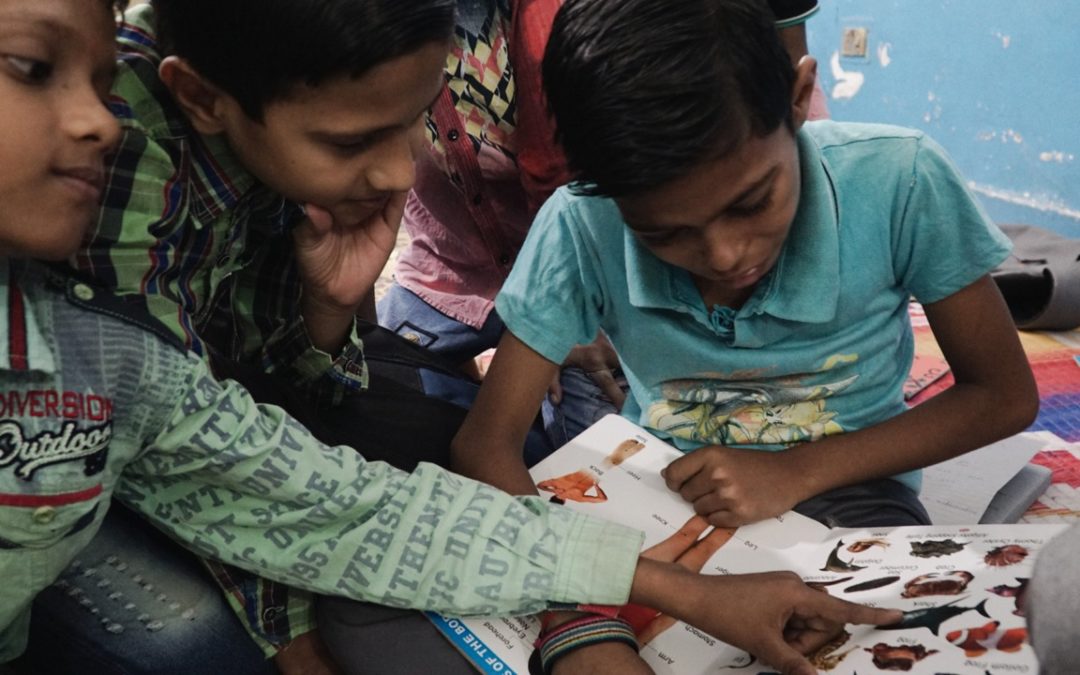
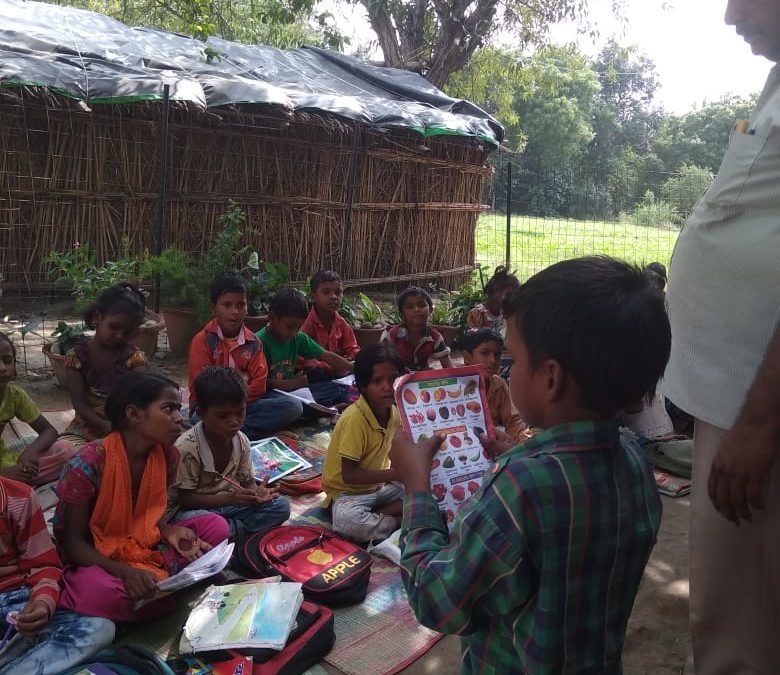
The Yamuna children are busy learning about ‘vegetables’! This is oxymoronic to say the least. These kids can teach us more than any book can. They know how to grow vegetables from seed to fruit. But here they are, book in hand, learning vegetable names conscientiously. I wish the class could have ben turned on its head, and the children would have been the one teaching us about vegetables, about how they are planted, when they are planted, how long do they take to grow, how often they need to be watered and so on. How much richer the class would have been.
This simple picture set me thinking about the value of the education we are imparting to our children. Call it serendipity, but the same morning I had a long conversation with one of Popples’ teachers about the importance of giving creative space to a child. She had complained about him spending time on making posters for competitions in lieu of completing his written work. I argued that the child would learn much more creating a poster than learning an answer by rote! I do not know whether I convinced her. I hope I did. Needless to say I did not chide the child.
Creativity is sadly absent from today’s curricula. Children have back breaking time tables and are meant to learn many things that they will never use in their lives. Everything you once had to learn is available at the swipe of a screen. So why do we still need to clutter minds.
My heart goes out to our children who live in a land where you are assessed on marks obtained for mugging school books by heart. This can only be done by hijacking and usurping all your rights as a child: the right to play, daydream, run in the park, play with your friends, read a book other than your school, book, question and argue! What are we doing to our children.
A recent study revealed that boredom makes you creative. How many parents allow their children to be bored to just daydream! When I look at the time table of a child today, I shudder: school, tuition, homework, music class and so on. Where is their time to be bored and hence be creative and have a chance to stand out in the crowd!
Whats new
Project WHY raises funds for Kerala Floods
by anouradha bakshi | Sep 14, 2018 | Whats new
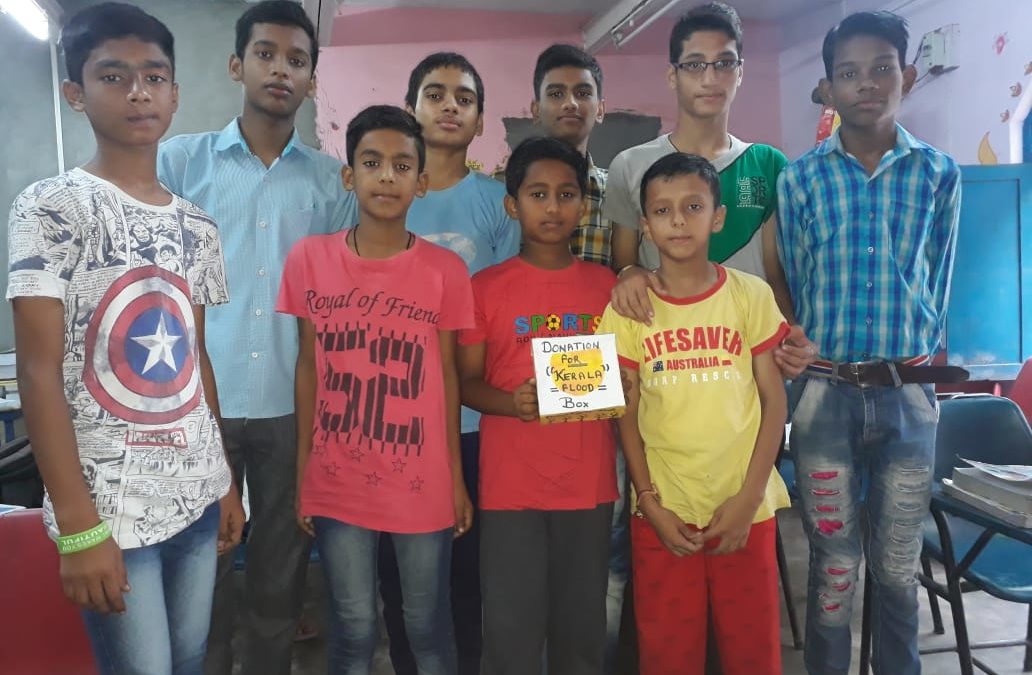
Through the month of August 2018, all our Centre’s children keenly monitored the floods and rescue operations in the state of Kerala. The Centre Managers explained the causes of flooding and encouraged our children to come up with ways to help the flood victims. A collection of funds ensued at all our Centre’s. Our Yamuna Centre that had its own experience of living with floods (as the children’s homes are close to the banks of Yamuna river) were the first to raise INR 2500. All contributions will be donated to the relief operations headed by Goonj.
Whats new
Thank You to the Road Again 2k18
by anouradha bakshi | Sep 14, 2018 | Whats new
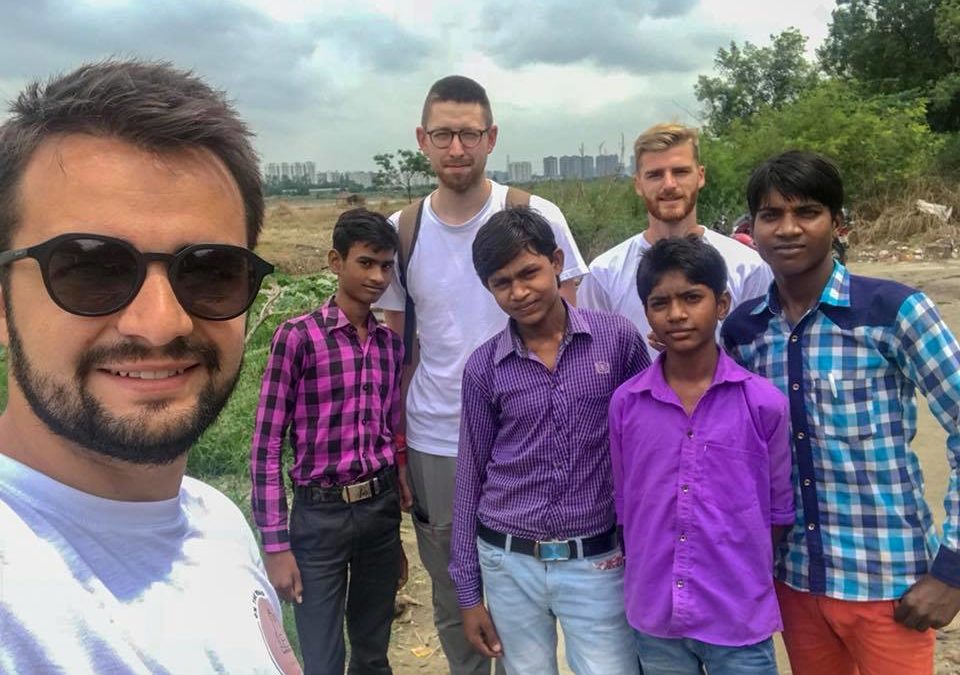
On The Road Again 2k18, a group of French Youth in India for a month, came and visited our Project WHY Centres on September 8, 2018. They interacted with our children and resource persons to understand the vision and reach of our program. We would like to thank them for supporting us via Enfances Indiennes.
Anou’s blog
Be astonished #GivingTuesday#India
by anouradha bakshi | Sep 11, 2018 | Anou's Blog
“Live for cause which is bigger than yourself! Be Astonished by your own existence.” Deepak Chopra. These words resonated deeply. For the past two decades I have strived to live a life larger than myself though I still have a long way to go to truly astonish myself.
The day I decided to step out of my comfort zone and start looking with my heart was a watershed moment and I have never looked back. I have been treated to the most amazing and astonishing experiences and have been taught innumerable lessons in compassion by the most unlikely teachers. The children of Project Why have been my masters in unconditional love and hence Project Why has become my true spiritual journey.
More than anything else, it has made me discover who I truly am and compelled me to take an inward journey and dig deep to spaces yet unknown. And at each step a miracle was conjured to make me want to take the next step.
Project Why has been a teacher taking me gently by the hand and proving me time and again that beauty and kindness exist in the most unlikely places; showing me that dreams come true if you truly believe in them.
The latest lesson came form a bunch of incredible kids who proved that giving is not, as many think, the prerogative of the privileged. When we decided to collect funds for the survivors of the Kerala flood, I would have never imagined that my Yamuna kids, the very ones who had lost everything in the recent Yamuna floods, whose fields lie barren and water logged, who survive by catching and selling fish, would be the ones to bring in the most money in the shortest time. My 80 Yamuna kids collected a whopping two thousand seven hundred rupees in three days. This was undoubtedly a huge lesson in compassion and big heartedness. It turned on its head all our misconceived beliefs and was a most humbling experience. My gratitude to all these wonderful little souls, who never stop smiling, for once again being my masters!
God bless you all.
ANOU’S BLOG
My instant FeelGood shot
by anouradha bakshi | Sep 4, 2018 | Anou's Blog
The past few days have not been the best. A series of irritants on the personal level resulted in the mood declining and the blues setting in. Mercifully, though I do not go to the Project Why as often as I did or would like to, I am treated every day to a host of pictures of activities at different centres courtesy a Whatsapp group!
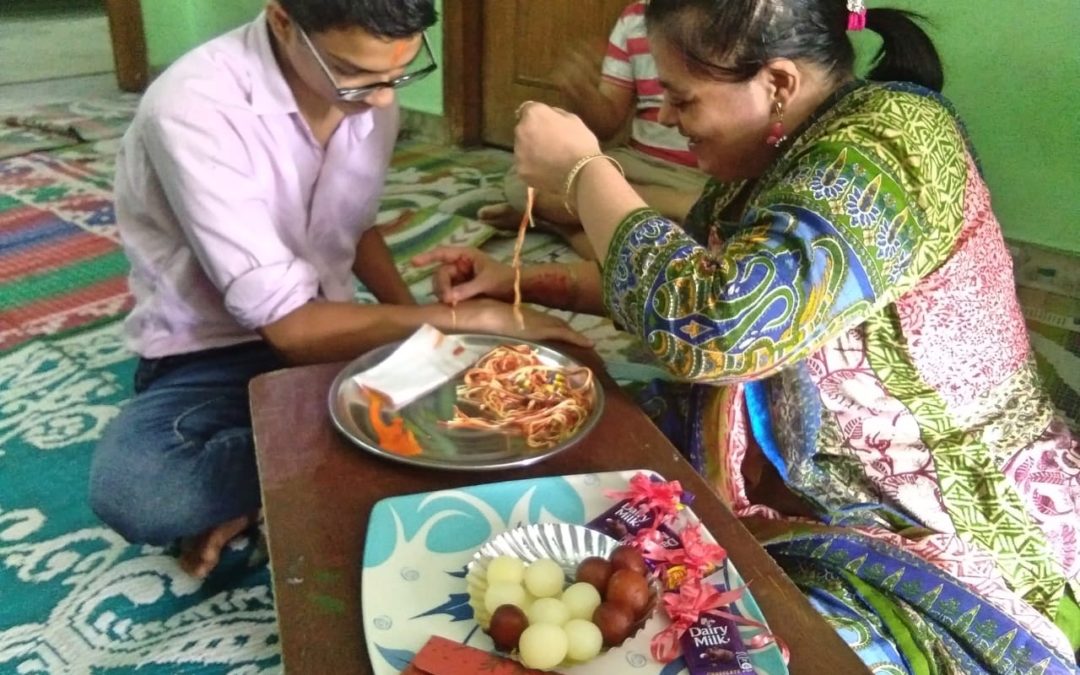
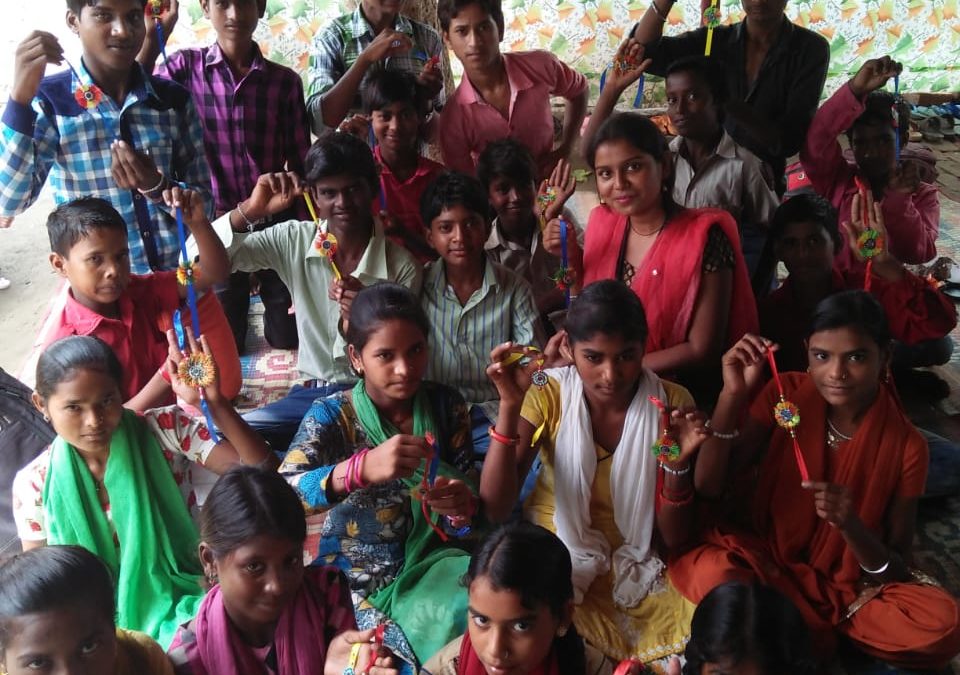
One picture was enough to lift the mood instantly. It was taken on Raksha Bandhan day where sisters celebrate brothers with two of our oldest and dearest students of our very special section: Shalini and Anurag.
The special section has always had the ability to perk me up and give me my instant FeelGood shot and just seeing the picture of these two lovely souls was enough to set off all the happy hormones and to take me on a magic ride down memory lane.
Whats new
Project Why & Ramanujan College
by anouradha bakshi | Sep 4, 2018 | Whats new
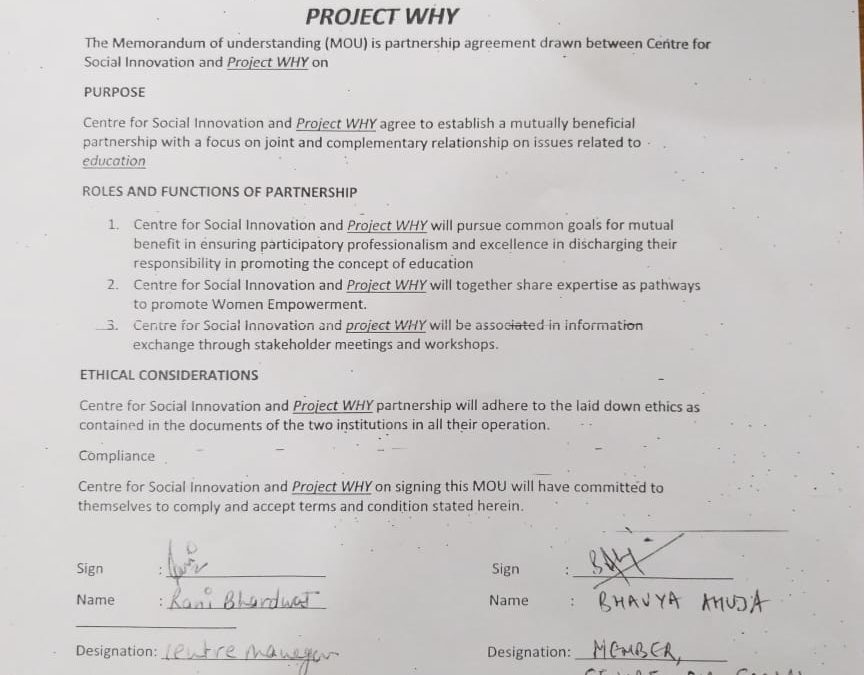
Centre for Social Innovation-Ramanujan college and Sri Ram Goburdhun Charitable Trust – Project WHY signed MOU for promoting after-school education support to slum children, empowering women as well as for mutual exchange of information.
Whats new
Janmashtami Celebrations
by anouradha bakshi | Sep 4, 2018 | Uncategorized, Whats new
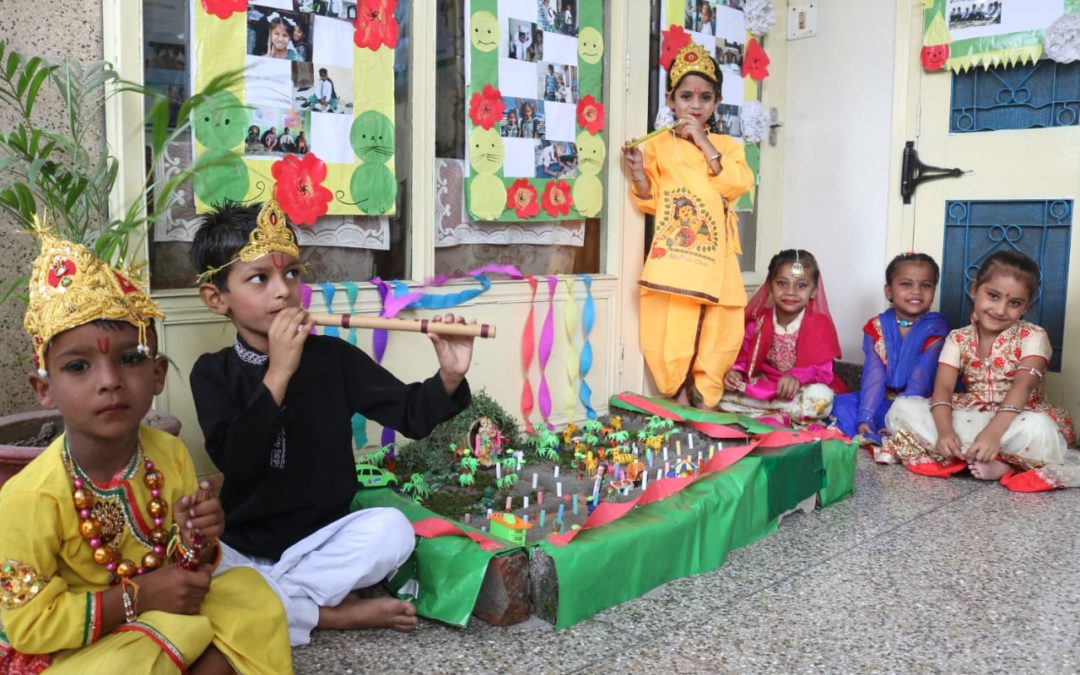
Project WHY centres – Delhi and Dehradun – celebrate the Indian festival of Janmashtami today. Children dress up and play act as lord Krishna.
ANOU’S BLOG
Part of being a person is about helping others #GivingTuesday#India
by anouradha bakshi | Aug 28, 2018 | Anou's Blog
“Part of being a person is about helping others” wrote Regis Murayi. We at Project Why believe in this maxim and try and teach compassion to our children at every step. Today, our children are busy garnering funds for the victims of the Kerala floods. For many, losing everything in a calamity is something they or their loved ones have experienced. Many of the families of our children came to Delhi after the devastating floods in Bihar some years back. And recently the families of our Yamuna children lost all their standing crops when the fields got flooded after torrential rains.
It takes a calamity to bring out compassion and it is heartwarming to see that people across the country are reaching out to their brethren in Kerala. I only wish compassion transcended calamities.
In 2004, when southern states were hit by a devastating tsunami, the children of Project WHY raised money to buy one motorised fishing boat for a village in Tamil Nadu. The boat was aptly named Project Why and brought help and support to many families. This time too, we hope to raise funds to bring some succour to the flood victims.
Compassion and gratitude are values that should be taught in homes and schools. Sadly that is not the case. Moral Study was taken off the school curriculum. I wonder why. Moral science should be part of the curriculum. It will help the child become a better person. We forget most of what we are taught in schools, but moral science would remain with us for a lifetime.
ANOU’S BLOG
Teach us English #GivingTuesday#India
by anouradha bakshi | Aug 21, 2018 | Anou's Blog
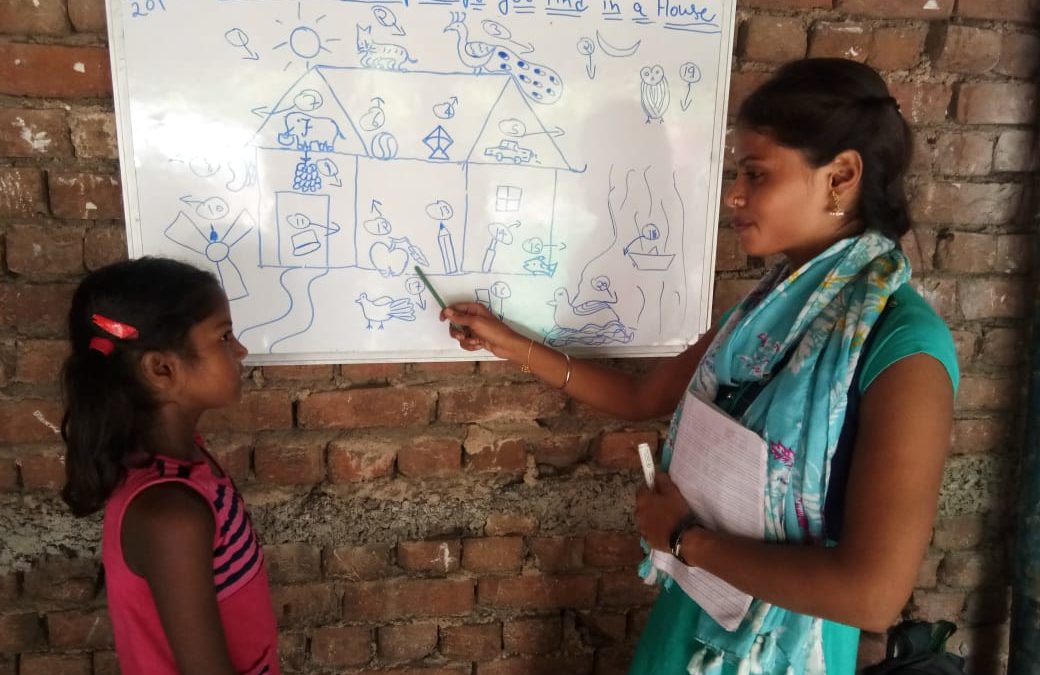
Way back in the summer of 2000 when we were still wondering what direction Project Why would take, I use to spend long hours in the Giri Nagar slums interacting with children and their parents, and the one request I got from one and all was: teach us English! No wonder then that our first programme was spoken English classes for children and the ladies!
A command of English seems to make all the difference and open many doors. It is as if India is divided in two classes: those that can speak English and those that cannot. The number of English Medium schools that have mushroomed everywhere are ample proof of that.
We have been teaching English to our children from day one, and many of our alumni today speak good English. It has not been an easy task as finding good English teachers has been a challenge. But we soldier on.
I was surprised to stumble upon an article entitled Majority of India’s private English-medium school students can’t read English. A survey covering 20 000 children across many States showed disappointing results: The survey found that an alarming 10.9%, 12.8%, and 10% of students in grades four, five, and six, respectively, fell short of even the lowest level of reading skills, that merely involve retrieving explicitly stated information.
Reading ability is one of the major factor to success in higher studies and careers, and the results of this survey does not augur well for Indian students. Students who performed better were those who read at home for pleasure but this is a habit that is slowly disappearing. Reading for pleasure is a vanishing act.
Learning outcomes are not only determined by school but by a host of socio-economic factors like parents’ educational levels, household incomes etc., cultural contexts, and identities. This is a challenge in a country as diverse as India, a challenge that policy makers need address. Our education system is due for a total overhaul. Band aid and patch work solutions will not suffice.
Our education system is one where rote learning has taken precedence over all else. The class XII results of this year are ample proof of this sad reality. How else could a student obtain a perfect score in subjects like English, History, Sociology etc! Unless we remedy to this urgently it is good all rounder students who will start falling off the net as admission to good colleges is solely based on marks!
There is something terribly wrong in our eduction system. Is anyone listening.
ANOU’S BLOG
Happy Independence Day #GivingTuesday#India
by anouradha bakshi | Aug 14, 2018 | Anou's Blog
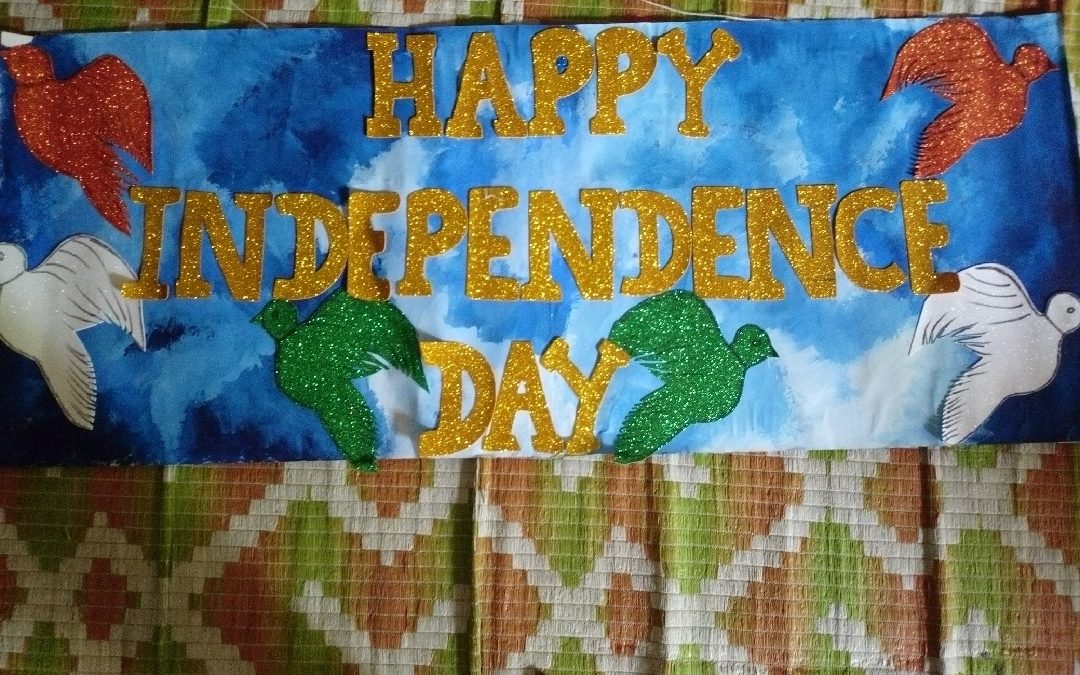
The past week has been hectic in all centres of Project Why! Every one is busy preparing for Independence Day. Decorations are being made, tricolour balloons blown, patriotic songs rehearsed, speeches learnt by heart, dance steps practised. A sense of perceptible excitement and joy pervades every nook and corner of Project Why.
On Independence Day, flags will be hoisted in each centre and the national Anthem sung with fervour. Then the children will perform all that has ben carefully prepared in front of guests teachers and friends. In that moment every one will be a star! And the dreams every heart carries will for an instant be in the realm of the possible. Celebrations do weave their own magic.
I too will be a guest at one of the centres as alas I cannot be at all, and will applaud the loudest. They are my children, all 1100 of them and seeing them in their best attire putting their best foot forward is always a matter of pride and joy. I also know that I will be moved to tears as I know I hold the dreams of all these children in custody and feel the weight of the huge responsibility I carry. Will I be able to fulfil all the promises, the hopes that all those who enter the portals of Project Why carry in their hearts. Only time will tell. All I know is that we will leave no stone unturned in this mission we have undertaken.
Amidst the celebrations and the joyful mood, there is also immense sadness in the wake of the reality that surrounds us. In 72 years have we done all that we could have for the children of India is a question that begs to be asked and sadly the answer is a deafening NO!
Children still beg at red lights. We see them every day. They still work in tea stalls and sweat shops. Millions of children are out of school, and hundreds of thousands drop out. Our education system is flawed, access to higher education is denied to too many. True there are laws in place, but many are toothless; true the Right to Education is now a fundamental Right but is not given to all.
Children die of malnutrition every day. 5000 a day in a land that throws away food with alacrity and impunity. What hurts me most is that we seem not to care.
It takes so little so make a difference. We at Project Why strive to do make that little difference and will strive to do so in the future. Do join us.
Happy Independence Day!
ANOU’S BLOG
The art of surviving #GivingTuesday#India
by anouradha bakshi | Aug 7, 2018 | Anou's Blog, Uncategorized
One of the greatest lessons I have learnt during the last two decades is that of survival with dignity and a smile. It has been not only a great eye opener but also taught me to review my own life in a whole new perspective. The art of survival with dignity lies in the ability to live in the now and feel abundant at all times. Over the years I have seen this many times in the generosity and kindness of those who have practically nothing but give with abandon and love. My respect for all hose I work with has grown in leaps and bounds.
The art of surviving with dignity and a smile rests in the ability to look for positives in the times of adversity. We were all privy to this last week when the Yamuna plains got flooded and all the people living on the banks of the river moved to higher grounds. This was the case with all the families of the children of our Yamuna centre. Though the water did not quite reach the centre, we closed it for a couple of days.
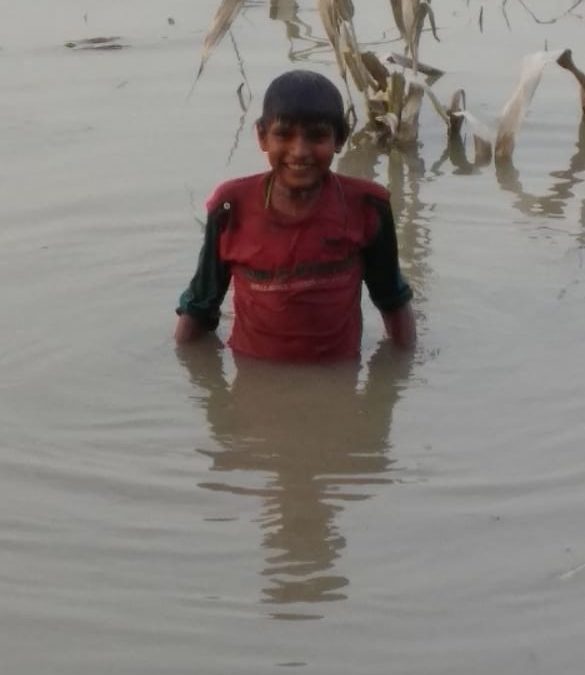
The floodplain was filled with water and all the vegetables growing on it were destroyed and hence the very livelihood of these families. But when you live hand to mouth, you cannot waste time on past ad future, you have to think in the now and so as soon as the water receded to waist height, children jumped in to catch fish! Some would be sold and the remaining would provide the next meal.
It is this spirit that I salute each and every time I encounter it, be it in the cup of tea and the flatbread shared offered by a gypsy family who does not know whether it will have a rood on its head the nest day orin the smile of the young boy looking to catch fish after the floods.
ANOU’S BLOG
The Deaths we Choose Not to See
by anouradha bakshi | Jul 31, 2018 | Uncategorized
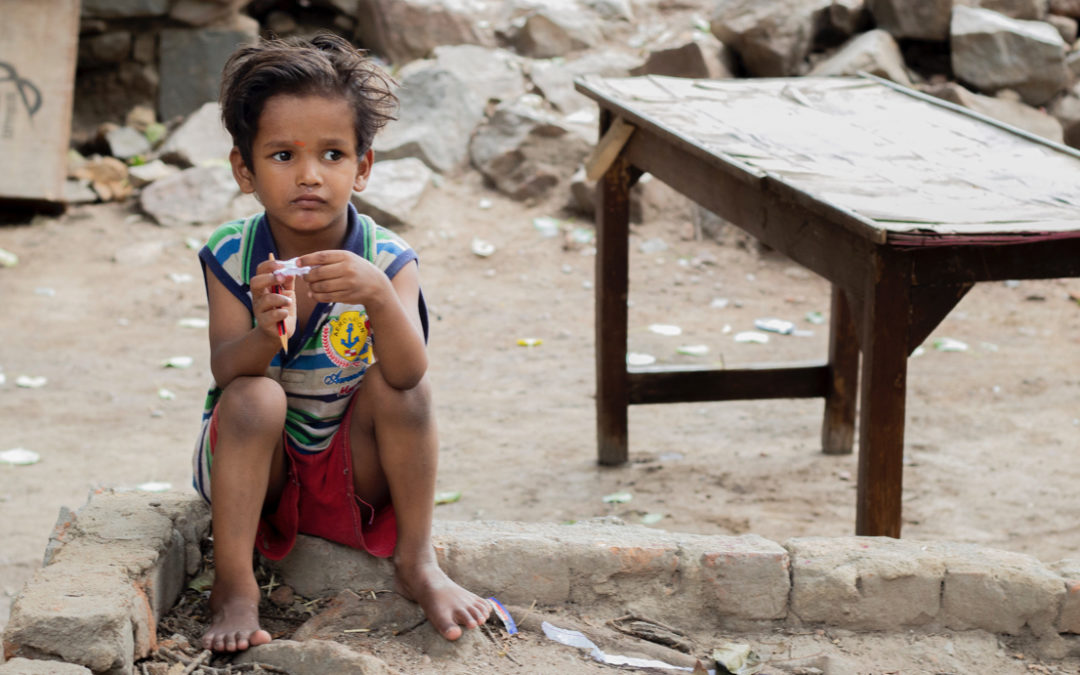
Three little girls, aged two, four and eight, died of hunger in India’s capital. Their autopsies found no trace of food in their stomachs. They had most likely gone without eating for more than a week. Their deaths shocked the nation, filled television screens for a few days, sparked the inevitable political blame game—and then, like so many tragedies before them, began to fade from public memory.
The three sisters made headlines because they died in Delhi. Yet every day, an estimated 5,000 children under the age of five die from causes linked to malnutrition. That is about 200 every hour—more than three every minute. I have written about this terrifying statistic for years, but numbers, however shocking, rarely stir us in the way that three little faces do.
I have been writing about this terrifying statistic for years now, but somehow it has never elicited the anger and outrage one would have expected. Perhaps that is because numbers, however shocking, remain just numbers—remote from our daily lives.
But Mansi, Shikha and Parul died in our very own city, a city where we throw food with impunity; a city where garbage cans are replete with perfectly edible fare; where food is thrown with alacrity at parties and religious festivals; a city where neighbours remain aloof; a city that seems to have lost its heart forever.
Will the deaths of these little girls go beyond the political slugfest and make us open not only our eyes but also our hearts? There are individuals and organisations across India who quietly feed the hungry with love and compassion. Their work reminds us that hunger is not inevitable. What is missing is not the capacity to act, but the collective will.
No one should die of starvation in any self respecting society, let alone a child. Even one child is one too many!
Will the deaths of these little girls go beyond the political slugfest and make us open not only our eyes but also our hearts? There are individuals and organisations across India who quietly feed the hungry with love and compassion. Their work reminds us that hunger is not inevitable. What is missing is not the capacity to act, but the collective will.
The three little girls were part of a migrant family. Their father had come to Delhi in search of work, hoping to build a better future. Like countless others who arrive in our cities every year, the family lived from one day’s wage to the next. They had no savings to fall back on and, often, no access to welfare schemes because they lacked the necessary documents. For families living on the edge, losing even a single day’s income can be the difference between survival and hunger.
Delhi is ‘home’ to thousands of homeless people, many of them migrants. Many find work and manage to survive, some like the family of the little girls slip through the cracks.
It is time, as individuals, as citizens and as a society, that we acknowledged this stark reality. Hunger is not someone else’s problem. It is ours. If we can open our hearts as readily as we open our wallets for celebrations, no child need go to bed hungry. Is that really asking too much?
Is this asking too much!
Whats new
WHAT’s NEW Project WHY student Aman’s Dream comes true.
by anouradha bakshi | Jul 31, 2018 | Whats new
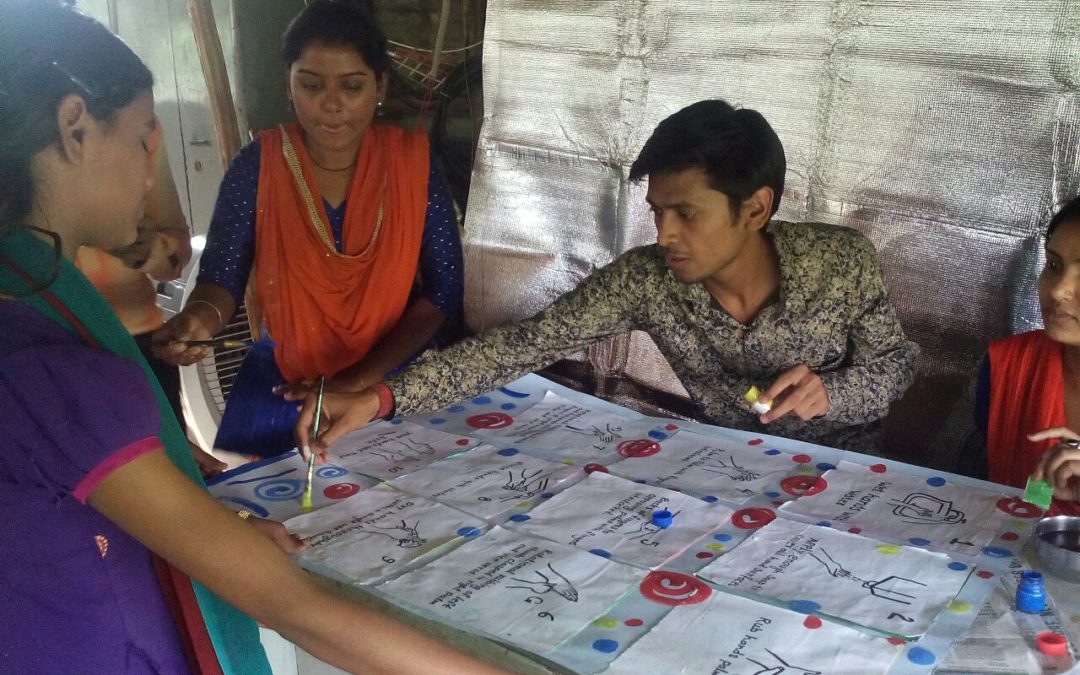
Our very own Project WHY student turned teacher, Aman, secured admission to the prestigious Delhi College of Art. Since 2014, he has been training to get admissions in the college. Project WHY has been supporting Aman in his pursuit for Art both emotionally and financially. We wish Aman all the very best.