by anouradha bakshi | Jan 17, 2017 | Anou's Blog, Uncategorized
A New Year has dawned. Let it be the year where children are heard. Let it be a year when children find their voices. Let it be a year when each one of us walks that little extra step for a child in need.
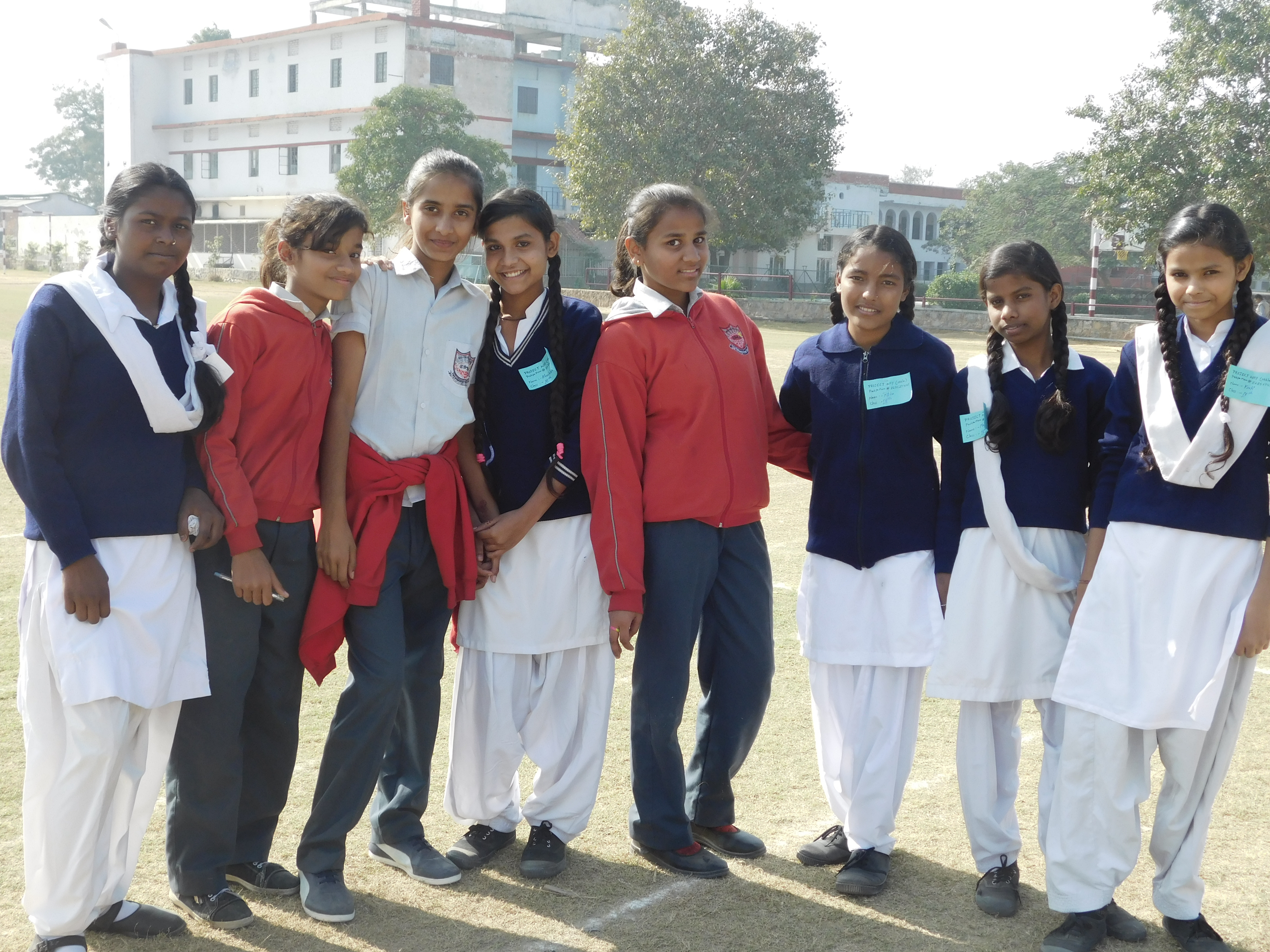
Recently Nobel Laureate Kailash Satyarthi launched two initiatives: “Laureates and Leaders for Children” and “100 Million for 100 Million”. The later aims at bringing 100 million privileged children to fight for the rights of 100 million deprived children. A laudable effort that resonates with what we at Project WHY believe.
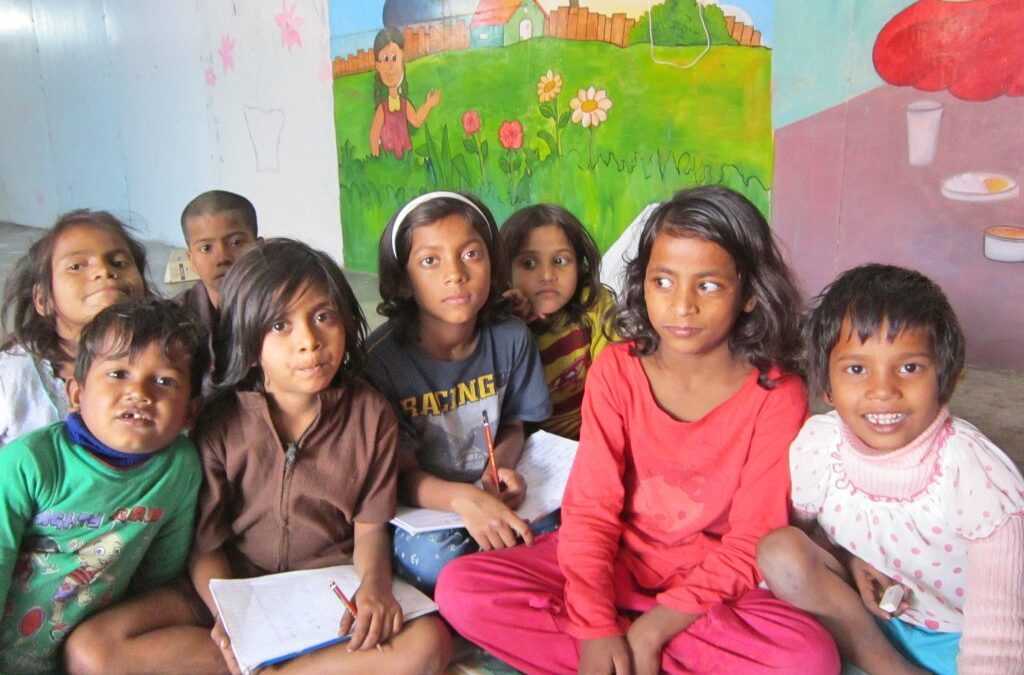
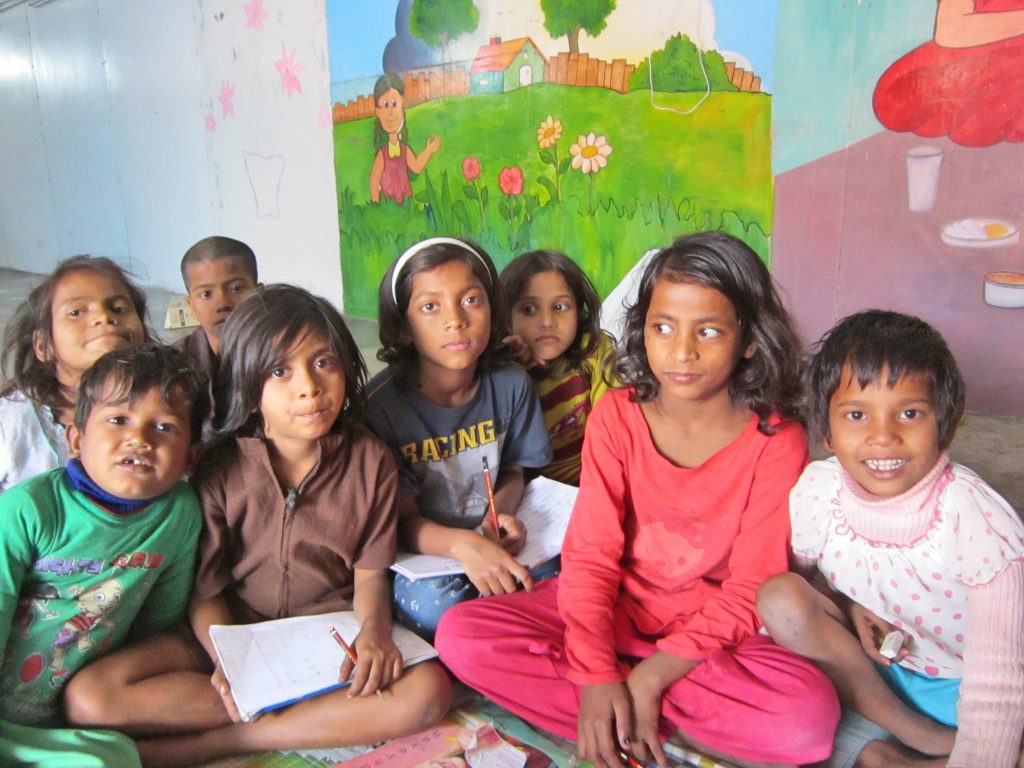
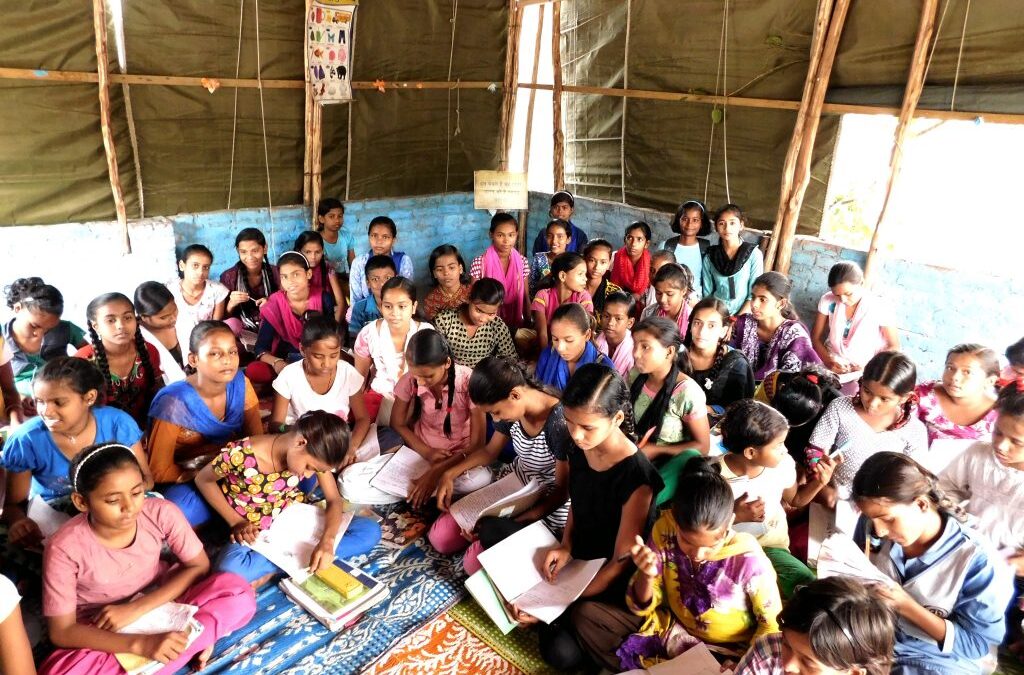
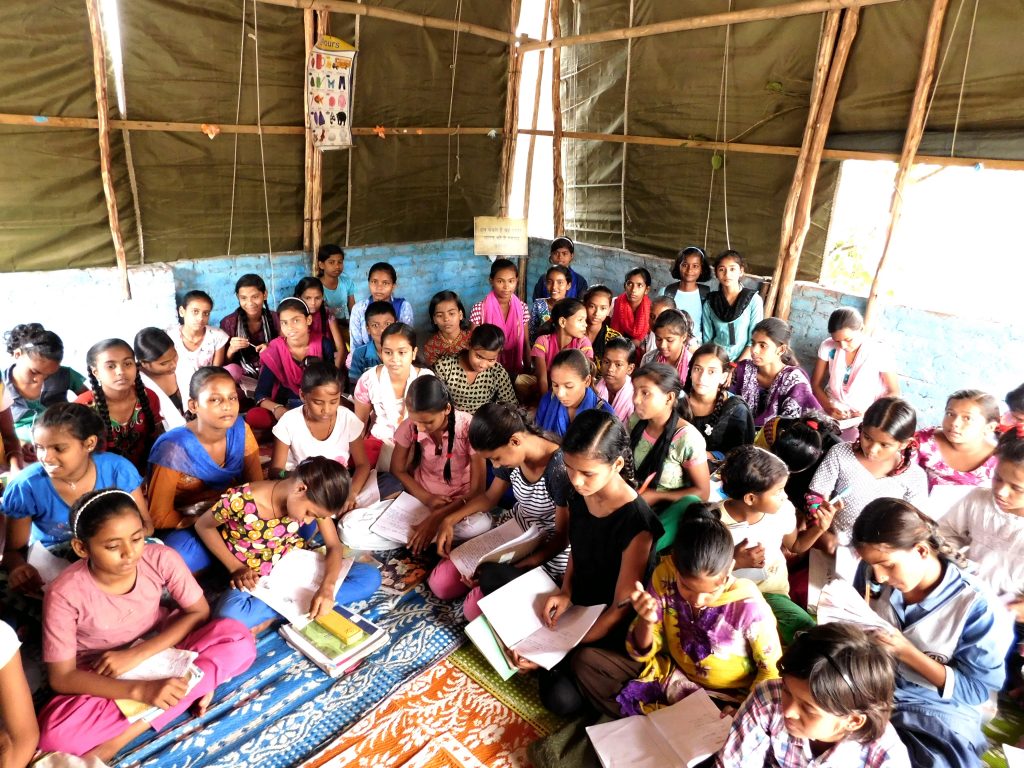
In our small way we initiated a similar effort bringing together Project WHY children and CSKM children in an effort to ignite compassion in young hearts. And we are proud to say that this happened and are eagerly looking forward to the bonds strengthening. We know they will.
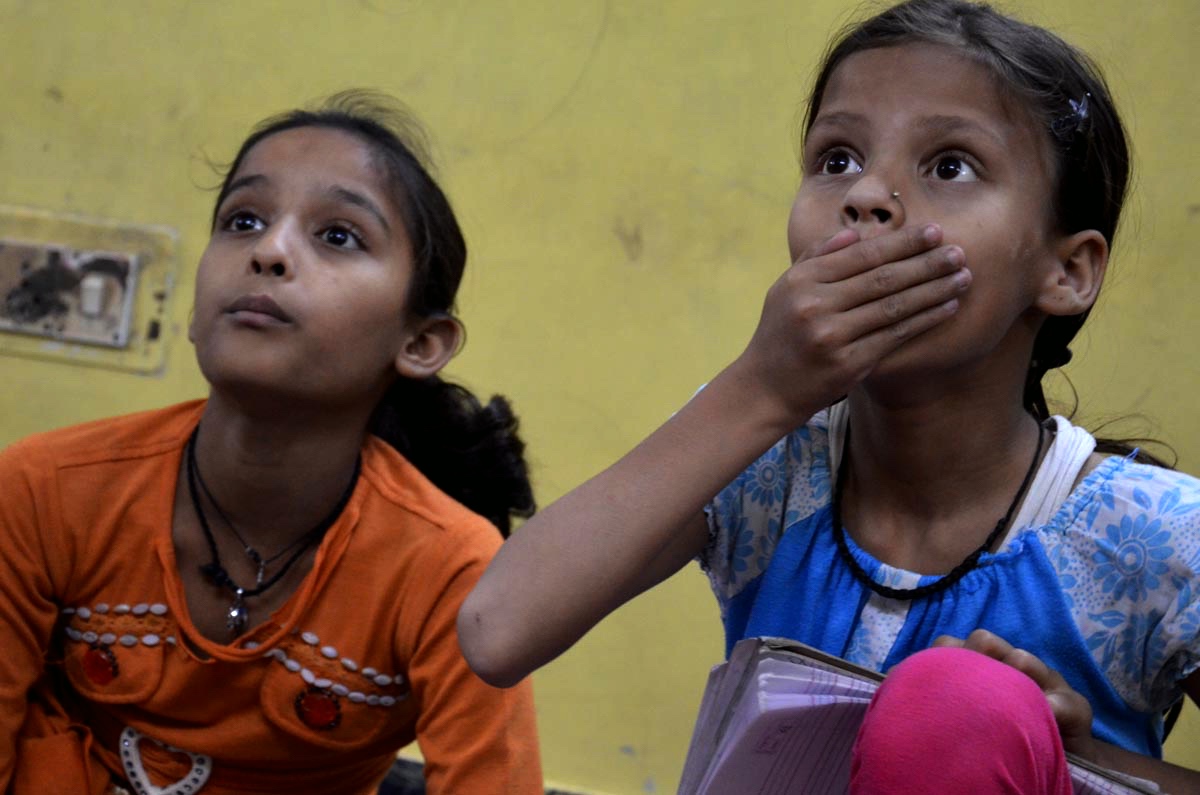
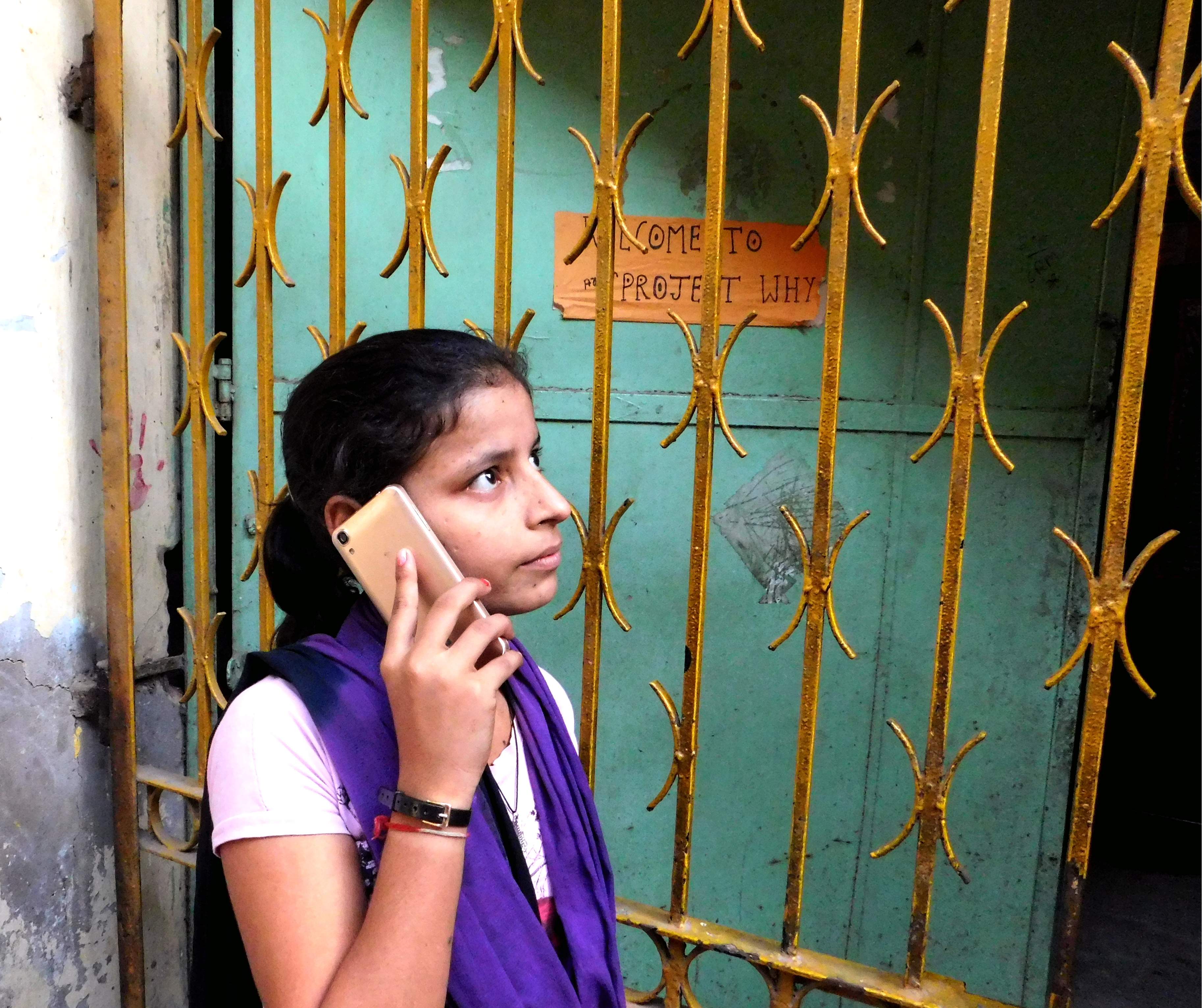
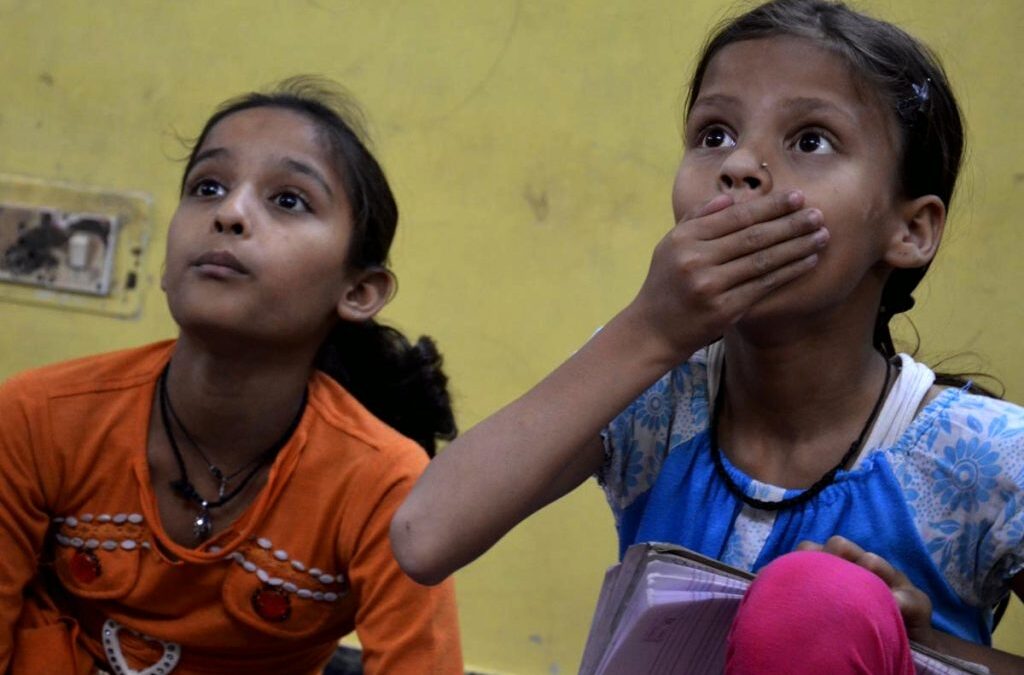
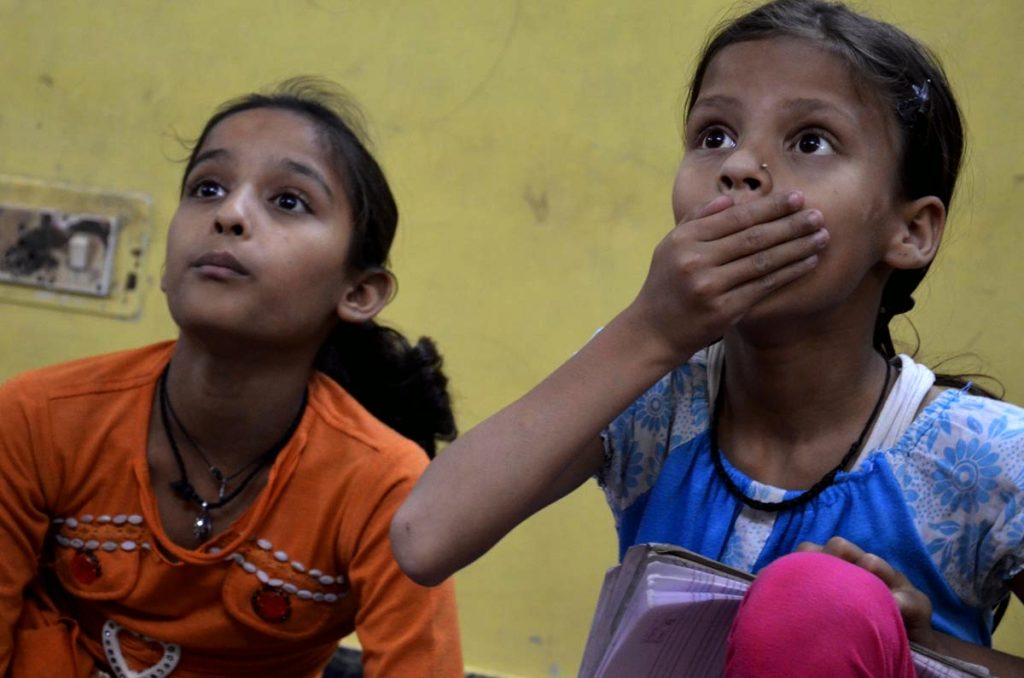
Do the girls in the picture below look any different from each other and yet they belong to two entirely different worlds, or so some would like us to believe.
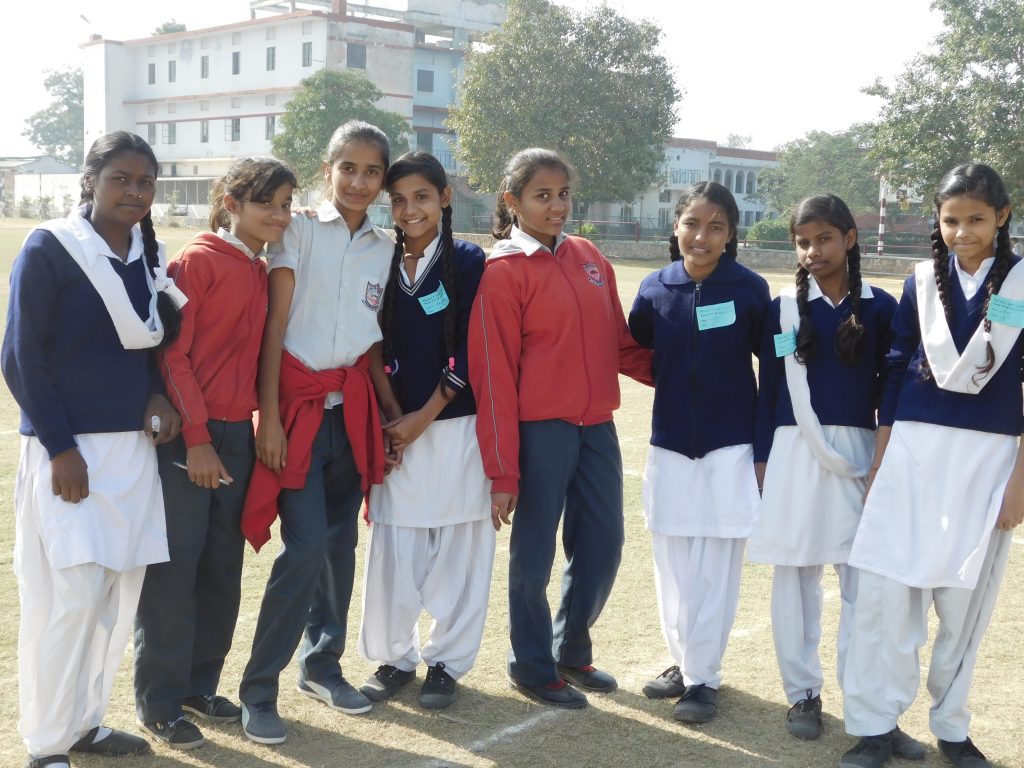
But this is a small step. We must not forget that in India children are trafficked and that child labour is rampant even in front of our eyes. So let us resolve not to remain mute and to do something!
Let 2017 be the year of the child!
by anouradha bakshi | Jan 3, 2017 | Anou's Blog, Uncategorized
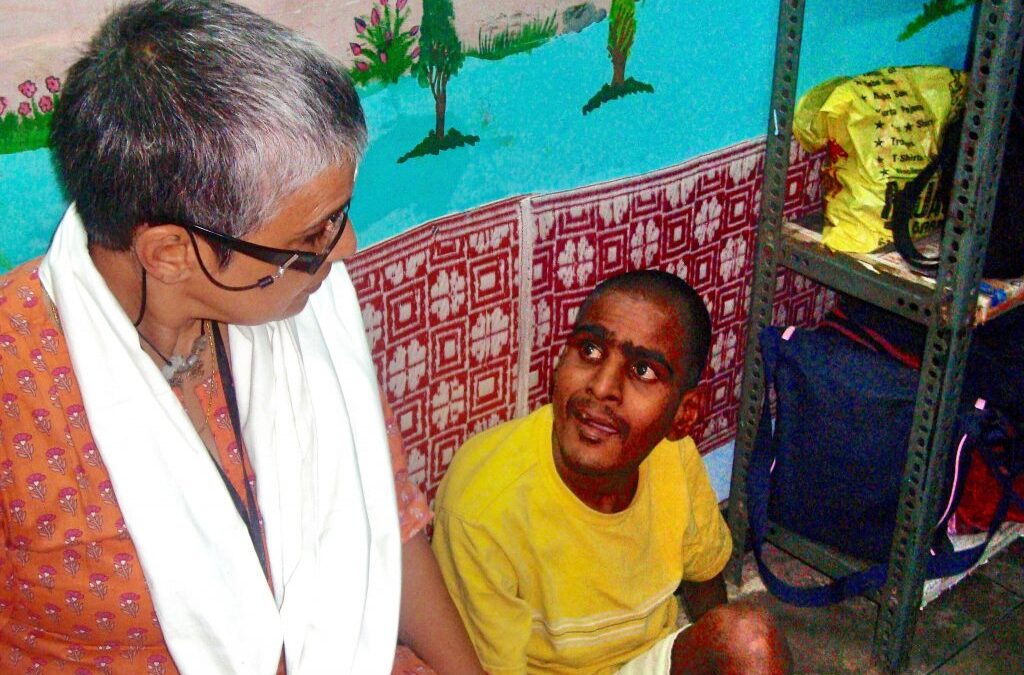
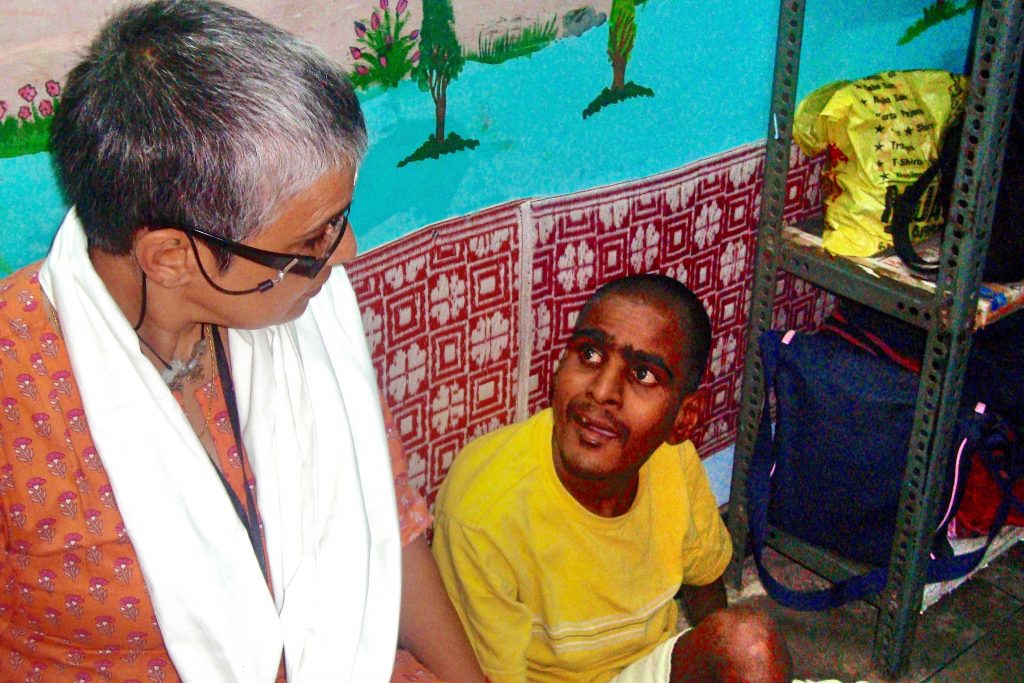 For the past 6 years, come January and my thoughts go to Manu who left us all lost and bewildered on a cold morning in January 2011. I must admit that on that fateful day my feet faltered and I was close to giving up. You see Manu had been the one who showed me the way and thawed my frozen heart. I had been rudderless after the death of my parents and it is Manu who gave me back not only the will to live but to do something to honour their memory.
How can you define the relationship between a ‘well-to-do’ well past middle age woman and a beggar. It would take volumes or just one simple word: love. Yes Manu redefined the word love and gave it a whole new meaning.
It was as if he had circled the same path over and over again for years, in extreme heat and bitter cold to ensure that when I passed by he would be there. And when we met if felt like we had both reached our final destination.
It was for Manu that Project WHY was set up in the quaint street where he had been born and where he ‘lived’. The broken, dishevelled, filthy soul riled by one and all waited patiently for that day in May 2000.
The rest is history. Project WHY was set up and Manu cared for.
For a decade our lives were entwined. Manu trusted me implicitly. He also taught me many lessons. Most of important of all that no life is useless. Had there been no Manu, there might have been no Project WHY.
The other lesson Many taught me was to never say die, no matter how bad things are, there is always light at the end of the road if you are willing to walk the one less travelled. In my toughest moments when everything seemed dark and the urge to throw my hands up was overwhelming, seeing him smile would lift the clouds and make the sun shine again.
He was a gentle soul with a quirky sense of humour. We shared many precious moments, dancing and laughing and many meals too! Spending time with him was a blessing, an intense feeling that all was well and one was safe.
I do not know what saints look like; I think Manu was one, a true child of God.
Project WHY has to continue to honour is memory.
Manu remains safe in my heart.
by anouradha bakshi | Dec 27, 2016 | Uncategorized
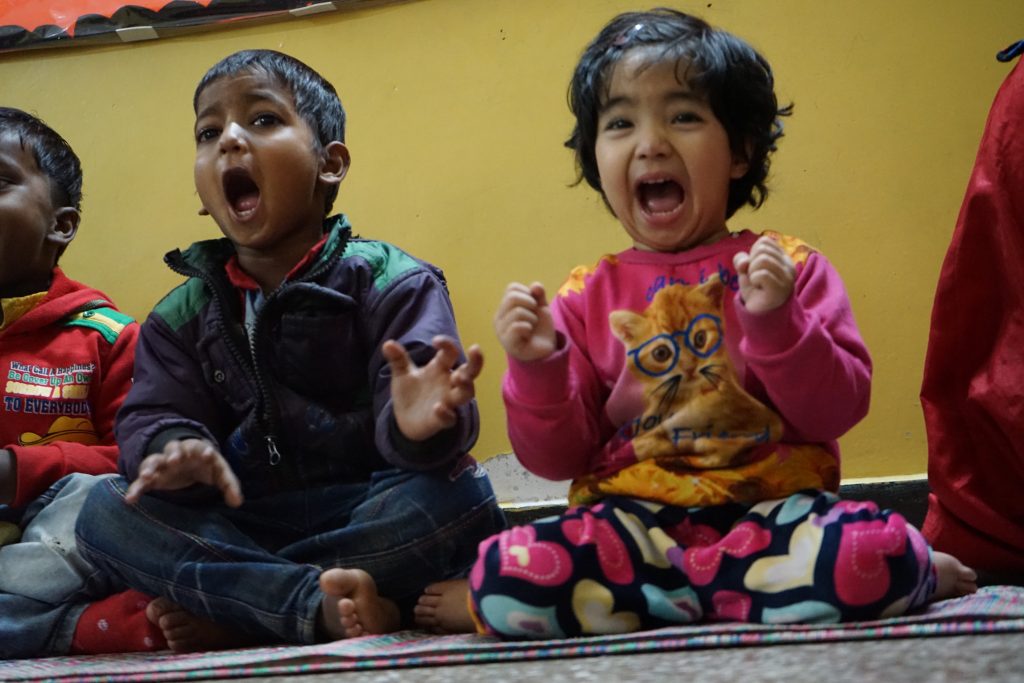
2016 has been the Year of Transformation for Project WHY!
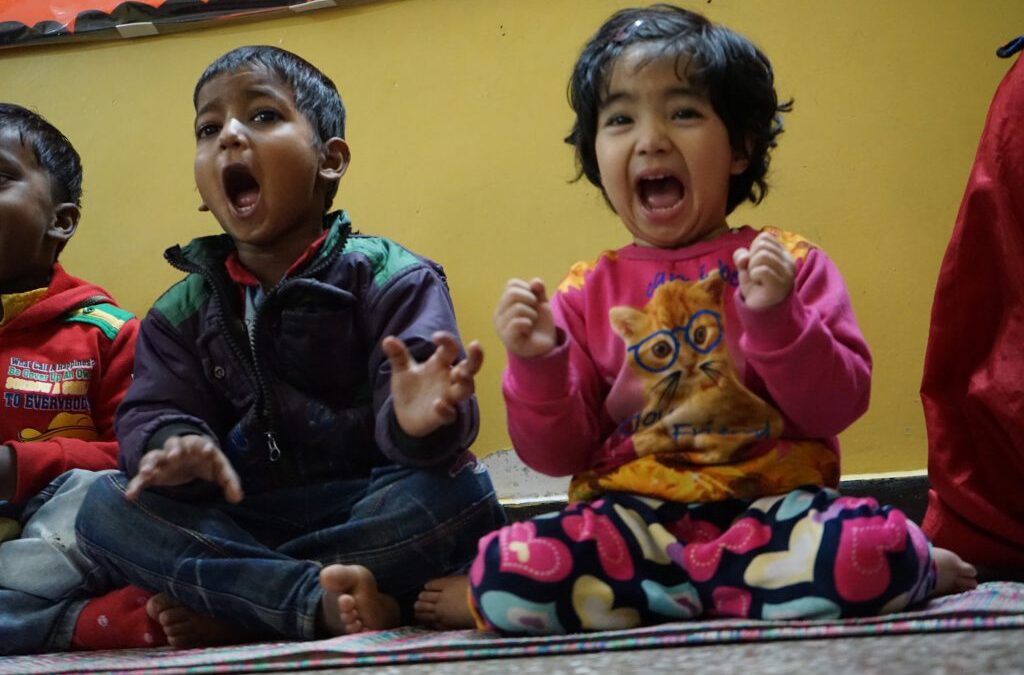
It began quietly without fanfare and ended with a bang. The mood on day 1 of the year was bittersweet. Everything was on track and all centres were running like a clockwork orange. The children were happy and busy. New activities were numerous thanks to our volunteers and friends. Exams were prepared and passed with success. Holidays saw the return of the dance teacher to the children’s delight and the centres throbbed with loud music and thumping feet. Festivals were celebrated, the perfect opportunity to showcase the newly learnt steps. All in all ‘all was well’ at Project WHY.
Few would have guessed how shaky things were backstage. The coffres were empty and it is only the kindness and generosity of friends and well wishers that made the ship sail. We all knew that it could not go on forever and that something needed to be done.
It is our dearest friend Kabir who lay the foundation of Project WHY’s transformation when he introduced our work to the Savitri Waney Foundation. The rest is history.
The Savitri Foundation bailed us out but that was not all. It decided to extend support provided we took the first steps to the much needed transformation. So it was time to pull the proverbial socks on and get to work. Policies were finalised, data put in order and new processes drafted. Everyone was and still is up on their toes! The much needed coat of paint was finally on.
Amongst the many changes: Project WHY inducted some new board members and the help of a consultant who would assist in strengthening existing and building new resources. This is an going process.
Savitri extended one year support to our Okhla and Khader centres and this will allow us to have the time to broaden our donor base and thus move towards sustainability.
That was one side of the story.
The other one is in sync with the Project WHY spirit. In September we started a pilot project within our existing ressources. This little project reached out the very first children that Project Why had targeted way back in 1998: the beggar children. That programme had not worked out but almost 18 years later we were able to reach out the children of the beggars of Kalka temple with an afternoon programme. Life had come full circle.
About 30 school going (yes beggars do send their kids to school) learn every afternoon in the night shelter for women. Let us see how this enfolds.
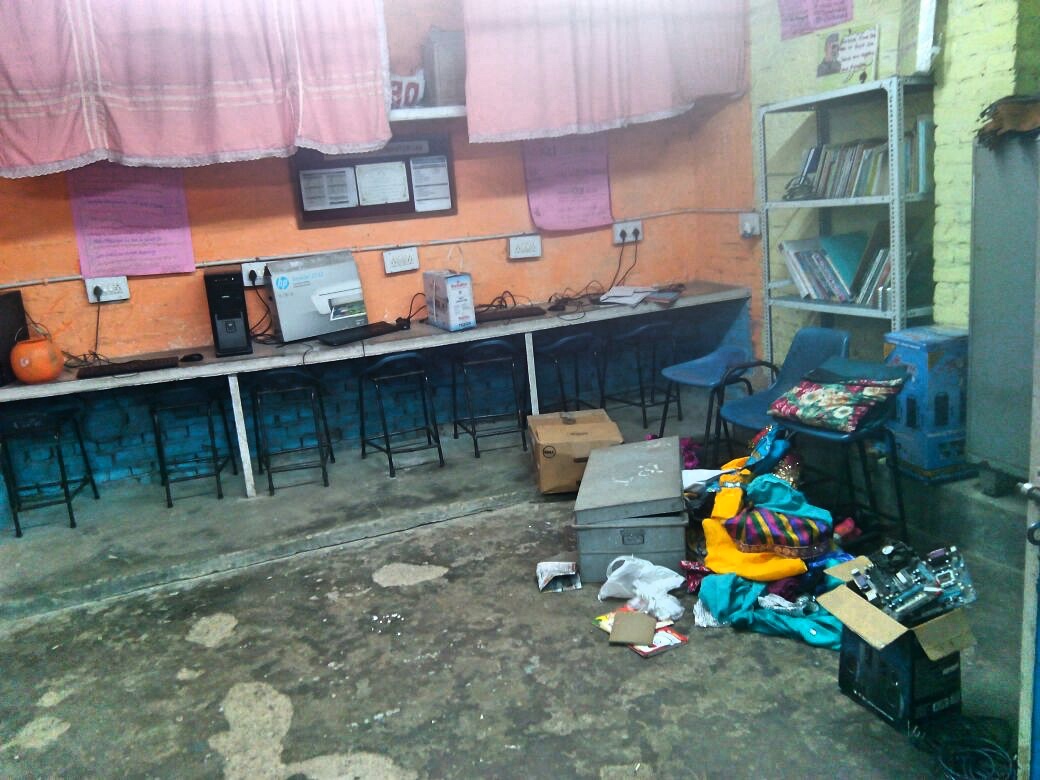
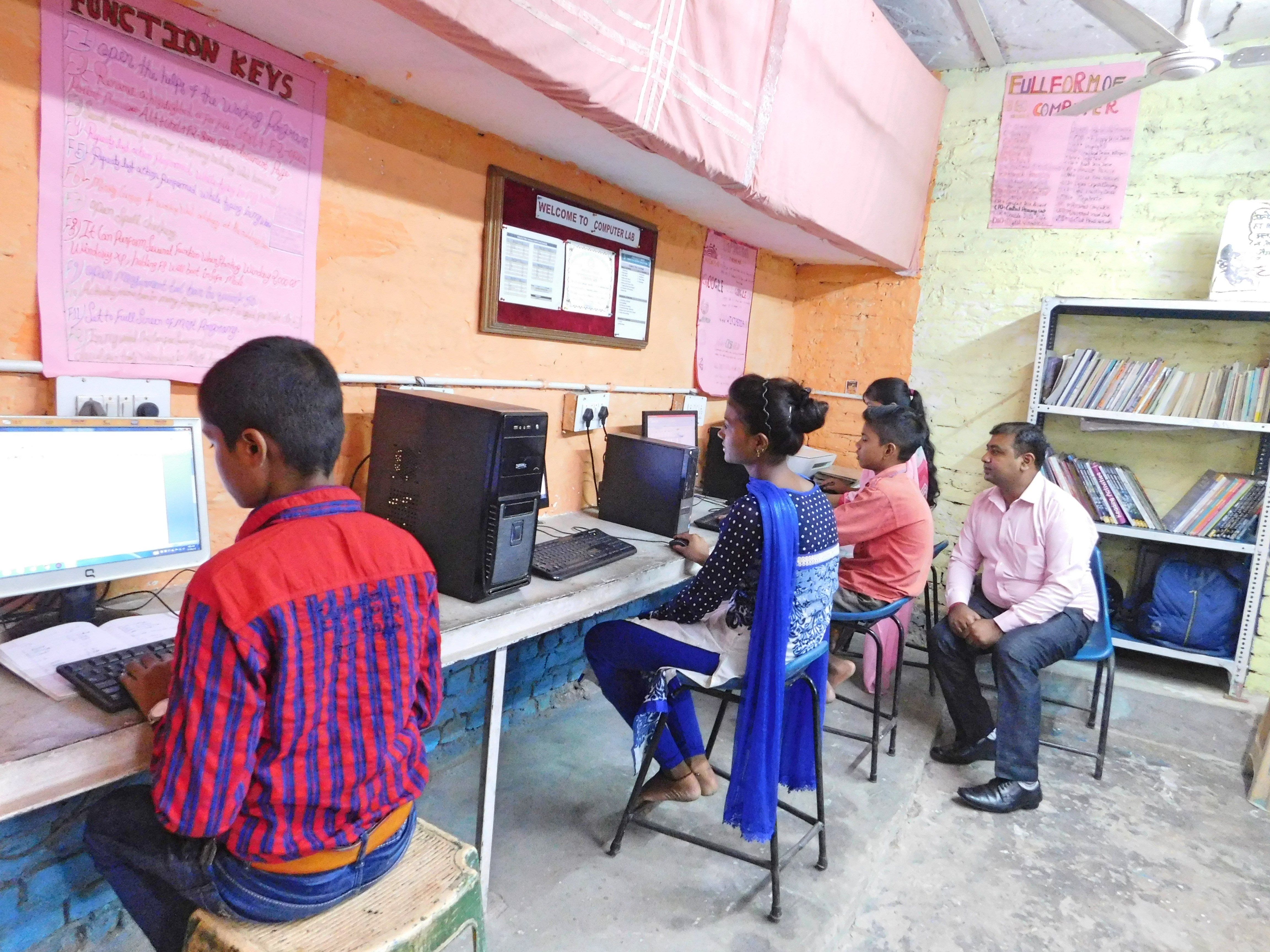
As said earlier the year ended with a bang and it would have been a bad one if not for what I call Project WHY’s miracles. Two weeks before the year ended, the terrible news of the theft of our computers at the Okhla centre, it was a huge blow indeed but a simple message was all it took to get all the computers replaced! Wow.
So what is the message?
It is simple: no matter what, do not stop believing in miracles!
Happy New Year.
by anouradha bakshi | Dec 23, 2016 | Uncategorized
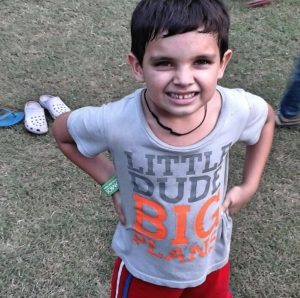
Angels do not have wings! Sometimes they appear in the form of a spunky 8 year old.
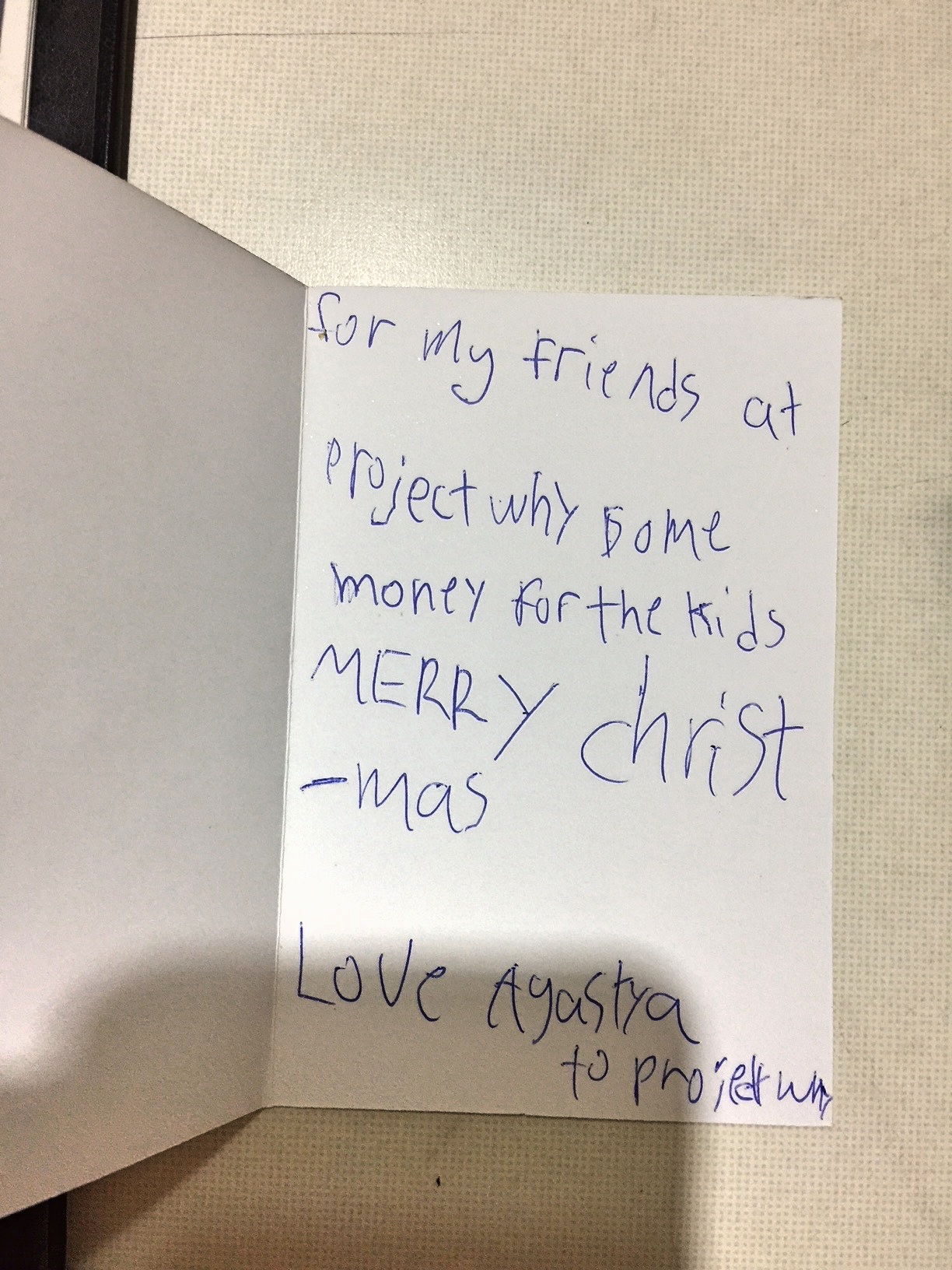
I was wondering what my Xmas message would be this year! How could I know that it would come to me in a sealed enveloppe.
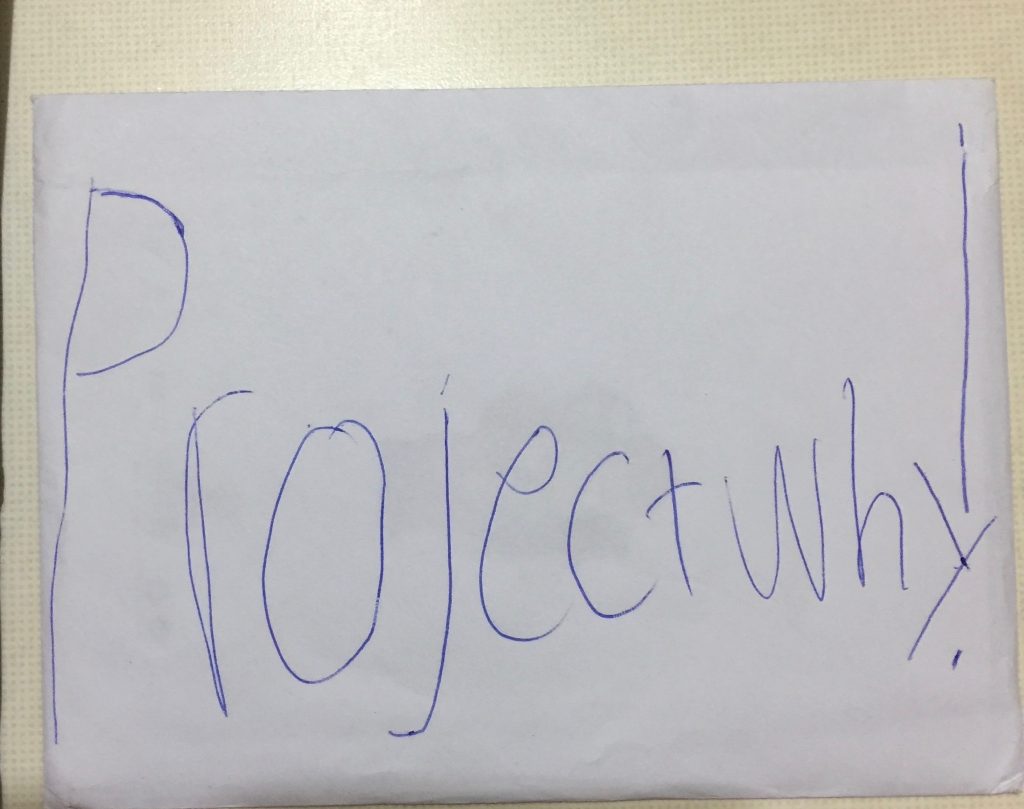
The enveloppe contained a card
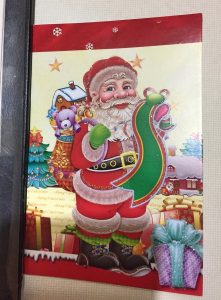
and a message!
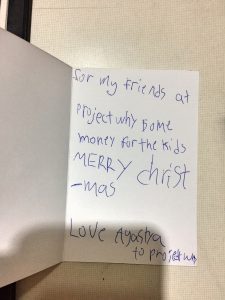
This was sent by my lovely grandson Agastya Noor for his friends in the Project WHY creche of which he is an alumni. The enveloppe also contained four 5 € bills, money he had got for Xmas. As his mom was coming to Delhi he decided to send it for his friends at Project WHY. he found card and enveloppe himself and wrote his message.
It was my Xmas miracle.
This tiny lad had proved that compassion knows no age and that seeing with your heart is a gift from God. Just like the Little Prince, Agastya learnt the secret of the Fox at a tender age.
But that is not quite the miracle I was referring to. For this this tiny enveloppe laced with so much love was the proof that my efforts to get children from all walks of life meet and learn from each other is no pipe dream but a reality that we must believe in.
At a time where Project WHY is seeking new forms of support, we have short listed ‘interaction with schools’ as one of our funding options. This is not so much for the coins and cheques that may come our way.
Education has to go beyond the confines of maths and english and other subjects, it has to break the bonds of marks and percentages. Education is about learning to live with others as expressed by Jacques Delors in his 4 Pillars of Education. In India, living with others entails first getting to know others by breaking invisible walls. Once they are broken then more miracles ensue. When Project WHY visited CSKM, it took no time for girls to bond and become friends. That one lived in a few square feet and the other in a big house did not matter. 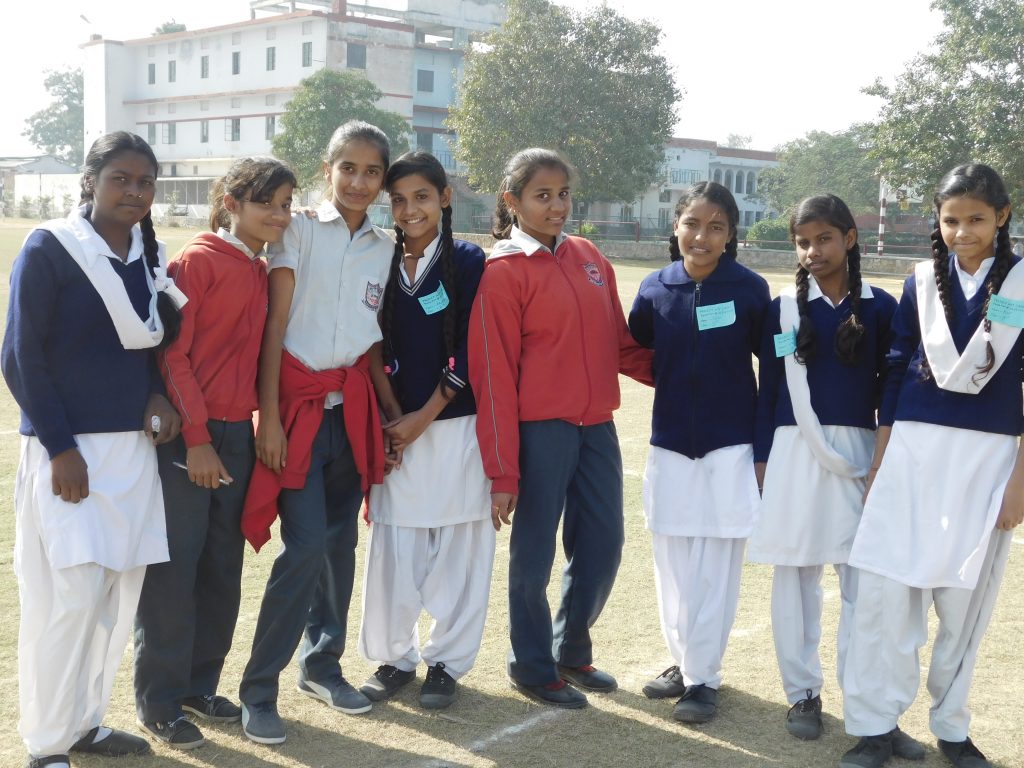
What mattered was sharing stories, exchanging numbers and holding hands. The question in everyone’s eyes was : when do we meet again!
That little enveloppe was the quiet reminder from a little Angel that Grandma was on the right path.
It is Xmas after all, Happy Holidays!
by anouradha bakshi | Dec 20, 2016 | Uncategorized
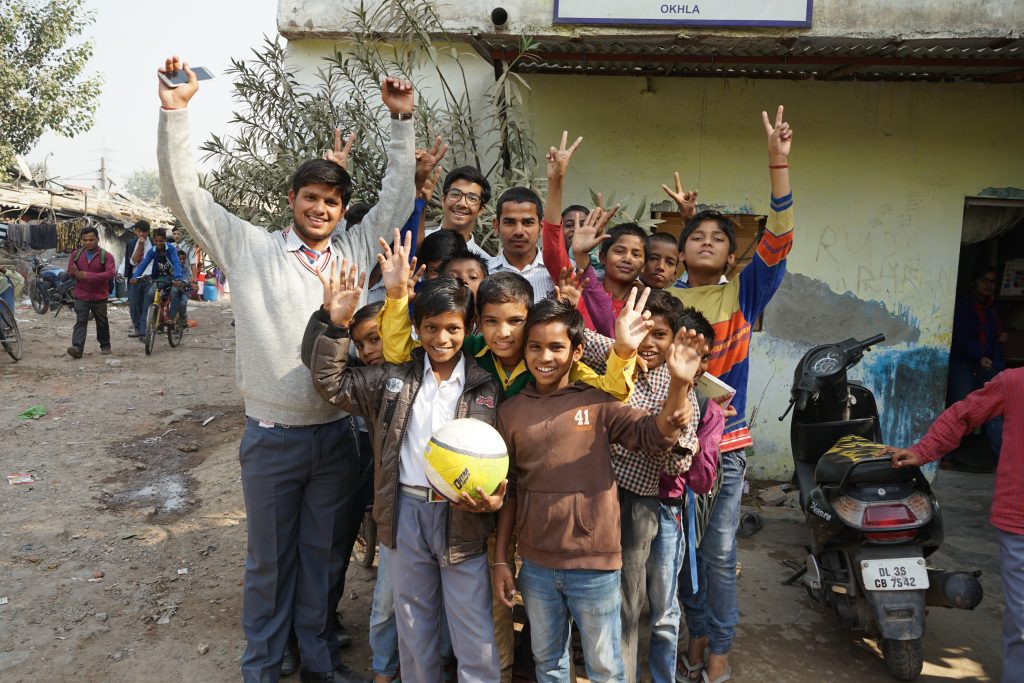
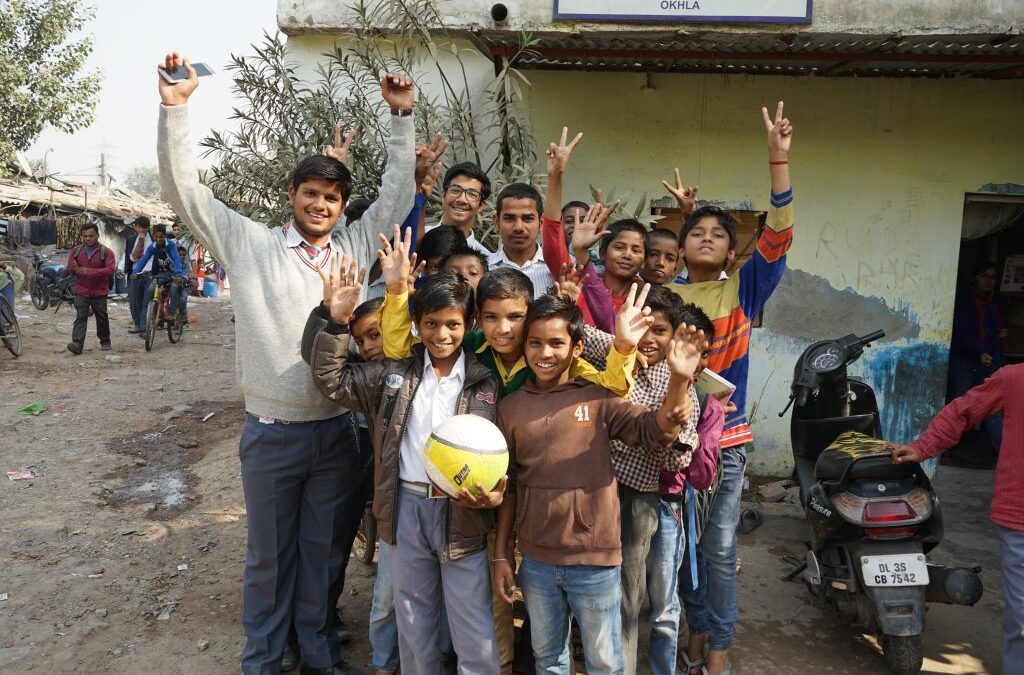
Tuesday, November 29th 2016 was a blessed day. One had waited long years for this moment. One of the most cherished vision of Project WHY has been to have children from both side of the spectrum meet and learn from each other as Project WHY believes that it is only then that India will awaken. Project WHY has always supported the idea of a state run, state-0f-the-art neighbourhood school where children from all walks of life learn and grow together as school need to be a level playing ground.
Alas it looks like one will have to wait a long time for this to happen. Hence the next best option: invite children from privileged schools to come and see Project WHY.
This had been long in the making but finally it happened thanks to the inimitable Shaku Ma’am, Principal of CSKM school, a school with a huge heart and the right values.
The need for children of all walks of life to meet and bond is an integral part of any sound education programme. Schools cannot be hermetic bubbles but have to be a level playing ground.
None of us knew how the day would unfold.
This was not your ‘normal’ outing to a museum or an amusement park, this was a raw reality check. How would kids normally ‘shielded’ from the other side of the fence, react to the surroundings and the children.
The Project WHY kids were told that the visiting children were their guests and they were free to interact with them in whatever way the wanted. They had prepared games and were all set to welcome their friends.
It would be quasi impossible for us to guess how the CSKM kids felt when their bus found its way to our Okhla centre and there were a few awkward moments as the children stood at the door and no one knew what to do. But that was short lived and in no time at all the children broke all barriers and it was bonding time. Questions were asked and answered, the bubble gun was soon in action and one heard peals of laughter. Older kids went to play cricket, others played games. Some of the senior CSKM kids were seen in deep conversation with their Project WHY peers, conversation we dared no intrude in. We know that plans were made to ‘meet again’!
It was soon time to move on to the Yamuna Centre where lunch was waiting. The CSKM children served the Yamuna children and vice versa. It was a beautiful moment that will remain engraved in our hearts forever.
The children roamed in the vegetable fields and the Yamuna kids were very proud to show there new friends their vegetable patches and explain cropping patterns.
It was soon time to leave. One could feel the emotions and the myriads of questions in the eyes of the CSKM kids, questions that would ignite compassion and much more. This was a real social studies class.
As they walked back to the bus, they spotted sugar cane growing in a tiny patch next to a hut. They ran towards it. The lady who owned this patch came out and was seen cutting cane after cane and giving it to the children with a huge smile on her face. When we offered to pay she refused. You need not be rich to be generous, another lesson learnt.
Most of the children expressed their desire to do something for their new friends and next week, Project WHY children will go to visit CSKM and share lunch withe their new friends.
Seeds have been sown in young hearts.
It is now for us to water them and help them bloom.
by anouradha bakshi | Dec 20, 2016 | Uncategorized
For those born before the advent of TV, the lessons best learnt were from stories told to us by parents or grandparents or discovered in books found in every child’s room and read with avid passion. The art of story telling is ancient and prevalent in all cultures. This art started dying slowly when ‘screens’ surreptitiously pushed books away. For some of us who were bookworms then and still are now, books are as essential as food if not more and the stories heard eons ago still fresh in our minds.
Some of us at Project WHY had been thinking of including story telling in the curriculum but never quite did so. It was a mail with a link to a blog entitled: Telling Truth, Why we teach storytelling to fifth graders and co-authored by Nina Sethi one of our dearest friends, that gave us the impetus to get going.
Nina and her colleague Gaby introduce us to their reinterpretation of story telling and what they share is amazing. They tell us how story telling has transformed their fifth graders. We have seen students grow closer to each other because they are impressed by classmates’ stories of risk-taking and reaching out. We have seen students grow closer to family members because they have had to think through their roles in those relationships.
We have always held that one of Project WHY’s main role is to give children a voice and what better way than story telling. And we will not limit it to one grade but extend it to both primary and secondary children. We hope it will help them bring out all those the things that have remained hidden and even festered; that it will bring them closer to their mates and teachers; that it will build their confidence and also improve their oral skills. A real win-win situation.
Just like for Nina and Gabby, we hope this will be great learning experience for all of us.
We have a voice; it is for us to use it and make it heard!
by anouradha bakshi | Dec 13, 2016 | Uncategorized
 Everything is going to be all right. Miracles happen everyday wrote Adrienne Posey. I second that unequivocally! In the past 16 years of running Project WHY, I have seen them happen and lost count.
Another one was conjured in the past 48 hours.
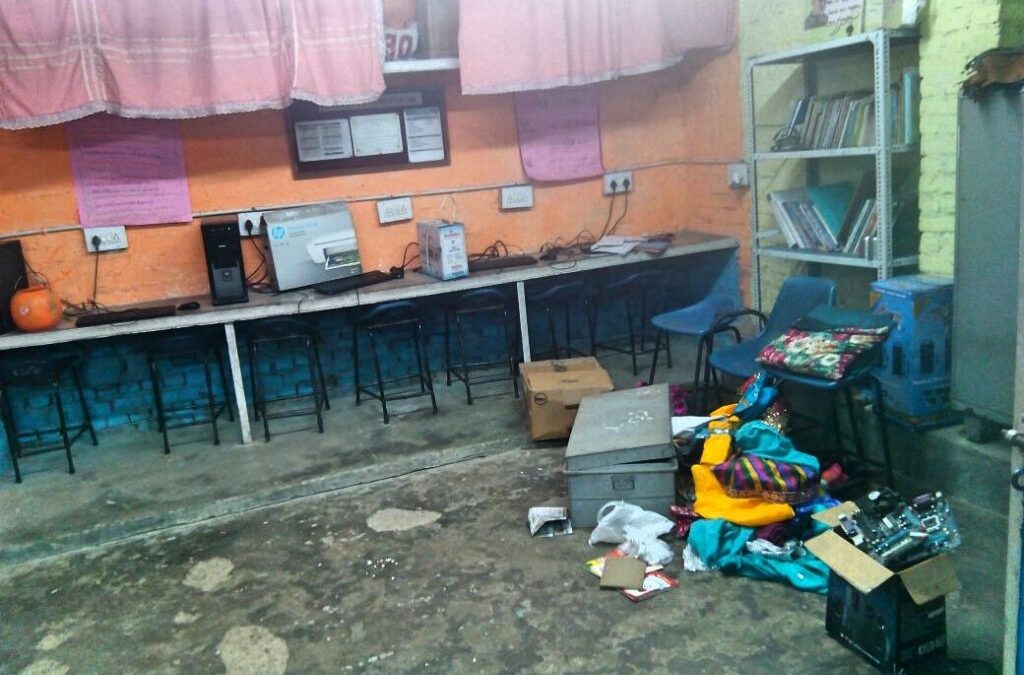
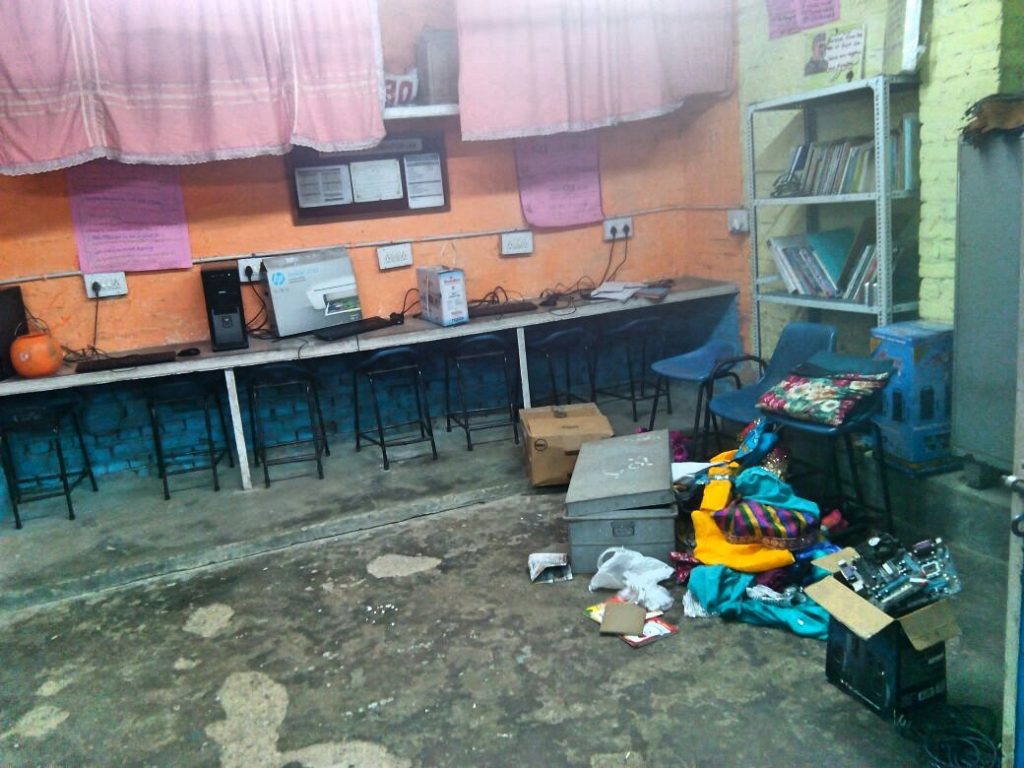
I was woken up on Sunday morning by a phone call informing me of the theft of most of our computers, printers etc at the Okhla Centre. It came as a shock!
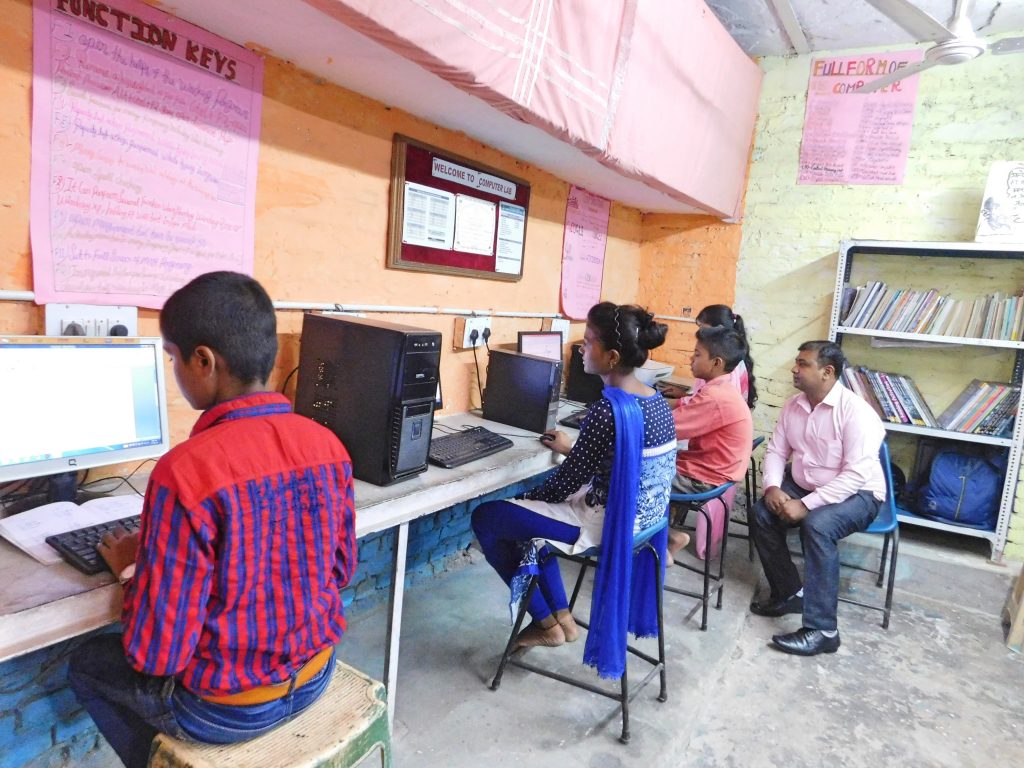
After making sure that all were informed, I sat down quietly to try and find out what lesson was this theft teaching me. For more than 14 years Okhla has been safe and protected by the community. Perhaps the lesson was that we had become too complacent. Who knows. But then why steal something that would hurt innocent children and their future. Somehow it did not seem right. I sat to meditate and was guided to share the incident on a healing group I belong to.
A few minutes later I hear the whoosh of my phone indicating a new message. It simply says: how much is the loss? Someone had money and had been wondering where to donate it and not getting any guidance. The money was simply waiting for us.
The bottom line is that ALL that was lost will be replaced and the children would have lost a couple of days only.
If this is not a miracle, then what is!
And it does not end there; thanks to this incident more doors have opened for Project WHY, doors that we did not know how to ope not having the right ‘introduction’. Our thief gave it us. No wonder I am grateful to him.
God or the Universe works in ways that we often do not comprehend. If Utpal had not suffered terrible burns would he be in a boarding school today? The list of Project WHY miracles is endless.
Over the years I have moved from awe to gratitude and now to complete surrender.
The lessons to be learnt are that we need to keep on believing that Good exists even if everything points to the contrary and that the Universe will provide for us if we keep our hearts open. Miracles cannot be explained by reason or logic. They belong to another realm. Someone mentioned the good will we hd gained over the years, but then the person who reached out was unknown to me till July 2016 and has never seen Project WHY!
I know everyone will want to analyse the whys and the who and play the game by the rules: the cops, the investigation, the endless to and fro to the police station. It needs to be done even if we are unlikely to find the stolen goods. That is the game of life.
I will simply thank the Universe for all lessons learnt.
by anouradha bakshi | Dec 6, 2016 | Uncategorized
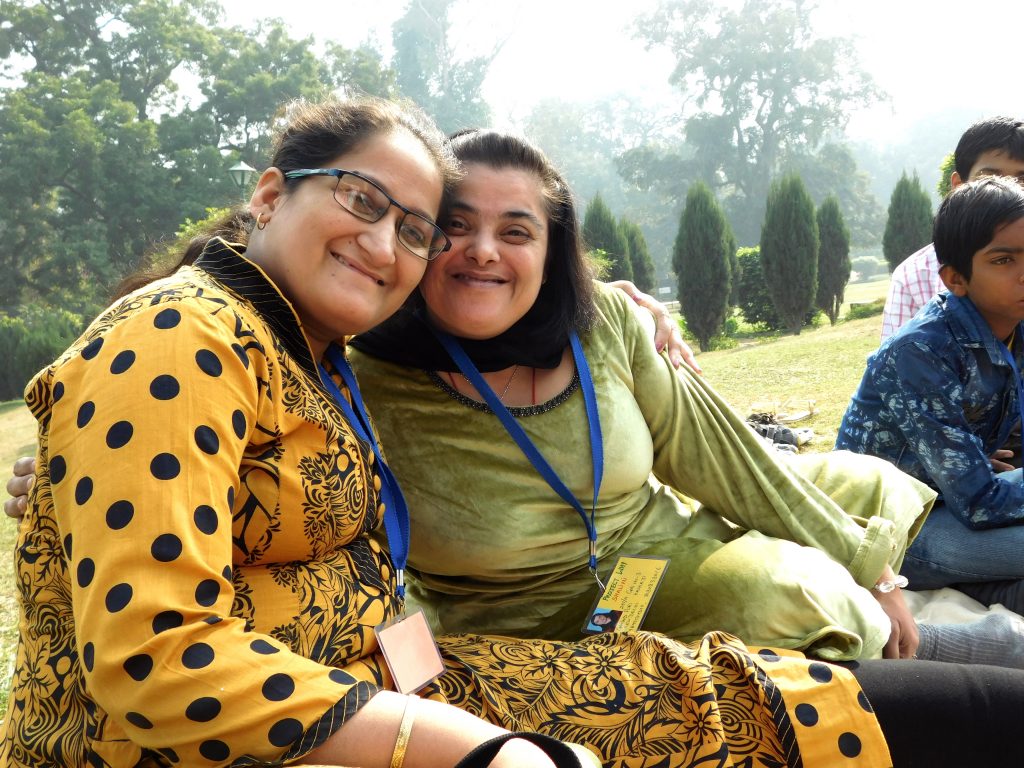
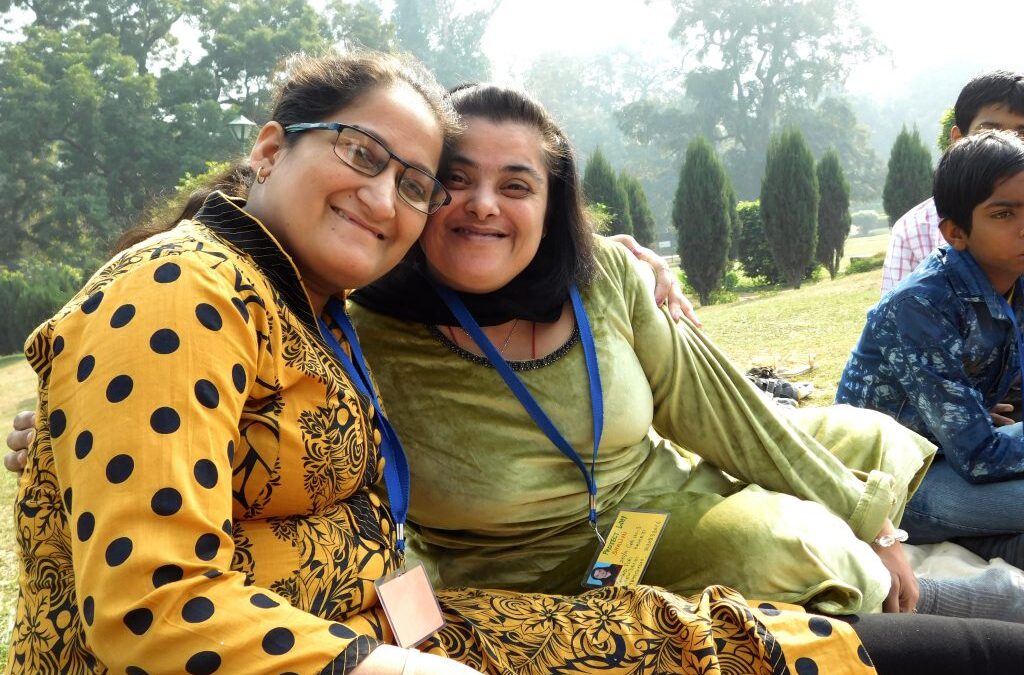
It was lovely to have Shalini back for a ‘day’ to join the Project WHY annual picnic that she has never missed for the past decade. This year she almost did as for the past months brave Shalini has been nursing her ailing mother. The often difficult stubborn special ‘child’ became the rock her family could lean on when the need arose. Her mom who passed away a few days after this picture was taken, had been bedridden for many months and needed to be cared for and the only one at hand was our Shalini. The father is very old and in poor health and her brother and sister-in-law work to ensure that needs are met leaving behind two young children to be taken care of.
Shalini did everything needed from washing clothes, to caring to her mother’s needs to looking after the kids. The once spoilt one was now the one to depend on. And she did it all with a smile.
When, a few days before the picnic, her teachers went to her home to request that she be allowed to join her friends, she was a very proud mom’s little helper and had to tell them everything she did. Needless to say her teachers well super appreciative. Her father was kind enough to allow her to come and she spent quality time with her best friend Geetu. The smiles in the picture say it all.
We never knew things would change so soon as now with her mom gone, the possibility of her becoming the ‘house help’ forever looms large. Another deafening WHY!
That is the plight of many children with special needs after the demise of their parents, more so if they are highly functional like our darling S. No one really pays any heed to their wants and aspirations. It is to address this very need that we had wanted to have a residential home for our children with special needs to give them a safe haven for life.
We will have to tread with care in our ‘mission’ to get Shalu back. We will have to negotiate and will use every trick in the book to do so. Our aim is to have her come at least for a few hours every day so that she can laugh and dance to her heart’s content.
Wish us luck!
by anouradha bakshi | Nov 29, 2016 | Uncategorized
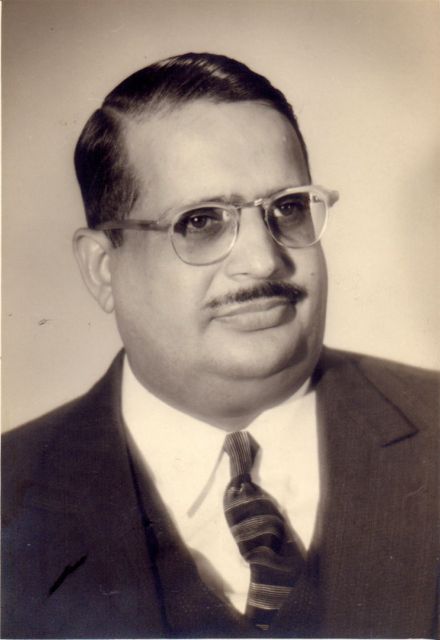
Ramchundur Goburdhun 15 August 1911- 29 November 1992
Most know us as Project WHY only. A few know that our legal identity is the Sri Ram Goburdhun Charitable Trust. And not many know who Ram was and yet if not for he, there might not have been Project WHY.
Ram or Ramchundur Goburdhun is my father.
He wore many caps through his life each with great aplomb and in his own inimitable way. As a student in his native island where the portly man I know was the mile champion of his island and admired by many young ladies! As a law student in London where passionate speeches at Hyde Park Corner would bring the needed coins to end the month. As a lawyer and then Magistrate back home where the trodden path may have led to a political career. As a perfect gentleman who courted his wife to be at times when courting was not quite known in a just freed India. As a career diplomat where his honesty, integrity, savoir faire and endearing personality were huge assets. But it is none of these that were the seeds of Project WHY. It is Ram the father who planted that seed and carefully watered it till his last breath.
If one was to look at my growing up years, they seem out of a dream: beautiful homes, governesses, criss crossing the world and the best of everything. Ram was aware of this and was careful to place the little notes needed to build a person. He always sent me to local schools where he knew I would rub shoulders with real people and learn to respect and love them. He with the help of my mama laid some unwritten rules that were needed to teach their only child true values. Toys were only bought at Xmas. The new dress was a birthday gift. Wasting food was a no no! But the one lesson that remains engrained is the Diwali blessing. After the prayers were over, Ram would tell me to go and touch the feet of everyone in the house who was older to me. That meant everyone including the staff that worked in our home. What is remarkable is that I never questioned this or resented it and that is because of the simple answer to my first why was: because they are older and will bless you.
Ram taught be compassion but he also taught me to respect every human being irrespective of their caste, creed, social background. With mama’s help he showed me how religion is one and all religions need to be respected. Again it was a well thought lesson plan based on my questions: can I fast with my Muslim friend, go to church, share a Sabbath dinner. The answer was always ‘yes’ with a small caveat: provided it does not hurt the other.
I could write volumes but that is not the point. Today I simply want to express my profound gratitude and unconditional love to the man who made me who I am.
The Sri Ram Goburdhun Charitable Trust was set up to honour his memory and to tell him that every lesson learnt at his knee had been well learnt. And most of all the last one murmured on his deathbed: have faith in India.
I miss him every minute of my life though I see him in every Project WHY child.
by anouradha bakshi | Nov 22, 2016 | Uncategorized
 The burning of schools in Kashmir vindicates the belief that education is the most powerful agent of change. Destroying a school destroys the future of children forever. Education is a powerful tool. The question lies in the way you use it.
In the early years of Project Why we were faced with a certain amount of resentment that was even aggressive at times. This bewildered us as in our book education was something everyone should encourage and cherish. But that was not the case with us.
We were ‘evicted’ from the corner of a park by local residents and politicians. It was a clever ploy. We were told that we would be ‘give’ another park and marched to one that was a pig stye, as a local resident reared his pigs in it. The once children park was a stinking rubbish dump. Our detractors must have expected outrage and protest but all they got was a warm Thank You! They had not yet tasted the spirit of Project WHY. If this is what we got, so be it! We would work our magic. A series of negotiations with the owner of the pigs who was known for his muscle flexing and the help of a few friends, not only was the park divided between the hogs and us, we transformed the park into a lovely space. It had a huge yellow tented roof and plants all around.
The truce lasted a year. The next attack was bulldozers. It transpired that the park was now needed to ‘build’ a community centre. We moved lock stock and barrel to the roadside. But classes never stopped. The game continued for a while and then petered down.
It took us a while to understand the reason for such vehement resentment and then the penny dropped. Education was acceptable if it followed the norms, these being teachers from one side of the divide and students from the other. But that was not the Project WHY model, for us teachers and kids came from the same source. That meant social transformation and that was not acceptable. We were changing minds, teaching children to think for themselves, urging them to ask questions and giving them a voice. In short we were empowering a community and that could be dangerous.
Everything in the book was thrown at us from threats to spreading false rumours but we did not budge. We simply wore them down. Education came out the winner and so it will remain
by anouradha bakshi | Nov 15, 2016 | Uncategorized
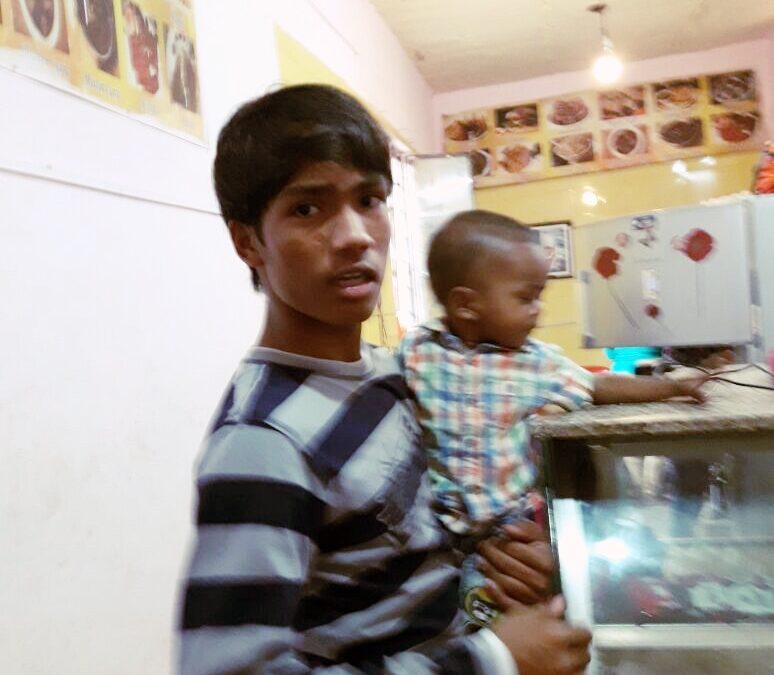
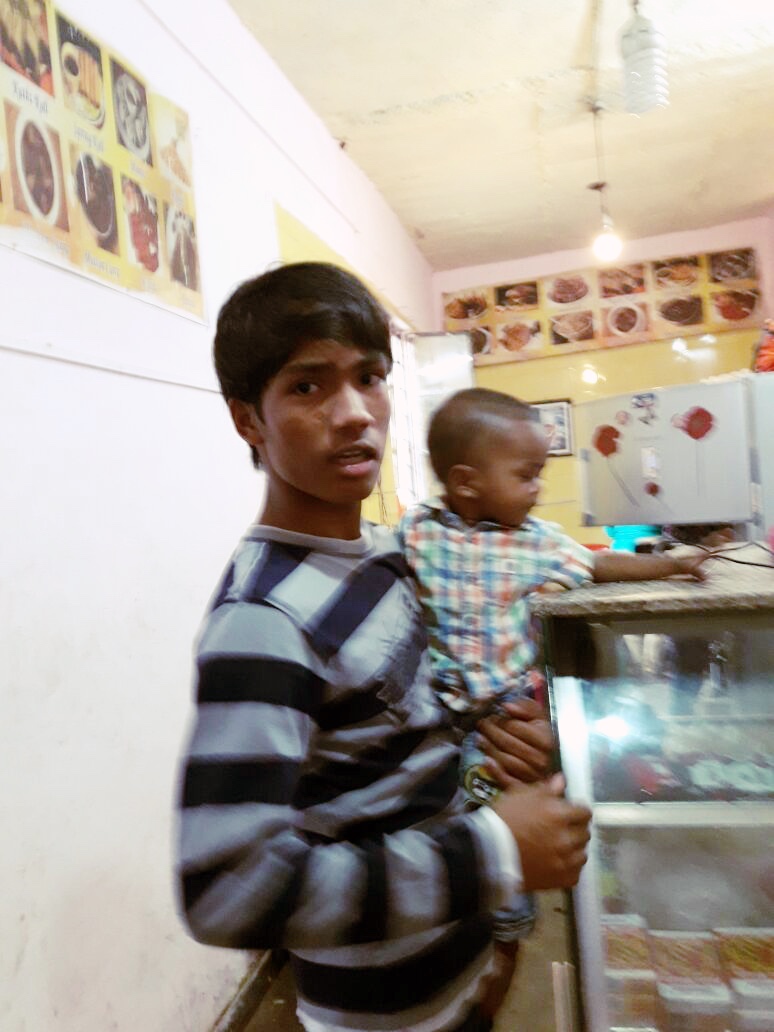 Like any teenager, Utpal often calls from boarding school to ask for something or the other usually food as at his age kids seem perpetually hungry or for a book of some kind. So when he called last week we were expecting ‘chips’ or ‘cookies’ and were very surprised when the demand was ‘toys’ for a toddler. He knew there were some in the store room, relics of years gone by as the grandson and he became big boys.
The toys were meant for the son of the sister of the lady who runs the canteen, one of his favourite place! Utpal had made friends with little Deepak and in true Utpal style had adopted him. When we visited the canteen with the toys of course we were taken aback when the little fellow jumped out of his mom’s lap and straight into Utpal’s arms. This brought a huge smile on our faces and even a lump in our throats. The love between the two was palpable and quickly confirmed by the mom when she told us that if the little child cried all you had to say was that Utpal was there and the tears stopped mid cheek and little eyes darted in all direction.
Utpal has always been a kind and warm hearted child always willing to share. In spite of being a cool teenager his love for younger children is remarkable and the patience and kindness he shows are moving.
One wonders if compassion is taught or innate. This is a difficult question as in this day and age one sees too little of it around.
Perhaps a bit of both.
One wonders how some children show compassion at an early age. In our list of volunteers we have many children, some now quite grown up but still as compassionate. We have had children who have given up birthday presents and asked their friends to donate to Project Why, we have had children who have sold lemonade or baked cakes to collect money for us. Some older ones have come and taught at Project Why giving up their precious school holidays.
I remember the little girl in an orphanage our school use to take us to when we lived in Saigon who undoubtedly played an important part in making me who I am. I am still haunted by her beautiful black eyes that crinkled when she saw me and smiled. That smile is seared in my heart.
Education is not just teaching the famed 3 Rs. Children have to be taught values and this can only happen if parents and school make that effort wholeheartedly.
I was impressed by an initiative taken St Louis where my grandson lives. It is called READ – RIGHT – RUN. The program’s goal is to develop reading-proficient, community-minded and physically fit children in grades K-5 by challenging them to READ 26 books, RIGHT the community with 26 good deeds, and RUN 26.2 miles over a six-month period. My 6 year old grandson participated and made grandma proud. How wonderful if we had a similar programme for all our children.
It is our duty as elders to teach compassion to our children.
Agastya’s first school was the Project WHY creche and his interaction with children from less privileged homes opened his heart forever.
It is important to water the seed of compassion every child carries in her/his heart and to do that it is imperative to answer disturbing questions with honest answers. Hiding reality or shielding children does more harm than good.
How compassionate a child can be best exemplified in Malte’s story:
Malte was eight when he arrived in Delhi with his parents to live here for four years. The small German boy immediately fell in love with the country. He enjoyed everything: the food, the music, Bollywood movies, the temples, mosques and bazars. Being blond he always attracted a lot of attention everywhere he went. So after a little while he could lead expert conversations on Bollywood actors or cricket with everyone and was blessed with tons of caring kindness.
The only issue that really disturbed him and made his life miserable in Delhi was to see all the poverty and suffering in the streets. Every afternoon returning from his privileged school in Chanakya Puri he passed by a busy traffic light seeing the same beggar children asking for money. It broke his heart to see and hear of their daily struggle. Why did he have such a privileged and enjoyable life while these children of the same age did not even have shoes to wear or clean water to drink. So his sister and he came up with the idea to make small packages of dry fruits to hand out to the street children. But still, that did not feel enough, they were fast finished and nothing had changed. Too much misery for these small packages of sweetness.
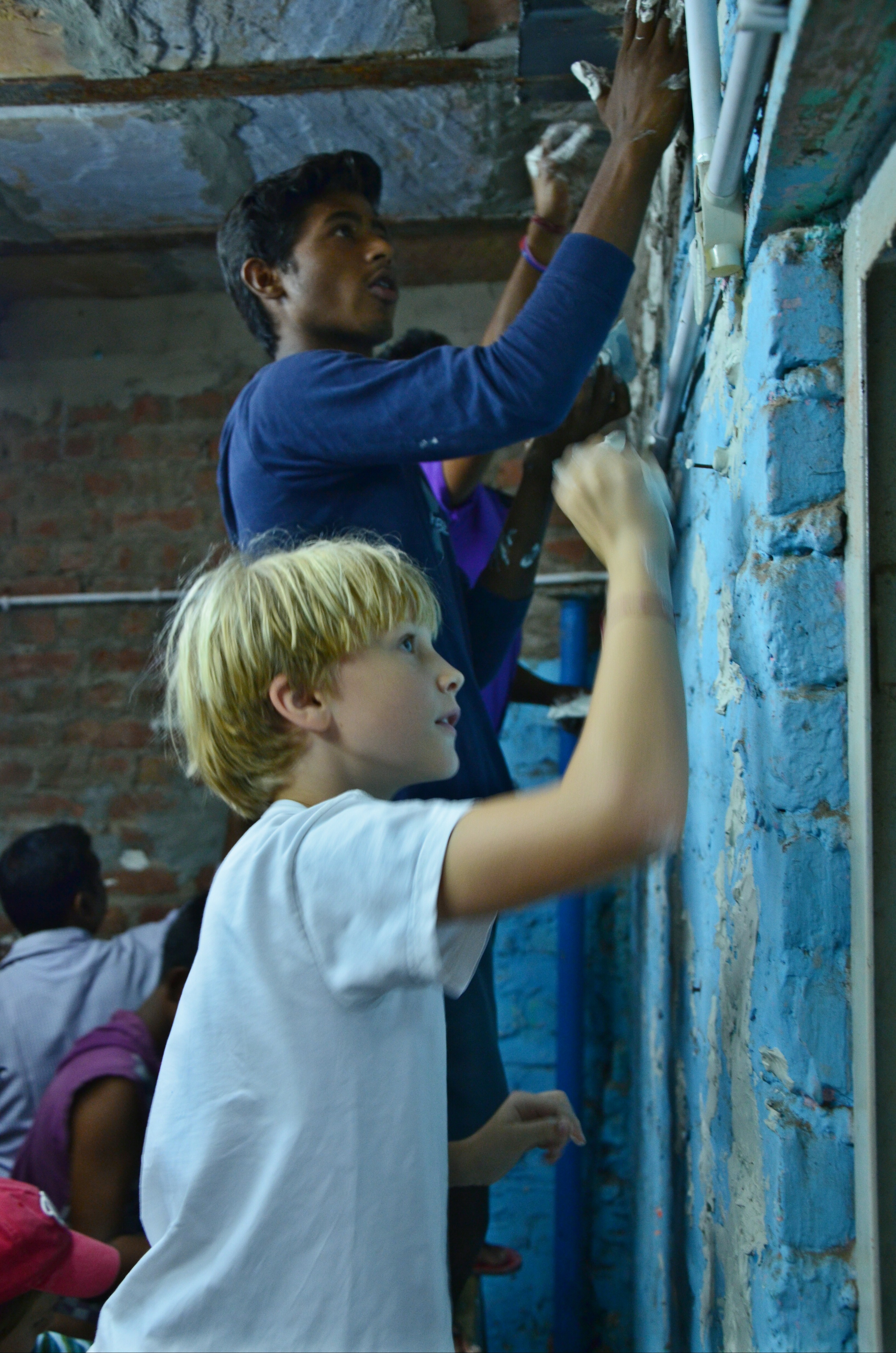
When his mother started to work with Project Why Malte heard a lot of slum children also having a difficult life but now thanks to Project Why with a chance to learn and alter their future. One Saturday morning he came along and saw by himself how a small group of committed people was trying to make a longer-lasting difference for a lot of kids. He was amazed to meet with the children, see their smiles on their faces and their eagerness to learn. A couple of weeks later he took his cub scout group to white-wash the newly renovated Okhla Centre. They all joined hands with the Project Why children to make the centre colourful and even more a happy place to be. And he felt a deep joy. He finally found a way and place where poverty was not accepted as a fate but as challenge to overcome! And where he – a ten year old boy – could make a difference.
So he decided with his 2 friends Stefan and Scottie to do even more. They came up with the idea of running a donation drive in their school. They designed colourful posters to show Project Why’s work, asked the special kids to colour and decorate traditional piggy banks (gulak) to collect donations. With everything prepared they got up really early for one week during the freezing month of December, built up their stand at the school entrance and asked all children, teachers and parents passing by to give a donation for Project Why. Even the school principal and the American Ambassador were impressed and eagerly squeezed their donation in one of the gulaks. And with raised funds Project Why could buy a Bamboo roof for the Okhla centre giving shelter to the students during the harsh summer and winter months.
Since then Malte feels part of the Project Why family, asking about the different children, always happy to join his mother for a visit. Again and again he gives away his pocket money to buy school supplies. And every time he is overwhelmed by the poverty in India he thinks of something new he can do for Project Why knowing that at least his friends there will enjoy a different future.
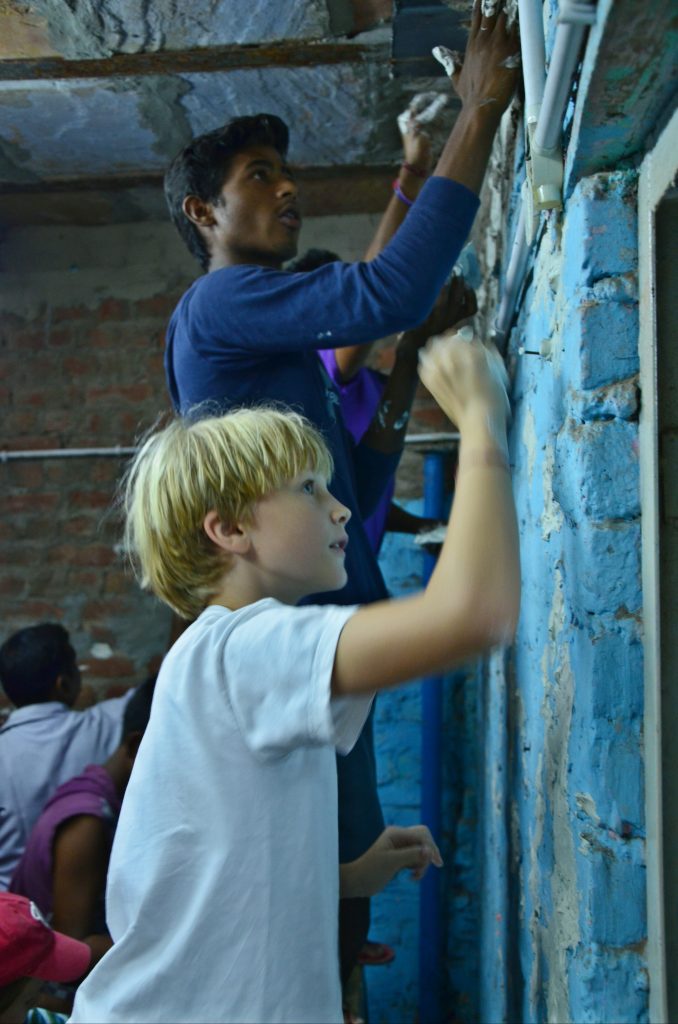
So how do children like Utpal and Malte, both from opposite sides of the world learn compassion?
My guess is that they are the blessed few who see with their hearts.
by anouradha bakshi | Nov 14, 2016 | Uncategorized
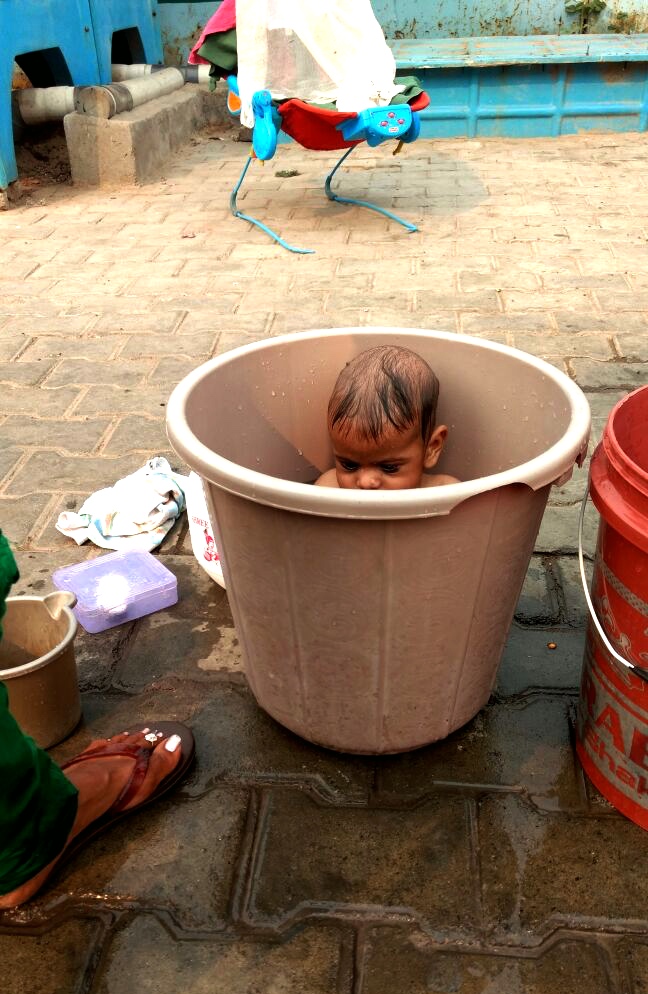
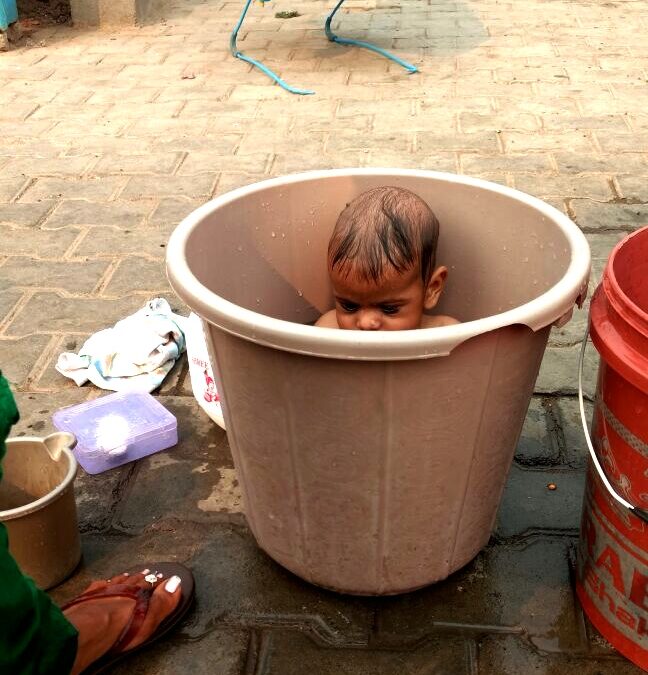
India celebrates Children’s Day today. There will be celebrations across the land. But for some, like the little fellow in the picture we now fondly call the ‘bucket baby’ it will be a day like any other.
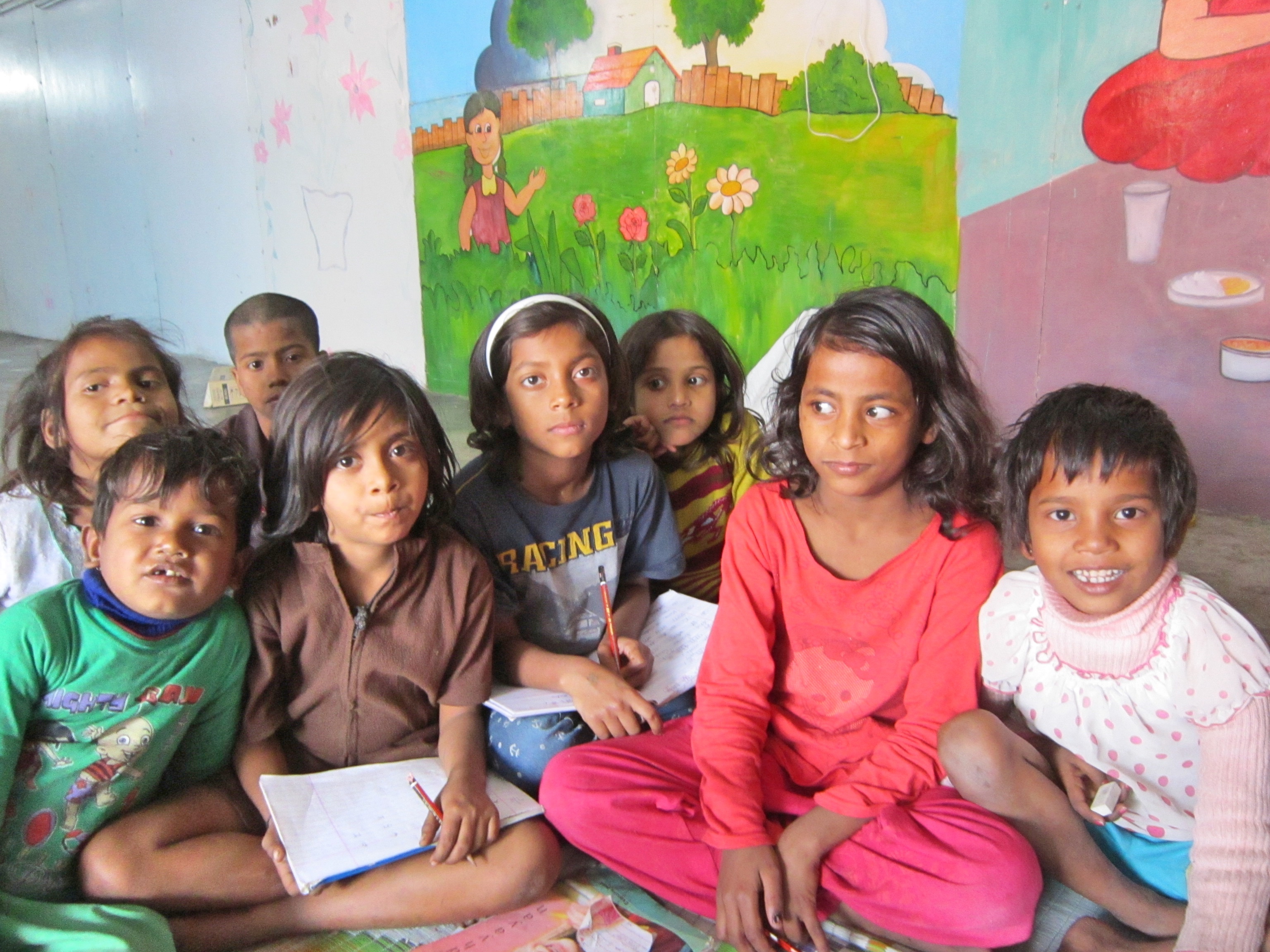
This little fellow was born around the time Project WHY launched its pilot project for the Kalka Temple beggars’ kids. It was and is our strongest belief that education and EDUCATION only can help these kids break the shackles they are born with. The reason we began this project was because some parents had already realised the power of education and were sending their kids to school. We knew that the school alone would not make any difference. What was needed was a sprinkle of the Project WHY magic.
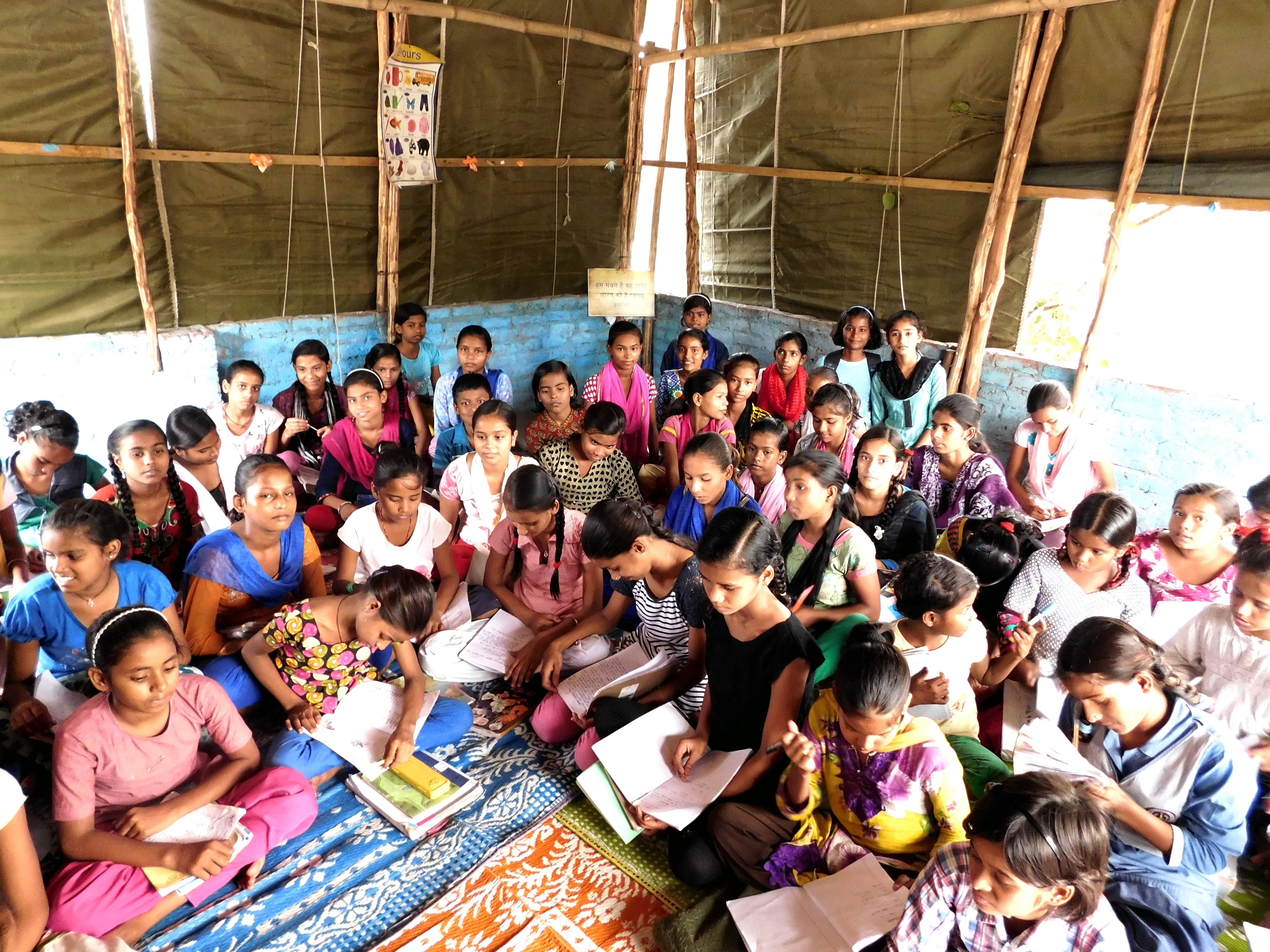
Today around 30 children come to the women’s night shelter in the afternoon where we run a class.
Sharing space with a handful of beggar women, often women abandoned by their families, is a rewarding experience that has not only shattered many misconceptions but compelled us to look at a world we once shunned with new eyes and newfound respect.
Today being children’s day, we share a little story that we hope will bring a smile to your face.
The women’ shelter is a large high roofed room where a handful of women live. It is often the space pregnant women come to to deliver their babies. We have seen four deliveries in the last 3 months. The shelter has rules like no beds or furniture etc and though there is water and even a clean bathroom, there is no way to heat water as no cooking is allowed hence no stove!
Beggar mommies are proud mommies who just like all mommies want the best for their babies and want to keep baby clean. So baths are a must. So they have found a solution. Water is poured into a bucket and then the bucket is kept in the sun, if sun there is. When mummy feels that the water is warm enough then baby is dunked in and washed with soap then quickly taken out and wrapped in a towel and hugged tight. What you see in the picture is baby’s bath time!
Happy children’s day!
by anouradha bakshi | Nov 1, 2016 | Uncategorized
project why
PT as we all know or at least presume stands Physical Training and is a high school ‘subject’ in India. It would be reasonable to again presume that it means playing games, training for individual and team sports etc. Not quite so in the Chacha Nehru Hindi High School, Bhiwandi. There you also have written exams! In the annual exam for class IX this year, the students were gobsmacked when the came across one the questions: Who is Virat Kohli’s girlfriend? For the uninitiated he is India’s Cricket team Captain. This was a multiple choice question and three known actresses were the choices given.
Does one laugh or cry?
This was a question out the prescribed syllabus. If one peruses the NCERT syllabus for the said subject, one learns that its aim is to : provide the required theoretical and practical inputs in order to provide an integrated
and holistic understanding and developing positive attitudes, values, skills and behaviour related to health and physical education at the primary, secondary and senior secondary levels.
A somewhat obscure definition but still one wonders how the knowledge of who is the current love interest of a cricket star does not meet the guidelines in any which way.
So one wonders why the question was included by the teacher who set the paper. Was is just for fun and popularity to be the ‘cool’ teacher? But what about those who have no interest in cricket and even less in the love life of the players. The question are endless but none seems to be satisfactory and acceptable. Parents are worried that their kids may have not known the answer as it was ‘out of syllabus’?
It is true that cricket is a passion and that many young people are totally aware of facts and trivia but not everyone. In a country were education is primarily by rote, even the brightest student may not have known the answer.
But it does not end there. Many deeper questions come to mind. The first one is about the seriousness and competence of the teacher. If one were to play the Devil’s Advocate one could say that the teacher was trying to test the student’s interest in other matters: did s/he read the newspaper, watch the news etc. But this does no stand ground as everyone knows that in the present system even half a point can make the difference between college or no college and hence you do not play around with the syllabus in an exam question paper.
This is indeed a very small matter but it does once again shed light on the critical importance of the need of an complete overhaul of our education and marking system, so that children can be freed from the stranglehold of impossible marks.
Project Why is very conscious of this anomaly and strives to take education outside books and walls.
by anouradha bakshi | Oct 25, 2016 | Uncategorized
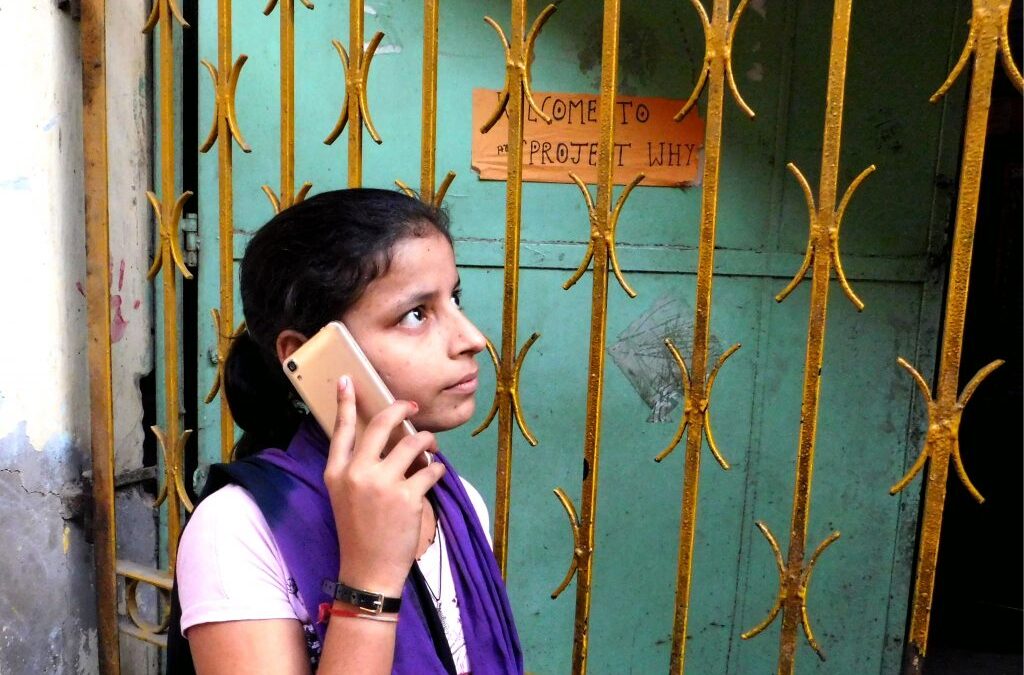
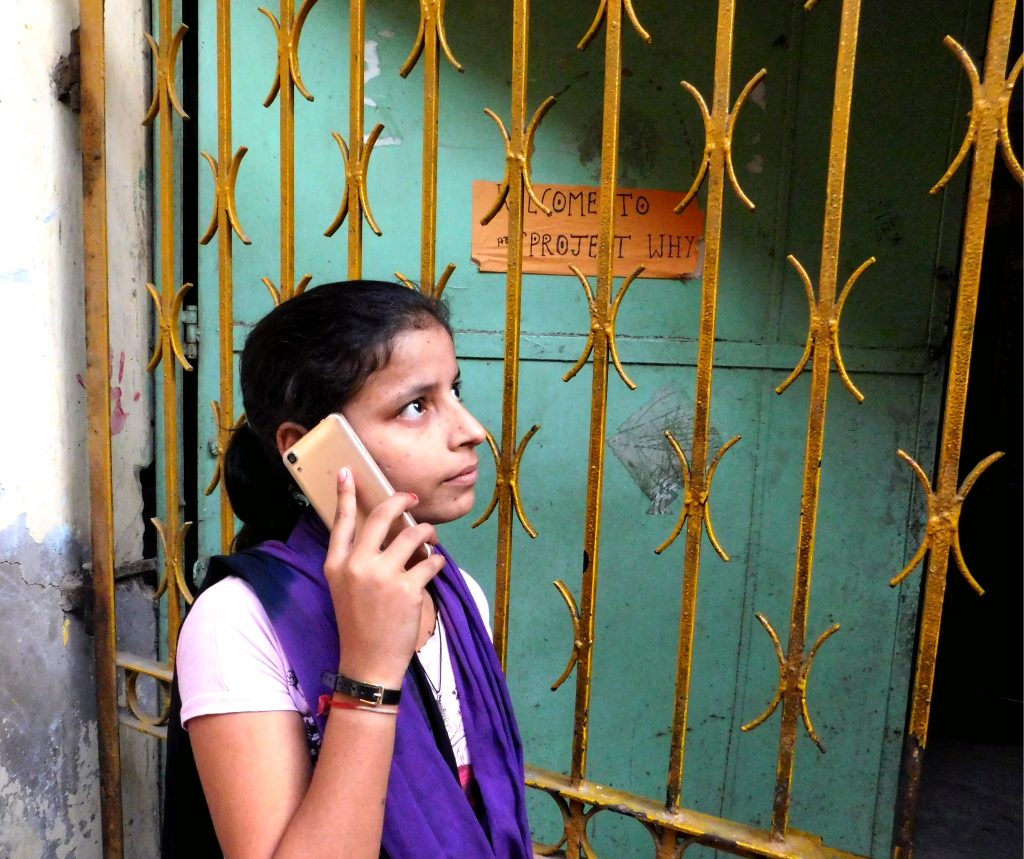 An interesting article appeared in the Wall Street Journal recently. It is entitled: Why the Vast Majority of Women in India Will Never Own a Smartphone. The emerging new middle class will purchase all sorts of things ranging from washing machines to even air conditioners but would not buy a smart phoneA for their daughters. The fear is a love marriage, something unacceptable to many families. Patriarchy supersedes technology.
Statistics are glaring: 114 million more men own cellphones than women. Once again women are denied the benefit of one of the greatest technological leap of our times. Smartphones are not just love machines; they have become an essential tool in our day and age and more than that are a great social leveller. They can help learn, increase skills, communicate better and above all increase their safety when they are out of the homes. But the fear is so deep seated that in rural areas village councils bar unmarried girls from possessing a cellphone.
The whole matter lies on the skewed view of placing the family’s honour on the tender shoulders of the girl child. An aberration!
Even those meant to protect us are quick to blame the woman for crimes like rape and even the ubiquitous cellphone as was the case a few years ago. when a police officer said: western culture, mobile phones and lack of entertainment as reasons for rape. Still trying to decipher the meaning of these words.
The question that begs to be asked is why is no one willing to address the cause and take measures to eradicate it. The bandaid solutions that are too often proffered are always steeped in gender bias. It takes two to tango, but in these cases only one is reprimanded.
From the day she is born, the girl child is treated differently at every step. She has one reason to celebrate at least she is not one that was killed in the womb as is sometimes the case. From the day she is born her life is decided by the men of the families she will ‘belong’ to: father, brother, husband and in her twilight years son and so are her choices.
Today it is the smartphone. God knows what it will be tomorrow.
In 2005 a letter was written to a girl who died in the in the womb. It ended wit these words:
Who are you: a statistic in the records of the hospital, a pain in the heart of many that will slowly fade away, a regret, a topic of discussions with its share of ‘ifs’ and ‘buts’… I do not know..
To me you are the little girl who refused to be born in a world that she felt was not worthy of her… a child who took her one and only independent decision..
And we abide by it…

by anouradha bakshi | Oct 25, 2016 | Uncategorized
Way back in December 2007 we celebrated Xmas at the women centre. One of our resident at the women shelter was Christian and she told us about the cakes her mom made and we ordered many for the party. Sophie one of our volunteers wanted a full scale celebration so there was a Xmas tree and all other decorations as well as pictures of Santa and gifts of course.
The children however were not Christians but mostly Muslims with a scattering of Hindus and it was left to me to make the link that would make sense to the kids. The kids got it as they always do: treats! Ladoos on Hindu days, vermicelli pudding on Muslim day and cakes at Xmas. As simple as that.
Festivals are about food.
Recently I was shown another side of the religious food story courtesy a wonderful volunteer of Indian origin who has always lived away from this land but whose family has followed traditions by simply adapting them. In their community you eat seven vegetables on Diwali. The hitch is that no one really likes a vegetable curry. What do you do? You take your kids’ favourite food and adapt it: enter the seven vegetable pizza, the family’s answer to traditions.
To me it was more than a ‘story’ that brings a huge smile to one’s face. This pizza held the true essence of the Hinduism I was brought up in and which embraces all and adapts to any situation.
Maybe we will have a seven vegetable pizza for Diwali this year!
Thank you Viren!
by anouradha bakshi | Oct 20, 2016 | Uncategorized
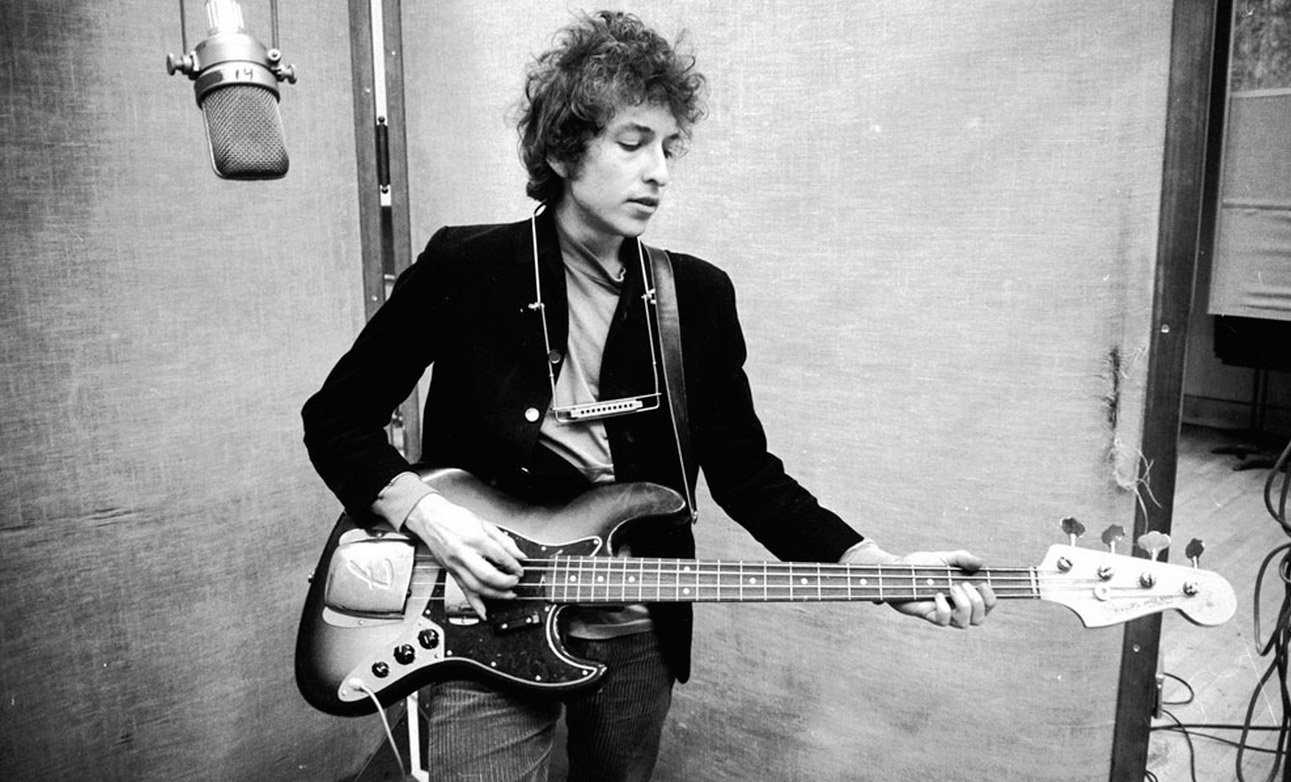
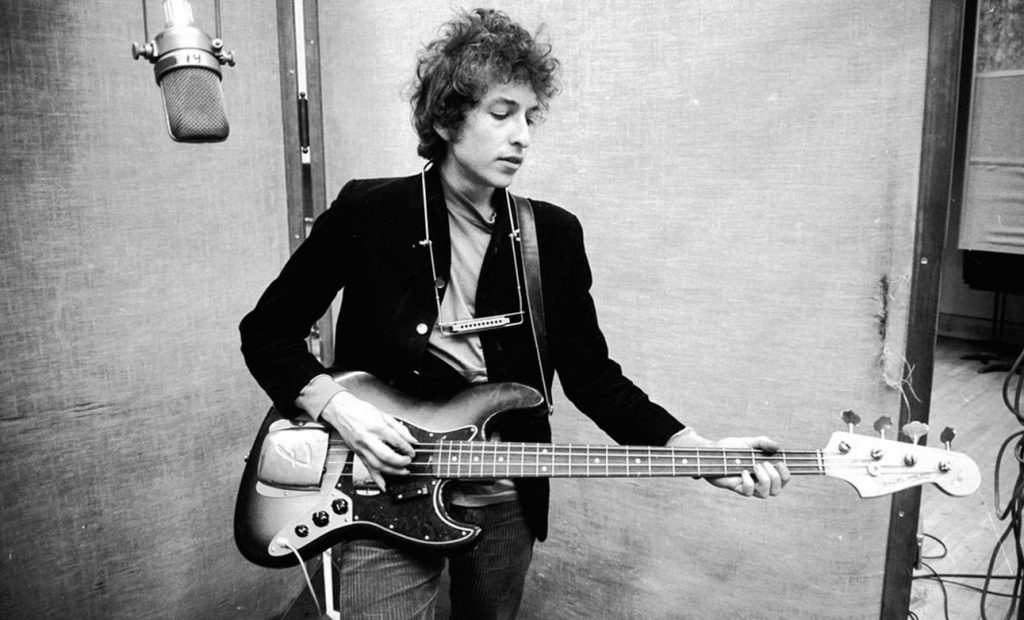
The news of Bob Dylan getting the Nobel Prize for Literature was one of the best news coming my way in a long time. For those of us who were young and impressionable in the sixties Bob Dylan was an intrinsic part of our lives.
I write this slightly personal note today as I want young people to know how deeply we were influenced by song and poetry and how important it was to us. Let us call it serendipity, but a few hours before I heard the news I was telling a young man how ‘dating’ in our time meant sitting in a park reading poetry or singing Dylan songs. In those days music was heard on turntables and the more you liked a record, the more scratched it became but who cared. Those vinyls in their soon tattered covers were our prize possessions.
Dylan was more than a song to listen. His poignant and hard hitting words use to lead to heated debates that moulded our pliable minds and the adults we became were definitely influenced by this incredible poet.
What is amazing though is that hearing his words today, half a century later are still as meaningful as they were then.
In those days we believed we could remake the world into a happy and peaceful and it was the age of the flower children and the hippies on a soul journey. That did not happen.
Today the world is the antithesis of what we had dreamt. And never before have Dylan’s words rung more true.
Yes, and how many times must a man look up
Before he can see the sky?
Yes, and how many ears must one man have
Before he can hear people cry?
Yes, and how many deaths will it take ’till he knows
That too many people have died?
The answer, my friend, is blowin’ in the wind
The answer is blowin’ in the wind
Bob Dylan 1963
by anouradha bakshi | Oct 18, 2016 | Uncategorized
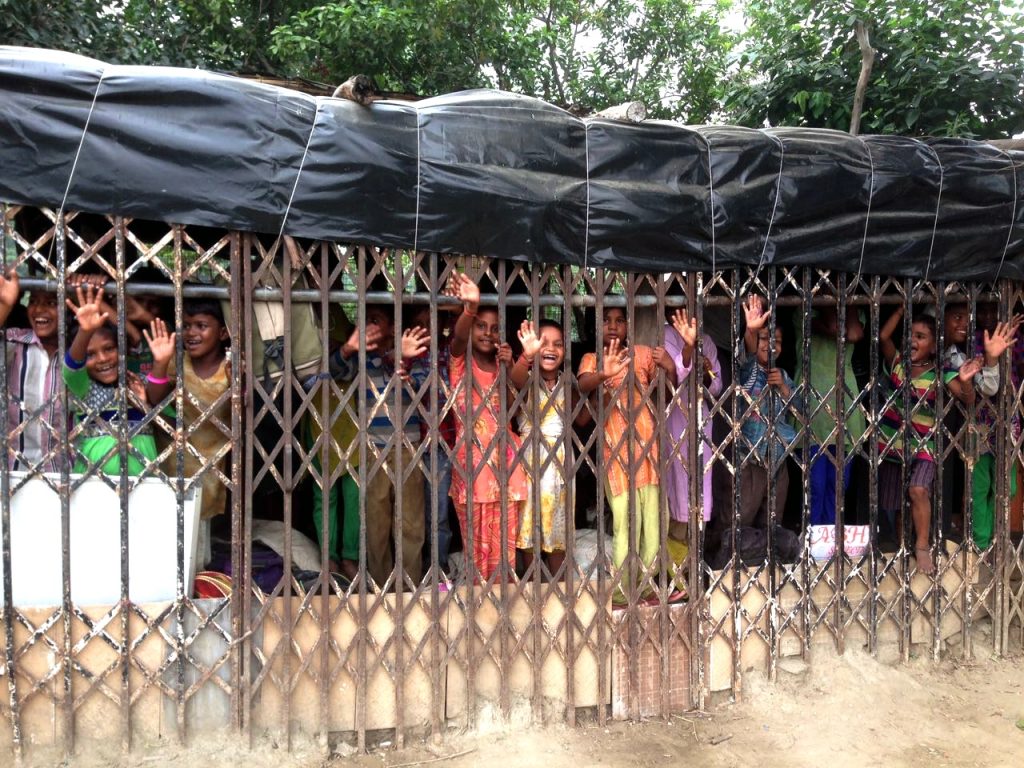
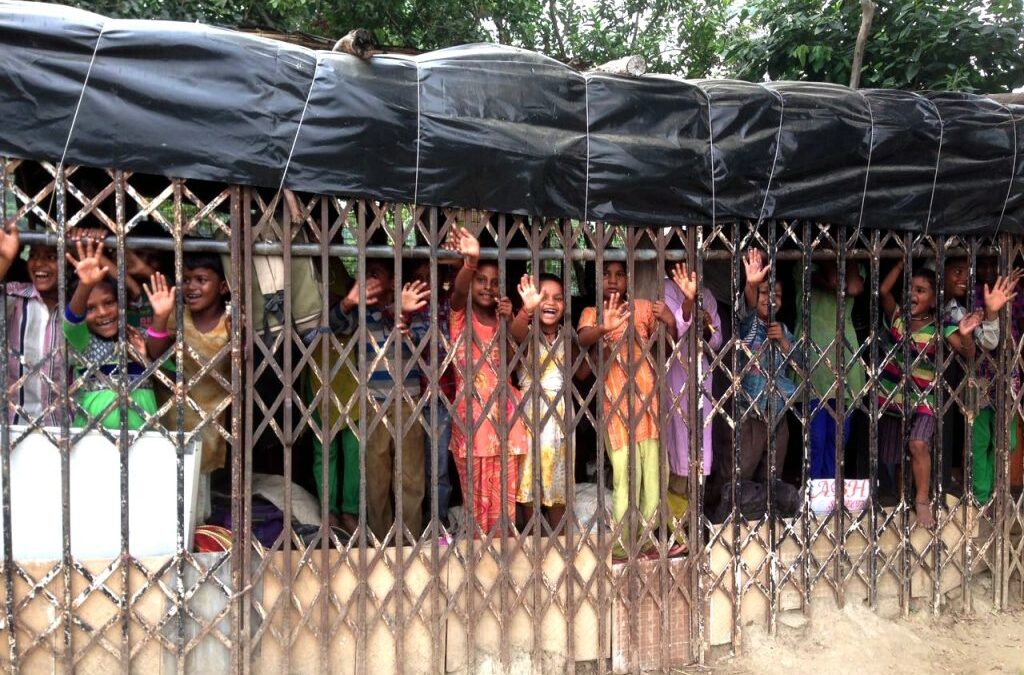
Don’t go by the picture! These kids are the luckiest as they live on the bank of the river in the middle of green vegetable patches and breathe good clean air, or at least the best available in our capital city.
For the others the invisible bars of polluted air are slowly appearing and will soon incarcerate us all for the months to come.
You guessed right! Air pollution is on its way. WHO has just confirmed that Delhi’s air is the worst of all megacities. Fine particulate matter is already four times more than what is acceptable.
That the situation is critical is obvious but to put matter in perspective here is a fact: India’s capital was the only megacity to record a PM10 level above 200 µg/m³, exceeding the WHO air quality standard of 20 µg/m³ by more than 900 per cent.
The monsoons have gone and with it blue sky and breathable air. For the past few days a grey lid covers the city and no, its is not rain clouds. In some areas farmers have begun to set harvested fields on fire, construction sites are thriving and in a few days festive celebrations will begin and firecrackers will burst with impunity. And then as winter comes small fires will be lit to keep warm, more fields will be set on fire, cars will rev in the traffic and the smoke of industrial chimneys will add to the toxic cocktail. And we will be breathing this air as we have no choice.
Or do we?
We all know that the air is polluted, that water is scarce and so on but how many of us take any remedial measures. The rich will buy air purifiers and soon the poor will too as prices are coming done. Market forces!
Is it not time to stop looking for bad aid solutions and do something for mother Nature.
Easier said than done as the fight is somewhat skewed. Talk of firecrackers and it is all brought down to mores and tradition, and what about the fire to warm yourself. When you live on the street then that is the only way you can beat the biting cold. For farmers it is easier to set fire on the land than painstakingly pullout old roots.
Air pollution has dangerous effects on humans, animals and plants. It leads to heart and lung disease, global warming, acid rain and more. Children are the most affected. Children from urban slums suffer the most as they rarely take a break and get to breathe clean air.
The problem with the solutions are that they require life style changes that many are not willing to adopt: take the bus or the metro instead of your car, switch off lights and appliances you are not using.
Some measures are impossible because of no availability of safe infrastructure. One would love to walk but where are the pedestrian walks, one could cycle to work but where are the cycle tracks. It is said that if water is sprayed regularly on roads and construction sites there would be a change in the air quality, but this again is Catch 22 itself as water is scarce and precious.
Most of these solutions are not in our hand as they involve government and administration.
At Project Why we believe that the first thing is to make children aware of the critical situation that exists and then inform them about the ways to curb air pollution so that even if they cannot do things they can become Warriors of Air.
Some of the steps they can participate in are: segregation of garbage. asking their families not to take motorbikes for short distance errands, learn to recycle and reuse, convert garbage into compost, switch off lights, etc.
Let us not forget that it is children who suffer the most. 4.4 million children in Delhi already have irreversible lung damage. So if not for us we have to think of the children and their tomorrow.
It is only when we ALL accept to become Warriors of Air that things will change.
by anouradha bakshi | Oct 11, 2016 | Uncategorized
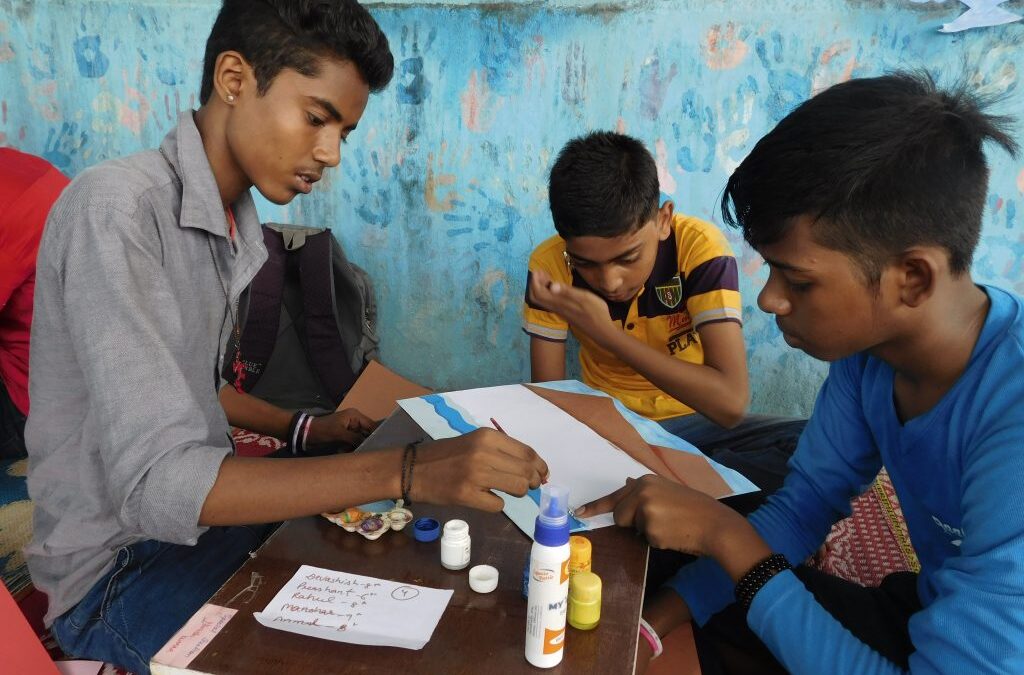
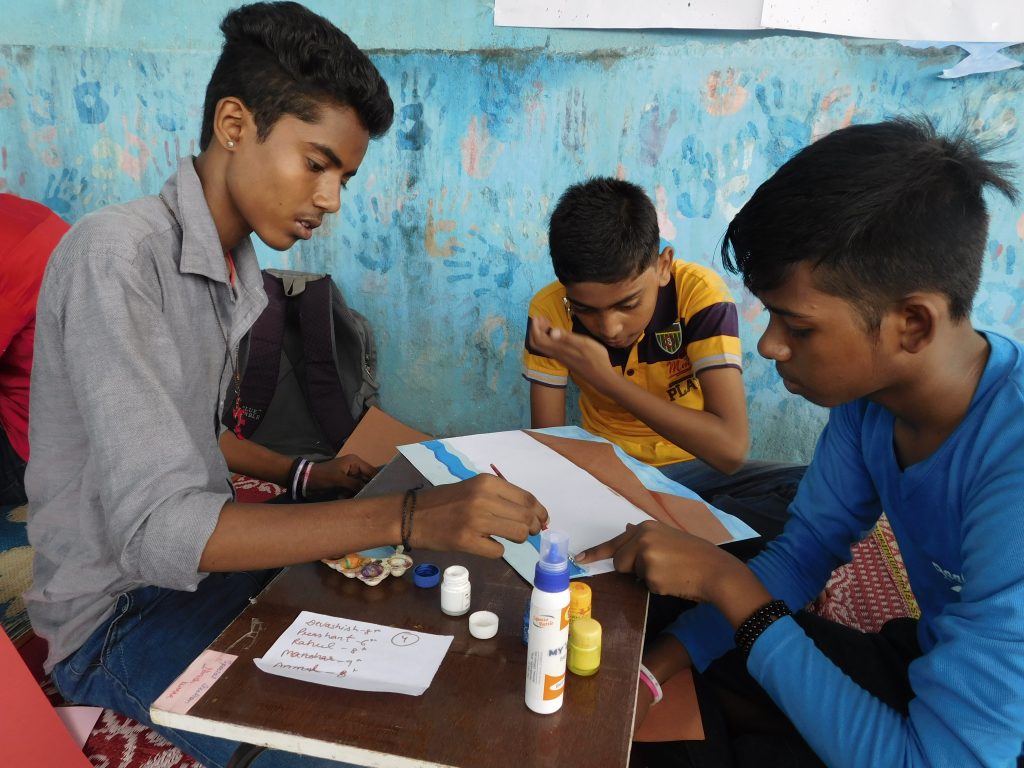 Two weeks ago, two class XII students murdered their teacher. The reason: he expelled one of them for poor attendance. Rage, anger, frustration? Nothing can condone violence of this kind and the boys will face the law.
The question that begs to be asked, though few will, is: who is responsible for this brutality and the answer may not be as easy as one would like to believe.
This extreme action should compel us to look at reality in the face. The two boys were school going and had studied hard enough to reach class XII. They were not one of the (ill)famed dropouts.
That any child would resort to such abhorrent violence must lead us to look at the present education system and social environment our young live in particularly in urban slums. This post is not meant to justify the act but prevent it in days to come as violence and aggression are an intrinsic part of the DNA of underprivileged children.
Education is undoubtedly the one tool that shapes mind and thus life. School should be an enabling environment where every child blooms according to her or his capabilities and talent. Education goes far beyond three Rs.
At Project Why we have always believed in Jacques Delors definition of education, namely his four pillars of learning: learning to learn, to do, to be and to live with others. Sadly education as we know it stops at the first.
One of the reasons of setting up Project Why was to address a unnatural reality: the half day school system whereby boys go to school post lunch. The school is for girls in the morning. Boys are left to their own device as their homes are tiny and so the street becomes their realm. With no quality parental control they are left to themselves. Bunking school becomes easy and as they grow the transformation between child and bad element is bound to happen. What we forget is that we are a part of the terrible mutation.
That they should be aggressive and even violent is again to be expected. Child physical abuse is rampant in both homes and school and becomes the only tool they know. No one talks to them or asks them their point of view. Communication is one-way from adult to child and they have no voice. So where do they learn to be and live with others.
We once asked a group of secondary students who were regularly beaten in their school what was the one thing they would change if given a chance and ALL of us would have bet our bottom dollar that the answer would be physical abuse. We were astounded when they told us that they would give the child a chance to explain himself before beating him. Beating was par to the course. What they wanted his a voice.
Children need to be heard. Children need to be recognised as individuals. Children need to be respected. Their talents need to be discovered and honed. They need to be given means to vent their anger and emotions. If the two boys who now will spend years in a brutal jail had been taught better then three lives would have been saved.
It is time we took responsibility and acted. Education reforms are needed but again they have to be the right ones, the kind that helps every child to grow to her or his full potential.