Manu

Manu

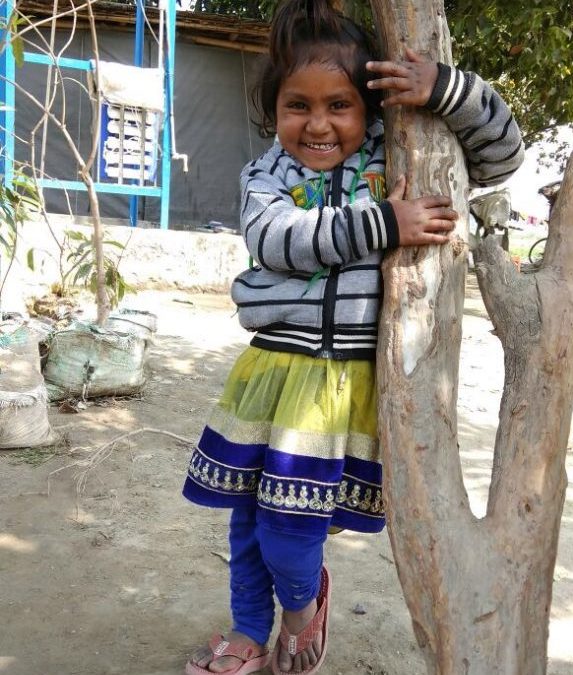
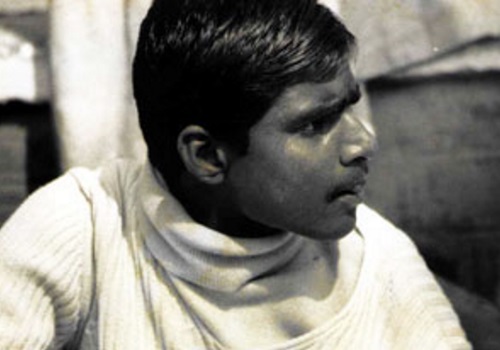
Two Angels landed in my life without any warning and changed my life forever. The first was Manu. Manu was the kind of being you pass on the street and never look at. To many he would be just a beggar who seemed deranged and bedraggled. He roamed a street I passed regularly. I often wondered what could have got him there, but it was a fleeting thought that disappeared in a trice. But one fateful day the heart rendering cry he let out as he was being riled by someone pierced my heart and soul in a way that I cannot describe in words. It was like a deafening cry for help targeted at me and demanding to be heard. I did hear it. The rest is history, something I have written about time and again. Manu was a mirror to my soul, the reason that really made me take the less travelled road. His mission as I see it was to show me the way at a time when I was somewhat confused and did not know which way to go.

All I knew at that instant was that I had to help him. How to help a beggar who roams the streets is not written in any book, you just have to find your way. And in finding my way, a larger plan enfolded called Project Why! I made myself a promise that no one knew till maybe much later. Manu would one day have a warm bed, a set of friends; would share a meal around a table, and would watch TV to his heart’s content.

To many it would have sounded ludicrous but to me it became a life and death decision. At that moment the ‘how’ and ‘when’ were of no consequence. As time passed we moved a step at a time towards a dream that rested in the recesses of my mind.

Project Why grew by leaps and bounds. Every day was better than the previous specially for Manu. He was bathed, fed and had his own bed in the veranda of what was our office. And when we launched our class for special kids, he was Roll no 1! So to some perhaps it could seem that the game was over, never mind the dining table or the TV. Not not for me. The small challenges and big ones we managed to overcome gave me the audacity to start dreaming big, too big. Was it hubris? I do not know. Maybe. The idea emerged in my mind when we began thinking about long term sustainability. While on the ground the ideas were mundane – chocolates, earthen lamps, candles, paper bags and even pongamia oil soaps – my mind was busy conjuring what came to be know as Planet Why! In its first iteration that was in my head it was to be a place where Manu and his mates could grow old and die with dignity. I imagined a green building, with terracotta bricks and old style floors, with arches and little windows that would let the breeze in. It would be Manu’s home, and workplace as he was able enough to learn gardening. And the strange things is that many believed in this dream. We bought the land, drew the architectural plans and set out looking for funds.

But then on a cold January Day in 2011, my dreams did not fit with those of the Gods of Lesser beings.

They decided Manu had completed his mission and he breathed his last leaving me lost and rudderless. There would be no Planet Why for Manu.

The best I was able do was craft a small residential unit where Manu and a bunch of special and regular kids lived together. Yes there was a dining table, there was a TV, there was a refrigerator and cold water and special treats. Often it was Manu who decided the menu and of course we never ran out of biscuits, Manu’s all time favourite. Manu died quietly after having had his tea and biscuits. The Angel who sustained and protected me for more than a decade flew away leaving me with one unanswered question: did I fulfil the silent promise I had made to myself.

When I feel a little lost ,all I have to do is look at his smiling face that sits on my wall frozen in time and remember that the only way to honour his memory is to continue my journey.
Utpal

Utpal

In March 2003, the day after Holi, we learnt that the ‘little boy next door’ had fallen in a boiling pot and, was believed to be dead. We barely knew him, as the family had shifted to Giri Nagar a few days earlier. We felt sorry for the baby, and went on with our lives

A few days later, we heard that the baby was not dead, and was back from hospital. When we saw him, we were shocked. A little bundle swathed in bandages, a bewildered look in his little eyes. The hospital had sent him back, telling the mother that he would not survive. We thought otherwise. With the help of Sophie a young nurse from Belgium and Rani we fought day and night… And six weeks later, Utpal smiled and we knew we had won.

Utpal is a lovely fellow, endearing in his ways, bright and intelligent. We discovered that his mother was bipolar and alcoholic and tried our best to have her ‘dry’ up but to no avail. At the tender age of 4, Utpal went to a boarding school.

We continued to try and rehabilitate the mother but one fine day she vanished. Utpal was shattered and had to go for counselling. We obtained his guardianship from the Child Welfare Committee.

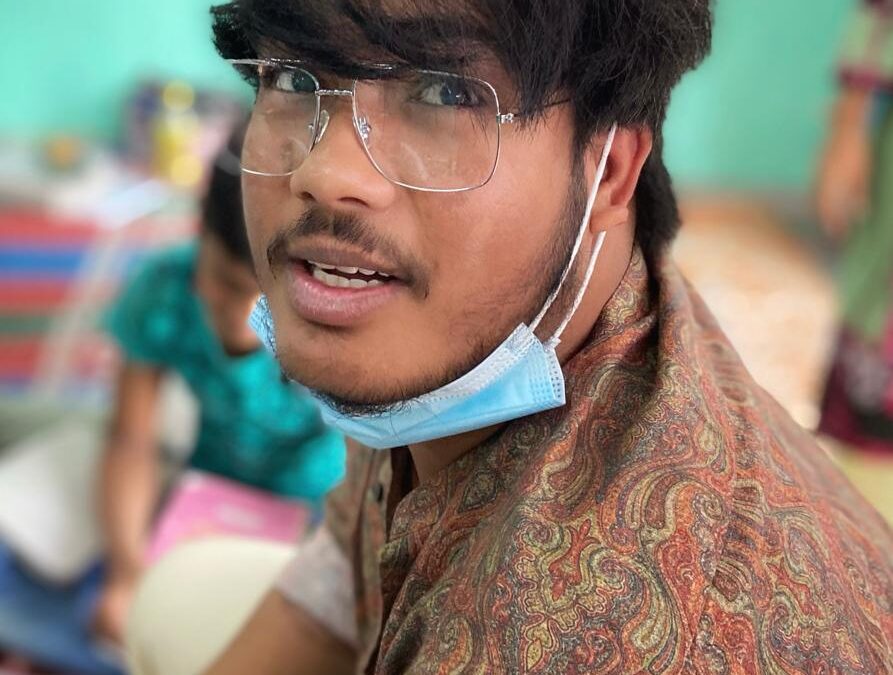
There were some hurdles along the way but we overcame them all as Utpal the brave heart is a survivor. And as he grew up, we saw him transform into a lovely teenager with a heart of gold. He is always willing to help others and never shirks away from any responsibility given to him. He is not your straight A kid but a wonderful all rounder who is a born artist, a mean skater and an incredible dancer.

He cleared his class X and chose to take on humanities as science was not his subject! He is in Class XI and is a Delegate Appointee of his school. During his breaks he volunteers at the Khader centre, his first home. He teaches the children dance and art and has walked into the heart of every child he reaches out. Utpal Bhaiya is a very special person.

Currently, Utpal Bhaiya has completed his studies. From 2020 to 2023, he completed his Bachelors in Mass Communication and Journalism. From 2021to 2023,Utpal began his journey into the film industry through small part-time projects, which gradually opened doors to collaborations with notable brands like Chai Sutta Bar and Infamous Club, he also experienced the Music Industry with projects like Kaarwan with Being UK Youtube, he also handled all shooting and editing using just his phone. These collaborations marked his first income in the field and inspired him to create is own content.

Then, from 2023, he worked for RITAM DIGITAL as a Sub Editor. In 2024, he worked in JANANI, EK AI KI KAHANI  as an Assistant Director.

We hope and pray that he will shine and live the life God has destined him to. We tend to spoil him a little, but as was said by a specialist in children’s trauma: “Never forget that there was a time when Utpal spent one third of his life in pain”

Think about it and then like us, you will agree that Utpal needs all the love he can get.

The Boarding School

The Boarding School

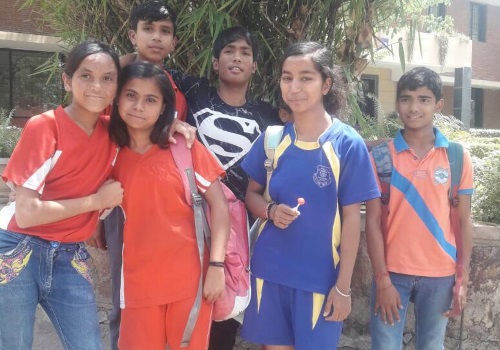
UTPAL, BABLI, ADITYA, VICKY, MEHER, MANISHA, YASH

Like all else at Project Why the boarding school project began as an answer to a deafening why. In the summer of 2006 Utpal found he was without a home as his mother had to be admitted in a rehab urgently and the ‘father’ stole all he could from their minute home and vanished. Utpal needed a safe house and the answer was a good boarding school. He joined school at the tender age of 4.

Four years later a potential donor wanted to give some children a better chance in life and requested us to select 4 children who could also be sent to the same school. Vicky, Babli, Nikhil and Aditya were the chosen ones and after spending a year in a residential facility we ran in order to groom them for the school, they joined Utpal.

It needs be said that the dream of having children from the poorest of homes rub shoulders with children from more privileged ones was a dream dear to us and this was a God sent opportunity. Many detractors felt that such deprived children should not be sent to better schools, as if these were hallowed ground, but we were confident that these children would prove that if given a chance, they would shine and do us proud.

Later they were joined by Meher, Manisha and Yash.

Nikhil left the programme after class VI.

They are incredible kids and are doing extremely well both in academics and extra curricular activities

The first batch will graduate in 2019 and we wait with bated breath for that day to dawn.

Heartfix Hotel

Heartfix Hotel

SPONSORING HEART SURGERIES FOR THOSE MOST IN NEED>

True Project Why is first and foremost an education support programme but when seeing with your heart is its watchword then it takes no time to widen your horizons. Answering every Why that comes our way has been our endeavour and what can be a more deafening why than the cry of a helpless parent in search of support to repair her child’s broken heart. And when you help repair one, it did not take long for others to follow!

Sanjay Padiyar: From camps to fashion Ramps

Sanjay Padiyar: From camps to fashion Ramps

Sanjay’s story starts with a camp of the Lohars
of Maharana Pratap, which has a longstanding relationship with Project WHY. The Lohars (ironsmiths) are a nomadic Indian tribe from Rajasthan (Chittorgarh), known to repair arms and shoe horses. One of their camps, containing 30 families, was located close to Project WHY Govindpuri centre. The sight of the Lohar children running and playing amongst the traffic light caught the attention of Project WHY. In 2005, The Project WHY Lohar Centre began, offered a crèche and primary school support for the children. Though the Lohar Centre no longer exists, Project WHY continues to employ people from this community.

Sanjay Padiyar, was one of seven children in the Padiyar family residing in the Lohars camp. Like his forefathers, Sanjay seemed destined to become a blacksmith. However, it soon became apparent that Sanjay’s dreams were much bigger. Having joined Project WHY classes, he finished his schooling. Through the recommendation of his sister, Project WHY employed Sanjay as a resource person. Sanjay was a primary teacher, and took the responsibility to teach at Project WHY for five years. His gentle ways and boundless patience made him a great favorite with the children. Despite his progress, he still took showers on the roadside, convinced that people like him could not transform their lives.

A French filmmaker, Camille Ponsin, visiting Project WHY in 2009, and maked a documentary on Sanjay’s life – Bollywood boulevard: From the Slums to
the Spotlights (AndanaFilms). Sanjay revealed his true dream on camera. “I want to be on the stage of the world. A model,
a Bollywood star”. It was not to be films, but that documentary led Sanjay Padiyar to the fashion ramp. In 2010, Sanjay walked the ramp for a top designer, Narinder Kumar, at the Lakme Fashion Week. In June 2011, Sanjay walked for Agnès B at her Paris Show, and has become a “poster child of rags to riches”.
Sanjay is living his dream and the showers on the street side seem like a distant memory. He continues to model, and has also now opened his own gym. He has become a beacon of hope to his community who hope to follow in his footsteps and achieve their dreams.

ANITA: The Power to say ‘No’

ANITA: The Power to say ‘No’

Anita’s relationship with Project WHY started in 2002 when she was a young girl studying in Class 3. Her father comes from Bihar and moved to Delhi in the late 80s to look for education. Due however to financial problems, he was forced to start working in the nearby factory at an early age and settled in the Giri Nagar area.

In 2004, with Anita in Class 6, her father, the family’s sole earner, was told that there was no work in the factory and told to take a two month ‘break.’ Whilst her mother had previously devoted her life to running the house, she was forced to begin running a stitching and embroidery service from home. In an effort not to make her family suffer, Anita’s mother combined this income with her life savings to support their lifestyle.

Anita is a glowing example of the opportunities that Project WHY can create. She attended
the centre in Giri Nagar untill Class 12,
and recorded consistent scores of 75-80% throughout her school career. As one of our brightest students, she secured admission to the prestigious Delhi University to do her B-Com in 2012.
Anita returned to us after graduating, wishing to provide the same opportunities to similarly underprivileged children. Her parents were supportive, indeed they knew she was safe with us and did not want her working anywhere else. As one of our oldest and most successful students, we were happy to take her on as a primary teacher. She then went on to teach some of our brightest secondary students in 2012.
In 2015, she came to us with the news that she would have to leave the job, as her parents had found a boy in the village and wished for her to get married. We had no choice but to accept this. Yet, four months later, Anita returned and asked to resume her old post, which we were happy to give her. The boy’s family had demanded a large amount of money as ‘dowry,’ claiming her to be dark in skin and apparently not sufficiently pretty. Yet Anita, as a product of Project Why, had learned to speak for her rights. She knows her self-worth, beauty and value to society and refused to get married under these conditions. She therefore spoke to the family herself to reject the boy and the forced marriage.

Dowry or Dahej is the payment in cash or/and kind by the bride’s family to the bridegroom’ s family along with the giving away of the bride (called Kanyadaan) in Indian marriage. It runs across all class and caste. Although Dowry was legally prohibited in 1961, it continues to be highly institutionalized and prevalent.  The groom often demands a dowry consisting of a large sum of money, vehicle, house, furniture, and electronics. The dowry system puts great financial burden on the bride’s family

At Project WHY, we pride ourselves in discussing prevalent social issues such as caste, dowry, violence against women and sexual abuse. We believe that we have made our resource persons fully aware of their rights and responsibilities. Anita, at that moment, stood up for her rights and refused to get married on those terms and conditions. “I am as good as any girl on this planet,” she voiced.

Today, Anita is back teaching and continues
to value education above all else. Together with her mother, she is funding her brother’s B-Tech from IP University, at a cost of INR 60,000 per year, striving to give him the same opportunities in life that she had. Concurrent to her work as a Secondary teacher, Anita is now pursuing her M-Com. She wants to apply for a government job, from which she feels she can have an impact on an even wider scale. Yet always thankful of her roots, she will never stop supporting Project WHY, both through donation and through education.

Geeta – A Girl Uninterrupted

Geeta – A Girl Uninterrupted

Under the Right to Education (RTE) Act, passed in 2009, a free and compulsory education is guaranteed for all children aged between six and fourteen. The most recent figures for primary school enrolment in India stand at a seemingly impressive 98 per cent.

But going to school is a very different thing from receiving a quality education. Those monitoring progress on the sustainable development goal of achieving universal primary education have observed that Indian schooling, albeit ubiquitous, is simply not to standards.

At government schools, pupils face numerous challenges. Overcrowded classrooms, absent teachers, lack of toilets and unsanitary conditions are common complaints, and can eventually lead to parents deciding that the education system is simply not worth it. Moreover, given the economic conditions of many parents and the need for someone to help out around the house, there is not enough value placed on a girl’s education. Whilst girls attend primary school in roughly equal numbers to boys, the gap widens as they get older and more are forced to drop out to help with work at home or to get married.

One such story is that of Geeta, who came to Project WHY in 2008. She was studying at the time in Class 5 at the local government school. Her family is from Bihar and very poor. They came to Delhi looking for a better life and live on rent in Khader. Thankfully, her parents were quickly put in touch with us and enrolled Geeta, her sister, and her two brothers into our primary programme.

After a year of her studying at Project WHY, Geeta’s father became very sick and the doctor recommended surgery. He was the sole earner of the family but, with little employment protection law in India, he was deemed unfit to work and lost his job. The family soon found themselves unable to pay the rent or buy groceries. During one of our classes, Geeta shared her family’s situation with her resource person, who came to realise that the family were on the verge of eviction. It was decided that Project WHY would assist by raising money amongst the staff to temporarily pay her rent, in order to avoid her family living on the streets that month.

Geeta’s father, still recovering, was incredibly appreciative, and came to Project WHY personally to thank all of the teachers. We found ourselves touched by their situation and decided that a permanent solution was required. Through our community connections, we were able to find a cleaning job for Geeta’s mother in order that the family could make ends meet. Our staff, who had grown attached to the struggling family, continued to check on them every week. We encouraged them, in spite of their difficulties at home, to allow Geeta and her siblings to continue studying, which they agreed to do.

As Geeta’s father began to recover, a vacancy arose at the Project WHY Khader Centre for a security guard. As a sincere and upstanding member of the community, we offered this job to him and the family’s economic condition slowly started to improve.

Geeta, with uninterrupted education and support, secured 85% in her Class 10 exam in spite of her family’s difficulties. She was admitted for her desired science classes in Class 11, but at this point her parents went through an acrimonious divorce. With neither parent willing to pay the tuition fees, Project WHY again stepped in to fund these studies. We provided counselling to the parents and tried to maintain a healthy environment for Geeta.

Now in Class 12 and preparing to go to university, Geeta is appreciative of everything that Project WHY has done for her, saying, “if it were not for Project WHY, nobody would have helped us and our condition would have become worse”. She looks after her parents, who continue to work, and manages the household budget for herself and her siblings. She says that she will always be grateful to our staff and that “my studies have not suffered and through Project WHY’s guidance I hope to fulfil my dreams and become a doctor.”

Gyanti Devi – A stitch in time

Gyanti Devi – A stitch in time

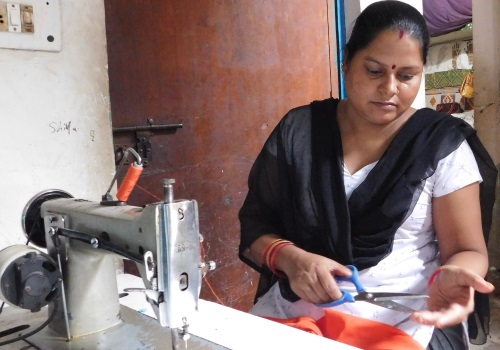
Born to a poor family in Bihar, Gyanti Devi never had the opportunity to learn as a child. Soon after her marriage, her husband, who is severely handicapped, required treatment. This meant moving her life and her two children to Delhi in 2006, where they lived on rent in the village of Madanpur Khader. The area houses mostly migrant families and has a high dropout rate from government schools as well as issues of safety and nutrition.

Gyanti Devi’s case was brought to our attention by a friend of the Project, Sunita, at the beginning of 2014. With her husband unable to work due to his handicaps, Gyanti Devi needed income for her family but, with no skill whatsoever, was unable to find a job.

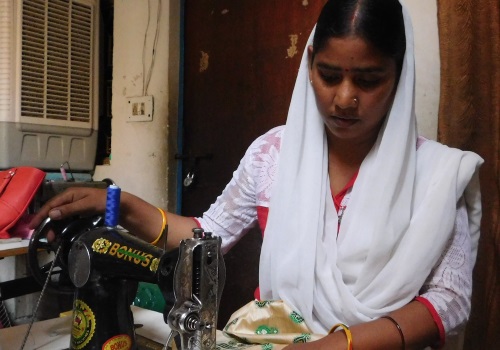
At Project WHY, we felt that our sewing or beautician classes could give Gyanti Devi the opportunity to start a career. However, we soon realised that, being entirely illiterate, she would need more than just vocational skills. Dharmender, the manager of our Khader centre, proposed that she spend the mornings learning to stitch with the vocational group, but also attend literacy lessons with the children for 40 minutes in the afternoon. She agreed to this and became one of our most motivated and diligent students, slowly building up her literacy skills with the children whilst also finding solace in her knitting.

Now, Gyanti Devi is a proud graduate of the Project WHY system and able to read, write and sew with ease. She has started a small business within her village stitching other people’s clothes, with which she is able to provide income to her family. She is also able to read the local newspaper and understand what is going on in the world. She points to an increased sense of freedom and opportunity with the skills that she now has. Previously afraid to take the bus alone, she notes that “I can now make my household budget and also can read the bus signboard.”

Armed with a new sense of financial responsibility, Gyanti Devi has spent the last three years building a new house for the family. She would get up early in the morning and take the interstate bus from Delhi to Palwal (Haryana) by herself, returning late at night. There, she would bargain and purchase the construction materials required. She kept detailed records of all labour payments in a notebook and is proud of her achievements. “I have successfully built my home for my family. So, I can say today that what every man can do, I can also do”.

Project WHY believes that every person should be able to change his or her life, and it provided the support for Gyanti Devi to do this and achieve her dream. She has created a better future for her children and she hopes that the skills she has learnt will allow her family to prosper for generations.

Bindaas Babli

Bindaas Babli

When Babli first came to Project WHY in 2004, she was a bright-eyed, feisty girl; what some Indians would call Bindaas, meaning carefree and confident. She loved books and seemed to always have a smile. It took Project WHY’s resource persons some time to realize that every breath she drew was an effort. Babli had a hole in her heart from birth and needed corrective surgery. Her family was unable to come up with the required funds. They had simply accepted that she would not live long.

In India, little girls are sometimes considered dispensable, their hearts not worth mending. The Census of India 2011 demonstrates a decrease in the population ratio of female children (age group 0-6 years) of India compared to 2001. For every 1000 male children, there were now 914 female children, a drop from 945 – so where are our girls? Investigations show that female infants experienced a significantly higher mortality rate than male infants in all major states.

Thanks to our wonderful friends, Project WHY was able to raise the funds for Babli by 2005 and the operation was performed successfully. It was scary and painful for this innocent little girl, but Babli’s bindaas spirit saw her through it all.

After her recovery, Babli was expected back in school but, to everyone’s shock, it emerged that she would not be able to continue her education. Her mother, being the sole earning member of the family, didn’t have time to take Babli to school. She also needed her to take care of her younger sister. The father was busy playing cards, and it eventually fell to Babli to manage the father’s work cart that sold tobacco and biscuits.

One step forward and two steps back. The Project WHY resource persons soon found Babli sitting on the cart selling chewing tobacco, cigarettes and biscuits instead of being in school, and her little sister standing in the background. She told them about how her name had been struck off from the rolls of the school and why she was working. But Babli’s words, spoken when she had trouble breathing, still resonated: “I want to be a police,” she had said, without hesitation, when asked about her dreams.

Project WHY found the situation unacceptable, and took steps to change it. After a meeting with her parents and a visit to the nearby government school, Babli was back in school.

Today, thanks to a kind sponsor, Babli studies in Class 9 at English Medium Boarding School in New Delhi, where she often tops her class. True, she won’t become a ‘police’ as the aftermath of her surgery resulted in scoliosis, but she will shine. Her education, which had fallen into peril this year because of a major donor backing out, will continue thanks to another kindhearted donor who has stepped in to fill the gap. This is Project WHY’s attempt to prove that given equal opportunities, children from the slum can do as well as those from the privileged classes.

Shehnaz: In pursuit of education

Shehnaz: In pursuit of education

Whilst literacy is essential to breaking social barriers, the problems faced by Muslim women in India extend beyond this. A quality, broad education is required to combat the issues of poverty and political marginalization faced by these girls, and it is essential that parents encourage this. It has been observed that after the first few years of the primary education afforded to the Muslim girl, one of two things usually happens. Either the girl is plucked out of formal education by the time she reaches puberty and for all practical purposes lapses into virtual illiteracy, or she continues in school but does climb up the education ladder due to virtual exclusion.

Shehnaz’s story shows how a young girl came looking for that quality support in her pursuit of an education and she found it at Project WHY.

Shehnaz lived in Bihar with her two sisters, her brother and their parents. Unfortunately, when Shehnaz was just two years old, her mother passed away. Her father soon remarried and got a job in a factory in Okhla, not far from where the family lived. Shehnaz was therefore stuck at home with her stepmother, who was abusive, unpleasant and wholly unsupportive.

Shehnaz was keen to attend a government school but, by 2015, she was well behind on the syllabus. Her father did not believe in education for women and refused to pay for any kind of tuition. Rinka, a friend of Shehnaz, told her about Project WHY, which she had been attending since 2013, and Shehnaz was immediately keen on the idea. She approached us on her own, as her father was too busy to help her, and explained that she had missed out on a school career and wanted to catch up. We were happy to take her on, encourage her, and prepare her to return to school.

Through her own determination, Shehnaz has now taken admission to the local government school and continues to attend Project WHY. Her stepmother was not happy with these decisions, but simply sees it as an inconvenience. With no help or support, Shehnaz walks two kilometers to and from school every morning. She spends the evenings doing chores, which she says keeps her father happy. This way, she is able to avoid being taken out of school and forced into marriage.

“I feel comfortable and happy at the Project WHY, this is the only place where I can be myself and express my feelings,” says Shehnaz. Her dream is to complete her studies and become a teacher like the Project WHY resource persons who have helped change her life. She wants to go on to help change the lives of similar children in her community. Every day is a struggle for Shehnaz, but she is slowly catching up with the other children. With her appetite for knowledge, we are convinced that she will be successful.

Munna: Passion for Life

Munna: Passion for Life

Indian society continues to treat disability with indifference, pity or revulsion. Low literacy, school enrolment and employment rates are making mentally disabled people among the most excluded in Indian society. These people are deterred from taking an active part in most families or even communities. Moreover, there is a stigma attached to children with disabilities, especially in rural India, and often even loving parents can do nothing to help their disabled child because they themselves are not aware of the disease or how to take care of the child.

The story of Muna therefore begins in 2005, when he first arrived at Project WHY. It was clear that he had never been adequately looked after. Upon further investigation, it was revealed that, whilst his parents cared about him dearly, they simply did not understand his intellectual impairments. Muna’s parents did not have the time nor the resources to give him due attention, as they had to care for his other four siblings.

Interacting with Muna, Project WHY found that he had little concept of personal hygiene. He would regularly soil himself and had never been taught to have a shower/bath. He had no understanding of social interaction and rules of engagement. This was demonstrated in 2014 when Muna left a shop without realising he needed to pay for his juice and was severely beaten by the shopkeeper.

Having grown up in the industrial neighbourhood of Okhla, Muna would spend his days begging outside temples, occasionally stealing when money was unavailable. Residents of the neighbourhood would befriend him simply to bully and take advantage of his simple mind. Without the ability to communicate clearly, he was reduced to performing illegal errands around the community such as collecting and selling alcohol for under-aged children.

Project WHY began by teaching Muna the basic concepts of hygiene and to be self-reliant. He was taught to use a lavatory, to dress himself and to shower regularly. From there, we were able to build his confidence through speech therapy classes and develop his basic social interaction skills. Project WHY also initiated the process of educating Muna’s parents, who now understand his disability and the kind of care that he requires. They acknowledge his kind heart and sense of compassion even if he cannot communicate this in the same way as other children.

Today, at the age of 19 years, Muna is one of the stars of Project WHY’s special needs class. He is the first to welcome and befriend any new volunteers, including foreign students who do not speak the Indian language. He is very fond of activities such as art, ball games and dancing and, in spite of his difficult childhood, he shows an overall passion for life.

Sehroonisha – Breaking Barriers

Sehroonisha – Breaking Barriers


Muslim women are among the most educationally disenfranchised, economically vulnerable, and politically marginalized group in India. Their poor socio-economic status reflects a lack of social opportunity that, though not a feature exclusive to Muslim women, is exacerbated by their marginal status within an overall context for most Indian women.

Muslim women in India have a low literacy rate compared to the Hindu women. About 59 per cent of Muslim women have never attended school. A relatively low male education amongst the Muslims in rural India creates a pressure to impose ceilings on girls’ education, so as not to render them “unmarriageable”. In addition, the low age of marriage is a major inhibiting factor, which reduces women’s autonomy and agency in the marital home and creates conditions of patriarchal subservience that get perpetuated through life. This thereby reduces a woman’s self-worth.

This point is well illustrated by the story of Sehroonisha, a teacher in the special needs section of Project WHY, Govindpuri. Sehroonisha, has always been interested in education. From a very young age she would love going to school. Her dream was to pursue higher education and to have a good stable profession. However, her father did not share this vision and was against her pursuing higher studies as he thought it was a waste to spend money educating girls.

Before her marriage, Sehroonisha lived near Connaught place with her parents, two sisters and three brothers. In spite of her father’s attitude, her mother was supportive of her and would work in people’s homes doing dishes in order to contribute to her education. Sehroonisha eventually graduated with a Bachelor of Arts degree in 2009.

Upon graduation in 2009, Sehroonisha’s father got her married at the age of 20 years to a man who had only been educated until Class 3. “I had to accept my father’s decision at the time” rues Sehroonisha. She held out hope that, through marriage, she could improve her life and explain her interests to her husband. However, her husband did not share the same passion for education and she found that his thinking was on similar lines to her father’s – that is, education is a waste for women.

Sehroonisha had a daughter and a son through the marriage, and soon realised she was the sole provider for them. In spite of her difficulties, she wanted to do something different in her life and stand on her own two feet. She came to know about Project WHY as we had put up a requirement for teachers; it seemed like the perfect platform to change her life. Today she emphasises the impact that the Project has had on her life, saying “Project WHY gave me an opportunity to teach and slowly I was able to rebuild my confidence and take my own decisions with their support.”

With the conducive environment of Project WHY, Sehroonisha has been able to articulate and define her dreams. She acknowledges “All my problems are yet not solved but Project WHY has taught me how to address them with my own abilities”. Today, Sehroonisha enjoys her role as a teacher at the special section of Project WHY, Govindpuri. She has been with us since 2015 and has now taken on the responsibility of looking after the children’s daily activities.

Priya – Hungry for Education

Priya – Hungry for Education

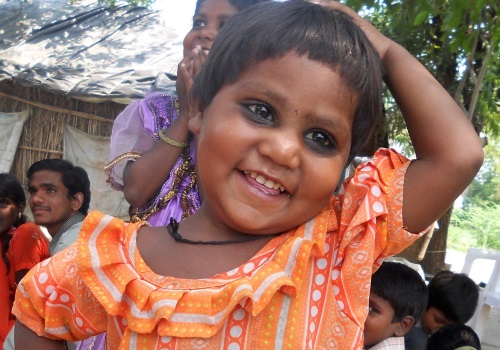
Priya is a 5-year-old girl who lives on the Yamuna Floodplain. Her parents, like the majority of those living on the plain, have no skills other than farming. Priya lives with her parents, two brothers and two sisters. Nobody in the family has received any education, as the expectation is that they will join the family farming business. As soon as they are of age, they will learn to harvest vegetables, which their parents will sell in town. The closest school is over three kilometres away; over a dangerous road, and these children do not feature on the government radar so would be unable to join.

Priya loves to explore the local area and now knows the Yamuna well. When she discovered our centre, which at that time served only higher-level students, she began to come every day and watch the children from a distance. The children of the Yamuna, unlike those of the other centres, are served a full lunch that is generously donated by one of Project WHY’s sponsors. This allows us to provide the children with proper nutrition, and also frees their parents to spend the day on the farm. Priya would watch the secondary students get served every day with wide and envious eyes. Rajesh, a teacher at the centre, one day decided to bring her into the centre and offer her a meal, which she was delighted to accept.

Rajesh started talking to Priya and asked her if she would like to study. She explained that she knows only farming techniques, but she doesn’t enjoy such work and would like to be able to read and write. It was this conversation that inspired us to create the Yamuna primary programme, through which we now teach eighty-four students. Without birth certificates, these students rely on Project WHY for all of their education. We therefore run the centre as a full-time school, following closely the Government syllabus and giving the children the basic skills of literacy that they deserve. As for Priya, she now dreams of being a teacher, and in fact loves her studies so much that she tried to come to school on a Sunday!

Meher – With a little Help from Our Friends

Meher – With a little Help from Our Friends

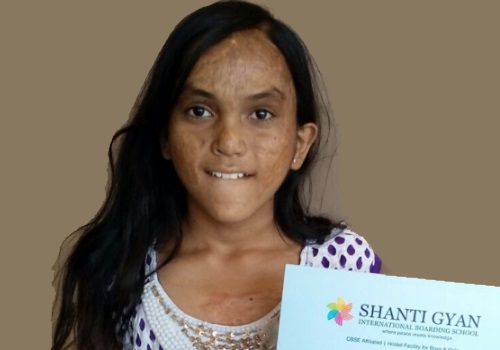
At the time of this photo, in January 2009, Meher was three years old and lived in Khader, near the outskirts of New Delhi. Her father was a migrant worker who came to New Delhi to work part of the year, and her family spent the rest of the year in their village in Nepal.

When Meher was eight or nine months old, a mosquito net over her bed caught on fire. Miraculously, she survived the terrible burns, but the experience left her face and scalp badly scarred and her left hand permanently closed and deformed. Meher’s father is a daily wage labourer. Her family could not afford to seek additional treatment for her, although they were concerned about her future prospects in Indian society.

Meher had been enrolled in Project WHY from a young age. She is extremely bright, verbal, and social and had picked up a little English from her time at Khader. She interacts confidently with visitors from all over the world. When an American elementary school teacher, Nina Sethi, came to give our staff some training, she took an immediate liking to Meher. We explained to her the social issues that plague a girl with such burns in Indian society and Nina was keen to help. Whenever Nina would arrive to work with the teachers, Meher would greet her and help to oversee her English class. Nina describes an “immediate connection and a special bond,” and notes that she “recognised something in Meher: a great capacity for leadership and an amazing spirit.”

In January of 2009, Nina asked her friends and family and a non-profit organisation in the United States, Chess Without Borders, to help her raise enough money to cover the cost of reconstructive plastic surgery on Meher’s hand and face. This would have to include staying in the hospital, multiple operations, medicine, physical therapy, and much more. She was also keen to extend the fund to raise money for Meher’s education, as she is very intelligent and had had limited opportunities in her past.

The response that Nina received was overwhelming. Through her dedication and commitment, she was able to raise over $45,000 (USD), which was more than enough money for Meher’s surgeries and education, and is likely to last her until her higher education. Thankfully, her surgeries were completed successfully at a private hospital near her home.

Meher now attends Shanti Gyam International School in New Delhi with some other children she knows from Project WHY. She is flourishing and is consistently the top student in her class. Nina often visits her in New Delhi and enjoys speaking to Meher in English. Meher is now outgoing, confident and intelligent and loves Nina like family!

Naresh Sir, with Love

Naresh Sir, with Love

Project WHY opened its first spoken English class for secondary students in 2001 in Giri Nagar. It was the same time that Naresh had just completed his Bachelor’s degree in Arts and was looking for a job. He was a whizz mathematician and loved to teach, and to fulfill this passion he was giving tuitions to the neighborhood children, often for free. But in a poor home, one cannot afford to dream, for dreams do not put food on the table. Naresh tried his hand at various jobs, even as a vendor in a shoe shop, which just lasted two-days. His heart was not in it.

One day, in November 2001, a Class 10 student, Aadarsh, came to class with large welts on his arms. He had been brutally beaten in the government school he attended. Corporal punishment still prevails in many Indian schools despite a law against it. Project WHY resource persons visited the government school. The experience was Dickensian. The headmaster kept whirling the stick in his hand to make his point. The boy and other Project WHY students were humiliated. The boys were called guttersnipes and the Principal contemptuously informed us that these boys would never pass their Class 10 Board Examinations (a state level examination).

Project WHY took up the challenge of providing these boys with support to clear their Class 10 examination. With no funds, no space and no teacher to take this forward, Project WHY was in need of a miracle to get the bunch of lads ready for an exam in two short months.

A miracle came in the form of Naresh, who happened to be the elder brother of a teacher, Rani. He had just finished his degree and was looking for a job in the Giri Nagar area, where Project WHY had started. The only space available was the dusty pavement in front of our center and the only time available to tutor the students was between 7.30am to 9.30 am in the morning before they went to school. Every morning ten students assembled in front of the center, some mats were laid out and Naresh and his boys sat in a circle to study. The cold was kept at bay by cups of tea graciously offered by Naresh’s family.

That year, the challenge was won. The boys cleared their Class 10 examinations and this marked the beginning of Project WHY’s secondary outreach programme. Since then, Naresh has single-handedly ensured the success of hundreds of boys and girls who have successfully cleared their Board exams. The boy with the welts is now father of a little boy and all set to immigrate to Australia after having completed his higher education.

To Naresh, teaching a student is a mission he cannot fail. When exams approach, he schedules extra classes and teaches at the crack of dawn or late into the night. This is quite a feat for someone who likes a morning lie-in and a late session with his pals! On exam days, he is as nervous as his students, if not more, and waits for their return so he can find out how it all went. Come results day, his nails are bitten to the base as he scours the Internet, his students in tow.

Recently, when he went visited the Project Why Okhla Center and found out that the senior secondary students were in need of some extra tutoring, he rescheduled his timetable and took them under his wings. He never seeks extra compensation. Naresh often tells his students that he wishes there had been a Project WHY when he was growing up.

Hungry for Education #GivingTuesday#India

Hungry for Education #GivingTuesday#India

(Posting a series of success stories  from the compilation The Project Why Stories 2000-2016)

Priya is a 5-year-old girl who lives on the Yamuna Floodplain. Her parents, like the majority of those living on the plain, have no skills other than farming. Priya lives with her parents, two brothers and two sisters. Nobody in the family has received any education, as the expectation is that they will join the family farming business. As soon as they are of age, they will learn to harvest vegetables, which their parents will sell in town. The closest school is over 3km away over a dangerous road, and these children do not feature on the government radar, so would be unable to join.

Priya loves to explore the local area and now knows the Yamuna well. When she discovered our centre, which at that time served only secondary students, she began to come every day and watch the children from a distance. The children of the Yamuna, unlike those of the other centres, are served a full lunch that is generously donated by one of Project WHY’s sponsors. This allows us to provide the children with proper nutrition, and also frees their parents to spend the day on the farm. Priya would watch the secondary students get served every day with wide and envious eyes. Rajesh, a teacher at the centre, one day decided to bring her into the centre and offer her a meal, which she was delighted to accept.

Rajesh started talking to Priya and asked her if she would like to study. She explained that she knows only farming techniques, but she doesn’t enjoy such work and would like to be able to read and write. It was this conversation that inspired us to create the Yamuna primary programme, through which we now teach eighty-four students. Without birth certificates, these students rely on Project WHY for all of their education. We therefore run the centre as a full-time school, following closely the Government syllabus and giving the children the basic skills of literacy that they deserve. As for Priya, she now dreams of being a teacher, and in fact loves her studies so much that she tried to come to school on a Sunday!

Your child will follow your example, not your advice. #GivingTuesday

Your child will follow your example, not your advice. #GivingTuesday

mapa

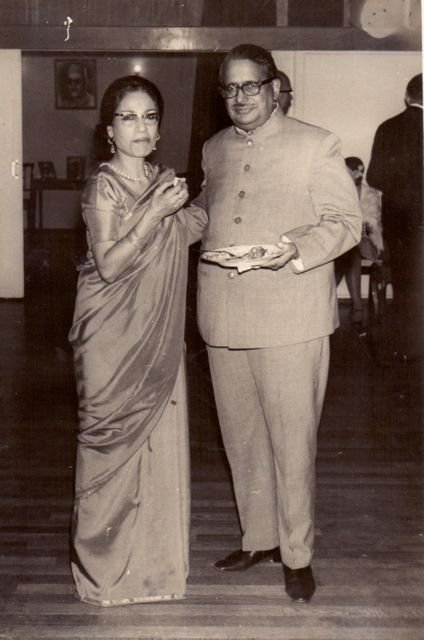
Live so that when your child thinks of fairness, caring, integrity she thinks of you. These words sum Ram and Kamala’s life. Today a more than a quater of a century after I lost them, and in the seventh decade of my life, I know I could not have been who I am if not for them.

They would have celebrated their 68th wedding anniversary today. I know they are popping the champagne bottle in heaven and I raise my glass to their happiness.

You may wonder why a blog about anniversaries and personal memories on what should be a post on Project Why. The answer is simple. Project Why is the logical outcome of an only child eagerly following her parents’ example day after day and not their advice. Advice is tinted by social mores, and politically correct guidance, example is from the heart. Advise would have been a lucrative career, a heavy bank balance, luxury holidays and three starred dinners. They gave me all that while I was still a child. I had my fill and sought more, but did not know what ‘more’ was as that never came as ‘advise”!

That came after they left and I sat looking desperately for the legacy they had left behind. It was not in the boxes and trunks and memorabilia that was strewn around me. I was terribly lost. All I had to hold on to were my father’s last words: don’t lose faith in India! It was November 1992.

It would take six long years of loneliness and pain to finally discover what the legacy was. Six long years of remembering their lives, the bittersweet memories, the stories often unfinished and bereft of any moral precept. And slowly it all came to me, in no order at all but somehow fitting the puzzle that would become Project Why. From Kamala’s side it was education, women’s right, patriotism, gender equality, standing for what is right, self-respect, courage and unconditional love. From Ram’s it was humanity, compassion, tolerance, social equality, generosity, giving unabashedly, giving when you did not have and of course culture, savoir-faire, integrity, probity and simple living.

It was left to me to honour this legacy.

And to honour them I set up Project Why with the hope that all the lessons learnt at their knee would be reflected in what I have been striving to do for the past 18 years!