
Project Why
  • HOME
  • ABOUT
    • Our Story
    • Our Founder
    • Our Board
  • PROGRAMS
    • Education
    • Skill Development
    • Mid-day Meal
  • CENTRES
    • Giri Nagar
    • Govind Puri
    • Madanpur Khadar
    • Okhla
    • Yamuna
    • Dehradun
  • IMPACT STORIES
  • MEDIA & AWARDS
    • PRESS
    • INTERVIEWS WITH ANOURADHA
    • AWARDS
    • PHOTO GALLERY
    • VIDEOS
  • BLOG
  • CONTACT
  • DONATE
  • MEET OUR TEAM

Select Page

The Suitcase Full of Dreams

by anouradha bakshi | Jun 21, 2017 | Stories | 1 comment

I was suitcase shopping recently.

Not for myself. I do not travel much.

This suitcase was for Utpal.

And as I stood looking at it, my mind went back to another suitcase—a little red one I bought for him nearly two decades ago.

Utpal was four years old then, and he was leaving for boarding school.

We filled that little red suitcase with everything on the list given to us by the school. But we also packed something else: a whole collection of dreams waiting to be discovered and fulfilled.

Over the years, as Utpal moved from one stage of his life to the next, we packed many more suitcases.

And we never forgot to tuck in the dreams that were still waiting for their turn.

Today, another suitcase is ready.

And this time, Utpal is not leaving for school.

He is leaving to begin his adult life and pursue his dream of working in films.

The little boy who once needed us to help him find his way is now ready to find his own.

But before we talk about the young man leaving for Mumbai, we need to go back to the little boy who almost did not survive.

In March 2003, the day after Holi, we heard that the little boy who had recently moved into the neighbourhood had fallen into a pot of boiling water.

We barely knew him. His family had moved to Giri Nagar only a few days earlier. We felt sorry for the baby and, as people often do, went on with our lives.

A few days later, we heard that he had not died after all. He had been sent home from hospital.

When we saw him, we were shocked.

He was a tiny bundle wrapped in bandages, with a bewildered look in his little eyes. The hospital had sent him back, telling his mother that he would not survive.

We thought otherwise.

With the help of Sophie, a young nurse from Belgium, and Rani, we fought for him day and night.

And six weeks later, Utpal smiled.

We knew then that we had won.

Utpal was a survivor.

But surviving the burns was only the beginning of his story.

His home life was far from safe. His mother struggled with alcoholism and mental illness, and the family environment was deeply dysfunctional. During the day, Utpal was safe with us. At night, however, life could become unpredictable.

There were nights when there was nothing to eat at home. There were times when his mother ended up at the police station. And there were moments when a little boy had to deal with situations no child should ever have to face.

Utpal, however, seemed to understand far more than a child of his age should have.

If someone wanted to visit his home, he would run ahead on his chubby little legs and hide the bottles of alcohol his mother had been drinking.

“Mama was naughty,” he would say.

The words were innocent.

The reality was anything but.

We tried to help his mother. We eventually arranged for her to go to a rehabilitation centre, while Utpal went to boarding school.

He was just four years old.

The separation was difficult for both of them. But when Utpal accompanied one of our resource persons to the rehabilitation centre to say goodbye to his mother, he smiled.

He knew he was safe.

And, more importantly, he knew that his mother was safe too.

Even then, Utpal was showing us something that would remain with him throughout his life: an extraordinary ability to endure and keep moving forward..

The years that followed were not always easy.

Utpal slowly learned to adapt to his new life at boarding school. During the holidays, he would return to us, but the situation at home continued to deteriorate.

Eventually, we became afraid that his family might take him out of school and disappear with him. We could not allow that to happen.

So we stepped in once again.

I became Utpal’s legal guardian.

By then, he had already been through more than most adults could bear. The burns had left scars on his body. The chaos at home had left other scars, less visible but no less real.

And yet, somehow, Utpal kept moving forward.

As the years passed, he taught us many things. Perhaps the most important was the meaning of dignified acceptance in the face of adversity.

He had endured excruciating physical pain. He had lived with the humiliation of being let down by the people he loved most. And yet he never allowed any of it to define him.

Looking back, Utpal could so easily have become one of the many children begging at a traffic light.

Instead, a network of people chose to hold on to a different dream for him.

The dream was simple: that this little boy should be given the chance to live a different life.

And slowly, with a little help, he began to build one.

And then, slowly, the little boy began to grow into himself.

By the time Utpal was fifteen, he had made peace with the scars that had once made him the target of bullying and teasing. He was now a lean, stylish young man, a terrific skater who taught skating to younger children at his school.

He played tennis and football. He loved music and dancing. And he had a particular fascination with engineering—or what he called engineering.

Whenever he came home for the holidays, he would take apart all manner of objects and then try to put them back together again.

Sometimes they worked.

Sometimes they did not.

But Utpal was always willing to try.

The wise little boy of earlier years had become a delightful teenager, complete with all the imperfections and mischief that come with being fifteen.

He was also deeply generous.

During his holidays, he would return to the Khader centre, his first home, and teach the children to dance and draw. He had a way of reaching straight into their hearts.

To them, he was Utpal Bhaiya.

And Utpal Bhaiya was very special.

After school, Utpal went on to study Mass Communication and Journalism.

But his real education was happening elsewhere too.

He had always been drawn to art, music, dance and storytelling. Now he began to find his way into the world of film and digital media.

Between 2021 and 2023, he worked on small projects, gradually gaining experience and opening doors to collaborations with brands and music projects. He filmed and edited using nothing more than his phone.

Those early projects brought him his first income and, more importantly, gave him the confidence to begin creating content of his own.

He went on to work as a sub-editor at Ritam Digital and later as an assistant director on the film Janani, Ek AI Ki Kahaniin Mumbai.

For a while, he returned to Delhi and worked with a digital marketing start-up.

But that was not really the dream.

The dream was still waiting.

And then, suddenly, the opportunity came.

The last few days before his departure were busy.

There was shopping to do, things to pack and special meals to cook. The suitcase slowly filled up.

No one said very much.

We were all quietly counting the days until it was ready and our Utpal was ready to leave with it.

I had been through this before.

When Utpal first left for boarding school, he was only four years old. I remember weeping like a baby. My heart was screaming at me: Was I doing the right thing? Was I really sending such a tiny child away?

My mind tried to reassure me.

It was for his good.

Education would help make his dreams possible.

Now, all these years later, I found myself facing another departure.

The little boy who had once left for boarding school was now a young man leaving to pursue his dream.

And once again, I had to let him go.

The half-packed suitcase sat in the room, silently staring at me. I could feel my throat constrict and my eyes fill with tears.

I was not the only one.

No one said much. There were so many things I wanted to say, but could not. Instead, I found myself patting his cheek, giving him a furtive hug and walking away.

I knew I had to let him go.

That was the only way he could find his wings and fly.

And so I would let him go.

There was no other option.

But suitcases packed with dreams have a destiny to fulfil.

I knew that when the time came, I would send him off with a smile and the right words.

I also knew that when the car disappeared and I stopped waving goodbye, I would probably break down and cry.

And I did.

But that is what we do for the children we love.

We hold them close.

We nurture them.

And then, when the time comes, we let them go.

I will pray every day to the God of small things to take care of my darling child and walk with him always.

“All God’s angels come to us disguised,” wrote James Russell Lowell.

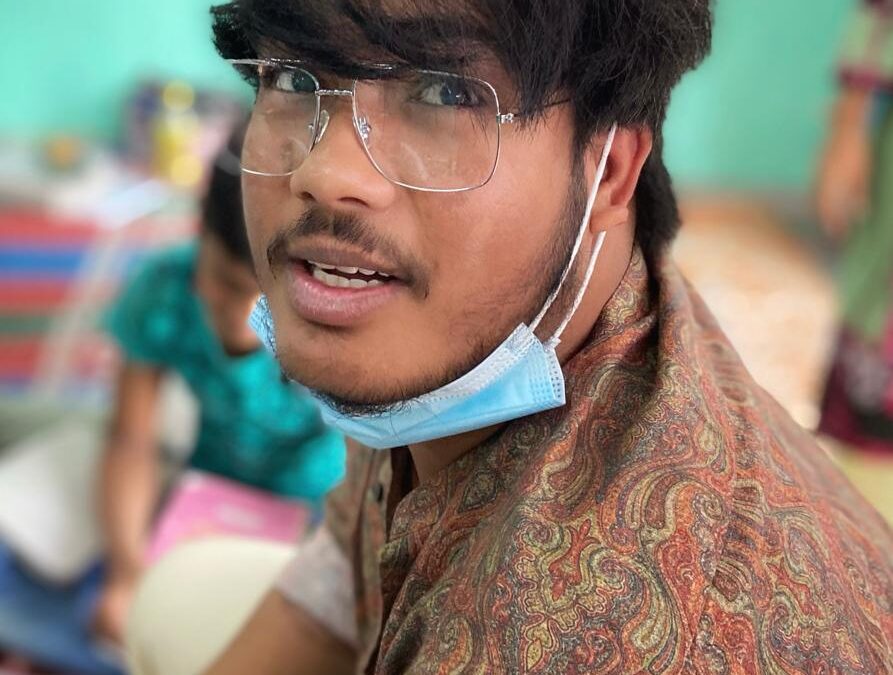
Utpal—Popples to me, and Outpal to his friends—is a force to be reckoned with.

He has survived third-degree burns, double pneumonia and acute hepatitis A. He has survived pain, loss and circumstances that could easily have broken him.

But he never gave up.

And now, finally, the little boy who once needed others to carry him towards his future is ready to walk there himself.

His suitcase is packed.

His dreams are waiting.

And it is time to let him fly.

Yes. This one is ready for the finishing touches.

Excerpt

After the death of her parents, Anouradha Bakshi felt lost and without direction. Then she met Manu, a homeless man whose trust and friendship gave her back a reason to live—and inspired the creation of Project Why.

I would keep the excerpt fairly simple. The article itself is deeply emotional, so the excerpt should create curiosity without trying to tell the whole story.

Editorial table

Original Title: Manu
New Title: The Boy Who Gave Me Back My Life
Rating: 10/10
Status: Ready after edit
Notes: The origin story of Project Why, told through the extraordinary relationship between Anouradha and Manu. A deeply personal and emotionally powerful piece about grief, love, human dignity and the way one life can change another. Manu is revealed not simply as the inspiration for Project Why, but as the person who gave Anouradha a reason to live and a path forward. The essay is both the emotional and historical foundation of the Project Why archive.
Cornerstone?: Yes — essential cornerstone

I would give this one a 10/10, rather than 9.5. Not because it is technically perfect, but because its importance to the Project Why story is unmatched.

You now have seven cornerstone pieces. And this one is the foundation stone—the story from which the others, in a sense, grew.

Yes. I’ve got the main Utpal piece. And I can already see the shape of it.

Before we rewrite, I want to make one important editorial decision: the story should begin with the boiling pot, but it must not remain a story about a terrible accident. The accident is the doorway. The real story is:

A child whom the world had almost given up on survived—and then became someone who helps other children find their own confidence and creativity.

That is much more powerful.

The current piece has four distinct movements:

  1. The accident and the fight for survival

  2. The loss of his mother and Project Why becoming his family

  3. The child growing into a talented, generous young man

  4. The adult finding his own path in film and media

I would also keep the final quote about having spent one-third of his life in pain. It is a very powerful way of reminding the reader what he overcame.

I suggest we start with the opening only. I would rewrite it like this:

In March 2003, the day after Holi, we heard that the little boy who had recently moved into the neighbourhood had fallen into a pot of boiling water.

We barely knew him. His family had moved to Giri Nagar only a few days earlier. We felt sorry for the baby and, as people often do, went on with our lives.

A few days later, we heard that he had not died after all. He had been sent home from hospital.

When we saw him, we were shocked.

He was a tiny bundle wrapped in bandages, with a bewildered look in his little eyes. The hospital had sent him back, telling his mother that he would not survive.

We thought otherwise.

With the help of Sophie, a young nurse from Belgium, and Rani, we fought for him day and night.

And six weeks later, Utpal smiled.

We knew then that we had won.

I think “We knew then that we had won” is a wonderful opening section. It gives the story a clear emotional beat.

Have a look at this first section and tell me when you’ve put it into your document. Then we’ll move to what happened after he survived, which is where the story becomes even more complex.

extra

Yes—please paste the extra snippets as well. I’ll read them alongside the main Utpal piece before we continue rewriting. They may give us the missing details, especially about his personality, his relationship with the children, and the later stages of his life.

I am just back suitcase shopping. Not for me though! I do not travel. Come Monday Utpal will board a train and leave for Mumbai to fulfil his dream of working in the movies. The stage is set for him as Mrinal and Abhigyan wait for the shooting of their next serial. My mind goes back to 2006 when I had gone suitcase shopping for him as he was going to boarding school. He was 4. We bought a little red bag and filled it not just with the things on the list given to us by the school, but also with a plethora of dreams yet to be revealed and fulfilled. Today one of these comes true. Over the past years as he moved from class to class we packed many suitcases for him never forgetting to tuck in the yet unfulfilled dreams. If his going to school the first time was a rite of passage for the two of us, today as he moves into the adult world is yet another one we both have to go through. I remember when he left for school the first time, I wept like a baby, a mix of feelings gushing through my mind, and my heart being ripped wide open. Was I doing the right thing in sending such a tiny tot to a big boarding school. The mind jumped in to quell the heart: it was for his good; education was what would make the dreams come true. The primary years ended and we moved to secondary school, then the final examination and results. School days were over. Then came college in another city a few hundred kilometres from here. His BA in hand, Utpal came to Delhi for his internship and then secured a job in a digital media start up. But that was not in the dream box. I was happy having him at home, seeing him every day. It was comforting but as I said not part of the dream. I was quite happy the way things were but not the God of small things to whom all dreams were entrusted. He had to make them come true. So the universe conspired to make things happen and they did at lightning speed: a phone call or two and before we knew it Utpal had a job offer and even a place to stay for the initial days. It was time to go. The last few days have been busy shopping, packing, cooking special treats. No one is saying anything. Each quietly counting the days till the suitcases are ready to move and our little Utpal with them. The coming days will be hard. Keeping a brave face is hard. The half packed suitcase in the room stares at me and I feel my throat constrict and my eyes well up.And I am not the only one. Though no one says anything. There are so many things I want to say but can’t. I find myself patting his cheek or giving him a furtive hug and walking away. I know I have to let him go as that is the only way he will be able to find his wings and fly and let him go I will as there is no other option. I know that when it is time to leave the house, I will send him off with a smile and the right words but I also know that when the car is gone and one has stopped waving goodbye, I will break down and weep. But suitcases with dreams have a destiny to fulfil. I will simply pray everyday to the God of small things to take care of my darling child and walk with him always. “All God’s angels come to us disguised” said James Russell Lowell. Utpal a.k.a Popples, and Outpal to all his friends is a force to reckon with, and a great lesson in survival. From a young age, he suffered third degree burns, double pneumonia, acute hepatitis A, and he never gave up. Utpal and his family moved into the tiny hovel adjacent to the Project WHY office, Giri Nagar in February 2003. In March 2003, the day after Holi, the ‘little boy next door’ had fallen in a boiling pot. The tiny boy sustained third-degree burns. The hospital gave up hope for the child’s survival when the discharge slip read – “Chances of survival – Nil” Project WHY, along with the help of Sophie, a volunteer nurse from Paris assisted in nursing Utpal back to health. In time Utpals scars healed, and the frightening reality of his existence emerged – alcoholic parents, violence, abuse and no clear plan ahead. His family was completely dysfunctional and not a healthy environment for a child to grow. Utpal negotiated both worlds the best he could. In 2003, Utpal started attending Project WHY in the day time and at night stayed with his parents. If the days were safe as both mother and son were under Project WHY’s care, conversely the nights were unpredictable – with nothing to eat at home and the possibility of ending up at the police station. He was an endearing child and wise beyond his years. Should anyone want to visit his home he would run ahead on his chubby legs to hide the alcohol bottles consumed by his mother at night, saying: “Mama was naughty.” As Utpal’s mother’s alcoholism became unsafe for the child. Project WHY stepped up and sent the mother to rehab for women and Utpal in boarding school. At that time Utpal was just 4 years old. The separation was hard for Utpal, but as he accompanied Project WHY resource person to the rehab centre; he bid farewell to his mom with a smile as he knew he is safe but above all his mom is safe. The intermittent years were not easy. Utpal learned to integrate into his new life at the Boarding school but would still come to his family on holidays, where the situation continued to worsen. Another incident compelled Project WHY to step in again – that of securing his legal guardianship, as it was feared that the family might take him out from boarding school and vanish. Project WHY’s founder, Anouradha Bakshi was made his legal guardian. As the years rolled by, Utpal taught us many things but most of all the meaning of dignified acceptance in the wake of any adversity: from excruciating pain that third degree burns bring, to the abject humiliation you suffer when those you love the most let you down. Looking back, Utpal was an ideal candidate for begging at a red light. Drunk parents, a nicely scalded body and yet an incredibly beautiful personality. With a little help from a network of friends who held on to the dream, of a better life for Utpal with Project WHY, made it possible for Utpal to survive and slowly transform his life. Each day goes by with making small memories which is captured in the little book called “dear Popples. with love Maam’ji” which will stand in for all the memories that Utpal may need as he grows into a man. Today, Utpal is 15 years of age and attends grade X at the boarding school. He is making up for all the lost years and the wise little chap of yesteryear has given way to a delightful adolescent with all flaws that come with the teen-age. He has made friends with his scars that had made him the butt of a lot of bullying and riling. He’s now a natty lean young lad, a mean skater, who teaches skating to smaller children in his school, plays tennis and football. He’s extremely fond of ‘engineering’: he takes apart a multitude of objects and rebuilds them when he’s at his guardian’s home for the holidays. He loves music and dancing like any other 15-year-old waiting for his dreams to unfold.

Ah—this extra material is extremely useful. In fact, it changes the shape of the article quite substantially.

The original piece tells us what happened to Utpal. These additional passages show us who Utpal was.

And there are some beautiful details here that we absolutely should preserve:

  • the little red suitcase;

  • the dreams packed into it;

  • the four-year-old hiding the alcohol bottles and saying, “Mama was naughty”;

  • his mother going to rehabilitation;

  • the pain of sending him to boarding school;

  • the later suitcase taking him to Mumbai to pursue his dream;

  • and the idea that the same child who once needed to be carried into a new life eventually had to be let go so he could fly.

That gives us a much stronger structure.

I think the article should probably open with the little red suitcase, rather than the accident.

Something like:

I was suitcase shopping recently.

Not for myself. I do not travel much.

This suitcase was for Utpal.

And as I stood looking at it, my mind went back to another suitcase—a little red one I bought for him nearly two decades ago.

Utpal was four years old then, and he was leaving for boarding school.

We filled that little red suitcase with everything on the list given to us by the school. But we also packed something else: a whole collection of dreams waiting to be discovered and fulfilled.

Over the years, as Utpal moved from one stage of his life to the next, we packed many more suitcases.

And we never forgot to tuck in the dreams that were still waiting for their turn.

Today, another suitcase is ready.

And this time, Utpal is not leaving for school.

He is leaving to begin his adult life and pursue his dream of working in films.

The little boy who once needed us to help him find his way is now ready to find his own.

I think this is much more emotionally sophisticated than beginning with the accident. Then we can go back in time:

But before we talk about the young man leaving for Mumbai, we need to go back to the little boy who almost did not survive.

Then we tell the accident story.

That gives us a beautiful circular structure:

Suitcase → accident → survival → childhood → boarding school → growth → dreams → suitcase → letting go.

And I would absolutely keep the detail:

“Mama was naughty.”

That one line tells us more about the little boy and the terrible situation he was living in than a whole paragraph of explanation.

The other sentence I especially want to preserve, in some form, is:

“I know I have to let him go as that is the only way he will be able to find his wings and fly.”

That is the emotional heart of the whole story.

So I suggest we do not yet rewrite the accident section. First, put this new opening into your document. Then we can move from the suitcase back to March 2003 and build the story chronologically from there.

Agrees, so can, I’m a little confused, so can you give me the entire beginning from the beginning? Thanks.

Of course. And you’re right to ask for the whole beginning—when we are working with several versions, it is very easy to lose track of which paragraph comes where.

Here is the complete opening section, from the suitcase through to the accident and Utpal’s survival. You can paste this as one continuous section:

I w

In March 2003, the day after Holi, we heard that the little boy who had recently moved into the neighbourhood had fallen into a pot of boiling water.

We barely knew him. His family had moved to Giri Nagar only a few days earlier. We felt sorry for the baby and, as people often do, went on with our lives.

A few days later, we heard that he had not died after all. He had been sent home from hospital.

When we saw him, we were shocked.

He was a tiny bundle wrapped in bandages, with a bewildered look in his little eyes. The hospital had sent him back, telling his mother that he would not survive.

We thought otherwise.

With the help of Sophie, a young nurse from Belgium, and Rani, we fought for him day and night.

And six weeks later, Utpal smiled.

We knew then that we had won.

I think this is now a very strong opening because it gives the reader the destination first, then takes them back to the beginning.

And the little red suitcase becomes a wonderful recurring image throughout the article.

The next section should deal with what happened after Utpal survived: his home life, his mother’s alcoholism, the dangerous environment, and the decision to send him to boarding school. That is a difficult section, and we should handle it with care and dignity.

now next

Yes. Now we move into the difficult part: Utpal survives, but survival is only the beginning.

I would write the next section like this:

Utpal was a survivor.

But surviving the burns was only the beginning of his story.

His home life was far from safe. His mother struggled with alcoholism and mental illness, and the family environment was deeply dysfunctional. During the day, Utpal was safe with us. At night, however, life could become unpredictable.

There were nights when there was nothing to eat at home. There were times when his mother ended up at the police station. And there were moments when a little boy had to deal with situations no child should ever have to face.

Utpal, however, seemed to understand far more than a child of his age should have.

If someone wanted to visit his home, he would run ahead on his chubby little legs and hide the bottles of alcohol his mother had been drinking.

“Mama was naughty,” he would say.

The words were innocent.

The reality was anything but.

We tried to help his mother. We eventually arranged for her to go to a rehabilitation centre, while Utpal went to boarding school.

He was just four years old.

The separation was difficult for both of them. But when Utpal accompanied one of our resource persons to the rehabilitation centre to say goodbye to his mother, he smiled.

ok

This section takes us naturally from physical survival to the much harder question of how a child survives a chaotic childhood.

The next section will be the boarding school and the loss of his mother, followed by the moment when you became his legal guardian. That is where the relationship between you and Utpal becomes even more central.

ok

Good. We’ll continue from there.

The next section should cover the years that followed: Utpal adapting to boarding school, the continuing uncertainty around his family, and the moment you became his legal guardian.

The years that followed were not always easy.

Utpal slowly learned to adapt to his new life at boarding school. During the holidays, he would return to us, but the situation at home continued to deteriorate.

Eventually, we became afraid that his family might take him out of school and disappear with him. We could not allow that to happen.

So we stepped in once again.

I became Utpal’s legal guardian.

By then, he had already been through more than most adults could bear. The burns had left scars on his body. The chaos at home had left other scars, less visible but no less real.

And yet, somehow, Utpal kept moving forward.

As the years passed, he taught us many things. Perhaps the most important was the meaning of dignified acceptance in the face of adversity.

He had endured excruciating physical pain. He had lived with the humiliation of being let down by the people he loved most. And yet he never allowed any of it to define him.

Looking back, Utpal could so easily have become one of the many children begging at a traffic light.

Instead, a network of people chose to hold on to a different dream for him.

The dream was simple: that this little boy should be given the chance to live a different life.

And slowly, with a little help, he began to build one.

This gives us a strong transition from the difficult years into the Utpal who begins to emerge.

Next, we move into the lovely section about his personality—his scars, skating, dancing, football, taking things apart, and becoming the lively young man he was. That will bring some light and energy into the story before we return to the suitcase and his departure.

ok

Good. Now we let the story breathe a little. We move from everything Utpal survived to the person he became.

And then, slowly, the little boy began to grow into himself.

By the time Utpal was fifteen, he had made peace with the scars that had once made him the target of bullying and teasing. He was now a lean, stylish young man, a terrific skater who taught skating to younger children at his school.

He played tennis and football. He loved music and dancing. And he had a particular fascination with engineering—or what he called engineering.

Whenever he came home for the holidays, he would take apart all manner of objects and then try to put them back together again.

Sometimes they worked.

Sometimes they did not.

But Utpal was always willing to try.

The wise little boy of earlier years had become a delightful teenager, complete with all the imperfections and mischief that come with being fifteen.

He was also deeply generous.

During his holidays, he would return to the Khader centre, his first home, and teach the children to dance and draw. He had a way of reaching straight into their hearts.

To them, he was Utpal Bhaiya.

And Utpal Bhaiya was very special.

I’ve kept this section lighter and warmer deliberately. We need the reader to fall in love with Utpal as a person before we take him into the next stage of his life.

Next comes the transition into adulthood—his studies, his interest in media and film, and eventually the moment when the dream of working in movies begins to become real.

ok

Then let’s finish it.

But suitcases packed with dreams have a destiny to fulfil.

I knew that when the time came, I would send him off with a smile and the right words.

I also knew that when the car disappeared and I stopped waving goodbye, I would probably break down and cry.

And I did.

But that is what we do for the children we love.

We hold them close.

We nurture them.

And then, when the time comes, we let them go.

I will pray every day to the God of small things to take care of my darling child and walk with him always.

“All God’s angels come to us disguised,” wrote James Russell Lowell.

Utpal—Popples to me, and Outpal to his friends—is a force to be reckoned with.

He has survived third-degree burns, double pneumonia and acute hepatitis A. He has survived pain, loss and circumstances that could easily have broken him.

But he never gave up.

And now, finally, the little boy who once needed others to carry him towards his future is ready to walk there himself.

His suitcase is packed.

His dreams are waiting.

And it is time to let him fly.

I think “His suitcase is packed. His dreams are waiting. And it is time to let him fly.” is a very strong ending.

Now, once you have put this in place, we should read the entire article from beginning to end. That is important because we may discover a few repeated ideas or places where the transitions can be tightened. Then we can choose the final title, excerpt, rating, and table notes.

ok

Perfect. Once you’ve assembled the full article, we can do one complete read-through. That final pass is where we check the overall rhythm and emotional arc, rather than just individual paragraphs.

The story now has a beautiful structure:

The suitcase → the accident → survival → the difficult childhood → boarding school → growing up → finding his dream → the second suitcase → letting go.

That circular structure is doing a lot of work for us. When you’re ready, paste the complete article, and we’ll read it as one story.

I was suitcase shopping recently. Not for myself. I do not travel much. This suitcase was for Utpal. And as I stood looking at it, my mind went back to another suitcase—a little red one I bought for him nearly two decades ago. Utpal was four years old then, and he was leaving for boarding school. We filled that little red suitcase with everything on the list given to us by the school. But we also packed something else: a whole collection of dreams waiting to be discovered and fulfilled. Over the years, as Utpal moved from one stage of his life to the next, we packed many more suitcases. And we never forgot to tuck in the dreams that were still waiting for their turn. Today, another suitcase is ready. And this time, Utpal is not leaving for school. He is leaving to begin his adult life and pursue his dream of working in films. The little boy who once needed us to help him find his way is now ready to find his own. But before we talk about the young man leaving for Mumbai, we need to go back to the little boy who almost did not survive. His home life was far from safe. His mother struggled with alcoholism and mental illness, and the family environment was deeply dysfunctional. During the day, Utpal was safe with us. At night, however, life could become unpredictable. There were nights when there was nothing to eat at home. There were times when his mother ended up at the police station. And there were moments when a little boy had to deal with situations no child should ever have to face. Utpal, however, seemed to understand far more than a child of his age should have. If someone wanted to visit his home, he would run ahead on his chubby little legs and hide the bottles of alcohol his mother had been drinking. “Mama was naughty,” he would say. The words were innocent. The reality was anything but. We tried to help his mother. We eventually arranged for her to go to a rehabilitation centre, while Utpal went to boarding school. He was just four years old. The separation was difficult for both of them. But when Utpal accompanied one of our resource persons to the rehabilitation centre to say goodbye to his mother, he smiled. He knew he was safe. And, more importantly, he knew that his mother was safe too. That little boy had already begun to show us something that would remain one of his defining qualities throughout his life: an extraordinary ability to endure, to accept what life placed before him, and somehow to keep moving forward. The years that followed were not always easy. Utpal slowly learned to adapt to his new life at boarding school. During the holidays, he would return to us, but the situation at home continued to deteriorate. Eventually, we became afraid that his family might take him out of school and disappear with him. We could not allow that to happen. So we stepped in once again. I became Utpal’s legal guardian. By then, he had already been through more than most adults could bear. The burns had left scars on his body. The chaos at home had left other scars, less visible but no less real. And yet, somehow, Utpal kept moving forward. As the years passed, he taught us many things. Perhaps the most important was the meaning of dignified acceptance in the face of adversity. He had endured excruciating physical pain. He had lived with the humiliation of being let down by the people he loved most. And yet he never allowed any of it to define him. Looking back, Utpal could so easily have become one of the many children begging at a traffic light. Instead, a network of people chose to hold on to a different dream for him. The dream was simple: that this little boy should be given the chance to live a different life. And slowly, with a little help, he began to build one. And then, slowly, the little boy began to grow into himself. By the time Utpal was fifteen, he had made peace with the scars that had once made him the target of bullying and teasing. He was now a lean, stylish young man, a terrific skater who taught skating to younger children at his school. He played tennis and football. He loved music and dancing. And he had a particular fascination with engineering—or what he called engineering. Whenever he came home for the holidays, he would take apart all manner of objects and then try to put them back together again. Sometimes they worked. Sometimes they did not. But Utpal was always willing to try. The wise little boy of earlier years had become a delightful teenager, complete with all the imperfections and mischief that come with being fifteen. He was also deeply generous. During his holidays, he would return to the Khader centre, his first home, and teach the children to dance and draw. He had a way of reaching straight into their hearts. To them, he was Utpal Bhaiya. And Utpal Bhaiya was very special. After school, Utpal went on to study Mass Communication and Journalism. But his real education was happening elsewhere too. He had always been drawn to art, music, dance and storytelling. Now he began to find his way into the world of film and digital media. Between 2021 and 2023, he worked on small projects, gradually gaining experience and opening doors to collaborations with brands and music projects. He filmed and edited using nothing more than his phone. Those early projects brought him his first income and, more importantly, gave him the confidence to begin creating content of his own. He went on to work as a sub-editor at Ritam Digital and later as an assistant director on the film Janani, Ek AI Ki Kahaniin Mumbai. For a while, he returned to Delhi and worked with a digital marketing start-up. But that was not really the dream. The dream was still waiting. And then, suddenly, the opportunity came. The last few days before his departure were busy. There was shopping to do, things to pack and special meals to cook. The suitcase slowly filled up. No one said very much. We were all quietly counting the days until it was ready and our Utpal was ready to leave with it. I had been through this before. When Utpal first left for boarding school, he was only four years old. I remember weeping like a baby. My heart was screaming at me: Was I doing the right thing? Was I really sending such a tiny child away? My mind tried to reassure me. It was for his good. My mind tried to reassure me. It was for his good. Education would help make his dreams possible. Now, all these years later, I found myself facing another departure. The little boy who had once left for boarding school was now a young man leaving to pursue his dream. And once again, I had to let him go. The half-packed suitcase sat in the room, silently staring at me. I could feel my throat constrict and my eyes fill with tears. I was not the only one. No one said much. There were so many things I wanted to say, but could not. Instead, I found myself patting his cheek, giving him a furtive hug and walking away. I knew I had to let him go. That was the only way he could find his wings and fly. And so I would let him go. There was no other option But suitcases packed with dreams have a destiny to fulfil. I knew that when the time came, I would send him off with a smile and the right words. I also knew that when the car disappeared and I stopped waving goodbye, I would probably break down and cry. And I did. But that is what we do for the children we love. We hold them close. We nurture them. And then, when the time comes, we let them go. I will pray every day to the God of small things to take care of my darling child and walk with him always. “All God’s angels come to us disguised,” wrote James Russell Lowell. Utpal—Popples to me, and Outpal to his friends—is a force to be reckoned with. He has survived third-degree burns, double pneumonia and acute hepatitis A. He has survived pain, loss and circumstances that could easily have broken him. And now, finally, the little boy who once needed others to carry him towards his future is ready to walk there himself. His suitcase is packed. His dreams are waiting. And it is time to let him fly I was suitcase shopping recently. Not for myself. I do not travel much. This suitcase was for Utpal. And as I stood looking at it, my mind went back to another suitcase—a little red one I bought for him nearly two decades ago. Utpal was four years old then, and he was leaving for boarding school. We filled that little red suitcase with everything on the list given to us by the school. But we also packed something else: a whole collection of dreams waiting to be discovered and fulfilled. Over the years, as Utpal moved from one stage of his life to the next, we packed many more suitcases. And we never forgot to tuck in the dreams that were still waiting for their turn. Today, another suitcase is ready. And this time, Utpal is not leaving for school. He is leaving to begin his adult life and pursue his dream of working in films. The little boy who once needed us to help him find his way is now ready to find his own. But before we talk about the young man leaving for Mumbai, we need to go back to the little boy who almost did not survive. His home life was far from safe. His mother struggled with alcoholism and mental illness, and the family environment was deeply dysfunctional. During the day, Utpal was safe with us. At night, however, life could become unpredictable. There were nights when there was nothing to eat at home. There were times when his mother ended up at the police station. And there were moments when a little boy had to deal with situations no child should ever have to face. Utpal, however, seemed to understand far more than a child of his age should have. If someone wanted to visit his home, he would run ahead on his chubby little legs and hide the bottles of alcohol his mother had been drinking. “Mama was naughty,” he would say. The words were innocent. The reality was anything but. We tried to help his mother. We eventually arranged for her to go to a rehabilitation centre, while Utpal went to boarding school. He was just four years old. The separation was difficult for both of them. But when Utpal accompanied one of our resource persons to the rehabilitation centre to say goodbye to his mother, he smiled. He knew he was safe. And, more importantly, he knew that his mother was safe too. That little boy had already begun to show us something that would remain one of his defining qualities throughout his life: an extraordinary ability to endure, to accept what life placed before him, and somehow to keep moving forward. The years that followed were not always easy. Utpal slowly learned to adapt to his new life at boarding school. During the holidays, he would return to us, but the situation at home continued to deteriorate. Eventually, we became afraid that his family might take him out of school and disappear with him. We could not allow that to happen. So we stepped in once again. I became Utpal’s legal guardian. By then, he had already been through more than most adults could bear. The burns had left scars on his body. The chaos at home had left other scars, less visible but no less real. And yet, somehow, Utpal kept moving forward. As the years passed, he taught us many things. Perhaps the most important was the meaning of dignified acceptance in the face of adversity. He had endured excruciating physical pain. He had lived with the humiliation of being let down by the people he loved most. And yet he never allowed any of it to define him. Looking back, Utpal could so easily have become one of the many children begging at a traffic light. Instead, a network of people chose to hold on to a different dream for him. The dream was simple: that this little boy should be given the chance to live a different life. And slowly, with a little help, he began to build one. And then, slowly, the little boy began to grow into himself. By the time Utpal was fifteen, he had made peace with the scars that had once made him the target of bullying and teasing. He was now a lean, stylish young man, a terrific skater who taught skating to younger children at his school. He played tennis and football. He loved music and dancing. And he had a particular fascination with engineering—or what he called engineering. Whenever he came home for the holidays, he would take apart all manner of objects and then try to put them back together again. Sometimes they worked. Sometimes they did not. But Utpal was always willing to try. The wise little boy of earlier years had become a delightful teenager, complete with all the imperfections and mischief that come with being fifteen. He was also deeply generous. During his holidays, he would return to the Khader centre, his first home, and teach the children to dance and draw. He had a way of reaching straight into their hearts. To them, he was Utpal Bhaiya. And Utpal Bhaiya was very special. After school, Utpal went on to study Mass Communication and Journalism. But his real education was happening elsewhere too. He had always been drawn to art, music, dance and storytelling. Now he began to find his way into the world of film and digital media. Between 2021 and 2023, he worked on small projects, gradually gaining experience and opening doors to collaborations with brands and music projects. He filmed and edited using nothing more than his phone. Those early projects brought him his first income and, more importantly, gave him the confidence to begin creating content of his own. He went on to work as a sub-editor at Ritam Digital and later as an assistant director on the film Janani, Ek AI Ki Kahaniin Mumbai. For a while, he returned to Delhi and worked with a digital marketing start-up. But that was not really the dream. The dream was still waiting. And then, suddenly, the opportunity came. The last few days before his departure were busy. There was shopping to do, things to pack and special meals to cook. The suitcase slowly filled up. No one said very much. We were all quietly counting the days until it was ready and our Utpal was ready to leave with it. I had been through this before. When Utpal first left for boarding school, he was only four years old. I remember weeping like a baby. My heart was screaming at me: Was I doing the right thing? Was I really sending such a tiny child away? My mind tried to reassure me. It was for his good. My mind tried to reassure me. It was for his good. Education would help make his dreams possible. Now, all these years later, I found myself facing another departure. The little boy who had once left for boarding school was now a young man leaving to pursue his dream. And once again, I had to let him go. The half-packed suitcase sat in the room, silently staring at me. I could feel my throat constrict and my eyes fill with tears. I was not the only one. No one said much. There were so many things I wanted to say, but could not. Instead, I found myself patting his cheek, giving him a furtive hug and walking away. I knew I had to let him go. That was the only way he could find his wings and fly. And so I would let him go. There was no other option But suitcases packed with dreams have a destiny to fulfil. I knew that when the time came, I would send him off with a smile and the right words. I also knew that when the car disappeared and I stopped waving goodbye, I would probably break down and cry. And I did. But that is what we do for the children we love. We hold them close. We nurture them. And then, when the time comes, we let them go. I will pray every day to the God of small things to take care of my darling child and walk with him always. “All God’s angels come to us disguised,” wrote James Russell Lowell. Utpal—Popples to me, and Outpal to his friends—is a force to be reckoned with. He has survived third-degree burns, double pneumonia and acute hepatitis A. He has survived pain, loss and circumstances that could easily have broken him. And now, finally, the little boy who once needed others to carry him towards his future is ready to walk there himself. His suitcase is packed. His dreams are waiting. And it is time to let him fly

Yes. I’ve read through the complete version, and the good news is: the structure works beautifully. The suitcase is a very strong central image, and the ending now circles back to the beginning perfectly.

There are just a few things to correct before we do the final polish:

  1. The entire article has been pasted twice. Delete the second copy completely.

  2. The actual accident paragraph is missing from the version you pasted. After:

    But before we talk about the young man leaving for Mumbai, we need to go back to the little boy who almost did not survive.

    we need to insert the section about the boiling pot, the hospital saying he would not survive, Sophie and Rani helping, and Utpal smiling six weeks later.

  3. The repeated lines:

    My mind tried to reassure me.
    It was for his good.

    appear twice. Keep them only once.

  4. “Janani, Ek AI Ki Kahaniin Mumbai” needs correcting to:

    Janani, Ek AI Ki Kahani in Mumbai.

  5. “There was no other option” needs a full stop.

Once you delete the duplicate and put the accident section back in, don’t make any other changes yet. Then we will do one final read-through for rhythm and repetition. I think we are very close to a finished piece here.

can you resend the whole text

Of course. Here is the complete, clean version in one place, with the duplicated text removed, the accident section restored, and the small errors corrected.

I was suitcase shopping recently.

Not for myself. I do not travel much.

This suitcase was for Utpal.

And as I stood looking at it, my mind went back to another suitcase—a little red one I bought for him nearly two decades ago.

Utpal was four years old then, and he was leaving for boarding school.

We filled that little red suitcase with everything on the list given to us by the school. But we also packed something else: a whole collection of dreams waiting to be discovered and fulfilled.

Over the years, as Utpal moved from one stage of his life to the next, we packed many more suitcases.

And we never forgot to tuck in the dreams that were still waiting for their turn.

Today, another suitcase is ready.

And this time, Utpal is not leaving for school.

He is leaving to begin his adult life and pursue his dream of working in films.

The little boy who once needed us to help him find his way is now ready to find his own.

But before we talk about the young man leaving for Mumbai, we need to go back to the little boy who almost did not survive.

In March 2003, the day after Holi, we heard that the little boy who had recently moved into the neighbourhood had fallen into a pot of boiling water.

We barely knew him. His family had moved to Giri Nagar only a few days earlier. We felt sorry for the baby and, as people often do, went on with our lives.

A few days later, we heard that he had not died after all. He had been sent home from hospital.

When we saw him, we were shocked.

He was a tiny bundle wrapped in bandages, with a bewildered look in his little eyes. The hospital had sent him back, telling his mother that he would not survive.

We thought otherwise.

With the help of Sophie, a young nurse from Belgium, and Rani, we fought for him day and night.

And six weeks later, Utpal smiled.

We knew then that we had won.

Utpal was a survivor.

But surviving the burns was only the beginning of his story.

His home life was far from safe. His mother struggled with alcoholism and mental illness, and the family environment was deeply dysfunctional. During the day, Utpal was safe with us. At night, however, life could become unpredictable.

There were nights when there was nothing to eat at home. There were times when his mother ended up at the police station. And there were moments when a little boy had to deal with situations no child should ever have to face.

Utpal, however, seemed to understand far more than a child of his age should have.

If someone wanted to visit his home, he would run ahead on his chubby little legs and hide the bottles of alcohol his mother had been drinking.

“Mama was naughty,” he would say.

The words were innocent.

The reality was anything but.

We tried to help his mother. We eventually arranged for her to go to a rehabilitation centre, while Utpal went to boarding school.

He was just four years old.

The separation was difficult for both of them. But when Utpal accompanied one of our resource persons to the rehabilitation centre to say goodbye to his mother, he smiled.

He knew he was safe.

And, more importantly, he knew that his mother was safe too.

That little boy had already begun to show us something that would remain one of his defining qualities throughout his life: an extraordinary ability to endure, to accept what life placed before him, and somehow to keep moving forward.

The years that followed were not always easy.

Utpal slowly learned to adapt to his new life at boarding school. During the holidays, he would return to us, but the situation at home continued to deteriorate.

Eventually, we became afraid that his family might take him out of school and disappear with him. We could not allow that to happen.

So we stepped in once again.

I became Utpal’s legal guardian.

By then, he had already been through more than most adults could bear. The burns had left scars on his body. The chaos at home had left other scars, less visible but no less real.

And yet, somehow, Utpal kept moving forward.

As the years passed, he taught us many things. Perhaps the most important was the meaning of dignified acceptance in the face of adversity.

He had endured excruciating physical pain. He had lived with the humiliation of being let down by the people he loved most. And yet he never allowed any of it to define him.

Looking back, Utpal could so easily have become one of the many children begging at a traffic light.

Instead, a network of people chose to hold on to a different dream for him.

The dream was simple: that this little boy should be given the chance to live a different life.

And slowly, with a little help, he began to build one.

And then, slowly, the little boy began to grow into himself.

By the time Utpal was fifteen, he had made peace with the scars that had once made him the target of bullying and teasing. He was now a lean, stylish young man, a terrific skater who taught skating to younger children at his school.

He played tennis and football. He loved music and dancing. And he had a particular fascination with engineering—or what he called engineering.

Whenever he came home for the holidays, he would take apart all manner of objects and then try to put them back together again.

Sometimes they worked.

Sometimes they did not.

But Utpal was always willing to try.

The wise little boy of earlier years had become a delightful teenager, complete with all the imperfections and mischief that come with being fifteen.

He was also deeply generous.

During his holidays, he would return to the Khader centre, his first home, and teach the children to dance and draw. He had a way of reaching straight into their hearts.

To them, he was Utpal Bhaiya.

And Utpal Bhaiya was very special.

After school, Utpal went on to study Mass Communication and Journalism.

But his real education was happening elsewhere too.

He had always been drawn to art, music, dance and storytelling. Now he began to find his way into the world of film and digital media.

Between 2021 and 2023, he worked on small projects, gradually gaining experience and opening doors to collaborations with brands and music projects. He filmed and edited using nothing more than his phone.

Those early projects brought him his first income and, more importantly, gave him the confidence to begin creating content of his own.

He went on to work as a sub-editor at Ritam Digital and later as an assistant director on the film Janani, Ek AI Ki Kahani in Mumbai.

For a while, he returned to Delhi and worked with a digital marketing start-up.

But that was not really the dream.

The dream was still waiting.

And then, suddenly, the opportunity came.

The last few days before his departure were busy.

There was shopping to do, things to pack and special meals to cook. The suitcase slowly filled up.

No one said very much.

We were all quietly counting the days until it was ready and our Utpal was ready to leave with it.

I had been through this before.

When Utpal first left for boarding school, he was only four years old. I remember weeping like a baby. My heart was screaming at me: Was I doing the right thing? Was I really sending such a tiny child away?

My mind tried to reassure me.

It was for his good.

Education would help make his dreams possible.

Now, all these years later, I found myself facing another departure.

The little boy who had once left for boarding school was now a young man leaving to pursue his dream.

And once again, I had to let him go.

The half-packed suitcase sat in the room, silently staring at me. I could feel my throat constrict and my eyes fill with tears.

I was not the only one.

No one said much. There were so many things I wanted to say, but could not. Instead, I found myself patting his cheek, giving him a furtive hug and walking away.

I knew I had to let him go.

That was the only way he could find his wings and fly.

And so I would let him go.

There was no other option.

But suitcases packed with dreams have a destiny to fulfil.

I knew that when the time came, I would send him off with a smile and the right words.

I also knew that when the car disappeared and I stopped waving goodbye, I would probably break down and cry.

And I did.

But that is what we do for the children we love.

We hold them close.

We nurture them.

And then, when the time comes, we let them go.

I will pray every day to the God of small things to take care of my darling child and walk with him always.

“All God’s angels come to us disguised,” wrote James Russell Lowell.

Utpal—Popples to me, and Outpal to his friends—is a force to be reckoned with.

He has survived third-degree burns, double pneumonia and acute hepatitis A. He has survived pain, loss and circumstances that could easily have broken him.

But he never gave up.

And now, finally, the little boy who once needed others to carry him towards his future is ready to walk there himself.

His suitcase is packed.

His dreams are waiting.

And it is time to let him fly.

1 Comment

  1. Nilima Mohite
    Nilima Mohite on October 2, 2019 at 9:32 am

    Wow Utpal. I used to read about you through projectwhy blogs in 2007-2008. You have really grown up. Hats off to you and Projectwhy ! Keep going strong !

    Reply

Trackbacks/Pingbacks

  1. I am busy being grateful #GivingTuesday #India - Project Why - […] about each one of them and many lives to express the extend of my gratitude . Many of you…
  2. Anou's blogThere is always room for hope #GivingTuesday - Project Why - […] did not give it up when a scalded baby landed in my arms and today he is a lovely…

Submit a Comment Cancel reply

Your email address will not be published. Required fields are marked *

This site uses Akismet to reduce spam. Learn how your comment data is processed.

ABOUT US

OUR STORY
MISSION
ABOUT ANOU
OUR PROGRAMME
OUR TEAM

aviator non gamstop uk casino olimp casino non gamstop casino uk

Casino gratis pragmatic play lleva años ofreciendo slots de primera categoría.

chicken road

REPORTS

FCRA QUARTERLY REPORTS
FCRA ANNUAL RETURN
ANNUAL REPORTS
LEGALESE
STRATEGIC PLAN 2020
STORIES

NEWS & MEDIA

FAQs
ANOU’s BLOG
PHOTO GALLERY
PRESS
VIDEOS

JOIN US

VOLUNTEER
DONATE
CONTACT US

  • Facebook
  • Twitter
  • Instagram
SRI RAM GOBURDHUN CHARITABLE TRUST
REGISTRATION NUMBER: S32978
© COPY RIGHT 2012-2018 PROJECT WHY I Design By S P Sharma