by anouradha bakshi | Jun 21, 2017 | Stories
Muslim women are among the most educationally disenfranchised, economically vulnerable, and politically marginalized group in India. Their poor socio-economic status reflects a lack of social opportunity that, though not a feature exclusive to Muslim women, is exacerbated by their marginal status within an overall context for most Indian women.
Muslim women in India have a low literacy rate compared to the Hindu women. About 59 per cent of Muslim women have never attended school. A relatively low male education amongst the Muslims in rural India creates a pressure to impose ceilings on girls’ education, so as not to render them “unmarriageable”. In addition, the low age of marriage is a major inhibiting factor, which reduces women’s autonomy and agency in the marital home and creates conditions of patriarchal subservience that get perpetuated through life. This thereby reduces a woman’s self-worth.
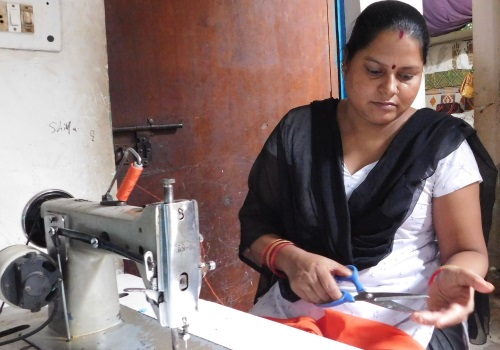
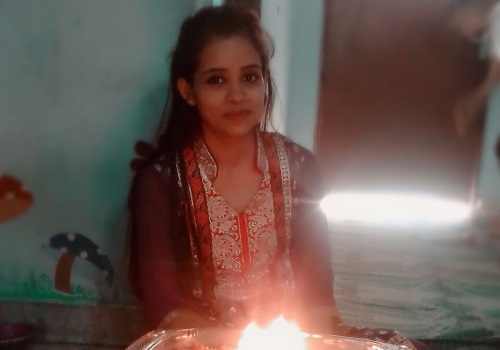
This point is well illustrated by the story of Sehroonisha, a teacher in the special needs section of Project WHY, Govindpuri. Sehroonisha, has always been interested in education. From a very young age she would love going to school. Her dream was to pursue higher education and to have a good stable profession. However, her father did not share this vision and was against her pursuing higher studies as he thought it was a waste to spend money educating girls.
Before her marriage, Sehroonisha lived near Connaught place with her parents, two sisters and three brothers. In spite of her father’s attitude, her mother was supportive of her and would work in people’s homes doing dishes in order to contribute to her education. Sehroonisha eventually graduated with a Bachelor of Arts degree in 2009.
Upon graduation in 2009, Sehroonisha’s father got her married at the age of 20 years to a man who had only been educated until Class 3. “I had to accept my father’s decision at the time” rues Sehroonisha. She held out hope that, through marriage, she could improve her life and explain her interests to her husband. However, her husband did not share the same passion for education and she found that his thinking was on similar lines to her father’s – that is, education is a waste for women.
Sehroonisha had a daughter and a son through the marriage, and soon realised she was the sole provider for them. In spite of her difficulties, she wanted to do something different in her life and stand on her own two feet. She came to know about Project WHY as we had put up a requirement for teachers; it seemed like the perfect platform to change her life. Today she emphasises the impact that the Project has had on her life, saying “Project WHY gave me an opportunity to teach and slowly I was able to rebuild my confidence and take my own decisions with their support.”
With the conducive environment of Project WHY, Sehroonisha has been able to articulate and define her dreams. She acknowledges “All my problems are yet not solved but Project WHY has taught me how to address them with my own abilities”. Today, Sehroonisha enjoys her role as a teacher at the special section of Project WHY, Govindpuri. She has been with us since 2015 and has now taken on the responsibility of looking after the children’s daily activities.
by anouradha bakshi | Jun 21, 2017 | Stories
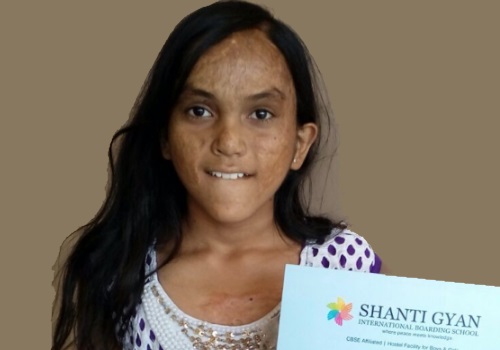
At the time of this photo, in January 2009, Meher was three years old and lived in Khader, near the outskirts of New Delhi. Her father was a migrant worker who came to New Delhi to work part of the year, and her family spent the rest of the year in their village in Nepal.
When Meher was eight or nine months old, a mosquito net over her bed caught on fire. Miraculously, she survived the terrible burns, but the experience left her face and scalp badly scarred and her left hand permanently closed and deformed. Meher’s father is a daily wage labourer. Her family could not afford to seek additional treatment for her, although they were concerned about her future prospects in Indian society.
Meher had been enrolled in Project WHY from a young age. She is extremely bright, verbal, and social and had picked up a little English from her time at Khader. She interacts confidently with visitors from all over the world. When an American elementary school teacher, Nina Sethi, came to give our staff some training, she took an immediate liking to Meher. We explained to her the social issues that plague a girl with such burns in Indian society and Nina was keen to help. Whenever Nina would arrive to work with the teachers, Meher would greet her and help to oversee her English class. Nina describes an “immediate connection and a special bond,” and notes that she “recognised something in Meher: a great capacity for leadership and an amazing spirit.”
In January of 2009, Nina asked her friends and family and a non-profit organisation in the United States, Chess Without Borders, to help her raise enough money to cover the cost of reconstructive plastic surgery on Meher’s hand and face. This would have to include staying in the hospital, multiple operations, medicine, physical therapy, and much more. She was also keen to extend the fund to raise money for Meher’s education, as she is very intelligent and had had limited opportunities in her past.
The response that Nina received was overwhelming. Through her dedication and commitment, she was able to raise over $45,000 (USD), which was more than enough money for Meher’s surgeries and education, and is likely to last her until her higher education. Thankfully, her surgeries were completed successfully at a private hospital near her home.
Meher now attends Shanti Gyam International School in New Delhi with some other children she knows from Project WHY. She is flourishing and is consistently the top student in her class. Nina often visits her in New Delhi and enjoys speaking to Meher in English. Meher is now outgoing, confident and intelligent and loves Nina like family!
by anouradha bakshi | Jun 21, 2017 | Uncategorized
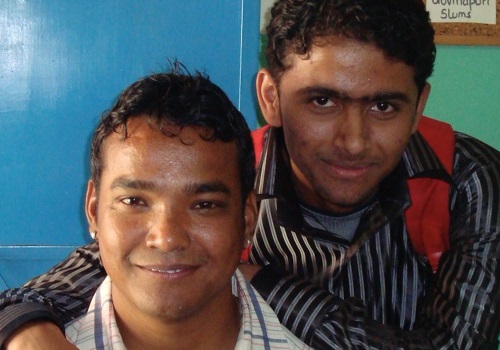
Project WHY opened its first spoken English class for secondary students in 2001 in Giri Nagar. It was the same time that Naresh had just completed his Bachelor’s degree in Arts and was looking for a job. He was a whizz mathematician and loved to teach, and to fulfill this passion he was giving tuitions to the neighborhood children, often for free. But in a poor home, one cannot afford to dream, for dreams do not put food on the table. Naresh tried his hand at various jobs, even as a vendor in a shoe shop, which just lasted two-days. His heart was not in it.
One day, in November 2001, a Class 10 student, Aadarsh, came to class with large welts on his arms. He had been brutally beaten in the government school he attended. Corporal punishment still prevails in many Indian schools despite a law against it. Project WHY resource persons visited the government school. The experience was Dickensian. The headmaster kept whirling the stick in his hand to make his point. The boy and other Project WHY students were humiliated. The boys were called guttersnipes and the Principal contemptuously informed us that these boys would never pass their Class 10 Board Examinations (a state level examination).
Project WHY took up the challenge of providing these boys with support to clear their Class 10 examination. With no funds, no space and no teacher to take this forward, Project WHY was in need of a miracle to get the bunch of lads ready for an exam in two short months.
A miracle came in the form of Naresh, who happened to be the elder brother of a teacher, Rani. He had just finished his degree and was looking for a job in the Giri Nagar area, where Project WHY had started. The only space available was the dusty pavement in front of our center and the only time available to tutor the students was between 7.30am to 9.30 am in the morning before they went to school. Every morning ten students assembled in front of the center, some mats were laid out and Naresh and his boys sat in a circle to study. The cold was kept at bay by cups of tea graciously offered by Naresh’s family.
That year, the challenge was won. The boys cleared their Class 10 examinations and this marked the beginning of Project WHY’s secondary outreach programme. Since then, Naresh has single-handedly ensured the success of hundreds of boys and girls who have successfully cleared their Board exams. The boy with the welts is now father of a little boy and all set to immigrate to Australia after having completed his higher education.
To Naresh, teaching a student is a mission he cannot fail. When exams approach, he schedules extra classes and teaches at the crack of dawn or late into the night. This is quite a feat for someone who likes a morning lie-in and a late session with his pals! On exam days, he is as nervous as his students, if not more, and waits for their return so he can find out how it all went. Come results day, his nails are bitten to the base as he scours the Internet, his students in tow.
Recently, when he went visited the Project Why Okhla Center and found out that the senior secondary students were in need of some extra tutoring, he rescheduled his timetable and took them under his wings. He never seeks extra compensation. Naresh often tells his students that he wishes there had been a Project WHY when he was growing up.
by anouradha bakshi | May 23, 2017 | Anou's Blog, Uncategorized
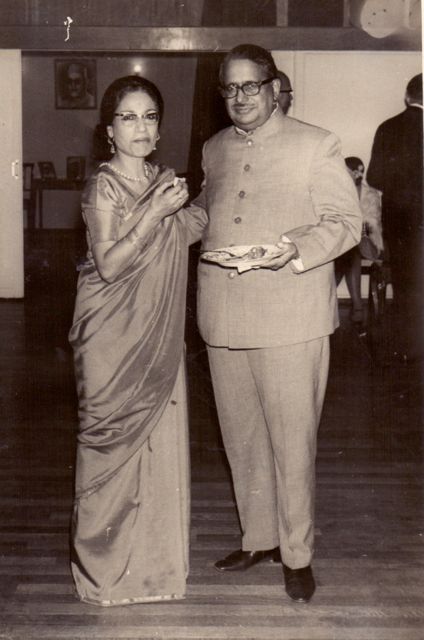
Live so that when your child thinks of fairness, caring, integrity she thinks of you. These words sum Ram and Kamala’s life. Today a more than a quater of a century after I lost them, and in the seventh decade of my life, I know I could not have been who I am if not for them.
They would have celebrated their 68th wedding anniversary today. I know they are popping the champagne bottle in heaven and I raise my glass to their happiness.
You may wonder why a blog about anniversaries and personal memories on what should be a post on Project Why. The answer is simple. Project Why is the logical outcome of an only child eagerly following her parents’ example day after day and not their advice. Advice is tinted by social mores, and politically correct guidance, example is from the heart. Advise would have been a lucrative career, a heavy bank balance, luxury holidays and three starred dinners. They gave me all that while I was still a child. I had my fill and sought more, but did not know what ‘more’ was as that never came as ‘advise”!
That came after they left and I sat looking desperately for the legacy they had left behind. It was not in the boxes and trunks and memorabilia that was strewn around me. I was terribly lost. All I had to hold on to were my father’s last words: don’t lose faith in India! It was November 1992.
It would take six long years of loneliness and pain to finally discover what the legacy was. Six long years of remembering their lives, the bittersweet memories, the stories often unfinished and bereft of any moral precept. And slowly it all came to me, in no order at all but somehow fitting the puzzle that would become Project Why. From Kamala’s side it was education, women’s right, patriotism, gender equality, standing for what is right, self-respect, courage and unconditional love. From Ram’s it was humanity, compassion, tolerance, social equality, generosity, giving unabashedly, giving when you did not have and of course culture, savoir-faire, integrity, probity and simple living.
It was left to me to honour this legacy.
And to honour them I set up Project Why with the hope that all the lessons learnt at their knee would be reflected in what I have been striving to do for the past 18 years!