![A sticth in time #GivingTuesday#India]()
by anouradha bakshi | May 2, 2017 | Anou's Blog, Uncategorized
(Posting a series of success stories from the compilation The Project Why Stories 2000-2016)

Born to a poor family in Bihar, Gyanti Devi never had the opportunity to learn as a child. Soon after her marriage, her husband, who is severely handicapped, required treatment. This meant moving her life and her two children to Delhi in 2006, where they lived on rent in the village of Madanpur Khader. The area houses mostly migrant families and has a high dropout rate from government schools as well as issues of safety and nutrition.
Gyanti Devi’s case was brought to our attention by a friend of the Project, Sunita, at the beginning of 2014. With her husband unable to work due to his handicaps, Gyanti Devi needed income for her family but, with no skill whatsoever, was unable to find a job.
At Project WHY, we felt that our sewing or beautician classes could give Gyanti Devi the opportunity to start a career. However, we soon realised that, being entirely illiterate, she would need more than just vocational skills. Dharmender, the manager of our Khader centre, proposed that she spend the mornings learning to stitch with the vocational group, but also attend literacy lessons with the children for 40 minutes in the afternoon. She agreed to this and became one of our most motivated and diligent students, slowly building up her literacy skills with the children whilst also finding solace in her knitting.
Now, Gyanti Devi is a proud graduate of the Project WHY system and able to read, write and sew with ease. She has started a small business within her village stitching other people’s clothes, with which she is able to provide income to her family. She is also able to read the local newspaper and understand what is going on in the world. She points to an increased sense of freedom and opportunity with the skills that she now has. Previously afraid to take the bus alone, she notes that “I can now make my house budget and also can read the bus signboard.”
Armed with a new sense of financial responsibility, Gyanti Devi has spent the last three years building a new house for the family. She would get up early in the morning and take the interstate bus from Delhi to Palwal (Haryana) by herself, returning late at night. There, she would bargain and purchase the construction materials required. She kept detailed records of all labour payments in a notebook and is proud of her achievements. “I have successfully built my home for my family. So, I can say today that what every man can do, I can also do”.
Project WHY believes that every person should be able to change his or her life, and it provided the support for Gyanti Devi to do this and achieve her dream. She has created a better future for her children and she hopes that the skills she has learnt will allow her family to prosper for generations.
by anouradha bakshi | Apr 25, 2017 | Blog
(Posting a series of success stories from the compilation The Project Why Stories 2000-2016)
The only issue that really disturbed him and made his life miserable in Delhi was to see the poverty and suffering on the streets. Every afternoon, returning from his privileged school in Chanakya Puri, he passed by the same busy traffic light where small children begged for money. It broke his heart seeing their daily struggle. Unanswered questions bothered him as to WHY he had such a privileged and enjoyable life while these street children of the same age did not even have shoes to wear or clean water to drink? So, his sister and him came up with the idea to make small packages of dry fruits to hand out to the street children. But still, that did not feel enough, as their packages disappeared fast without bringing any desired change. He realised that the packages of sweetness were welcome, but only provided a very temporary relief from the misery of the streets.
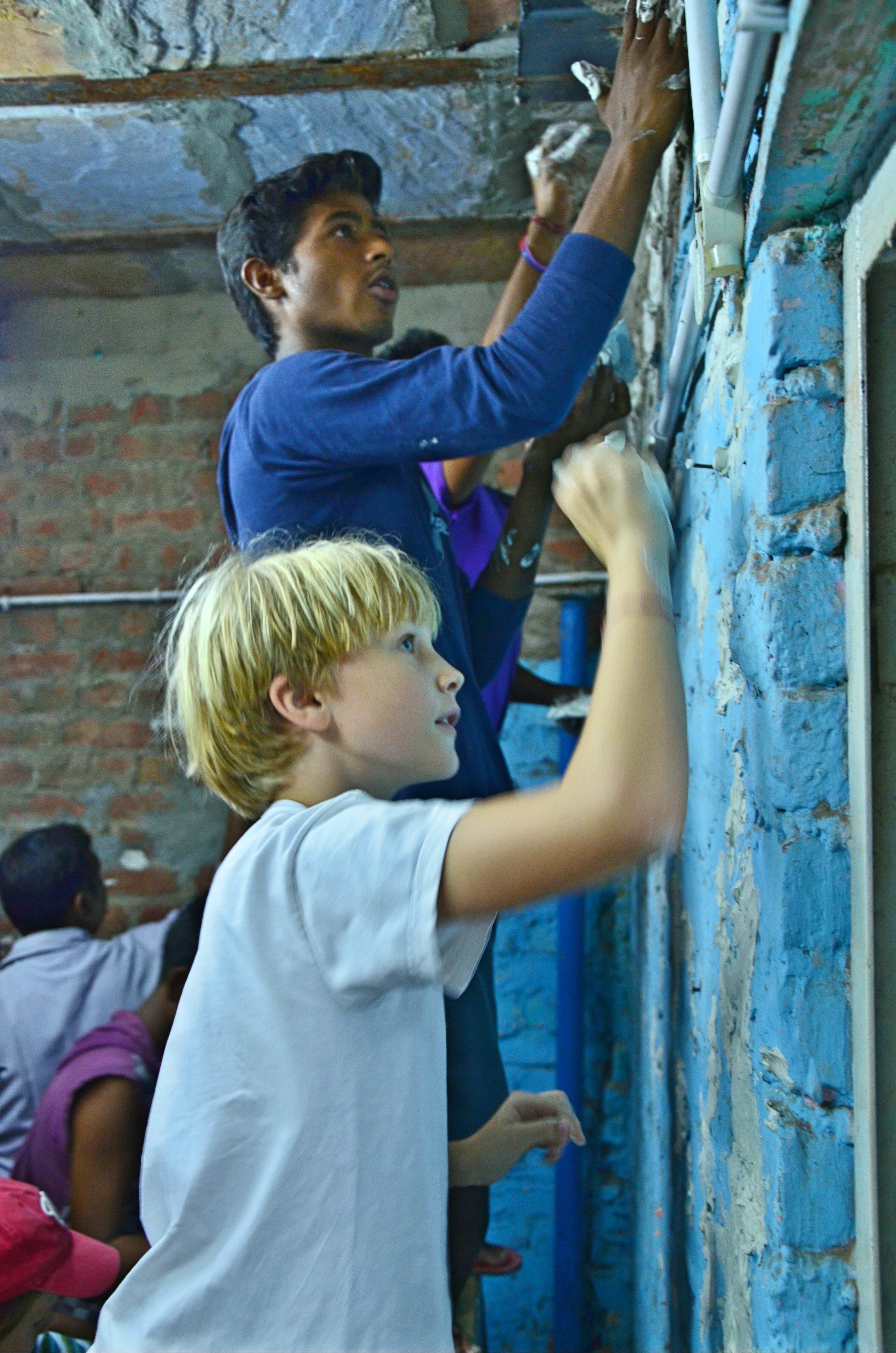
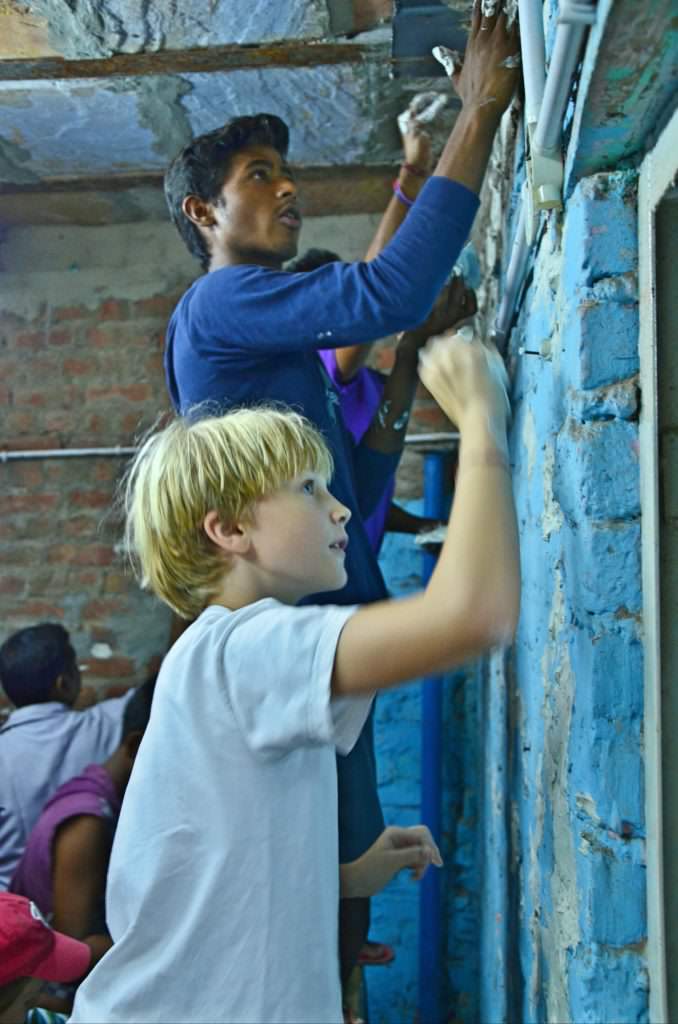
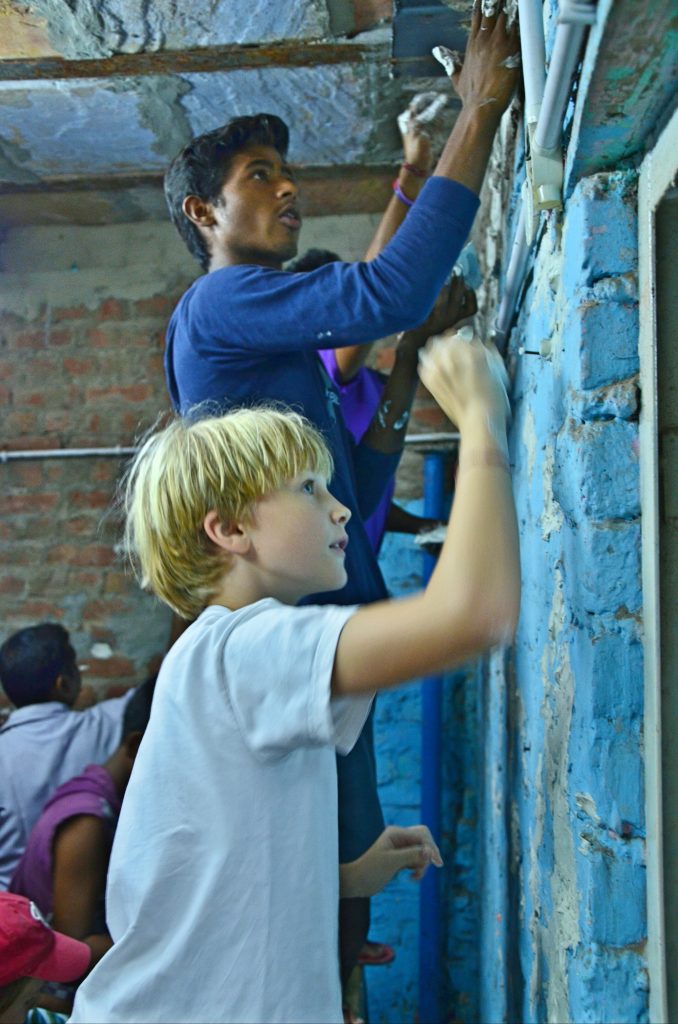
When his mother started to work with Project WHY in 2014, Malte heard about Project WHY’s support for slum children, who also had a difficult life, but now had a chance to learn and improve their future. One Saturday morning, in October 2015, he came along and saw for himself how a small group of committed people was trying to make a longer-lasting difference for a lot of poor children. He was amazed to meet with the children, see their smiles on their faces and their eagerness to learn. A couple of weeks later, he took his cub-scout group to whitewash the newly renovated Okhla Centre. They all joined hands with the Project WHY children to make the centre colourful and a happy place to learn. It gave him immense joy. He finally found a place where poverty was not accepted as a fate but as challenge to overcome! And where he, a ten-year-old boy, could contribute to make a difference.
Malte’s determination to make a difference did not stop. He, with his friends Stefan and Scottie, decided to do even more. They came up with the idea of organizing a donation drive in their ‘privileged’ school. They designed colourful posters to show Project WHY’s work, and asked the special kids (of Project WHY) to colour and decorate traditional piggy banks (gulak) for collecting donations. With everything prepared they got up early every morning, for one week, in the freezing month of December 2015, to build their stand at the school entrance asking all children, teachers and parents passing by to donate for Project WHY. Even the school principal and the American Ambassador were impressed and eagerly squeezed their donation in one of the gulaks.
Malte and his friends raised INR 12,000 in total. With these funds, Project WHY was able to buy a Bamboo roof for the Okhla centre, giving the students a covered shelter that protected them from the harsh summer and winter months.
Since then, Malte has felt a part of the Project WHY family. He is constantly asking about the different children, and is always happy to join his mother for a visit. Periodically, he gives away his pocket money to buy school supplies for the Project WHY Centres. Every time he is overwhelmed by the poverty in India, he thinks up something new he could do for the children in Project WHY, knowing that at least his friends there will enjoy a different future.
by anouradha bakshi | Apr 18, 2017 | Anou's Blog, Uncategorized
(Posting a series of success stories from the compilation The Project Why Stories 2000-2016)
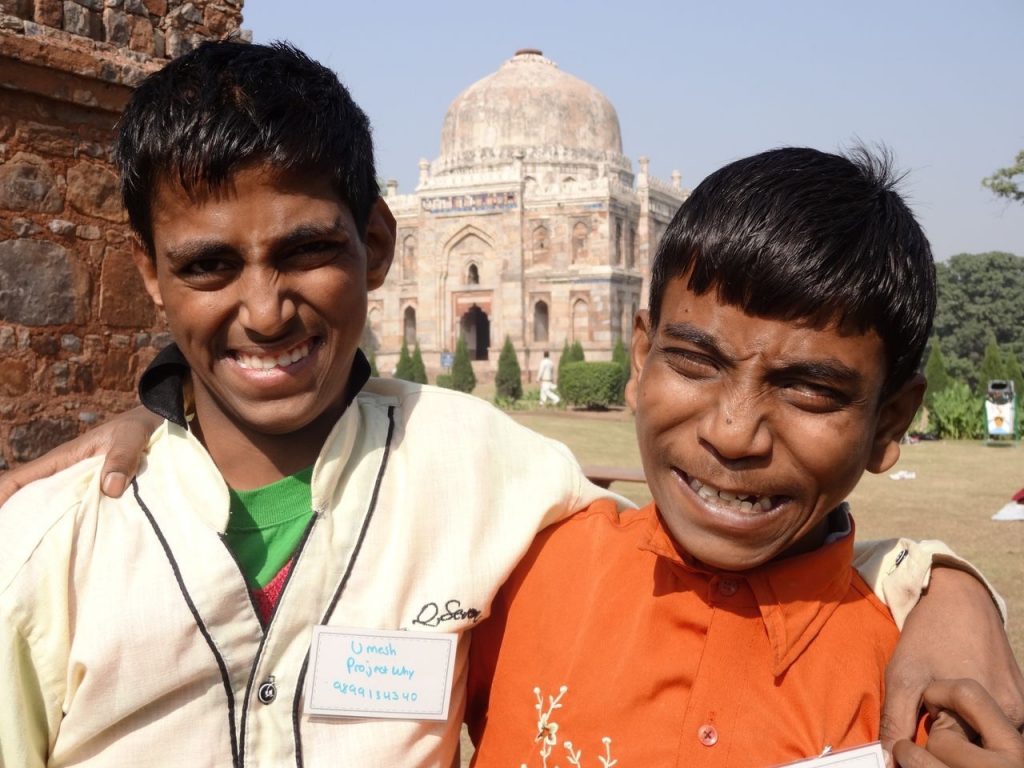
Indian society continues to treat disability with indifference, pity or revulsion. Low literacy, school enrolment and employment rates as well as widespread social stigma are making mentally disabled people amongst the most excluded in Indian society. These people are deterred from taking an active part in most families or even communities. Moreover, there is a stigma attached to children with disabilities, especially in rural India, and often even loving parents can do nothing to help their disabled child because they themselves are not aware of the disease or how to take care of their child.
The story of Muna therefore begins in 2005, when he first arrived at Project WHY. It was clear that he had never been adequately looked after. Upon further investigation, it was revealed that, whilst his parents cared about him dearly, they simply did not understand his intellectual impairments. Muna’s parents did not have the time nor the resources to give him due attention, as they had to care for his other four siblings.
Interacting with Muna, Project WHY found that he had little concept of personal hygiene. He would regularly soil himself, and had never been taught to have a shower/bath. He had no understanding of social interaction and rules of engagement. This was demonstrated in 2014 when Muna left a shop without realising he needed to pay for his juice and was severely beaten by the shopkeeper.
Having grown up in the industrial neighbourhood of Okhla, Muna would spend his days begging outside temples, occasionally stealing when money was unavailable. Residents of the neighbourhood would befriend him simply to bully and take advantage of his simple mind. Without the ability to communicate clearly, he was reduced to performing illegal errands around the community such as collecting and selling alcohol for under-aged children.
Project WHY began by teaching Muna the basic concepts of hygiene and to be self-reliant. He was taught to use a lavatory, to dress himself and to shower regularly. From there, we were able to build his confidence through speech therapy classes and develop his basic social interaction skills. Project WHY also initiated the process of educating Muna’s parents, who now understand his disability and the kind of care that he requires. They acknowledge his kind heart and sense of compassion even if he cannot communicate it in the same way as other children.
Today, at the age of 19 years, Muna is one of the stars of Project WHY’s special needs class. He is the first to welcome and befriend any new volunteers, including foreign students who do not speak the Indian language. He is very fond of activities such as art, ball games and dancing and, in spite of his difficult childhood, he shows an overall passion for life.
![A sticth in time #GivingTuesday#India]()
by anouradha bakshi | Apr 12, 2017 | Anou's Blog, Uncategorized

This picture is not the LOC. It is not an incarceration centre. It is not a prison. It is not a loony bin. This is my home! This the wall that separates us from our new neighbours!
I seek your indulgence today for writing a very personal post. I ask it in the name of all I have done and stood for and in the name of my mother who fought for the freedom of our beautiful country and was even willing to live as an old maid rather than give birth to a child in an enslaved land. God did give her one child: me. Kamala, my incredible and beautiful mother ensured that her only child take her first breath in an India that was free.
Today, sixty five years later I wonder if it was all worth it.
I have over the years felt saddened at many things but set them aside and never lost hope. I preferred taking the road less traveled and dog what I could to fulfil the dreams of all those who fought for our freedom. It was a fulfilling journey. There were hiccups but it was all par to the course and was taken as such. Ours is not a perfect world.
When things got bad, I drew strength from the home we built almost half a century ago where every wall is filled with memories of unconditional love and abundant gratitude. My home, now old and crumbling was my security blanket. I just needed to walk in and felt at peace.
But even that has been taken away from me.
The old house next door was brought down and in its place a new building was erected with many flats. Even that was OK. For many months the din and rattle made by the workers and their families was comforting. It was my India. The wailing of babies, the shouting, the laughter and even the fights, everything was welcome. But that too ended. Now we have neighbours!
I looked forward to meeting them as my generation welcomed neighbours and often bonded with them. But that was not to be.
I was woken from an afternoon sleep by strange jarring noises. I wet out and discovered workers on the wall that separates the house drilling holes and placing iron angles. When I asked what was happening I was told that this was for barbed wires, the lethal kind. My blood ran cold. This was the place where Utpal and my grandchild play in summer, the wall they climb when their ball gets stuck in the tree or on the parapet. This was the wall across which in the good old days when the old house existed we handed over a cup of sugar or some other silly item the neighbour needed, the wall where we stood and simply exchanged a greeting.
The idea of looking at barbed wire was preposterous and filled me with sadness and rage and total incomprehension. What had we become? When had we lost all that was good and beautiful? When had we allowed the invisible barriers we had erected to become visible and so in the face. This wall is just between their house and my house. When did they and I become enemies.
I did try to reason with the young person who will now be my neighbour. But to no avail. The fear was so deeply instilled that no words could assuage them. Those fears were a reflection of the society we have become. It seems like no one knows what the cause is. That has got lost in translation.
The anger gave way to sadness and the sadness to the realisation that the barbed wire was here to stay and that it was for me to find a way of protecting myself and my children and grandchild from its ugly sight.
Today I will get some kind of shield placed in front. I will make sure it is bright and filled with colours. I will make sure that my little ones will be able to climb that wall and that tree and get at the ball they hit often purposely so that they can climb that tree and that wall.
I refuse to be greeted by barbed wires every morning!
Remember, I am the child of the mother who was willing to sacrifice motherhood at the alter of freedom.
by anouradha bakshi | Apr 11, 2017 | Anou's Blog, Uncategorized
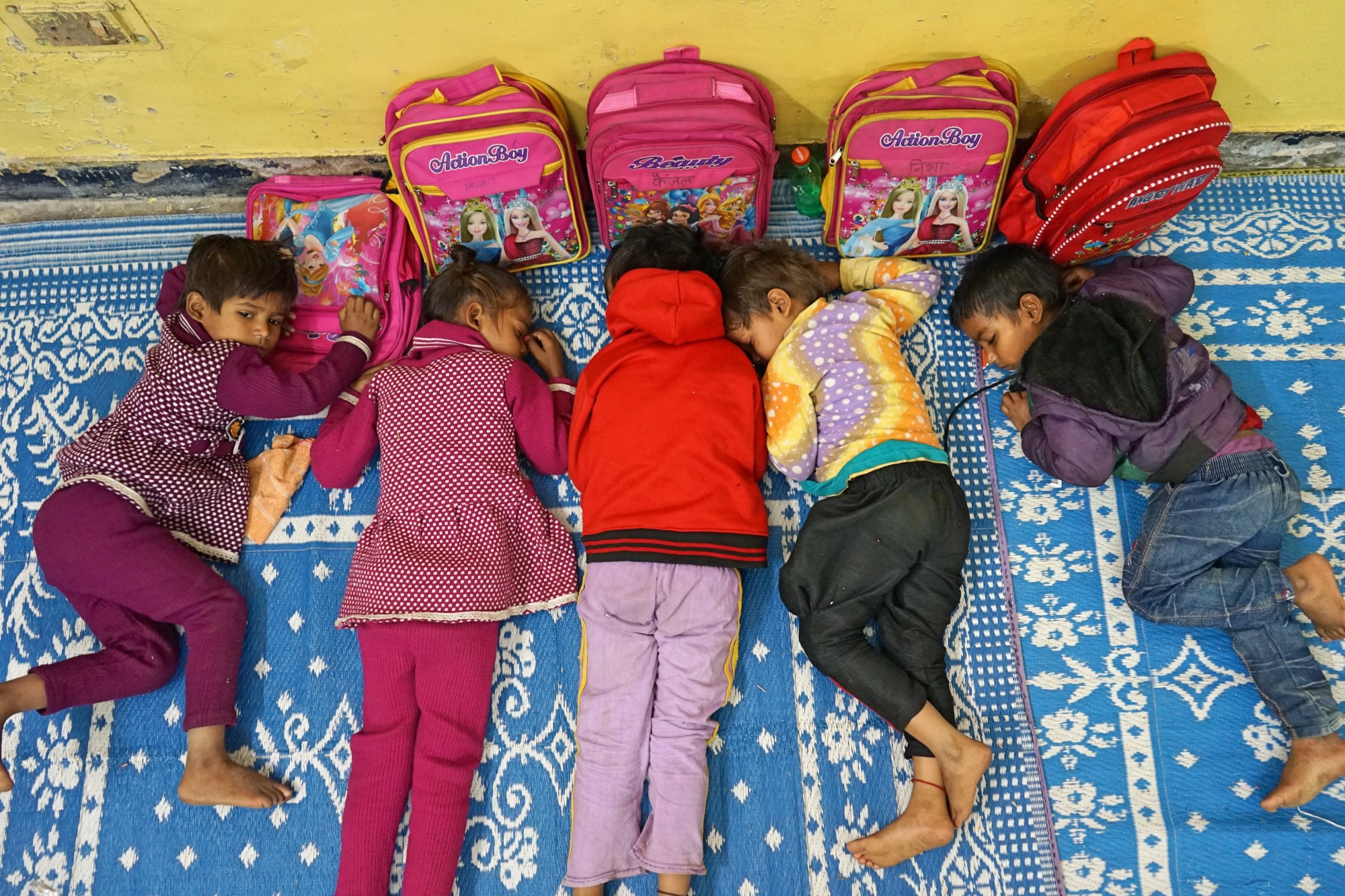
The Delhi government, while inviting applications for admissions to nursery, kindergarten and Class I, has imposed an upper age limit of 4, 5 and 6 years, respectively, on applicants. It is so easy to make ‘laws’ for children who have neither voice nor vote! And it is also so easy to find picture perfect justifications that seem logical. “We cannot admit a 12-year-old to Class I, the child needs to go to Class VIII only,” said an adviser to the education minister. Yes true. That is the ideal situation and we all wish we could ensure that ALL children in India could access Nursery at age 4! But sadly that is not the case so a law like this pushes millions out of school. The Education Act allows late entry upto class VI. True a 12 year old does not look ‘good’ in class I but can you take away her right to Education with one stroke of the pen.
One of the most cherished mission of Project Why has been to push back children to school and mainstream them. If we were to look back under this new prism a large percentage would have been pushed right back to the streets. Most if not all children out of school belong to what we call underprivileged homes, the other side of the fence! They do not have parents who are obsessed with getting their kid in a school. They do not have parents who know the value of education. Their parents are often illiterate and busy surviving from day to day. Their kid is not sent to pre and pre pre nursery schools. They often do not even keep track of their child’s age.
The parents we work with have to be pushed and reminded and egged on and often it is Project WHY that takes on the parental role till the moment when a crucial signature is needed. Now I guess we will have the added responsibility of keeping track of their ages.
Why is it that when decisions are taken about children, the ones on the other side of the fence are far too often forgotten.
We push them in; please don’t push them out!