by anouradha bakshi | Aug 7, 2018 | Anou's Blog, Uncategorized
One of the greatest lessons I have learnt during the last two decades is that of survival with dignity and a smile. It has been not only a great eye opener but also taught me to review my own life in a whole new perspective. The art of survival with dignity lies in the ability to live in the now and feel abundant at all times. Over the years I have seen this many times in the generosity and kindness of those who have practically nothing but give with abandon and love. My respect for all hose I work with has grown in leaps and bounds.
The art of surviving with dignity and a smile rests in the ability to look for positives in the times of adversity. We were all privy to this last week when the Yamuna plains got flooded and all the people living on the banks of the river moved to higher grounds. This was the case with all the families of the children of our Yamuna centre. Though the water did not quite reach the centre, we closed it for a couple of days.
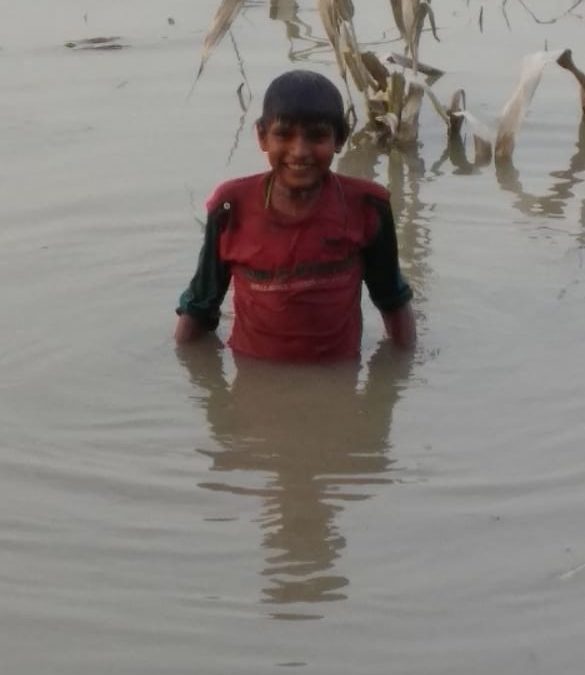
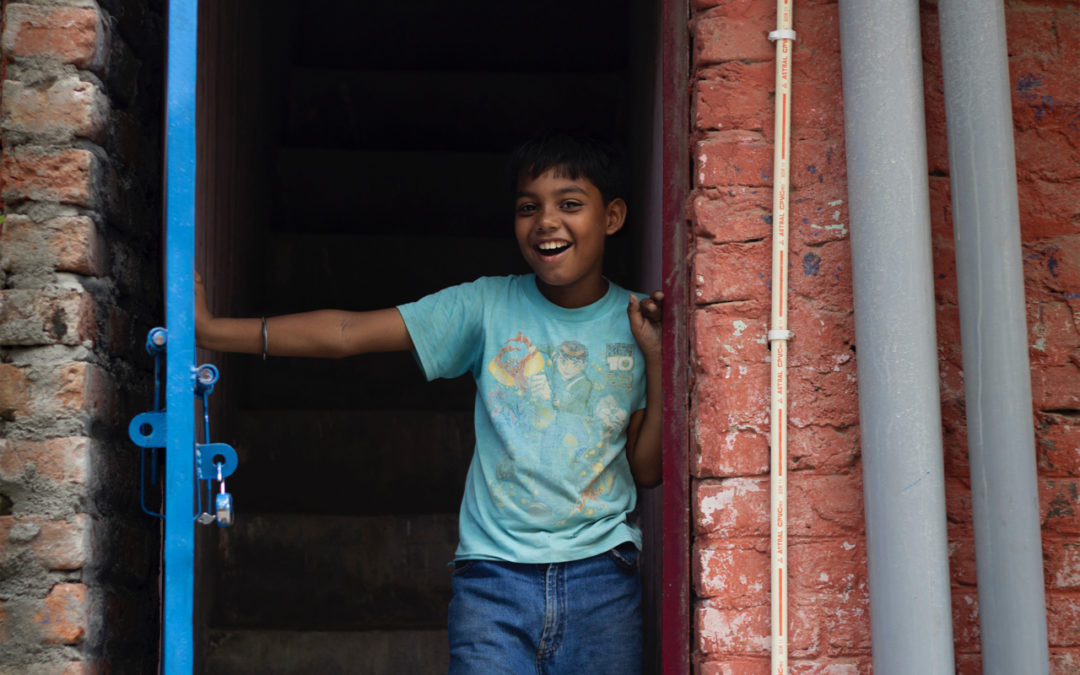
The floodplain was filled with water and all the vegetables growing on it were destroyed and hence the very livelihood of these families. But when you live hand to mouth, you cannot waste time on past ad future, you have to think in the now and so as soon as the water receded to waist height, children jumped in to catch fish! Some would be sold and the remaining would provide the next meal.
It is this spirit that I salute each and every time I encounter it, be it in the cup of tea and the flatbread shared offered by a gypsy family who does not know whether it will have a rood on its head the nest day orin the smile of the young boy looking to catch fish after the floods.
ANOU’S BLOG
The Deaths we Choose Not to See
by anouradha bakshi | Jul 31, 2018 | Uncategorized
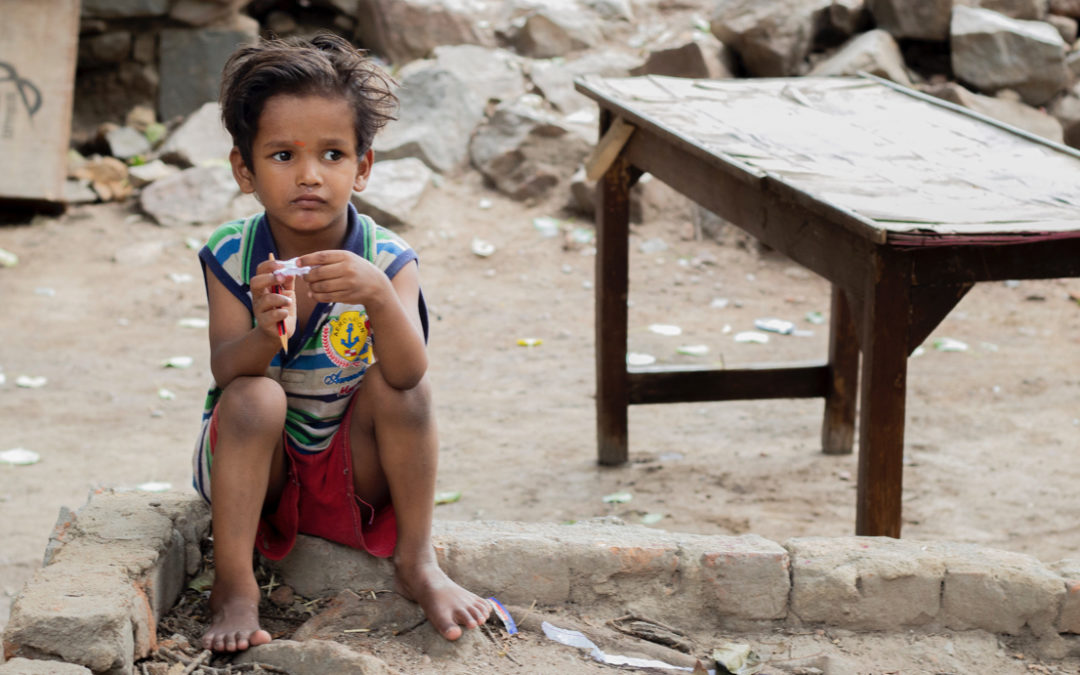
Three little girls, aged two, four and eight, died of hunger in India’s capital. Their autopsies found no trace of food in their stomachs. They had most likely gone without eating for more than a week. Their deaths shocked the nation, filled television screens for a few days, sparked the inevitable political blame game—and then, like so many tragedies before them, began to fade from public memory.
The three sisters made headlines because they died in Delhi. Yet every day, an estimated 5,000 children under the age of five die from causes linked to malnutrition. That is about 200 every hour—more than three every minute. I have written about this terrifying statistic for years, but numbers, however shocking, rarely stir us in the way that three little faces do.
I have been writing about this terrifying statistic for years now, but somehow it has never elicited the anger and outrage one would have expected. Perhaps that is because numbers, however shocking, remain just numbers—remote from our daily lives.
But Mansi, Shikha and Parul died in our very own city, a city where we throw food with impunity; a city where garbage cans are replete with perfectly edible fare; where food is thrown with alacrity at parties and religious festivals; a city where neighbours remain aloof; a city that seems to have lost its heart forever.
Will the deaths of these little girls go beyond the political slugfest and make us open not only our eyes but also our hearts? There are individuals and organisations across India who quietly feed the hungry with love and compassion. Their work reminds us that hunger is not inevitable. What is missing is not the capacity to act, but the collective will.
No one should die of starvation in any self respecting society, let alone a child. Even one child is one too many!
Will the deaths of these little girls go beyond the political slugfest and make us open not only our eyes but also our hearts? There are individuals and organisations across India who quietly feed the hungry with love and compassion. Their work reminds us that hunger is not inevitable. What is missing is not the capacity to act, but the collective will.
The three little girls were part of a migrant family. Their father had come to Delhi in search of work, hoping to build a better future. Like countless others who arrive in our cities every year, the family lived from one day’s wage to the next. They had no savings to fall back on and, often, no access to welfare schemes because they lacked the necessary documents. For families living on the edge, losing even a single day’s income can be the difference between survival and hunger.
Delhi is ‘home’ to thousands of homeless people, many of them migrants. Many find work and manage to survive, some like the family of the little girls slip through the cracks.
It is time, as individuals, as citizens and as a society, that we acknowledged this stark reality. Hunger is not someone else’s problem. It is ours. If we can open our hearts as readily as we open our wallets for celebrations, no child need go to bed hungry. Is that really asking too much?
Is this asking too much!
Whats new
WHAT’s NEW Project WHY student Aman’s Dream comes true.
by anouradha bakshi | Jul 31, 2018 | Whats new
Our very own Project WHY student turned teacher, Aman, secured admission to the prestigious Delhi College of Art. Since 2014, he has been training to get admissions in the college. Project WHY has been supporting Aman in his pursuit for Art both emotionally and financially. We wish Aman all the very best.
Whats new
Yamuna raising- Waiting and watching
by anouradha bakshi | Jul 31, 2018 | Whats new
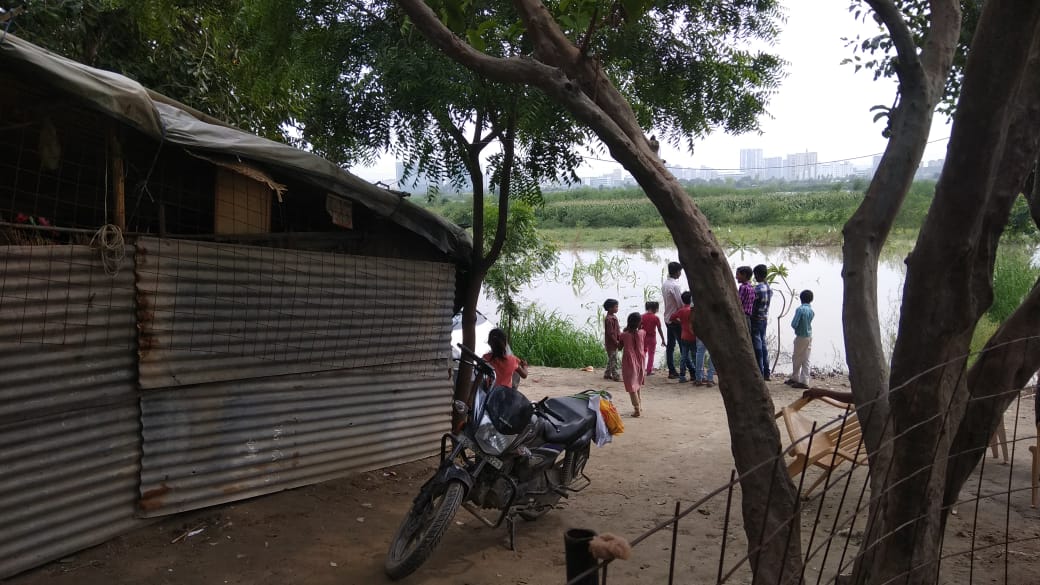
Delhi Government on Friday(July 27) issued its first flood warning when water level in Yamuna started raising due to continuous heavy rainfall. Though our Project WHY Yamuna centre is on a higher plain, our staff have been keeping watch. We have moved all our learning materials and essential items. Today, the water is just a meter away from the centre. We have closed our centre indefinitely for the safety of the children. This would mean a break in their studies and access to a wholesome meal by Azure. We need all your prayers and support
ANOU’S BLOG
Project Why revisited #GivingTuesday#india
by anouradha bakshi | Jul 24, 2018 | Anou's Blog
One of the inevitable consequence of moving forward, is that some have to step back. At Project Why the ‘axe’ fell first on yours truly. For the team to learn and gain not only the experience but also the confidence Anou Ma’am had to step back. So for the past two years or so, I have been cutting the umbilical cord gently but surely and boy it has worked: the project does not need my presence anymore, a far cry from the days where I sat doggedly from 8 to 4 to keep the show on the road. Now I visit the Project on a need basis: to welcome guests, hold a staff meeting and so on. So my contact is fractured, one centre at a time, often in the morning so I miss the girls.
We recently engaged two budding photographers, Taranbir Singh Sawhney and Devika Grover, to take pictures of all the centres and shifts of Project Why. Yesterday I was given a link allowing me to view the pictures and it was a real treat. The pictures are amazing and will soon appear on our site and social media for all to share.
I sat down to watch them in the evening not knowing what was in store. Through these 200 odd images, I could visit, albeit virtually, my entire Project! It was a heady mix of delight and nostalgia. The first common denominator of most of the pictures is SMILES! That warmed the cockles of my heart and filled me with pride as for Project Why was always to be a place where children could be happy and joyful. Mission accomplished. I give myself a tap of the back.
It was a pleasure browsing from picture to pictures and seeing the kids in a child friendly and safe environment. It was heart warming to see them enjoying what they were doing be it studying, playing, dancing and above all fooling around, something they often do not have the chance to do.
My heart filled with gratitude as I saw my stellar staff at work, braving the extreme heat, but not losing patience or smile. Once more I felt validated in my decision to take staff from the community. It was a challenge for both sides but I am glad to say, we met it head on and in perfection.
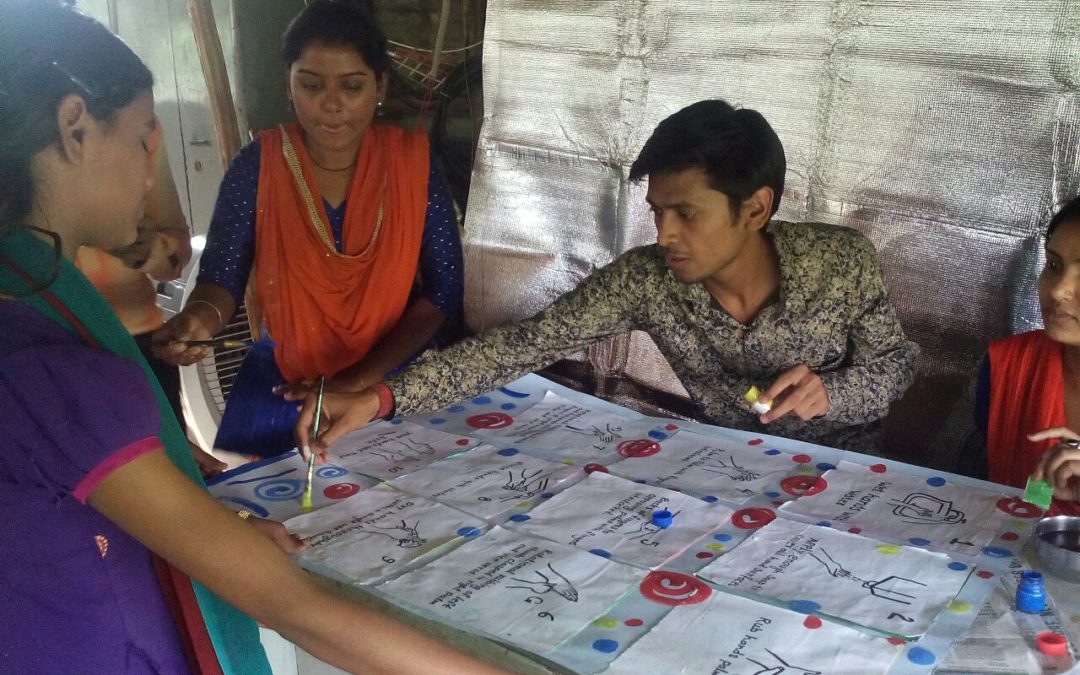
It was nice to see the ladies busy learning a skill that has the potential to transform their lives. Again a matter of pride.
Always a delight to see my very special ones. They never stop smiling and have the ability to lift your mood in a jiffy.
The babies always so endearing and it was truly special to see Rani’s son, tiny Astitva, as the youngest member of our early education programme. His mom’s story is also the story of Project Why.
I could go on and on about each picture as each has a story to tell. Maybe I will do so one day.
Revisiting Project Why was a huge treat. Thank you Taranbir and Devika for having captured its spirit.