by anouradha bakshi | Apr 4, 2026 | Uncategorized, Whats new
I had decided to celebrate my 74th quietly, without much ado but that was not to be.With the very eclectic social circle I have, it is quasi impossible for me to have one big bash, not that I like those. But everyone needed to be satisfied. So planned a small lunch with two of my favourite people on the eve and planned a lunch with my granddaughter at the mall food court.
In the morning Shamika kept insisting I accompany her to the Govindpuri Centre.The Okhla and Govindpuri staff were there with a big cake and hot samosas. Still par to the course.
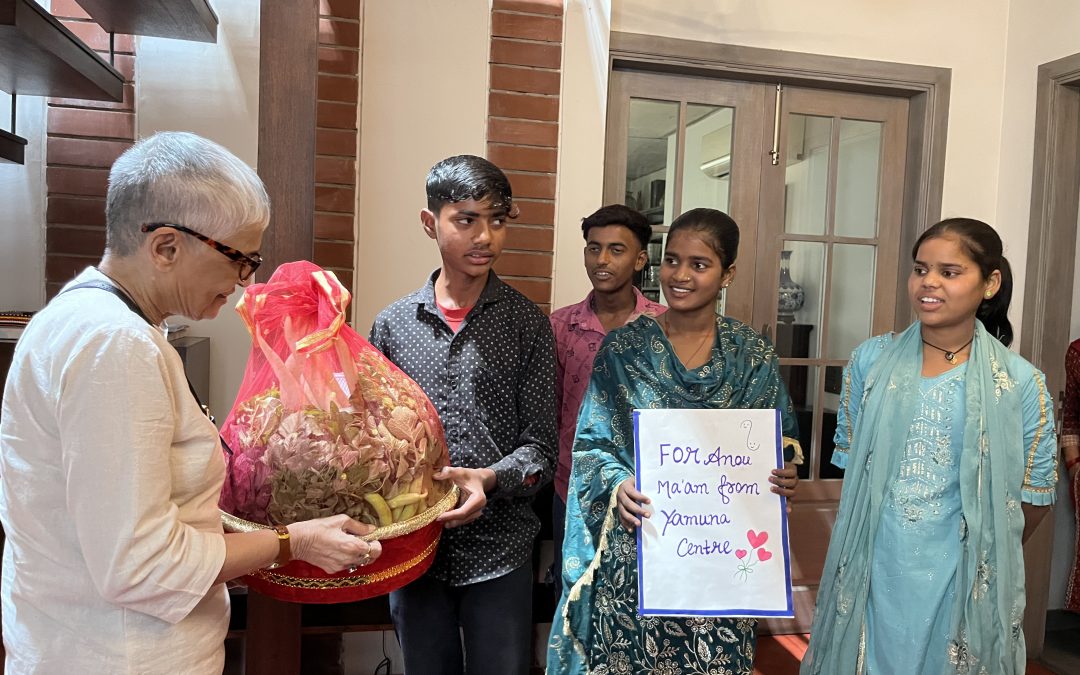
But a phone call changed it all. The Yamuna centre staff asked if I would be home and whether they could drop by for a few minutes. Four children and two teachers came by with the most soul stirring gift I have ever got in my life. A huge basket of fresh vegetable picked in the morning by the children from their fields and beautifully wrapped. It was the children who had thought of this. And with it a beautifully penned card that thanked me for having brought education to their doorstep and with time convinced their parents about how important education was. I asked the 4 children who had come what they aspired to be: one teacher, two doctors and a police officer. Way to go. You have to dream and dream big and Project Why will be the wind beneath your wings. But you children have taught me so much too: the hard toil needed for farming, respect for nature and above all the ability to stay grounded something that your urban peers have forgotten. You have taught us all that you can hold on to your values and need not cast them away in the lure of what we call urban dreams. Stay this way beautiful children. That is my prayer for you.
There were many messages from across the planet from my Project Why family and my amazing team; many videos from each and every centre with heartfelt messages from my wonderful children.
All in all, it was the best birthday in a long time.
by anouradha bakshi | Apr 3, 2026 | Anou's Blog, Uncategorized
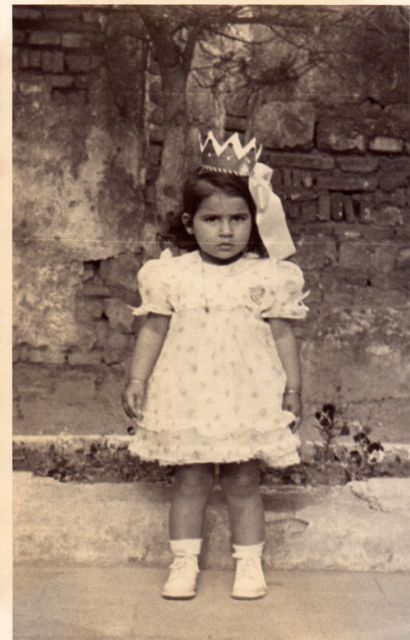
This little girl all dressed up for her second birthday is looking ahead at her future: what does it hold for her, she wonders. Let in unfold and be a mystery.
Tomorrow she will be 27010 days or 74 years old. Time to look back at the mystery and answer the one question that has always troubled her: when it is time to go can I look into a mirror and not have to look away. The little girl is me!
When I look back at the years gone by what first comes to mind is the abundance of love I was smothered me by my two doting parents whose only child I would be. It was pure unconditional love something I would understand much later in life. This love did not translate in abundant toys or making every wish come true. It was the time my mother and father spent with me, the stories they told me, the long moments of silence when nothing needed to be said, the gentle whisper, the loving embrace each one leaving indelible traces that would slowly make me into who I am. The values never spelt out but always shared as stories or gestures to emulate taught me long ago that giving was the most important thing in your live. Giving without expecting. Just giving. I first felt it viscerally in my gut at the age of three when my eyes were staring at the man without a coat in winter and not at the pranks of his bear. I still feel the same gut wrenching when I hear any street hawker walking by my window trying to sell wares nobody buys anymore. With malls and ten minutes delivery Apps and houses now transformed into many flats who goes down to the street to buy a few vegetables and smile at the vendor. Does anyone ask herself the question: will his family eat tonight?
I remember a friend sharing an anecdote from Star Wars asking what are the three most important words in the world? And no it is not I Love You; it is PLEASE HELP ME. I was never on Starship Enterprise but these words were seared in my soul a long time ago.
Life took over: studies, jobs, marriage children and now grandchildren and all the responsibilities that come with them. The love of my parents was still there, still unconditional. and my only strength and anchor but then by 1992 I lost both of them and my life became a dark bottomless abyss. For many years I could not find a way to get out of it.
But then I remembered a silent promise made to myself when I discovered the village my ancestor left way back 1890 and that still looked frozen in time. I realised that fate has given me everything though I should have been like the women of this village: illiterate and a grandmother at 30. Again the twist in my gut and the question: what can you do to help.
That is when a series of serendipitous occurrences happened and somehow at the dawning of my sixth decade I was prompted to create Project Why. Miracles after miracles, some big, some small and some unbelievably large came our way and in a a few short years we were reaching out to over 1000 children. Every time I felt I had hit rockbottom and would have to pack up and shut the door, a shot of abundance came my way. My helping journey was not over. Even the terrible diagnosis of MM in 2020 did not have the power to alter my course.
Along the way I understood many things. First and foremost there are innumerable good souls in this world and we at Project Why were blessed to build a network of such people that I call the Project Why Family. Next that honesty is the only way to follow; the rewards will come.
Today there are thousands of children who have completed their education and a great number has joined us as teachers at Project Why. Others have become successful in many ways. Four of our alumni have got admitted to IITs!
All this sounds great. But that is not the end of the story. Project Why has also been a spiritual journey for me, one where I have redefined my own religious beliefs. I do not need to visit any temple, go on any pilgrimage. I see God every day in the eyes of all my Project Children. I have also realised along this path that the first soul you must learn to love is YOU. You are your only lifelong friend and only if you love yourself can you help and love others.
I have often quoted St Exupery’s Little Prince where the fox tells the Little Prince that it is only with the heart that one can see rightly. what is essential is invisible to the eye. For seeing with your heart you have to open it and let love flow. I understood that my becoming a recluse was not withdrawing from the world it was allowing me to open the door of my heart to allow myself to walk in. To help anyone you need to learn to look with your heart.
And the last lesson of this journey as on 4 April 2026 is to learn to surrender completely to whoever you believe in and hand Her/Him the reins of your life. The more you surrender, the more the Universe fulfils you.
Today I am ready to go as I know that I can look at the mirror and give myself a pat in the back while I Thank the Lord for everything I was blessed with.
by anouradha bakshi | Mar 27, 2026 | Anou's Blog, Uncategorized
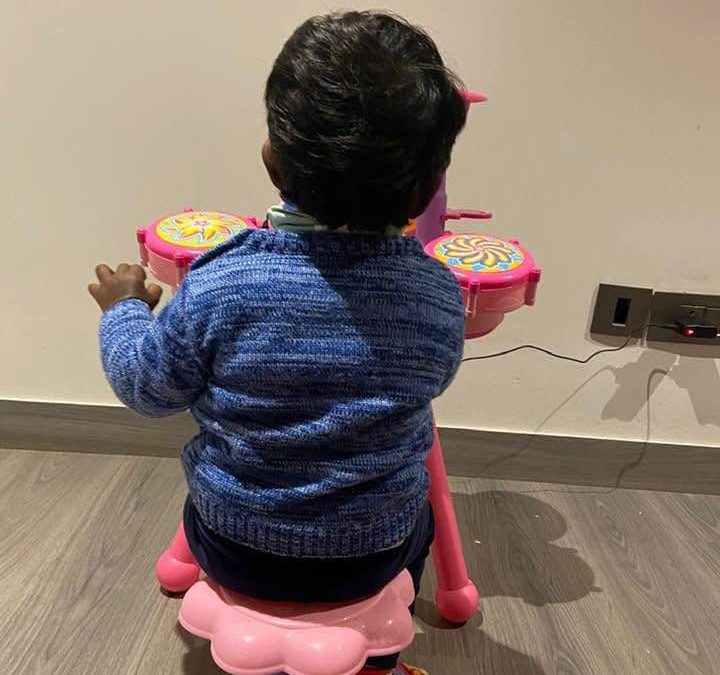
Every child deserves more than a place in a classroom. True inclusion means understanding, acceptance and the support needed for every child to thrive. This story is about one little girl with ADHD whose experience reminds us that admitting a child to school is only the beginning. Making her feel that she truly belongs is the real challenge.
It is not enough to invite them to the party, you must ask them to dance
It took a long time for schools in India to be inclusive but today there are by law. Today schools in Delhi are legally mandated to be inclusive, following the Rights of Persons with Disabilities (RPwD) Act, 2016, and the National Education Policy (NEP) 2020. All government and private schools must admit children with disabilities, provide reasonable accommodations (e.g., special teachers), and ensure a barrier-free environment.
Sadly some disabilities like ADHD or ODD are not included in RPwD Act yet. I hope they will one day.
A little girl was admitted into a private school in Nursery. She was diagnosed with the above mentioned issues. She is bright, witty, intelligent and full of beans but can also be defiant and difficult. But that is par to the course. Her first year in school went well though a little turbulent. But the next one was nothing short of a nightmare. Being very dark as she is from the South she was racially profiled as being ‘black”! This hurt her immensely. A core symptom of her issue is acting impulsively and thus picking up things that do not belong to her. This little girl did so and the only way the teacher found to deal with it was put her bag outside the class thus profiling her again and leaving her bewildered.
Adopted children often spend their early life in indifferent orphanages deprived of love or any human contact. They go into survival mode that often translates in such issues. The child cried for help in her own way: scribbling on her school books and other methods a little brain could conjure till one day she garnered her courage and voiced her pain: Please change my school!
Her mother did try to approach the school but in spite of all. efforts nothing changed and it was decided to change her school
When she was given her Transfer Certificate she was shocked to read that the reason given for the withdrawal was HEALTH ISSUES. This last profiling would become part of her educational journey and could hamper admission into another school or be a slur she would carry for life.
It is easy for law makers to make changes that rock the boat as they are not the ones to implement them. Including differently abled children does not just mean making a few alterations and accommodations. It is sensitising the staff, it is understanding that the slightest misstep can result in lifelong trauma and a feeling of rejection. Handling children with physical disabilities is easier but those with mental issues whose brains are not wired like ours requires extreme sensitivity and deep compassion.
Yes Education is a Right of all children born in this land, and inclusivity is the way to go but this should be done with great responsibility. I am sharing this personal story in the hope that someone who can make changes will read it.
It is not a complaint against a school. It is a gentle warning that in our rush to make changes that look good on paper we forget we are dealing with tiny lives.
Children with mental issues may have IQs higher than others but are wired differently. You need to enter their world.
This illustration says it all
Remember it is not enough to invite them to the party; you must ask them to dance
by anouradha bakshi | Mar 23, 2026 | Uncategorized, Whats new
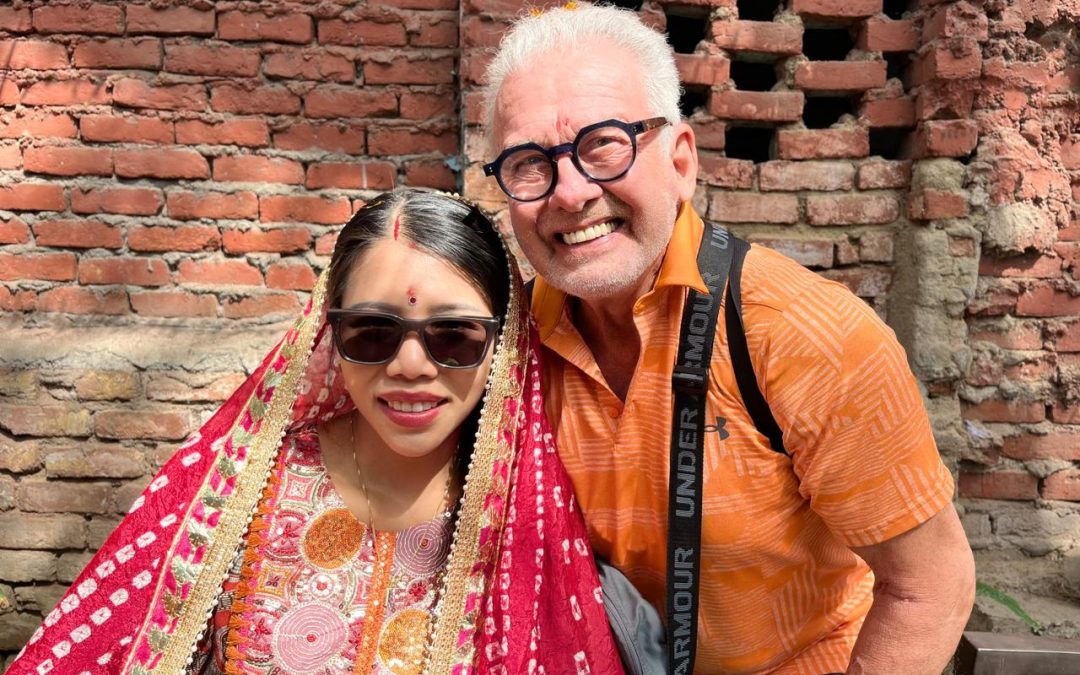
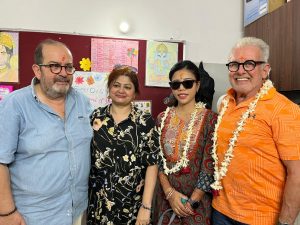
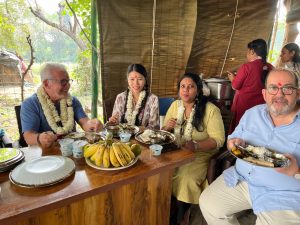
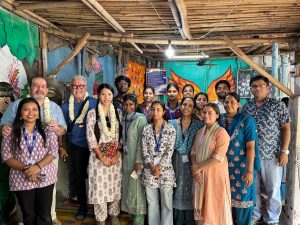
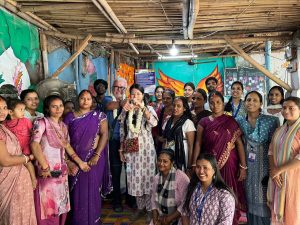
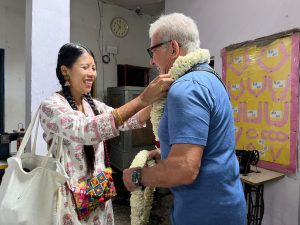
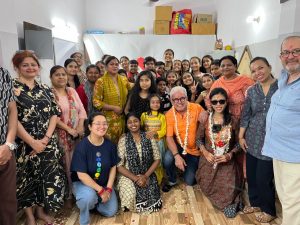
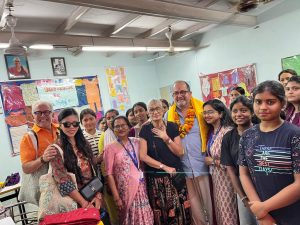
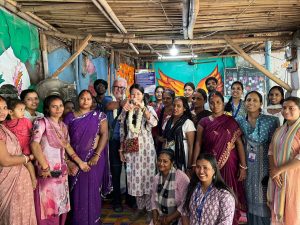
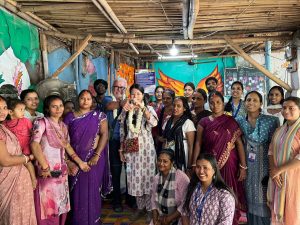
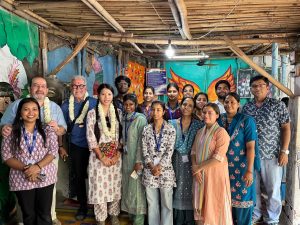
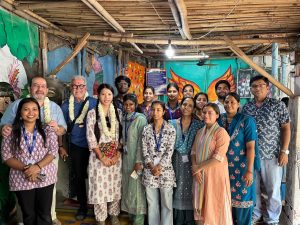
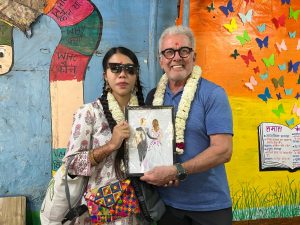
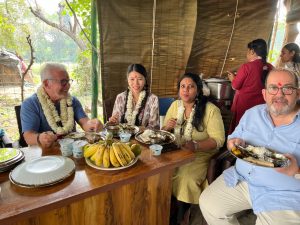
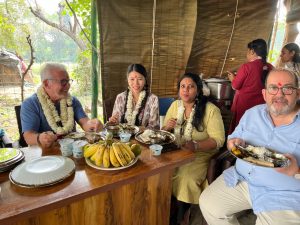
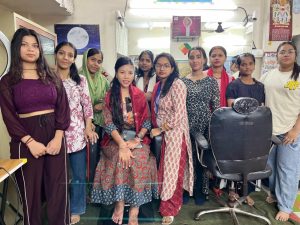
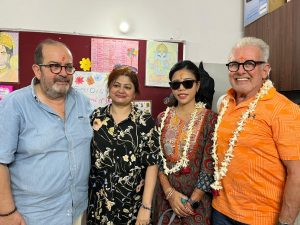
A few days back Xavier informed us about the visit of Serge an old friend of Project Why with his new bride Saranya. We decided to do something special for them. It was to be a surprise.
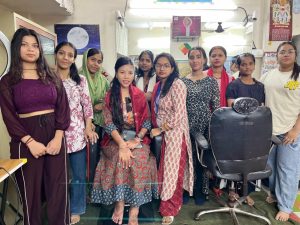
Serge carries India in his heart and his bride has never visited India. It was decided to welcome them at every centre with traditional Indian marriage customs. There was the exchange of garlands, the bride entering the ‘house’. after kicking a pot of rice, games newly weds play when the pride first comes, traditional wedding songs, wearing of toe rings and more.
Each centre did a fabulous job and the newly weds enjoyed every moment;
You can share of the moments too!
We wish them a happy married life.
by anouradha bakshi | Mar 21, 2026 | Uncategorized, Whats new
I came across this beautiful article recently. What caught my eye was the title:”When joy becomes simple, life becomes extraordinary“. I read it and was drawn to every word as it resonated with everything I have gone through. If you have time, read it.
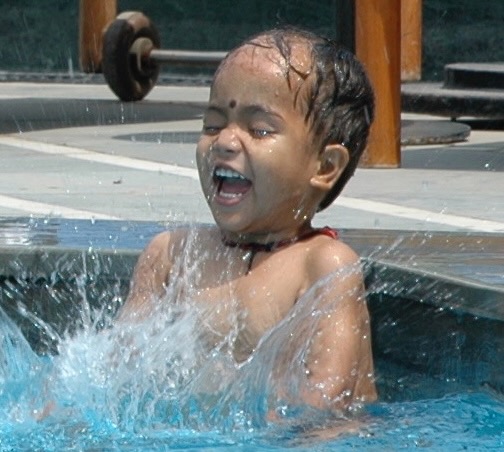
It took me a long time trying to find an image to illustrate this post. I waded through the hundreds of pictures I had and fell on this one. This is my darling Popples bathing in a five star swimming pool for the first time. A simple joy indeed but at that moment life for the tiny soul was nothing short of extraordinary.
It was time to take a walk down memory lane. True I am a daughter, wife, mother, grandmother and my life has had its share of ups and downs but did it ever feel extraordinary. The answer is NO!
What has made it extraordinary is the last 25 years of Project replete with simple joys: the trusting smile of a child, the sticky sweet put into my mouth by a child who has just passed her exams, the pride of children who have come to share their exceptional result, the loud GOOD MORNING MA’AM of the little creche kids as I pass by their class, Manu feeding me with his grubby hands, Utpal taking his first step, my special needs kids dancing with abandon, the child who has had a heart surgery walking back to class, and I can go on and on. And all these are the simple joys that have made my life extraordinary.
On a more personal note I also understood why I became a recluse in my golden years. The author ends with these words The deepest journey of life is always inward, towards the unmasked self, waiting quietly within. Now I understand that your one and only lifetime long best friend is YOU. I did not become a recluse; I just found my best friend.