“Don’t loose faith in India” were my father’s dying words. Both my parents were true patriots and loved their country with rare passion, a passion that they instilled in their only child. I fell in love with India from the stories I heard at their knee.
I am a proud Indian at a proud Hindu. My mother made sure I knew all about my religion. She celebrated each and every festival in the faraway lands we lived in. I never doubted my faith even when nuns in erstwhile Saigon (now Ho Chin Minh City) wanted to convert me. They offered me a double promotion! I was 12
Much water has flown under the bridge since then but my love for my country and the belief in my faith have never wavered.
Don’t lose faith in India were the last words my father chose to say to me and it is because of those words that I am writing this blog.
When I turned 40 I decided to open Project Why to honour my parents and because I believed that every child deserves the best. It has been a beautiful journey and it renewed my faith in my country as I found in this India all the values that my parents had talked about: generosity, respect for elders, for traditions etc.
But today I feel that faith wavering and I am plain angry. That is why I write these words.
In the past few weeks we have been privy to many aberrations and invaded by cockroaches! What started as a genuine student movement turned into a free for all platform with politicians eager to hijack the movement. And they did succeed. Students and children were quickly forgotten. All that they wanted was the resignation of the education minister as if that would solve all.
During the one month protest in the centre of Delhi everything that should not have happened did happen. With the craze for social media and the latest popularity of reels, everyone wanted a part of the cake and everyone wanted to go viral, never mind the content. We saw some terrible reels insulting our PM and others, insulting Hindu Gods all amidst a bacchanal atmosphere were all was permitted. Soon there were more bad elements than students and the decision to march to the Parliament ended in unnecessary, ugly and brutal violence.
It has been over a month and we are still witnessing the consequences of that violence.
The movement was said to look at the education scenario and bring the much needed change. As a person deeply involved with education I was happy that someone at least was talking of education. So much change is needed but sadly that is not the true agenda of our cockroaches! Post the agitation, some so called leaders of the CJP (Cockroach Janta Party) decided to visit schools in different parts of the country. They did aggressively, without any permission, throwing their weight around having ensured that the press was in attendance. And when met with resistance and complaints, they quickly played the victim card and went running to seek help from the courts and they got a rap on their fingers. You cannot enter a school at your whim and fancy, let alone take pictures! You violate the right of children and the POSCO (Protection of Children from Sexual Offences) Act .
What really angered me was that one soon realised that no one was really interested in the children of India or their education. All that the CJP leaders did was to regurgitate the figures of the Niti Ayog. Never did I hear of any road map or any plan. All one heard was unnecessary, empty and useless noise. And what is worse is that every card was played in the worse way possible: Hindu muslim, high caste low caste and so on. Switch the. TV on and you will see what I mean. No one is talking about education reforms. All that one can see are political games with every one wanting their share of the pie.
There are 248 million children enrolled in school as I write these words. 124 million attend government schools, There are two given realities that we cannot ignore: that children cannot wait for changes to happen and that with the advent of AI the job scenario is changing at a the speed of light. One salutes the government for the new education policy which seems to address the challenges of AI but my humble question is how long will things take to percolate to the remotest school and where are the resource persons. By the time everyone gets their act togetherI wonder how many batches would have passed out with useless knowledge.
In all the brouhaha about changes needed in the education system I have not heard one concrete proposal, one small idea that would benefit the children.
Many would ask what gives me the right to blabber about these issues. My simple answer is: working with underprivileged children for the past 26 years. I always walk the talk..We at Project Why have remained in touch with reality and kept our approach flexible and in tune with the happenings in the world. We have modified our teaching to include all the skills needed in to succeed in today’s day and age. It is an uphill task with a lot of resistance from the teaching staff as everyone wants to remain in their comfort zones. It took the use of the carrot and the stick approach to get things done our way. Today all Project Why children are learning English and computers from class I and we have incorporated all XXI century skills in our every day classes. My Project Why children will be able to accept every challenge that comes their way. Will write more about our approach in another post.
So my question to everyone including our ‘dear’ cockroaches is: will someone take the bull by the horns and ensure that EVERY CHILD gets what he or she deserve. In my humble opinion what is that what is needed is an interim programme that starts today till everything falls in place. I do not see any of this. I only hear strident voices bashing each other.
I just hope that some sane voices emerge and prevail.
I would also like to write about the what transpired between protestors and the police. It is important to understand that they have a job to do and are doing just that. The senseless beating of police in uniform was deplorable. My father taught me to respect the uniform and till date I will get up if any police officer enters my office with his cap on and I m 75.
Institutions need to be respected in any society worth its name. True there may be wrong doings but anarchy is not the way to handle the situation. We are a democracy and if you do not like the present ELECTED government then stand for elections and bring the change you seek but insulting the PM is not the way to go. To me the insults are a poor reflection on who we have become as parents, teachers and elders. Sadly unlike earlier times, there is not much for children to emulate. Children learn by watching what elders (parents, teachers and those in power) do and what they are seeing now is bad language, insults, violence and so on. No one is showing them a solution or a better way to go.
So please take a moment to think and find out solutions that work starting TODAY. Children cannot wait. They grow every minute.
Last but not the least let us talk religion. What I always liked about the Hinduism my parents taught me was its all encompassing nature. As a child my parents always allowed me to fast with my muslim friend, got to church with my christian one and celebrate Sabbath with the jewish ones. It never made me less of a hindu. But today, in the name of sensationalism and the quest for social network visibility, al is kosher. Bash Hindu Gods and traditions seems to be the flavour of the day. This has hurt me immensely as this is in no way what I was taught.
The divide and rule approach inherited from the British has been perfected by today’s politicians and this will ring the death knell of all we held as true.
I urge every one whose heart beats for India to wake up and. see the writing on the wall and for once move out of your comfort zones, stop been armchair protestors and come out and say what you feel.
Even if I wavered for a bat of an eye lid, my faith in India is strong, my heart beats for India and I will not lose faith in my country. So help me God.
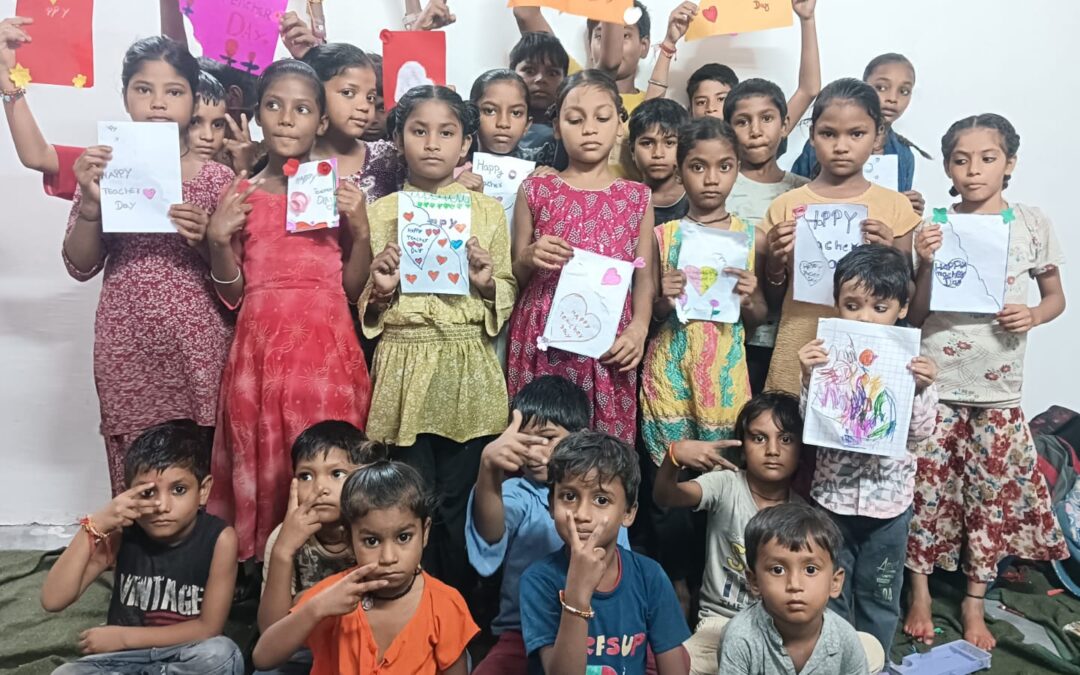
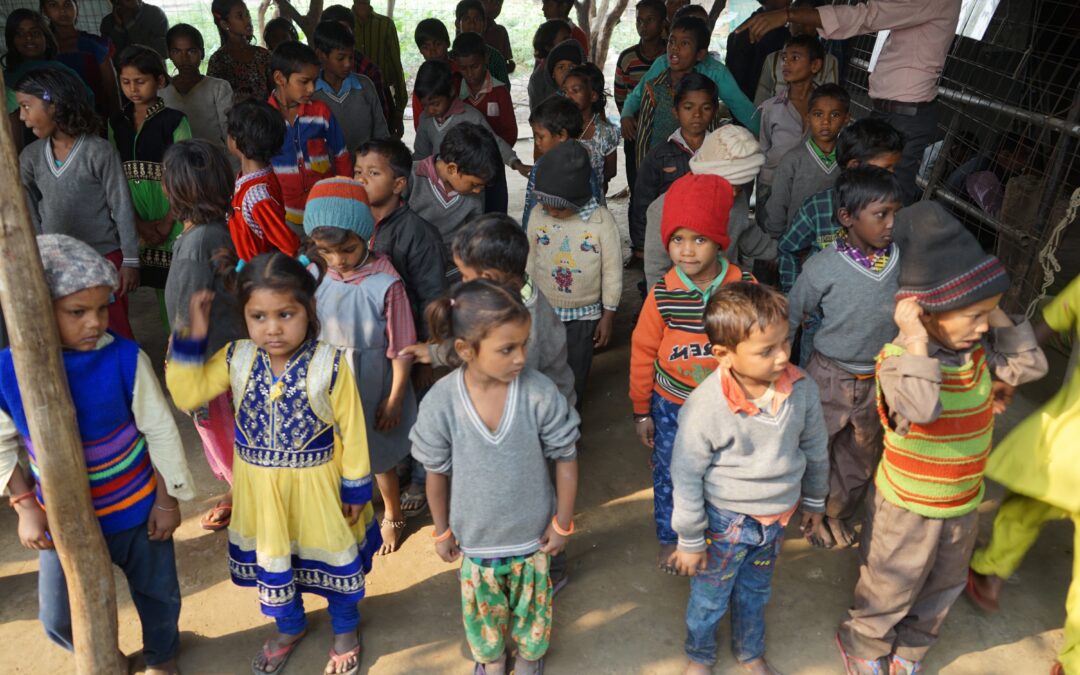
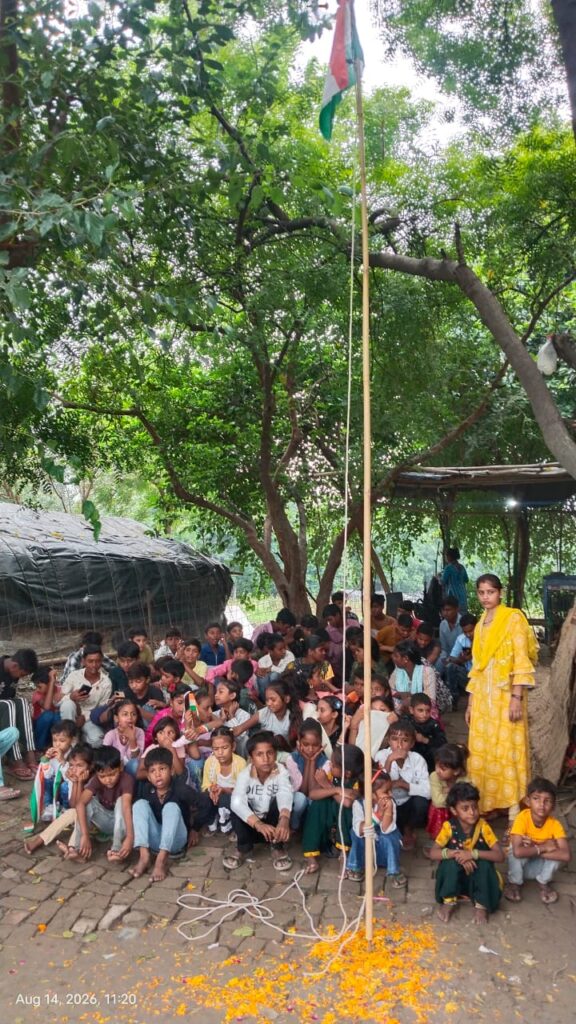
PS The picture you see above is that of the Yamuna children in their new centre. They are the true children of India. Their parents grow vegetables on the banks of the river and we ran a centre for them in the midst of fields. These are children no one cared for and yet they are the brightest, kindest and grounded children of Project Why.Today their fate is uncertain. Of the over 100 kids we had earlier only 26 have joined are new centre. Their future is fragile and uncertain. We will continue to hold their hands for as long as possible.
These are the children that need your help and support.
This morning I visited the Yamuna Centre. As we drove down the mud track that reaches our centre I saw the families sitting grief stricken amidst their belongings scattered shelter skelter have last week’s demolition drive. The families have put up plastic sheets on bamboo poles to protect themselves from the vagaries of the weather.
They sit desolate praying for a miracle, a miracle I know will never come. Over the years the authorities have come several times, broken all the dwellings. taken pictures to prove that they completed the task assigned to them and left. The families have rebuilt their fragile dwellings and carried on their life.
So. today they sat once again a little lost hoping that this will be just like the other times.
But we know that this time is different. Delhi’s masterplan is being reworked and the flood plains are to be transformed into parks and walking tracks. The directive has come from the Courts and there I nothing anyone can do.
For these families it is the loss of their livelihood as the fields where they use to grow vegetables will no longer be there. The areas are to be fenced The measurements have been taken. It is just a matter of time.
As we reached our centre that still stands the children were busy learning.
As they have been for the past 11 years!
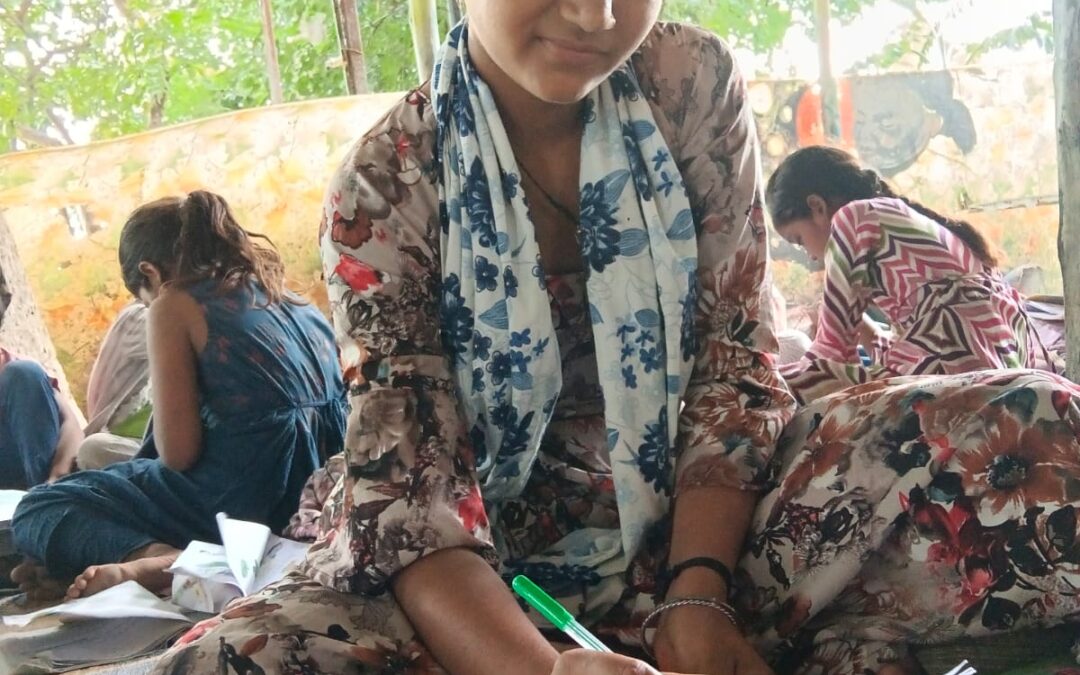
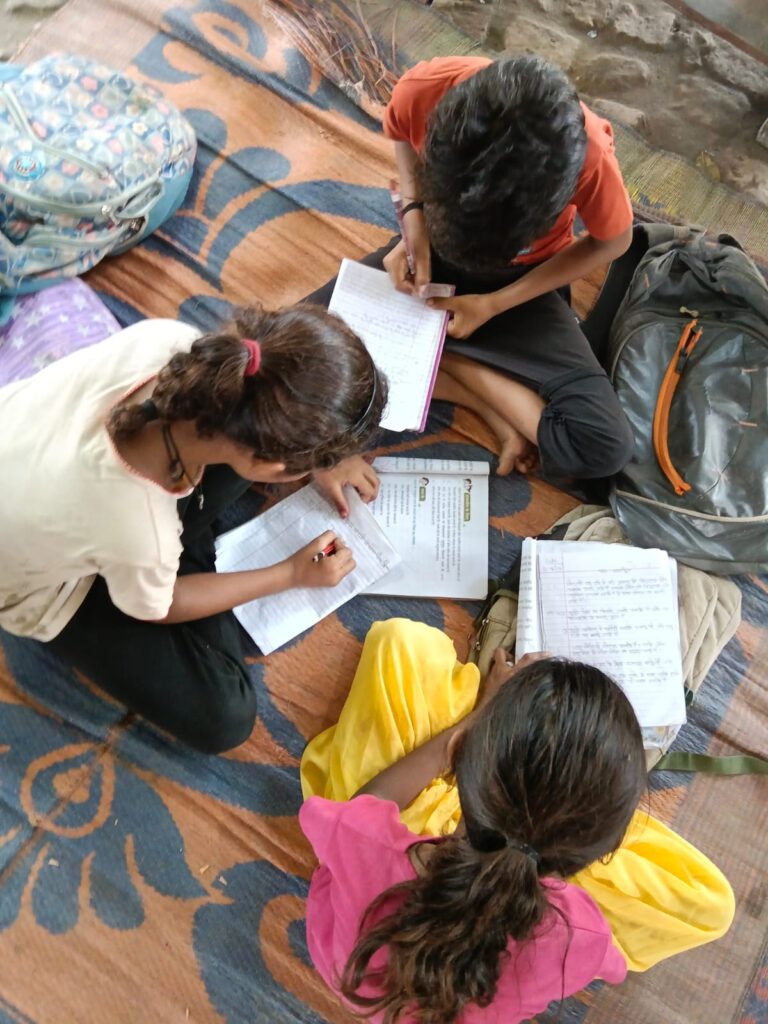
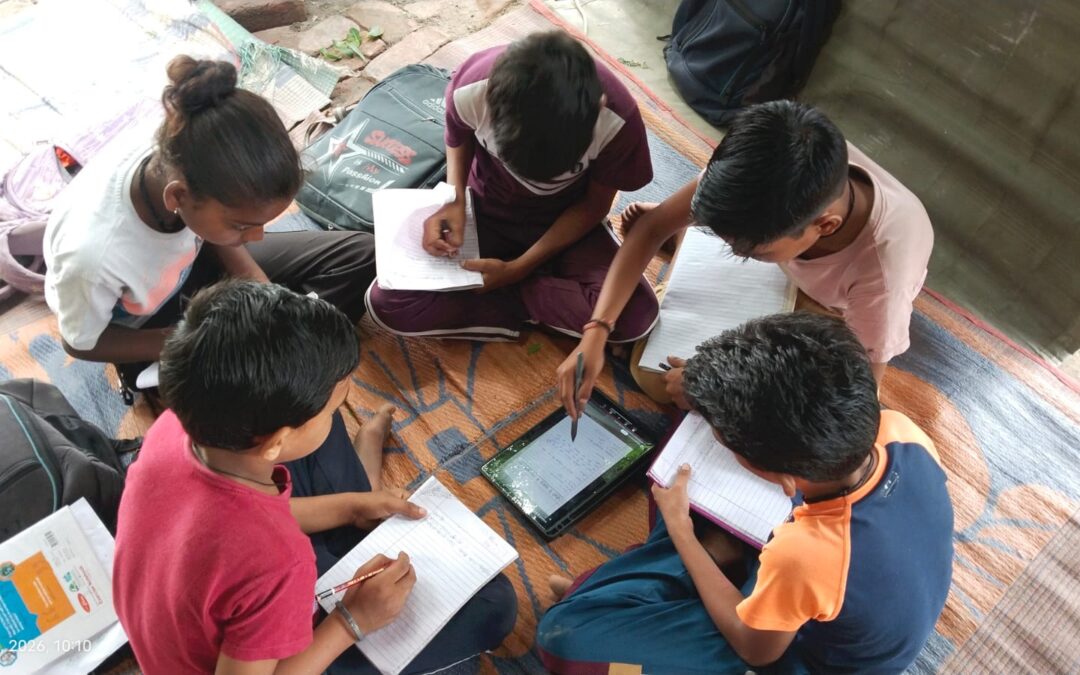
They sat on the mats lost one their books, not thinking of what awaits them. Not knowing what lies ahead. All they know is that dreams can be fulfilled through learning. They have been their seniors who have passed out. One of them works for Project Why.
They have dreams.. They shared them with us. From fashion designer to teacher, to police officer to business owner, you name it, they dream it. But now they will move back to their villages. Most of them as staying without a livelihood is impossible. Rents are high and they need space to house all their agricultural equipment. There are not many options for them.
We will continue to teach them as long as they are there and our school is not demolished. Few say they will stay. We are waiting to see where they move to. We may open a new centre in that area. We plan to continue teaching them online is we can.
Right now everything is unclear.
My brave hearts are busy learning as much as they can.
The phone rang on Monday morning. It was Rani. I do not know why but I felt something was wrong. even before I picked it up. “There is some sad news about the Yamuna centre” said Rani. For a second I thought or rather hoped that she would say the waters are rising and we need to evacuate the centre. But that is not what she said. “The bulldozers have come, the police are there. The whole place is being raised”. My heart missed a beat. This time was no more a cry wolf situation. It was no more a cat and mouse situation when huts are broken but then people resettle again. This game went on for years. The wolf never came. But this time it has.really come. A court order has sealed everyone’s fate.
I rushed to the centre and was shocked at the number of bulldozers, police personnel and even the Rapid Action Force armed with batons and even tear gas shells. I wonder why. These are the gentlest people ever. As I walked along the muddy track towards the centre I saw the families quietly packing their lives and sitting down wondering what next. The children who normally greet you with loud Good Morning Ma’am were eerily quiet.
At the centre things were being packed hastily. The staff stood bravely but I knew their hearts were broken. Everyone spoke in almost a whisper as future plans were discussed. No one had the heart to engage in conversations. The mood was broken by someone who told me to move fast as the police would barricade everything. I sent the car away but did not have the heart to leave yet.I just sat, lost in memories of all the beautiful moments I had lived at this very spot over the past decade. Too many to recount.
It was time to leave. We retraced our steps to the exit slowly. As we reached the end the road we encountered the bulldozers who had begun their destruction. One was almost in my face. I wove my way past police, forces and batons and shields making me wonder why all this was needed. These people are not the ones that would engage with the police unlike our cockroaches. Quite frankly one felt disturbed.
Some of you know the Yamuna Centre, It was the most beautiful place you can imagine.amidst trees and green fields. The river at a distance, a gentle breeze always blowing. Once you came it was difficult to get one self to leave. I have spent many amazing moments there.
For the past decade Kabir and Azure hospitality have beeb feeding these kids a healthy scrumptious lunch a beautiful moment we will all miss.
The Yamuna children are very different. They are not spoilt by urban ways and live close to nature. They are grounded. They know things take time to grow and have learnt patience. But they have a thirst for knowledge and a burning desire to learn as they intuitively know that education alone can change their lives. Over the past years they have proven their worth. Some have secured their class XII and one is even working with us.
They too have dreams, dreams that we wanted to fulfil. I remember one girl wanted to be a fashion designer and another a teacher. How will be able to fulfil our promise? I do not know. But I know that we will leave no stone unturned and find a way out. I still believe in miracles and know the God of Lesser Beings will not let us down.
And taking of lesser beings. I am truly infuriated. Yes I understand fully the need to protect the food plain. Honestly no one should have been allowed to settle there. But they did. People from nearby areas have actually “bought” tacts of land and hire them to these poor people who leave their villages to come and tend to the land. The ‘owner’ rents out the place at quite a high price, a tithe that needs to be paid even if the crops fail. But that is not all. Look across the river and you will see buildings, a games village and a swanky temple. But they will not be touched! The divide between rich and poor is a reality we have to live with. A law for you and another one for you.
We wait for the decision of the parents before we decide our next move. If they move back to the village then we will work out an online programme. If they stay as some parents want their children to continue their studies, then we will set up a new place close to where they move. It is all fluid for now.
Today, the Yamuna children and staff hoisted the national flag for the last time. It was a moving and heartbreaking moment.
FCRA or Foreign Currency Regulation Act is something NGOs aspire to as it allows them to get funds from foreign countries. Today FCRA is out of the closet. The government wants to amend it and the opposition is up in arms.
Wonder why?
Till date the FCRA did not have stringent rules and many were misusing the money. You had 50% available for administrative cost which could mean anything: the spa cost of the top person, entertaining friends and so on. Some time back, the government amended it to 20%.
Working areas were defined loosely and could be interpreted to suit any situation. Rigorous reporting was not mandatory and it was a free for all. When you said you ran an NGO people looked at you in a strange way. And many thought all NGOs were dishonest.
A guest in a TV programme, an eminent one at that, stated that NGOs should not get money from abroad and raise their needs from within the country. Well my dear Sir this is what we have wanted for decades but were never able to do. At best we raise 10 to 15% from India and that too painfully.
Some may wonder why do we need NGOs at all. Good question. I can only talk about education and women’s empowerment as that is the field we work in. When we started over a quarter century ago, schools were in a poor state and drop out rates alarming. Sadly they still are. Over 1 lac schools in India run with ONE teacher.
We arrested drop out rates, pushed children back in school and ensured that they complete their schooling with honourable marks. Today we are busy redesigning our approach to meet XXI century skills in a job market hijacked by AI.
Were we successful? I leave it to you to decide: 4 of our alumni made it to the IIT, we have chartered accountants, journalist, lawyers, engineers, dental assistants, army officers and more. In my humble opinion NGOs are still needed in the field of education.
Over the years we have grown as Project Why is not a static but a dynamic organisation ready to answer any WHY that comes its way. Our needs have also grown and no matter how we packaged ourselves funds from India were not forthcoming. We have survived thanks to the generosity of Indians living abroad and whose heart still beats for India.
However we have ALWAYS complied with all government. regulations, and always used all the money we received for the stated purpose. I am quite flummoxed when I hear on debates that some NGOs do not use even 10% of what they get!
When I look at the new FCRA bill that is to be tabled in Parliament. I feel no panic at all. We have met most of what is asked barring maybe not shared our social media handles:)
That NGOs should be up in arms because they are asked to use the money for the purpose stated and give detailed account of how it was used to me it is a no brainer. Frankly, if you are doing good and honest work there should be no problem so why the hue and cry.
“I want to be a doctor” are words that I have heard innumerable times for over 25 years. Every time you ask a child what she aspires to be doctor is often the answer you get.
For the past few days the hallowed entrance examination you need to pass in order to get admission in a medical college is in the news following the disturbing exam paper leak. This led to 12 aspirants taking their own lives.
Nothing is more tragic than the death of a young soul. No wonder students are angry and have taken to the roads. They definitely had reason to do so and we all supported them. The Cockroach Janta Part (CJP) was the result of this anger. The protest began but sadly was soon hijacked by political parties, each one looking for their pound of flesh; each one looking at a possible new vote bank. The cause of the children was soon forgotten.
I am not going to recount the incidents of the past few weeks. Everyone knows what happened.
I would like to delve deeper and share some thoughts based on the work I have done with children of underserved communities for over a quarter of a century.
For the past 25 years we at Project Why have been working with children of a lesser God. We have helped thousands of children succeed in their studies and gain employment. As I said at the beginning of this post I want to be a doctor are words I have heard every so often, and each time my heart breaks as I know that this is one dream I cannot fulfil.
True NEET is a tough exam and may not be for these children many would think. You are both right and wrong. My children can crack NEET as you will be surprised to know that many of them are super bright. But in the present scenario, to crack NEET you often need to. join a coaching institute that comes at a heavy cost that parents of these children cannot afford. As you would have realised much of the leaks that have happened is because of the coaching mafia. I think we should borrow a page from China’s playbook. China banned for-profit private tutoring and coaching for core school subjects under its sweeping “Double Reduction” policy. The major goals of this nationwide crackdown are to reduce student stress, lower family living costs, and shift academic responsibility back to public schools. It is laudable for sure but has its own problems.China has seen the emergence of underground clandestine tutoring.
However I strongly feel that something needs to be done to regularise and monitor all coaching institutes.
Over 2.3 to 2.4 million students apply for the NEET UG exam annually, competing against a total of approximately 1,36,939 MBBS seats. This pool includes roughly 63,296 government seats and 73,643 private and deemed university seats across 823 medical colleges. Now the cost for each is astronomicalThe average total course fee for an MBBS degree in India ranges drastically from ₹30,000 to ₹15,00,000 in government colleges, compared to ₹40,00,000 to over ₹1.5 Crore in private colleges and deemed universities. I do not have to spell out the fact that these costs cannot be met by lower middle class and middle class families and loans are not easy to get when you live in a slum and your parents do not have steady jobs. So even if you clear NEET the door slams shut! Your family cannot afford it.
You can now understand why my hear breaks when I hear the words: I want to be a doctor. And what is even more disturbing is knowing that many of these children have the intelligence and motivation to succeed.
Becoming a doctor is not for the underprivileged. I wish people understood that, So you see even if papers are not leaked medicine is only for the privileged. Many aspiring students go to smaller countries like Uzbekistan or Ukraine to fulfil that dream even if it means that they will have to take another examination to be able to practice in India.
The article concludes with these words: India’s higher education journey reflects remarkable progress in expansion and diversification. However, the next phase of transformation must focus on equity, quality, employability, and affordability to ensure that higher education becomes a genuine instrument of social mobility and national development.
And if the CJP truly wants to work for the betterment of education than it has to look deeper at the aspirations of all children.