by Anuradha Bakshi | Jan 20, 2008 | Uncategorized
Sunday 20 January will remained engraved in my memory for times to come. I normally shy away from TV appearances but when a leading Hindi channel called to say they wanted to do a programme on pwhy I accepted more for the sense of elation it gives my team. At that time I thought it would be a story on our activities and a little publicity could only help and would look good on our CV!
When the shooting was done I fell off my chair when the young reporter told me that I had to come to the studio the next day as the programme was a live call in one. That was out of my league but one look at the young reporter’s face and I knew there was no way I could back out.
I walked into the studio as nervous as someone going in for her first job interview but the kind anchor and then the pictures of pwhy kids as the story was played did manage to calm my thumping heart. But nothing could have prepared me for what was yet to come.
As the last image of the report faded away and the anchor began her introduction the first call came in from a remote part of India and then another and yet another and the beautiful words of love and encouragement from these simple people filled me with a range of emotions I cannot begin to unravel: I just know I felt tiny, humbled and undeserving of all the praise that was coming my way, but at the same time my heart filled with pride and elation as an India I always knew existed reached out to me.
The calls kept coming: someone who wanted to give a month’s salary, a bunch of college students who wanted to help, people asking how they could help children, people wanting to help us.. and a simple touching message that simply said: I have no money to donate but I want to work for the poor. I am a housewife…
People from all walks of life, from different states, from different faiths came forward with words of praise and encouragement and offers to help! It was moving and soul stirring and wondrous. Above all it was a vibrant proof of the reality that is India, of the land that we all need to fight for, a reminder of how we as a responsible civil society had to shed our cynicism and selfish ways and stop being armchair reformers and begin acting.
For me personally it was the vindication of much of what my parents had taught me and wanted me to believe. It endorsed my father’s last words: have faith in India! Nine years in a soulless city like Delhi had eroded this faith. The simple and candid words that came my way rekindled it and renewed my resolve to carry on my work till my last breath.
That is the wonder that is India!
by Anuradha Bakshi | Jan 19, 2008 | Uncategorized
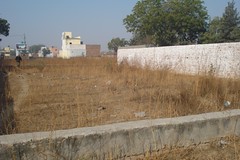
 A rock pile ceases to be a rock pile the moment a single man contemplates it, bearing within him the image of a cathedral wrote St Exupery. How right he was.
For me this piece of barren line ceased to be barren from the moment we decided that it was the one chosen to hold planet why. From that instant in time reason took leave of absence and the heart took over. Never mind if one did not know how or when; never mind how daunting the task at hand looked; never mind the obstacles that could come our way, planet why was a reality that just had to happen.
Another beautiful quote of the same author flashed in my mind: if you want to build a ship, don’t drum up people together to collect wood and don’t assign them tasks and work, but rather teach them to long for the endless immensity of the sea and I realised that this was what lay between today and the day when planet why would be a vibrant reality: my ability to get people to long for planet why as much as I did.
No mean task in a world where people have long forgotten the beauty of simple things and lost their ability to think beyond their own needs. And yet beautiful things live on and miracles happen. Just a few days back I would not have believed that I would be standing at the edge of a dusty road looking at a piece of barren land. Just a few days back I was simply trying to figure out how we would go through the next month and the next… the rock pile just remained a hope, a dream, a longing, a prayer… one that I had left to a higher being to fulfill.
The road to this dusty road has been a long one. For a long time I did try to get others to long for it just as I did, but at some point of time I surrendered the thought to the wind knowing within myself that it would ultimately land safely some day. It did, far sooner than I could have imagined and in the most unlikely way possible leaving us all speechless.
The journey is not over and much remains to be done. But it will all come together as long as we keep on longing for the essential, as long as we keep looking with our hearts and as long as we keep on taking one step after another in the right direction.
by Anuradha Bakshi | Jan 18, 2008 | Uncategorized
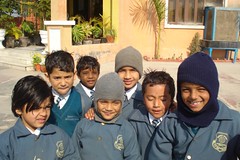
 When Utpal fell into my lap almost 4 years ago he was scalded, swathed in bandages and quite frankly not a pretty site. And yet as I held his fragile body and looked into his incredibly beautiful eyes I knew this was no ordinary child but a very special emissary who had landed my way for a purpose.
As years went by his bag of miracles unfolded and each time something extraordinary happened one felt one had finally unraveled the reason of his appearance in our lives. But as time went by we realised that we would never be able to keep up with him and he would never cease to amaze us.
When we had conceived of planet why and dreamt about it we had never imagined what it would turn out to be when it actually happened. Frankly we were quite content with the image we had conjured and in fact felt it was larger than life. A place for our lost souls was more than we could hope for. But for our little miracle man it was not enough. He had done his bit by sending a set of angels our way but with them came a rider: over and above shelter for our lost souls, we would need to ensure that more kids like him would one day be able to wear smart school uniforms and attend schools that actually were not meant for them and have pals they could laugh and play with.
So be it. You cannot argue with orders that come from blessed souls;you just have to obey them and give them your best though you are more than a little perplexed about what and when the next diktat would come.
Today we set out on our new mission with a song in our heart, a prayer on our lips and renewed determination to see planet why become the hallowed ground we hope it will as what is at stake is far more than anyone can imagine!
by Anuradha Bakshi | Jan 17, 2008 | Uncategorized
To many this may just look like a barren piece of land, and it is just that if you look with your eyes. But today I ask you to look with your heart just as a little prince did in a marvelous fable and said: What makes the desert beautiful is that it hides a well somewhere…
If you do agree to look with your heart then this ungainly piece of land will soon transform into a place where dreams come true. It all began almost 8 years ago with a disturbing encounter between a middle aged a woman and a young man abused hurting and forsaken by all and a preposterous dream: to give this man a real home. At that time the dream did seem absurd;just a meal or a set of clean clothes was what reason dictated but the woman was a dreamer and the dream refused to go away.
The meal was bought, the clothes too, but it did not seem enough and a journey began as somehow she felt that the dream would be fulfilled when day would break, it was just a matter of getting through the night!
It was a long night, and along it more dreams came each of them as impossible as the first one particularly if you allowed yourself to look with your eyes, one just had to keep the heart wide open. Many little hurting souls joined the bandwagon and midway remedies were found and applied but the dream refused to go, on the contrary it became larger and bigger: a home for all the hurting souls, a smile on all the faces that had forgotten to smile, a haven for all those forsaken by their own!
And as it became larger, the woman realised that it was now way beyond her league but she knew she had to just get through the night: day would break. And all through the night she kept praying as she knew that now the matter was not in her hands anymore. And then one fine day Angels appeared and decided that the time had come for the day to dawn.
So look the the picture again: this is where planet why will soon become a reality. This where Manu’s home will be, where Champa will roam freely, where Nanhe will smile away and where Sapna will jump to her heart’s content and many more lost souls will live a dignified and happy life. But the Angels did not want to stop at that, this where many little Utpal’s will don their smart school uniforms and leave for school and one day will stand shoulder to shoulder with those born on the other side of the fence.
So this is no barren piece of land, this is sacred ground, a place where dreams come true, where angels do not fear to tread, a place where the day finally breaks.
Dreams do come true; you just have to get through the night!
by Anuradha Bakshi | Jan 13, 2008 | Uncategorized
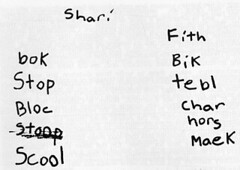
 This would make any teacher go ballistic and hurl a string of unkind words at the child who stands mortified not quite understanding why his valiant attempt at forming words meets such rage!
The truth is that in most cases both are right: the teacher is unaware of the problem of the child,and the child is incapable of doing better.
Most adults are not aware of learning disabilities and akin them to incompetence, sloth and even impudence. And children who are learning impaired slowly withdraw and lose all self confidence! They become failures and can rarely achieve what they are capable of. The plight of such kids was beautifully evoked in tare zameen par and I decided that all pwhy teaching staff see the movie in the hope that they would be able to understand the extent of harm that a word often said with good intentions could have on the child under their care.
I must confess that it has been an uphill task to try and get this across to my great team who often thought that I was clueless about teaching. I cannot blame them as they themselves are products of a harsh school system and even harsher home environment where verbal and physical abuse is the order of the day.
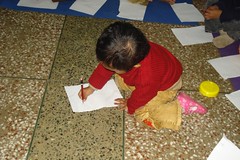 Many of the children who come to project why may not have learning disabilities but do have difficulties because of their social background, the inability of their parents to teach them and above all because of the callousness of their insensitive school teachers who have often already bruised their faltering self confidence. And yet each one had incredible potential waiting to be tapped.
So the entire staff was sent to see the film with the tacit understanding that this was not to be fun time but learning time and that there would be a brainstorming session after that. So we sat down the next day to exchange our thoughts and feelings about what we had all seen. I set the ball rolling by simply asking what they thought the film was about. As expected one of he younger teachers started by giving a summary of the film viewed from the outside. I stopped her half way and simply asked: How do you think each one of you fitted within the story?
There was a long silence some puzzled faces and then one teacher softly said: we should not use harsh words; another: every child has great potential and yet another: I saw myself in the film as this was happened to me.
These three simple comments had said it all and I realised with some satisfaction I must confess that I had finally been able to convey what I had been trying to for a long long time.
by Anuradha Bakshi | Jan 12, 2008 | Uncategorized
 Planet why is my most cherished dream but till two days back it was just that: a dream. True that I am used to dreaming and must confess that I have turned quite greedy as many of my dreams have turned into reality over the past 8 years, but planet why often seemed akin to the holy grail and I knew I was no Parsifal!
And yet, with a zeal close that of a knight with no armour I held on to that dream and pursued it as best I could because my holy grail was a cup full of lost smiles and hopes gone astray! I must confess that I rarely garnered the courage to actually spell out the astronomical figure needed to recover all these hopes and smiles but I persevered in my elusive search.
What I had forgotten along the way was that the quest was not mine alone; actually I was simply a channel, albeit a blessed one, who had to carry on what had been entrusted to me, and never give up, no matter what obstacles came my way.
Pwhy has been a journey interspersed with dreams and miracles and even the confirmed agnostic would be compelled to accept that this journey has been steered by an unknown hand who makes things happen!
A chance virtual encounter barely a few months back led to the the incredible: planet why moved from the realm of dream to that of reality as angels joined my quest and helped us secure an interest free loan to enable us to purchase the land where planet why will seed. They are now furiously at work so that we are able to repay back that loan and get the funds needed to build this blessed space where mislaid hopes and smiles will finally find a home and bright morrows will be crafted with love and care.
Angels look just like us; only you need to see with your heart to recognise them! And you do not thank Angels, you just carry on your work with renewed faith to hold on to their wings.