by Anuradha Bakshi | Oct 27, 2008 | Uncategorized
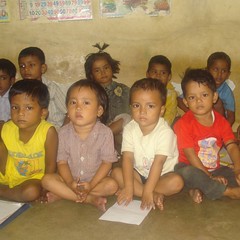
 I have been looking at your website, since I arrived in Delhi a few months back. I have been able to see with my own eyes how some kids are living in this area, and despite their hard lives, they still keep on smiling, which gives anyone the will to live and enjoy life in the simplest way. I am writing to you today to see if you need a person to help you time to time, I do not have a job here yet and therefore I am not able to donate some money, but I am willing to give some of my time, help or love if needed.
These simple words from someone I have never met dropped in my mailbox this morning. To me they were the most precious gift as they validated much of what I hold as true. Today’s world is engrossed in seeking things money can buy and hence is also blinded by its obsession to make more and more money. In that frenzy we seem to have forgotten that there are more valuable, rewarding and abundant things waiting to be discovered. The recent events have shown how fragile and shaky the gaols we seek are!
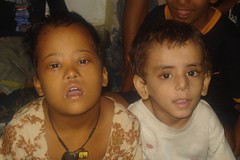
The smiles that greet me each day as I walk into pwhy truly remind us that happiness is not directly proportionate to the size of a wallet or bank balance. These kids have nothing to smile at were we to apply our canons of success. Some went to sleep hungry, others may have been beaten by a drunk father. Some cannot walk, or talk or even hear. And yet they smile with abandon at the slightest prompt.
We seem to have forgotten how to appreciate small things, how to enjoy the beauty that surrounds us, how to marvel at a flower just bloomed or bask in the morning sunlight. We have forsaken the simple pleasures that lie in wait at every corner of our lives. We are just busy counting our gains and losses. When we hear the word give we recoil in horror as we are convinced that everyone just wants our shrinking pile of money. We simply forget that there is so much more we can give: time, help or love as writes my young friend. These are far more precious than all the gold in the world as with these you give a little of yourself.
by Anuradha Bakshi | Oct 26, 2008 | Uncategorized
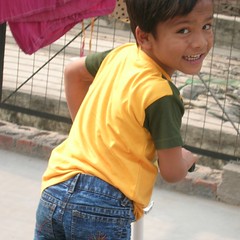
 Utpal is home for his Diwali break. Home this time is the women centre without mom as she is back in rehab. Home is where his toys and preferred TV programmes await his return, where the fridge is laden with his favourite goodies and where his pals both big and small look forward to his homecoming.
On his way home, Popples dropped by my home. He sauntered in a huge smile on his face, a twinkle in his eyes. After some hugging and cuddling, he fished out a folder sheet of paper from his pocket and handed it to me. It was a Diwali greeting card, the kind every school child makes: some glitter, a handful of lamps, candles and diyas carefully coloured with crayons, and the customary Happy Diwali in curly letters. Inside the card was a simple message: Rose is red, sky is blue, Mummy and Daddy I L U.
As I read the words, my hear missed a beat. I looked at him and softly asked him: is this for me? The answer was a simple: yes.
I was moved to tears; my throat choked painfully. I just hugged him tighter unable to utter the words I wanted to. He simply held on to me tight. Then like all little boys he wanted to know what i had got for him and whether there was an orange – his favourite fruit – in the fridge. Needless to say there was. We spend some time chatting and he told me about his maths test that had been held the same morning and in which according to him he had secured 10/10! After a while he wanted to go off to the women centre and watch cartoons.
I sat for a long time, his precious gift in my hands. I wonder whether he understood the meaning of the words he had scrawled, whether he realised that there were things in his life which were different. Did he feel he was missing something is pals had. Or was his still too young and had just made the card without grasping the meaning of the words. Or was it that he felt that it was meant for the people he cared for and hence for his maam’ji! I knew the day would come when real questions would spring in his mind and when answers would have to be found.
My thoughts went back to what I had written in dear Popples: Popples you will have to, one day, write an essay about your family and you will find it very hard to do it because if you do what big people ask you to, then you will be writing a pack of lies, and if you write the truth, your little friends may not quite understand. But I want you to know that if you begin by writing lies then you will have to do so all along, whereas if you say the truth and even if one person sticks by you, you will have won!
by Anuradha Bakshi | Oct 24, 2008 | Uncategorized
 God bless India were the words chosen by the Orissa nun who had been mob raped in August to end the almost half an hour statement recounting her horrific tale. In a controlled and choked tone she related how she had been abused, humiliated, violated and defiled. Her narrative was graphic. She described everything she was subjected to including the total apathy of the police.
I sat in total silence, dumbfounded and shocked. Her last words carried terrifying portent. Which India was she blessing? The one that had stood silent and watched her ordeal? The one that had refused to give her justice? The one that claimed thousands years of civilisation and tradition but could not protect one of its own? Or the one that today was using her harrowing ordeal to garner political brownie points?
Which religion are we defending as we chose to violate a woman of faith? In which God’s name were such acts perpetrated? And what makes seemingly innocuous human beings commit such horror?
The questions are endless, the answers few or empty. I was shocked beyond words by the pathetic and pitiable defense put up by a guest at a talk show debating the issue: the rape has not been proved he shouted. I would like to ask him what more proof did he need than the woman herself saying on national TV that she was raped. Need I remind him that it is not easy for any woman to come out in the open, least of all one who has taken wows of chastity? But who is listening, no one is really interested in the plight of the poor woman. Every one is seeking his pound of flesh.
There are more disturbing questions, the ones that address the cause and not the effect, the ones that are never asked for fear of revealing what we are not ready to hear. Why is this happening? What is making people act in such dastardly ways? What is ailing our society? What lies behind it all? Where are we heading?
who invade the privacy our homes through innumerable TV programmes and intoxicate us with nonsense? I wonder why not one of them has ever denounced such And again I have no option but to resort to my leitmotif: the widening gap between the have and the have nots, the absence of any self respecting system of education, the total abdication by the powers that are to address real issues. Such are acts are indeed whipped up by some vested interests but are executed by disgruntled and weak individuals seeking instant gratification and unless we address the problems of such individuals we will never be able to reverse the situation. But again who bells the cat: a hijacked education system that has lost its way and instead of bridging gaps is playing to the gallery and widening them; religious Godmen who invade the privacy of our homes through innumerable TV programmes. I wonder why not one of them had ever denounced such despicable acts.
Unless we garner the courage to face real issues, such acts will continue. Another headline will replace the story of Sister Meena, actually it already has and even those of us who were moved to tears by the tale will move on. Such is life. I wonder how many more such horror stories will it take to awaken our collective conscience.
God bless India said sister Meena. I wonder which India she was referring to.
by Anuradha Bakshi | Oct 23, 2008 | Uncategorized
 Ho’oponopono means to make it right. It is an ancient Hawaiian healing technique that can be applied to any problem or difficulty. The reason why I talk of this today is because of an incident that occurred yesterday and that left me quite baffled.
The daughter of a dear friend came to me with a problem seeking the right answer. She was on her a way home in a three wheeler when a small accident occurred involving a bigger car. No real harm was done and the protagonists could have continued their journey without much ado, But that was not to be. The occupants of the car forced the rickshaw to stop and pulled the driver out and started bashing up violently. The poor man kept apologising profusely but to no avail. The beating and abusing carried on mercilessly. My little friend tried to glare at the perpetrators but that seemed to have the opposite effect as the miscreants decided to play to the gallery. A small crowd gathered, mostly simple workers and bystanders. The enraged men shouted at them and they too dispersed. Someone gently told the young to take another ride home.
The young girl came home visibly shaken by the incident. What disturbed her most was the fact that she had walked away and not been able to help the poor rickshaw driver. She wanted me to tell her what she should and could have done. She felt like a coward for having walked away.
We sat for a long time trying to find an answer, and sadly in the given circumstances and situation there was none. Rage that seems to have become the order of the day. The arrogance of the rich and the helplessness of the poor provide the right stage for such incidents that seem to be the rule rather than the exception. And once again we seem to be healing the effect and not the cause. The true answer lies elsewhere. In ourselves more than in others but are we willing to look inwards.
I looked for answers too, larger ones and that is when I remembered ho’oponopono. It is a code of forgiveness whereby you have to accept as being the cause of everything that surrounds you and learn to forgive not only others but yourself. The problem with things around us today is that we thrive in the blame game and never accept our part of responsibility let alone begin to forgive. The men in the car could have simply forgiven the rickshaw driver and moved on. The young girl has also to forgive herself for having walked away.
It is time we all learnt to ho’oponopono.
by Anuradha Bakshi | Oct 21, 2008 | Uncategorized
 When did you last say thank you to the man who washes your car, the one who delivers your newspaper or the one who collects your garbage every day. When did you smile at the lady who leaves her children to come and look after yours? When did you look into the eyes of the waiter who served you your coffee while you sat laughing with your pals? A mail from the founder of dream-a-dream reminded us all of just that. He said: Change, I believe, will have to happen in two-ways. One, empowerment of the vulnerable who can stand up for their dignity, respect and rights as an equal in society and at another, more difficult level, empowerment and sensitization of the community of people like us who over generations have become immune to the prejudices and biases we exercise in our daily lives.
As we sit watching the market crashing and stocks tumbling and dolefully counting our losses, it is perhaps time to take a peep into ourselves and see what we have truly lost. If we do so with honesty and candor we will be compelled to realise that over the years we have lost our ability to care, love, give an reach out to others. Hubris took hold of us in more ways than one, and we lived insulated little lives protecting what we had been taught to believe as being the only asset of true value. We had all become targets of what a friend called financial terrorism. A very insidious form of terrorism as it does not operate through violent and visible attacks, but feeds on surreptitiously creating large than life dreams in innocent people’s lives, dreams that are waiting to crash.
It was almost two years ago that I wrote about my fears about plastic money and bank loans reaching the pockets of the poor. But the adversary was too big for me, the terrorist forces were at work and the dreams too tempting to resist. It has been two years since the loan was taken. The money was used in a day to add veneer to a wedding. And since that fateful day the little family of 5 has had to live with half a salary, the other half being used to pay the dreaded EMIs. This is just one instance. There are innumerable others.
But was this post not about saying thank you! or rather about the importance of getting past our prejudices and fears, of reclaiming lost values like compassion and empathy. I somehow feel that it is the new mantra we have all been taught to chant that is the cause of such a behaviour. In a world where the material, the visible and the transient are valued, there is no place for the immutable, the permanent and the invisible.
Maybe it is time to reclaim lost values and make them part of us. Maybe it is time to garner the courage to look at those we take for granted and whisper a simple thank you. I am sure that we will be the ones truly gratifies. I an never forget the beggar woman who many years back thanked me warmly not for having given her a coin or banknote, but for having simply looked into her eyes and told her that I was sorry i did not have anything to give!
by Anuradha Bakshi | Oct 15, 2008 | Uncategorized
 It is that day of the year when I remember Kamala, my mother. Last year on this very day I dedicated our women centre to her. Kamala was an extraordinary woman in more ways than one, a true free spirit in times were women were often relegated to the shadows. She was passionate about many things but what she cherished the most was education, something she achieved with great difficulty and strife. When I decided to open a women centre it had to be dedicated to her memory. Today one year down the line, it is time to ask whether the women centre is worthy of the one whose name it bears.
The Kamala centre is a placed filled with joy, laughter and a palpable energy. In the span of a short year it has over 200 children and long waiting lists. Over 50 women come each day to learn stitching of beauty skills to enable them to slowly take the road to financial independence. One a week there is a women’s meeting where many topical and sometimes. disturbing issues are debated while sipping tea and nibbling on biscuits. Till now the women have talked about gender bias, child abuse, women’s rights, girl child, HIV and much more. Simpler issues have also been discussed: hygiene, balancing household budgets, saving, immunisation and insurance. On a lighter vein and on popular demand there was also a pasta cooking session where the women were taught how to make pasta in tomato sauce!
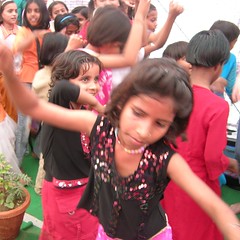
The Kamala centre also has a library, that is even open on Sundays. The children are thrilled and consider the library as one of their most precious possession. Not a single book has been torn or misplaced. The Kamala centre is a vibrant place. It is not simply a study centre but a true children centre, one that they consider their very own. They celebrate festivals and come to play in it after working hours. It is a place where children know they can reclaim their right to be children and they do!
The centre may be just a year old but it is imbued by Kamala’s spirit and a reflection of all she believed in. It holds in custody the dreams of aspirations of a many: children on their way to a new tomorrow; women slowly getting empowered. It is a place where people of all caste, creed, social background come together as one in a true celebration of life itself.