by anouradha bakshi | Feb 28, 2017 | Anou's Blog, Uncategorized
Use the skills that I have got.
Do not focus on what I have not.
Of course, I am aware of my limitation.
Yet, I am a part of God’s wonderful creation.
William E. Lightbourne
A recent article brought once again the terrible plight suffered by mentally challenged souls. The article gives us a glimpse of the state of affairs in one of Delhi’s Home for the Mentally Challenged: overcrowding (4 to a mattress), filth, stink, inmates crawling for want of wheel chairs, no medical or psychological support, poor nutrition, no hygiene. The list is endless. And it gets worse: the inmates are even denied the last shred of dignity.
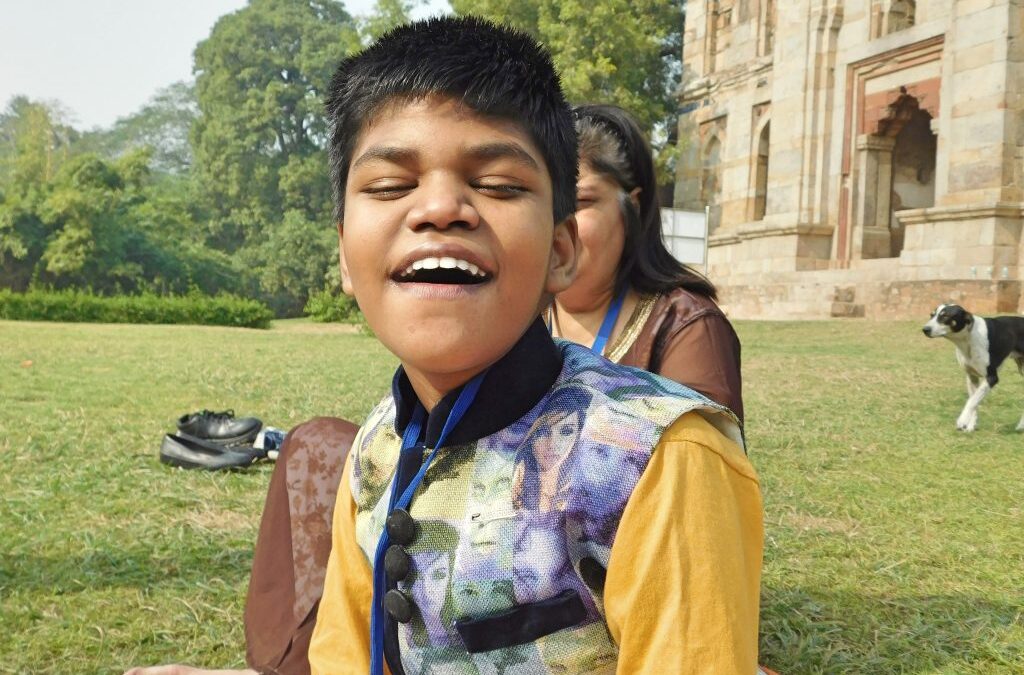
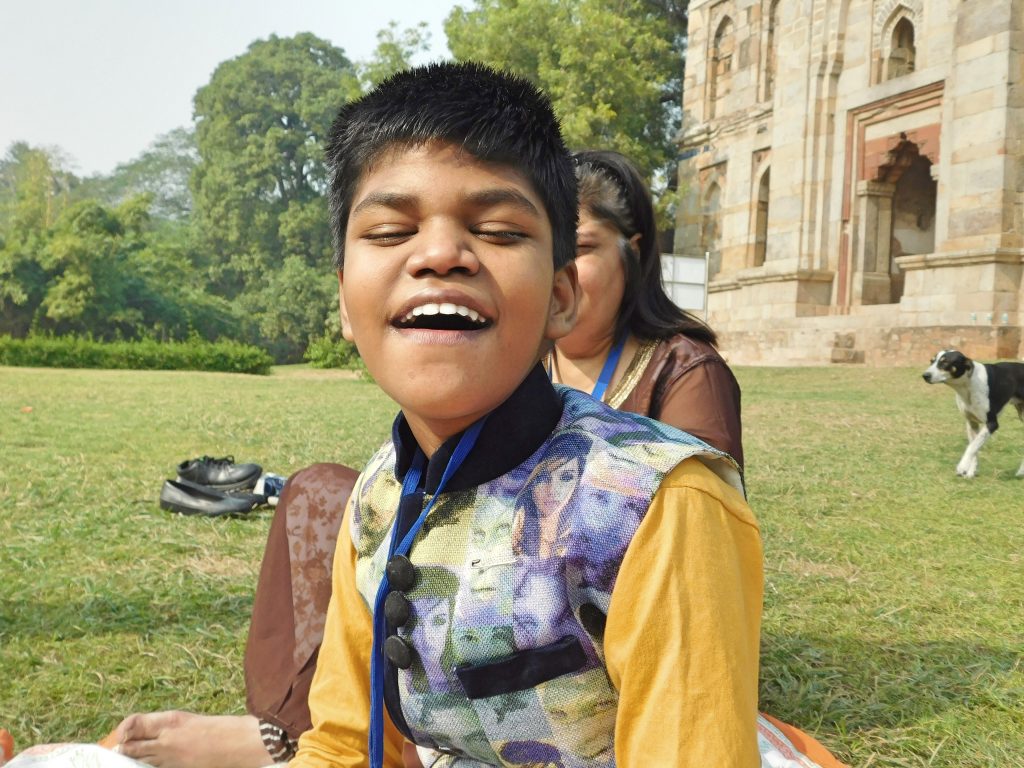
Was it instinct or God’s intervention that made me shun sending Manu to a ‘home’ I do not know. What I knew was that I was the one that needed to care for him. And in order to do that Project WHY saw the light of day. The biggest lesson I got was that no life, however wretched, was worthless. Every life was a plan of God.
And soon God’s plan unfolded as a little later a lady landed with a motley crew of differently abled children whose school had closed and who had nowhere to go. Project WHY’s doors were open even if their first class was on the road side.
by anouradha bakshi | Feb 14, 2017 | Anou's Blog, Uncategorized
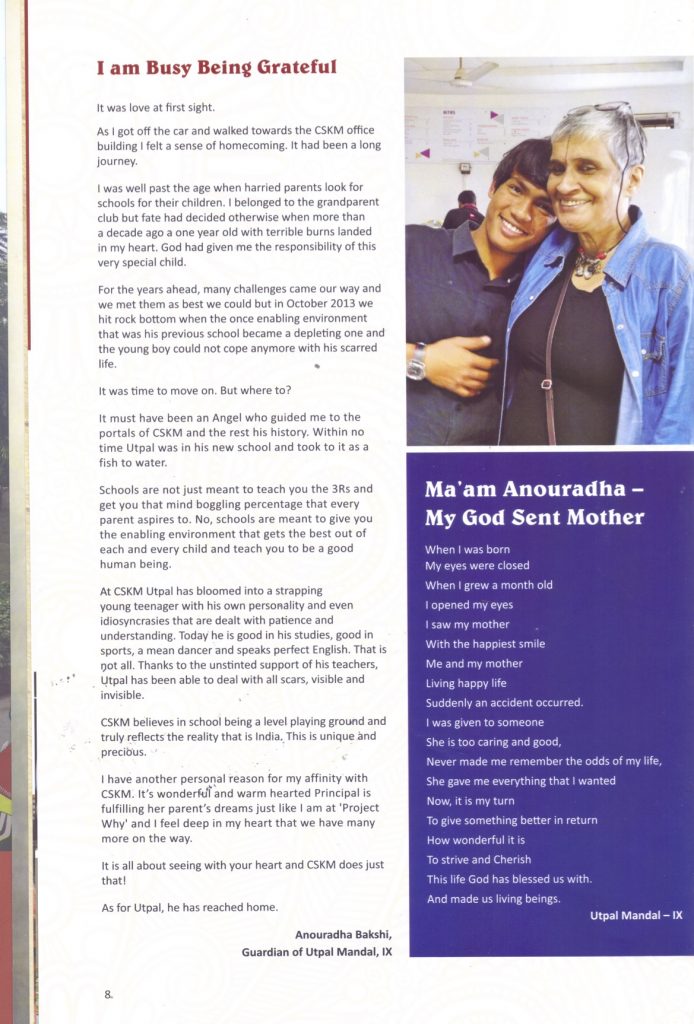
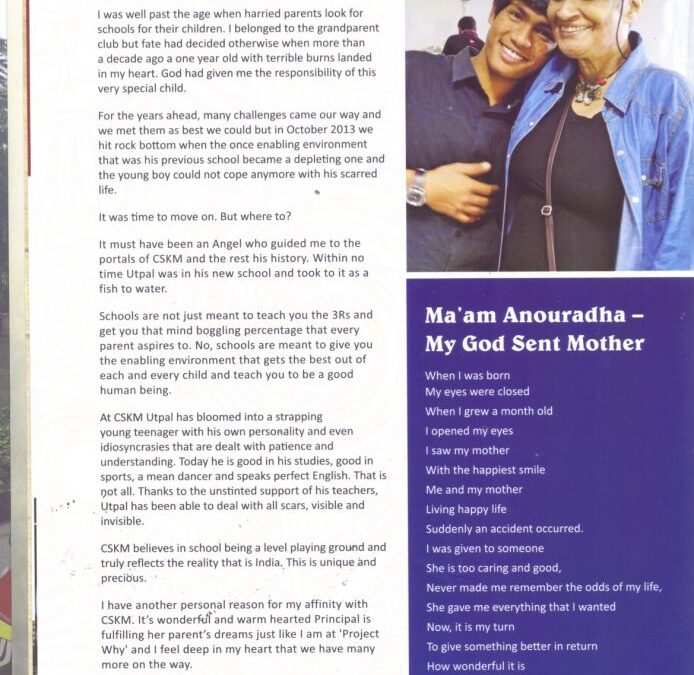
Today is Valentine’s day. A day to celebrate LOVE! A day to remember what love truly means by going beyond the pink hearts and red roses! A day to take a walk down memory lane and reminisce about all the love stories of our lives. I have been blessed with many, each one as beautiful as the other but the most unexpected one was close to my 50th birthday and when a little scalded bundle swathed in bandages walked into my heart and changed my life forever.
That is not all. Two days ago when I visited the school for the ‘dreaded’ PTM I was handed a copy of the school magazine where one whole page was dedicated to this very special love story. And tucked away in a box was a poem dedicated to me and written by that little bundle of joy now a strapping and handsome teenager!
Feels wonderful.
I have written volumes about this little soul, even a book.
Today I simply want to share the magic of keeping your heart open. You never know who will walk into your heart and stay there forever age no bar!
It happened to be when I was 50 and he was 1!
This is the love story of Utpal and his Maam’ji!
Happy Valentine’s day!
Love is really in the air!
by anouradha bakshi | Feb 14, 2017 | Anou's Blog, Uncategorized
Called it synchronicity but came across the word UGLY in two different contexts recently. The first was a touching article about a woman who had to bear the ignominy and hurt of being called the ugliest face on earth in a post that went viral and the other was as an explanation for dowry giving in a class XII Sociology text book.
The so called ugliest woman is today a great motivational speaker who truly exemplifies the saying: True Beauty is reflected in the Soul. Her talks are a lesson to all showing us the true meaning of defining who we are. Lizzie Velasquez has overcome all that was thrown at her.
The second instance though is far more dangerous. It s surreptitious and insidious and can hurt and harm so many beautiful souls.
Believer it not but a sociology text book for class XII states the following in a chapter entitled Major Social Problems in India: “If a girl is ugly and handicapped, then it becomes a very difficult for her to get married. To marry such girls, bridegroom and his family demand more dowry. Parents of such girls become helpless and pay dowry as per the demands of the bridegroom as family. It leads to rise in the practice of dowry system.”
What does one say to these words. Just imagine the young girls in class who do not consider themselves pretty! And there are many as the canons of beauty today are so stringent and so in your face courtesy the Internet or Television that I have rarely come across a young girl who thinks she is pretty. More often than not even a pretty girl finds herself too fat, to short, too dark and so on. Her nose is too big her hair to thin, her skin pimply and so on again. Her self esteem is below her feet. Now is she reads this passage imagine her plight.
Girls are often considered a burden and know it. Their marriage is the prime cause of concern of her family and reading such callous and hurtful words are bound to affect her.
Many questions come to mind. The first one is that no one seems to vet books, and if they did then how could such a passage pass the test. Then who defines beauty? In this passage it seems that beauty is physical based on skewed social constructs. What about beauty of the heart, the soul. Why do authors who write books for school children who are still vulnerable not realise how such words can destroy a child’s self esteem.
It is time we understood this.
by anouradha bakshi | Feb 8, 2017 | Anou's Blog, Uncategorized
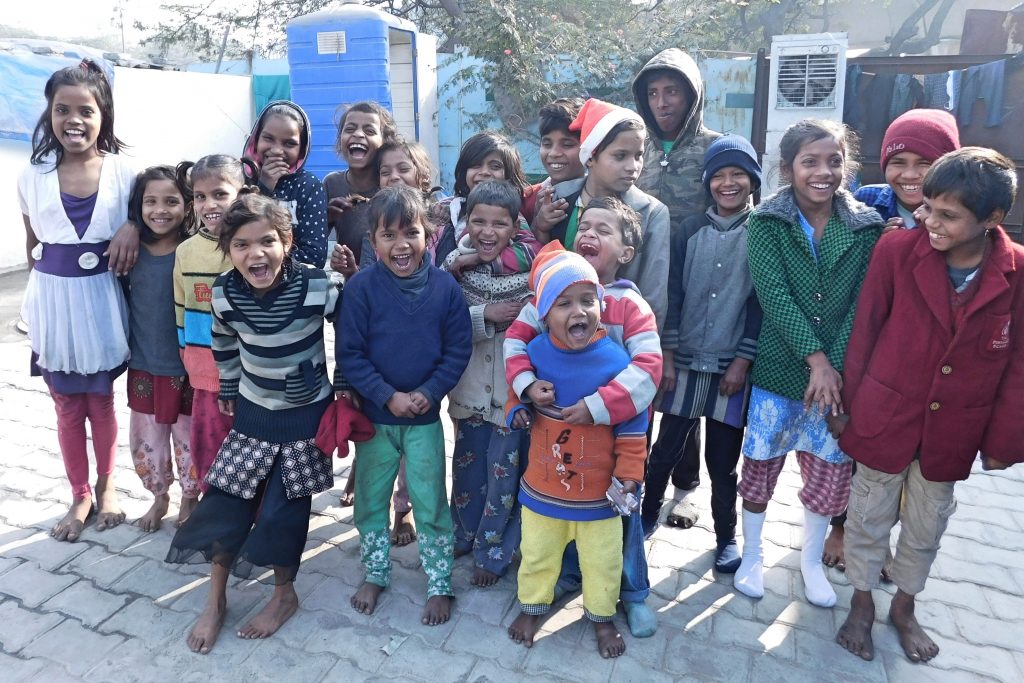
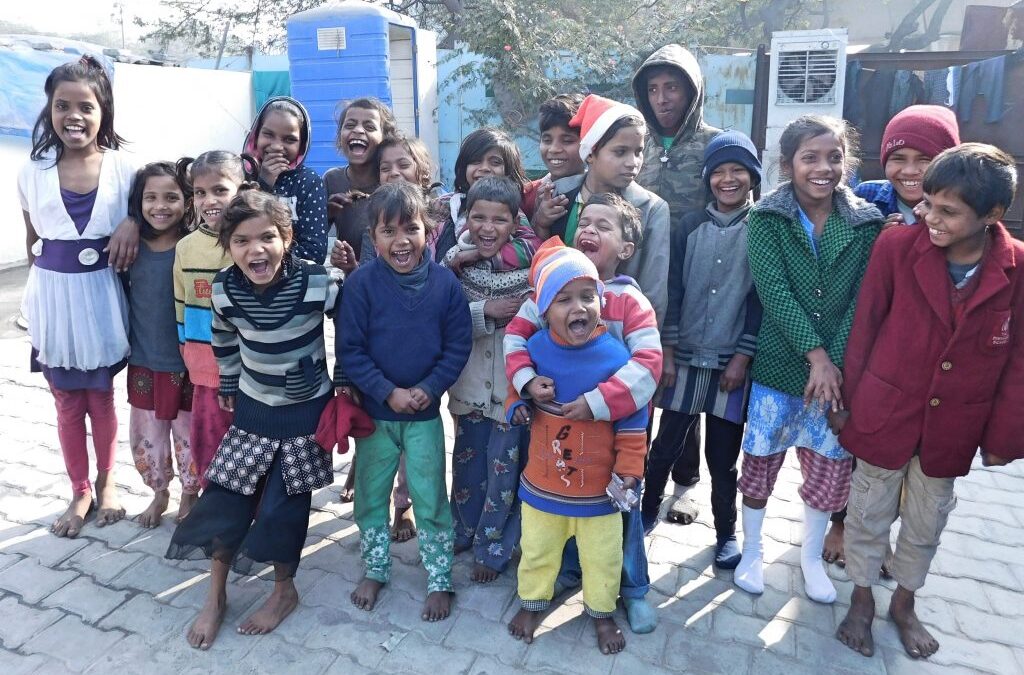
A little girl was crushed to death by a vehicle last week. She lived in a shack under the Nehru Place flyover. Her family is part of the posse of beggars that live there. It is a spot I pass often en route to Project WHY and have been interacting with such children for very long. The fear of such a tragedy happening was always there. She was just like my little beggar girl of yore years.
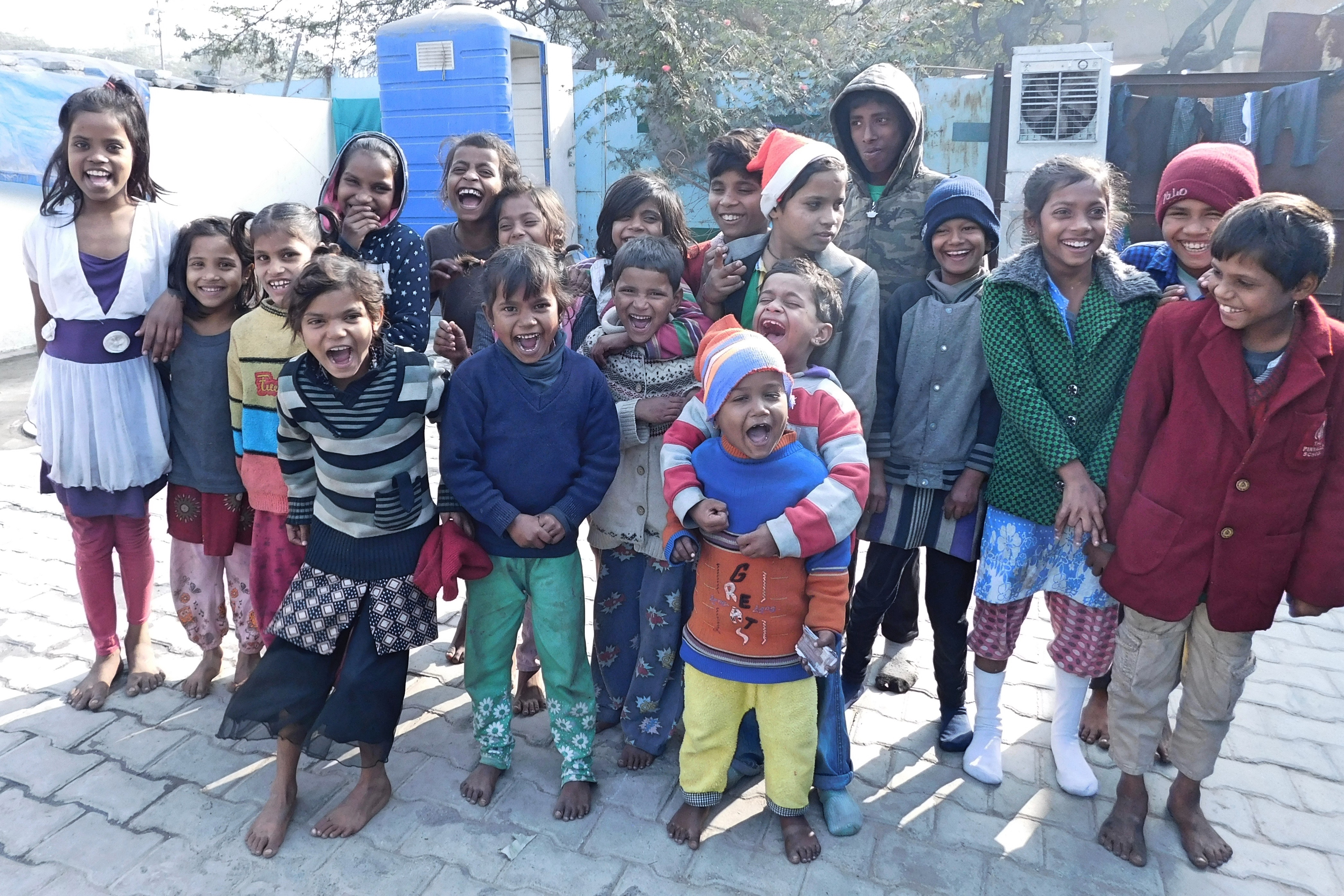
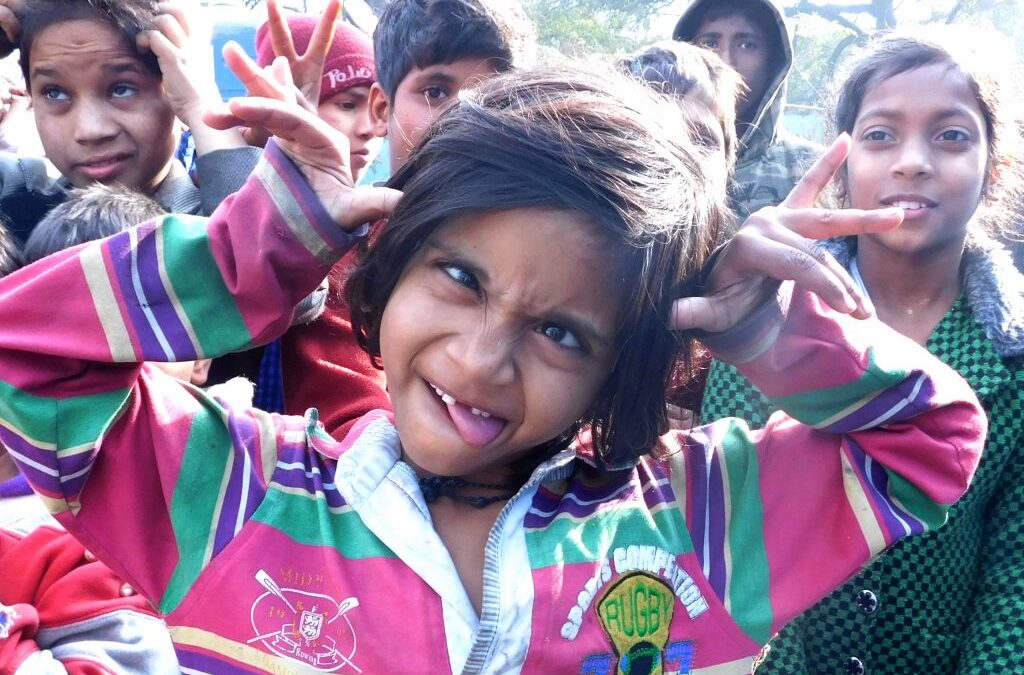
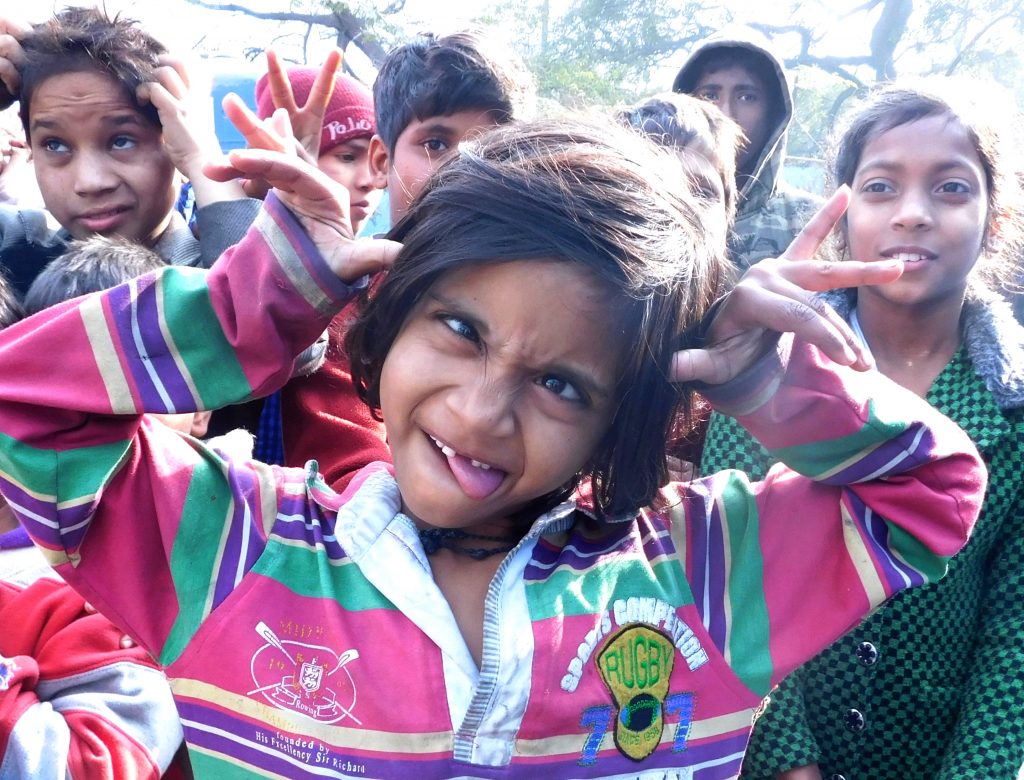
The plight of children begging has been the one deafening why that is still unanswered. The only source of comfort is the opening of our Kalka Temple project for children like the little girl who lost her life. The children you see in the picture are all children of beggars and would be roaming the streets and begging. Now they study for a few hours and some even go to school. They may escape the grim future that beckons them. We will definitely try our best to ensure that.
Once again the death of this child brings to the fore the plight of children who beg on the streets.
When you see the smiles on the little faces in the picture, you see children just like any other. Nothing differentiates them. They are full of mischief and giggles, like to play pranks, love games and deserve what every child does!
It is time we stood up and did something for them!
by anouradha bakshi | Jan 31, 2017 | Anou's Blog, Uncategorized
The recent incidents of sexual molestation in Bengaluru have once again brought to fore the reality of gender biaises and the stranglehold of patriarchal values in across society.
Molestation, rapes and all form of sexual abuse are a power game wherein the perpetrator cannot accept the victim deviating from accepted norms. True there are some aberrations that defy all explanations the most deafening being the rape of children and babies!
Sexual abuse of children in often committed by members or someone close to the family. These are the ones that go unreported as they touch upon the honour of the family and what is terrible the code of silence is often imposed not by a male, but a female member of the family.
Patriarchy decreed the daughter would be the repository of the family’s honour. Why not the son? The son can do no wrong; this is a notion prevalent across the board, a sentiment aptly defined in the words of a leading politician: boys will be boys.
Every time there is a rape or molestation case civil society wakes up and, post a few candle lit marches and fiery speeches, sinks back into silence. What is always sought is the hanging of the perp as if that act alone would solve all issues.
Experience has shown that this is not the case as rapes and abuse continue with impunity. Recently a tailor, father of five was arrested for having molested hundreds of girls!
We need to protect our children as boys too suffer abuse. The statistics on chid abuse are terrifying. One child abused is one too many!
Long term solutions are not the need of the hour. Children cannot wait. What we are dealing with is age old mindsets that will not vanish overnight. Patriarchy is too deed rooted. The only immediate solution is to inform children about abuse and empower to say NO, a no so loud that it cannot be ignored. It all begins with the notion of ‘good’ touch and ‘bad’ touch.
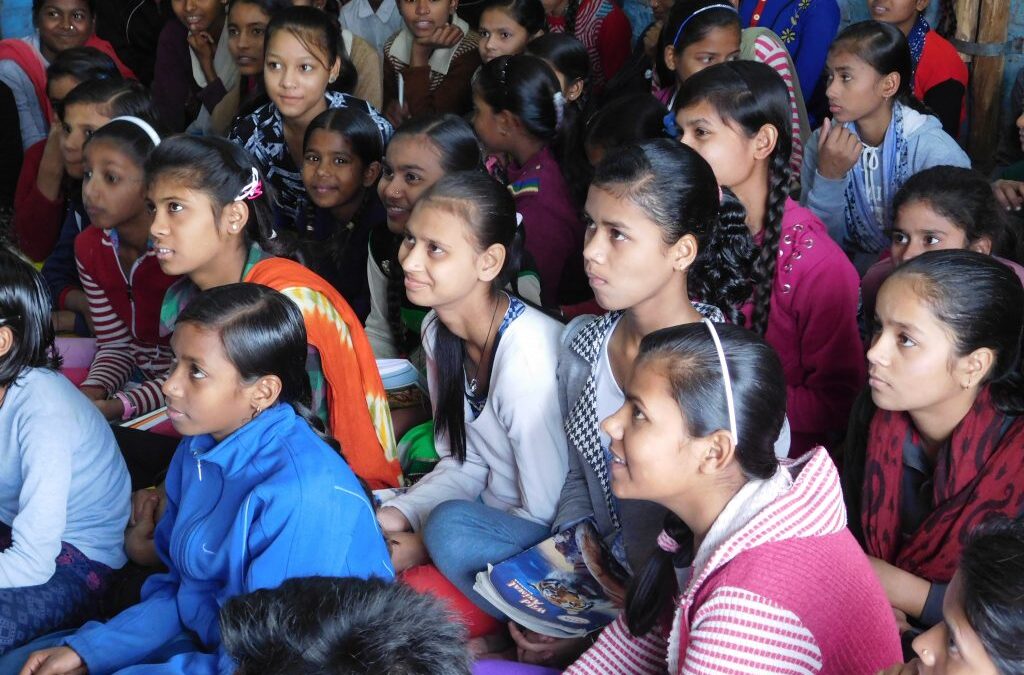
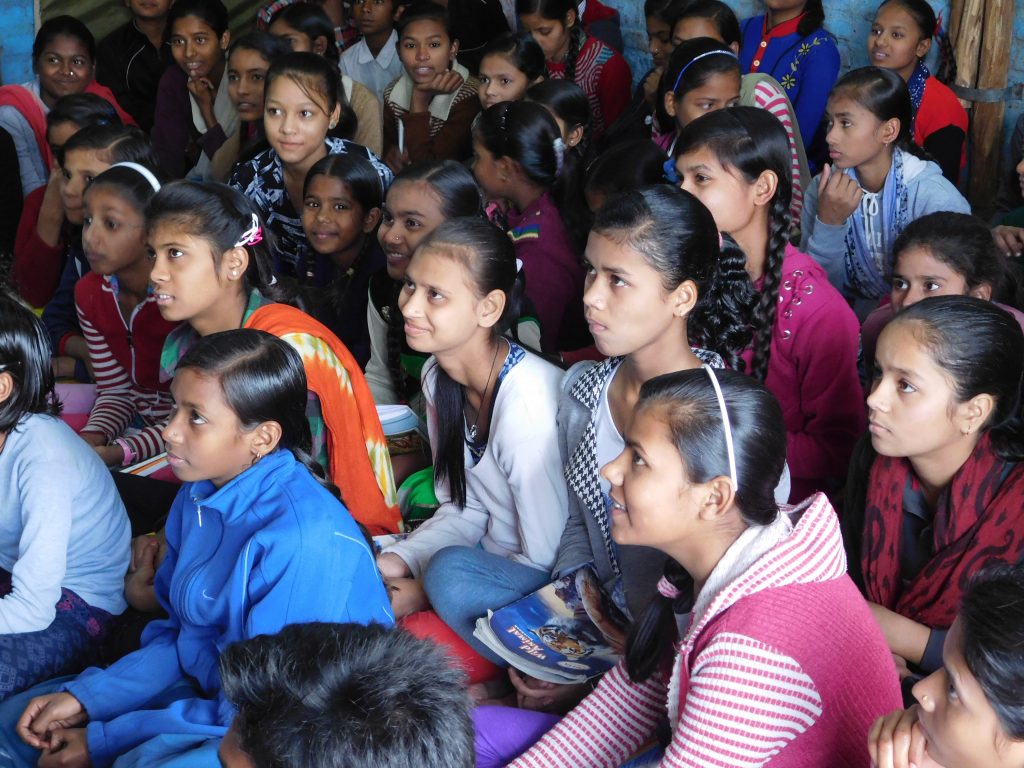
This is something we do at Project WHY at an early age. Our effort is to also lend a patient and understanding year to every child.
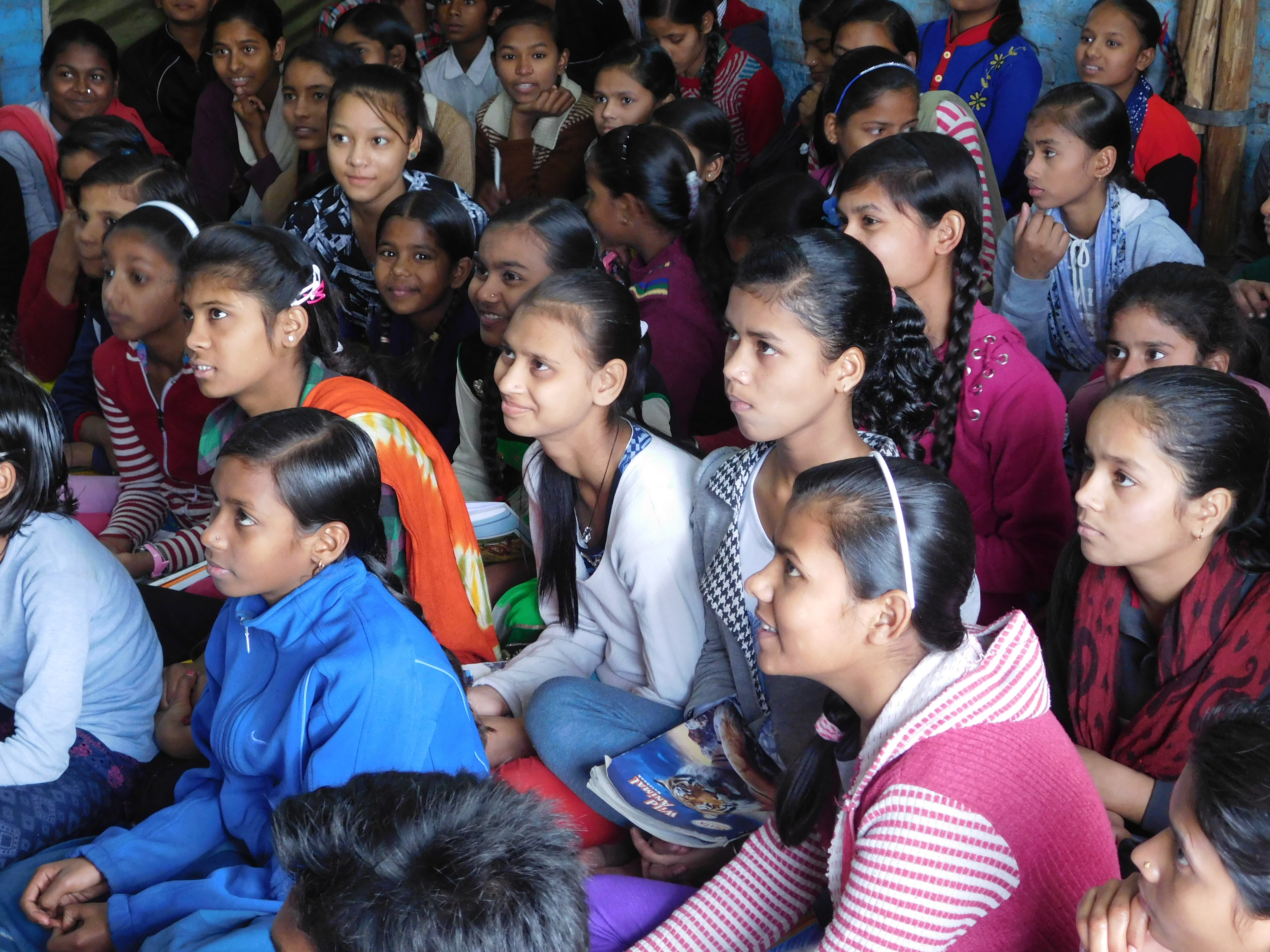
Regular workshops for adolescent are conduced regularly in order to address all the questions that can never be asked within the four walls of a patriarchal home.
It is not easy to grow up in a slum. Though the family is uber traditional, the environment is quite different. Television has invaded the home and the ubiquitous smart phone had reached every hand each claiming its space, its supremacy. Think of the child, the adolescent, the teenager having to navigate in between these two!
We plan to have workshops on cyber crime soon.
We do our best to help children grow into responsible adults but above all we strive to give them a voice!