by Anuradha Bakshi | Aug 29, 2007 | Uncategorized
Many incidents of incomprehensible and inhuman rage made the headlines in recent days. On each occasion I held on to my urge to react as I felt that my words would have no or little effect. However the pictures aired yesterday on all leading channels broke my resolve.
It was a story from a small town in Bihar where the mob decided to met out their own brand of justice to a young thief. What was disturbing was the fact that the police played to the gallery and tied the poor boy to a motorcycle and dragged him in full public view. All his was aptly captured on camera by a local journalist. Nobody reached out to help the boy. For those three hours all that holds a society together and protects it – the rule of law – was conveniently forgotten! From being the largest democracy in the world, we had travelled back in time to the middle ages or the roman arenas.
In the recent past there have many incidents that have brought to fore the latent anger and rage that seems to reside in apparently sensible people waiting for the slightest reason to break free. A young school girl is beaten by six teachers for having failed to do her homework. A young boy is beaten to death by his classmates for having soiled a shirt. A man is beaten to death for simply not giving way to a passing motorcyclist.
These are only some of the ugly incidents that have made their way as headline news. The reality was one has to face is that as a society we are giving up the rule of law and resorting to wild west ways. And when law makers or protectors resort to such ways too, then it is the beginning of the end.
One needs to stop and try and analyse the reasons that have led us to this day. And as is oft the case, the sated cliches come to mind: corruption, politicisation of institutions, arrogance of the rich and more of the same. But to this we also need to add frustration, lack of opportunities, impossible aspirations and the lure of riches, not to forget the now jaded caste and creed.
To add to the plethora of baffling realities one wonders why a district official gets suspended for not recognising the Chief Minister’s voice on the phone or why a cop gets suspended for hugging a cinestar convict. In spite of our democratic cloak, are we not atavistically feudal and thus resort to our feudal selves at each provocation.
Think about it.
by Anuradha Bakshi | Aug 26, 2007 | lohars
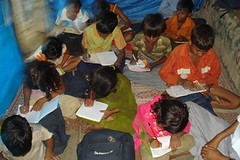
Our lohar friends have always held a special place in our hearts. We have known them for over 7 years and have been impressed by their wise ways and their humane qualities more than once.
In the last few months we saw a sharp decile in the number of children attending pwhy classes. True that many had graduated to secondary school but even then the drop seemed bewildering. We held counselling sessions with both children and their parents, coaxed and cajoled and even chided them. But to no avail.
Then it struck us that maybe 6 years of the same repetitive pattern had taken its toll on their free wandering nomadic spirit. It was time for a change. Our formidable administrative duo of R and S came up with a brilliant idea: evening classes. And boy it worked!
From 5 to 7pm our little blue tent is filled to the brim with little heads, both boys and girls, and the once unruly and rowdy lot have turned into a bunch of serious students. Sometimes it takes just a tiny to change to achieve miracles.
by Anuradha Bakshi | Aug 24, 2007 | women centre
Welcome to the why women centre!
Though the why women centre was born out of necessity it truly came alive last night when Firdaush our energetic volunteer from Paris decided to spend a night with the girls. It was a fun filled night but one where plans were made, dreams redefined and, beleive it or not, serious work initiated.
Bags and jewellery was designed keeping in mind parisian taste, creche activities planned, time tables set, but what was most important was that the spirit of the centre was defined: one of trust and understanding, laughter and gaiety and motivation and determination.
These women have come a long way and made a jouney many would have given up half way. The beat all odds and overcame many obstacles with no bitterness or anger. Somehow during that night the past was buried and healed once in for all and only tomorrow mattered. A morrow where they would reinvent themselves and prove to the often unforgiving world outside that nothing is impossible as long as someone is wiling to give one a second chance.
We invite to a sneak view of that incredible night
by Anuradha Bakshi | Aug 23, 2007 | sealing, two indias
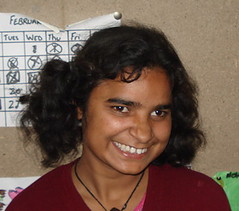
Champa may soon lose her home, one she has lived in since she was a very tiny girl. Champa lives at the ill famed transit camp with her mother who works in homes as a maid.
For the past few days Champa has not been able to comprehend why her mom has not gone to work. She normally leaves at 6 am, even locking Champa out. Champa cannot comprehend why everyone is shouting and cluttering the street. All this is disturbing and unsettling.
What Champa is witnessing from the confines of her simple mind is actually a plight that is befalling many residents in India’s capital city. The transit camp, as its name implies, is land that was given to slum dwellers two decades ago, when they were moved out of an upmarket location. At that time one wonders whether anyone understood what transit meant, or whether the authorities gave them a specified time frame. Over the years this camp turned into a vibrant and crowded colony, with multi floored structures where rooms were given out on rent. Greed and false promises of regularisation made by local politicians looking for votes lent a sense of false permanence and some original allottees even sold out their plots.
For the past year or so this long forgotten colony once at the edge of the city, came back into the limelight as authorities rediscovered the meaning of transit. Since many an attempt to seal or raise it have been made, each met with the understandable anger of the residents aptly supported by some local politico or the other resulting in the usual drama of protests and arrests.
But this time for reasons yet unknown it seems that this colony will be destroyed and thousands of men,women and children will yet again be rendered homeless notwithstanding their ration card or voter’s ID that proudly displays a transit camp address. This time it seems that the game is over and no amount of palm greasing or political support will help.
The transit camp issue brings to light one of the worst ailment that plague our social fabric. Whereas we all know that the rule of law must prevail, laws are never respected at the initial moment but allowed to be circumvented endlessly till all avenues are explored regardless of the human factor but propelled by the greed of one and all. As a society we have to be made to understand that laws need to be respected from the time they are promulgated.
Champa’s case is poignant. If her home is relocated she loses not only her home, but also the safety and protection of pwhy where she spends the only happy moments of a very sad life.
by Anuradha Bakshi | Aug 21, 2007 | Uncategorized
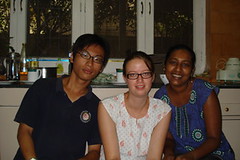
One of the biggest asset of pwhy has been its band of volunteers. They have come from every corner of the planet and each one has left his or her mark. This summer we were truly spoilt as we had not one, not two but three superb volunteers: Lucy, Xiong and Firdaush.
At first we were a little worried about how we would manage three volunteers in our tiny project but our concerns were soon allayed as these three young people just adopted us and found their place in a jiffy. It was as if they had always been part of pwhy.
Lucy a young student from Cambridge spent her mornings with our special kids and her afternoons in the newly opened Sanjay colony centre; Xiong from Singapore taught the secondary kids in the morning and then spent his afternoons at our Govindpuri centre and Firdaush brought high levels of energy to our creche and prep kids and some order to our Okhla centre.
What was truly amazing is how these young people adapted to the difficult environment they found themselves in: electricity cuts that made the heat unbearable, the filth of the slum lanes, the sometimes too spicy lunch, the often incomprehensible Hinglish. Nothing could deter their enthusiasm and drive. The seriousness and application with which they approached each task was laudable and praiseworthy.
They came from different worlds and yet seemed so comfortable in ours. Each one brought to pwhy something special, something that will stay forever in intangible and yet precious ways.