
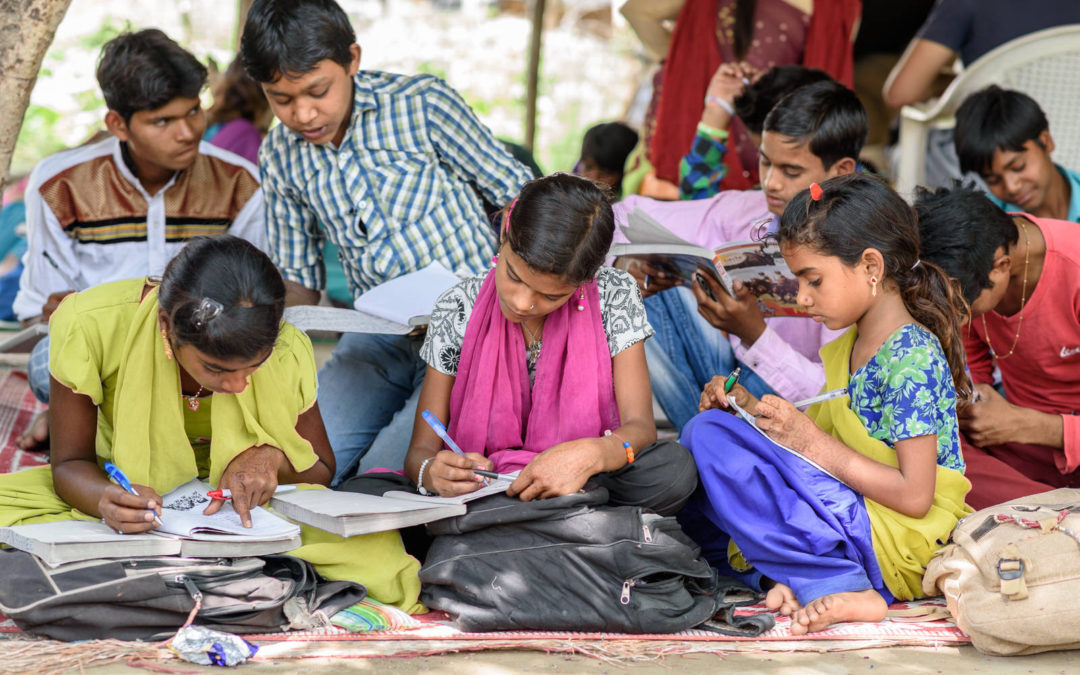
When Sumitra Devi retired after a lifetime of sweeping the streets, three distinguished guests came to honour her. One was a District Collector, another an engineer, and the third a doctor. They were her sons. Education had transformed not only their lives but the future of an entire family.
If education could transform the life of one street sweeper’s family so completely, why are thousands of children in India’s capital still being denied even the most basic conditions in which to learn?In Delhi, nearly 2,700 children attend a government school with only two dilapidated toilets, no drinking water, broken windows and a playground filled with garbage. Of the 91 teachers sanctioned, only a fraction are in place. The remaining teachers struggle heroically to keep the school running, sometimes even paying for light bulbs from their own pocket.
The Right to Education promised every child free and equitable education. For the 2,700 children in this school, that promise remains unfulfilled. A right is meaningful only when it is honoured in practice. For far too many children across India, it exists only on paper.
Their school has only two dilapidated toilets, no windows. a playground filled with water and garbage. The school runs on Government funding but in spite of that the conditions are pathetic. No money to change bulbs, no drinking water. Of the 91 teachers sanctioned, 72 have not been appointed. A bare 20 odd teachers keep the show on the road. Hats off to them. When a bulb needs changing they dip into their meagre pockets and do the needful.
The Right to Education promised every child free and equitable education. For the 2,700 children in this school, that promise remains unfulfilled. A right is meaningful only when it is honoured in practice. For far too many children across India, it exists only on paper.
Over the years, governments have launched a number of initiatives to help children from disadvantaged backgrounds continue their education. Some have made a real difference. Yet I have also watched far too many children fall through the cracks—not because they lacked ability or determination, but because their families did not know about a scheme, could not produce the required documents, or simply found the system too complicated to navigate. For children already living on the margins, opportunity often depends less on potential than on whether someone is there to help them find their way.
The Right to Education Act was meant to be a great leveller, ensuring that every child had access to quality education. I have always believed that education should bring children together rather than divide them. This is why I have supported the idea of a common school system, where children from different backgrounds study side by side and learn from each other. If our government schools could be transformed to the standard of institutions like the Central schools, it would change the lives and aspirations of millions of children. But for that to happen, mindsets must change. Are we ready for that?
Underprivileged children have once again been let down. They remain voiceless, needing those of us who have seen their struggles to speak on their behalf.
In the case of the school mentioned above, activists took up the matter and the High Court asked for a report. But this is not an isolated example. Far too many schools continue to function in unacceptable conditions. Even one such school is one too many.
Education alone can change lives and transform India.
I would like to end this post on a positive note by returning to the story of Sumitra Devi, a woman who spent her entire life sweeping the streets we walk on. At her retirement celebration, three special guests stood beside her: a District Collector, an engineer and a doctor.
They were her sons.
Her story is a reminder of what education can do. It does not merely provide a livelihood; it opens doors, changes destinies and gives children the chance to rise beyond the circumstances into which they were born.
I rest my case.