
we just assume it is written for someone else
 “Most of us can read the writing on the wall; we just assume it’s addressed to someone else.” wrote Ivern ball. The recent dastardly blasts in Jaipur sadly confirms this saying. While bodies still lay unclaimed, while families are yet to come to terms with the horror that has hit them, while reality is yet to sink in, the now jaded reaction drama is in full swing. Speeches are made about the spirit and resilience of the people of the land; blame game have begun targeting other political parties, and other nations. Sops are promised out to grieving families, wonder how many will actually reach the right hands, and wonder how money can heal loss.
The innumerable intelligence agencies are pointing fingers at each other. VIP’s are planning visits to the maimed city and thus ensuring front page coverage hence displacing all the disturbing and embarrassing issues making us almost wonder about how well timed the blasts seem to be. And international sympathy is surging.
The writing is on the wall but we all look away. Every day in our own city there are rapes of children and vulnerable women, carjacking have become the order of the day, murders for a few pennies abound, neighbours kill neighbours for a handful of coins, road rage is rampant.
The writing is on the wall as walls visible and invisible are built to widen the gap between caste, creed, or social status ; new malls and stores multiply with quantum leaps while tiny businesses are sealed and road vendors banned in the name of aesthetics.
The writing is on the wall but we just assume it is written for someone else as we carry on unabashedly, stopping maybe just for that small instant to mumble a few appropriate but empty words.
And yet everything points at the indubitable and unavoidable reality that all is not well in the world we live in. That sooner than later all of this may just happen to us, that we are not protected by impregnable walls. It is time to read the writing on the wall and accept that it is for each one of us.
the new gym on the block
 Roshni has been working at our women centre since its very inception. She began has a general helper and then slowly moved on to being a creche worker. Today she even attends adult education classes.
Roshni has seven children. Hers is the story of many migrant families who leave the safety of their villages and come to the cities seeking a better future. her husband is a tailor and the family barely survives. They live in a tiny hovel where one can barely move.
When Roshni decided to put her children into a school her first option was undoubtedly the local municipal school. It was supposed to be free. But as she did not have birth certificates the school refused admission. Roshni was never told that a simple affidavit would have solved the issue.
Not one to give up she registered in some local private school – read teaching shop – where the combined fees and compulsory tuition were a whopping 4ooo rs! When we heard this we decided that we would get her children admitted to the government school and set out testing them to find the appropriate entry point. We were shocked to see that the children, the elder being in class V could barely read. Wonder what the tuition was for.
That is one chapter of Roshni’s story. There is more. Her husband was has a debilitating back problem and once again brave Roshni took him to the best hospitals and got a sound diagnosis. But, and her is the catch, one important element of the treatment was regular exercises and when we asked her whether he did do them regularly, her sheepish answer was that he never had. The reason was again a huge eye opener for all of us: their house being so tiny, there was no place to exercise. I confess I could never have thought of this in my wildest dreams.
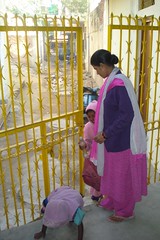
So in true pwhy style we decided to open the centre for an hour after all regular classes so that Roshni’s husband and anyone else with similar problems can do the few stretches and other exercises that have been prescribed to them. And maybe, who knows,we might just start some yoga classes as any form of physical activity is totally absent from the lives of children and adults in slums.
Mens sana in corpose sano as the latin quote goes, a healthy mind in a healthy body. Maybe that is what is needed
post partum blues
For the past few days I have been in a state of postpartum blues, the kind women suffer after the birth of a child. Doctors have their own complex clinical explanations but to me it is simply the feeling of overwhelming emptiness that comes after what you have waited for, desired, expected, prayed for finally comes your way and instead of the feeling of elation should come your way, it is a terrible emptiness that engulfs you and leaves you rudderless.
Last week saw the realisation of two incredible feats came my way: we managed the garner all the funds needed for the land for planet why and are ready to close the deal, and dear popples got published. I should be jumping with joy, planning a holiday or a bash but al I feel is terribly empty and at a complete loss.
What comes to my mind are Oriana Fallaci’s words: To fight is better than to win, to travel much better than to arrive, once you have won or arrived you feel a great emptiness, and to overcome your emptiness you have to set out on our travels again, create new goals..
That is where I stand now. Needing to create new goals, charting new travels, conjuring new dreams as again in the words of Oriana Fallaci: to have realised your dreams makes you feel lost!
And there are many, some small, some huge, some seemingly easy others daunting. Garner the figure with a staggering numbers of zeros needed to build planet why, assemble the much needed money to run pwhy for the next months and then he next one; find the support to ensure that the foster care kids complete their education, find a possible treatment for little Radha, and maybe start writing another book: the project why story!
Yes to fight is much better than to win, to travel much better than to arrive. It is time set out on a new journey…
we believe in miracles
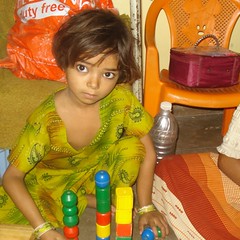
Little Radha is 7. She suffers from ostoegenesis or brittle bone disease has terribly deformed legs and is unable to stand. The slightest fall or hit causes a fracture as her bones have become terribly porous. She has already had more than a dozen in her tiny life.
She came to our office in the arms of her mother clad in a fleece outfit. The ambient temperature of the moment must have been 40 degrees Celsius. When we asked her mother why she was wearing such an outfit, the answer was simple and direct. She had no other decent clothes.
Radha lives in a sunken hovel, the roof of which is lower than a person standing and where not a shred of light enters. Her father lost his job as the factory in which he worked closed. He now sells tea but can barely make both ends meet as they have 4 children. Radha seemed a healthy child till the age of two when she first fell and broke her leg. It was then that she was diagnosed with osteogenesis.
1 in 60 000 children get osteogenesis and little Radha is one of them. Also known as brittle bone disease the ailment has no known cure. Management of the disease includes focusing on preventing or minimizing deformities and maximizing the child’s functional ability at home and in the community. Sound doable but in a home like hers it is close to impossible. Support groups exist but not for someone like our little Radha. The prognosis is scary as it not only affects bones but can result in brittle teeth, loss of hearing and easy bruising. The main cause is little or poor type of collagen.
Wheelchairs or braces are recommended and exercise like swimming is extremely beneficial. But where does a child like Radha go to swim or how does she use a wheelchair in the hole in which she lives. A child with OI needs good nutrition, rich in calcium, leafy vegetables, cereals, milk products all not within reach of a family that barely survives. The doctors had suggested this but for a family that can barely feed 6 mouth this was quasi impossible. And little by little her legs contorted as she suffered one fracture after the other.
New research suggests the use of bisphosphonates that seem to have has excellent results but that still seems at a trial stage. We will of course look into it!
Radha was denied any form of childhood and could not accompany her siblings to school or play. She just lived in her dark hole and dragged herself from one corner to the other. Two of her siblings come to our creche and that is how we came to know about her. Thank heavens her spine of head did not suffer any fracture!
Radha is an intelligent child who could learn like any other seven year old but her ailment closed all doors to her. We hope to be able to help her as best we can. As you know we at project why believe in miracles!
Finding its feet and its wings
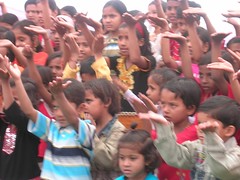
 The Kamala centre is now more than six months old and much has happened within its walls. It all began as everything does with lofty ideas, impossible dreams and ambitious plans though past experience had proved that these do not get fulfilled no matter how hard you try. We were of course prepared for all course corrections and open to all suggestions and constructive criticism.
It all began when two women needed some breathing space to take stock of their lives and chart out their future at a time where they had been dealt too many blows by an unforgiving and insensitive society. I guess what we did not understand at that moment in time that once you found your feet you had to start looking for your feet and we made the mistake of planning out a long term future for them.
It is true then when things look dark and without hope, people are willing to make adjustments and come to terms with many situations. But as things start looking up and problems resolved, old habits came back to haunt and wings slowly start growing. Often their growth is slowed by a misplaced sense of indebtedness but your heart is not there and you start slipping. Just like with children that is when the wise should let the bird fly out of the coop though many do not understand this.
The last few weeks have been difficult as one of our residents, now healed of all her ailments, started feeling stifled in an environment so different form the one she had known all her life and though it was one that gave the respite she so need a year back, it was not conducive to her needs and desires now that she had found her feet. It was time to let her go.
It was also time to understand that the women centre could only be a refuge and temporary shelter for those who needed to some breathing space. True some may turn up to want to stay for long but we must realise that we cannot and should not try and hold any one back.
On the flip side the Kamala centre has gone beyond our expectations in other ways. We had imagined the children activities to be a small part of the overall project but once again reality stares at us and our education support system now till class X is choker block and even has long waiting lists. Our activities with local women are also on the rise and over and above vocational courses like beauty and stitching, we now have English classes and regular get togethers where women share all their problems and discuss matter of interests to them or us: girl child, banking, legal rights, health and hygiene, government schemes etc.
So slowly we too are finding our feet before looking for our wings!
But tomorrow, dawn will come the way I picture her
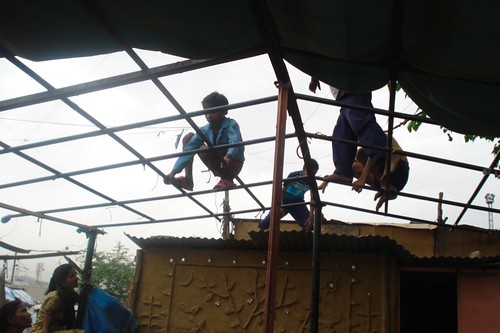
 This is not a picture of a tsunami hit structure. It is simply our very won Okhla centre after the dust storm that blew over Delhi two mights ago. The figures you see eagerly repairing the tent are our very own students. And this is not the first time they have done this, they do it every time the need arises.
The Okhla centre has known more than its share of problems and has dealt with each of them with rare dignity and courage. They are not ones to be deterred and prove beyond doubt the oft quoted and sated dictum: if there is a will…. The almost apocalyptic site was not enough to wipe off their smiles; they just set out to task determined to have their precious school up and running.
Actually they had come out in the night itself during the storm and seeing the damage guarded the place till the teachers turned up in the morning.
As I watched this unique site many thoughts ran in my mind. I felt a sense of immense pride as in spite of belonging to the poorest of the poor, these children showed much more mettle and grit than their colleagues in other centres. Perhaps it is because most of these kids are survivors in the true sense of the word and know that their morrows depend on their own abilities.
My mind wandered on. I realised that this mild storm that did not make a dent in the lives of millions across the city who did not even suffer the customary power cut, had been enough to blow away one of our oldest centres. Was this yet another proof of the extreme fragility of project why itself that could blow away if we did not anchor it on solid moorings.
And I was reminded of these lines wriietn in the XVII century by William Collins
barefoot and disheveled, standing outside my window
in one of the fragile cotton dresses of the poor.
She will look in at me with her thin arms extended,
offering a handful of birdsong and a small cup of light.”
making memories
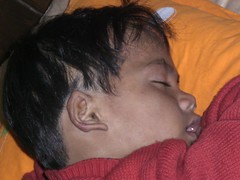
”We want to preserve their childhood days so that tomorrow if they ever want to see how they were, where they were, they could easily get to see those precious moments. We gift a CD to the parents of the adopted child,” says Madhuri Abhyankar, Director, Sofosh Orphanage.
This is a new initiative launched by an orphanage is an extremely sensitive and a step in the right direction. Adopted children often have the desire to know where they came from, what happened to them, why their natural parents abandoned them and so on.
Childhood needs to be preserved as nothing is worse than not knowing, even the if the truth is harsh. I wonder though how a child would feel of he or she finds out that it was left at a doorstep, in a garbage dump, at a railway station or simply to die. This is the case in India today.
A touching comment on a recent post says: Our 6 year old daughter was a 7 day old foundling left abandoned with a note in the train station at Kattack. Our 12 year old daughter was abandoned after birth at St. Ann’s Hospital in Kumbakonam. I often wonder if their birth mothers ever think of them, wonder about them, worry for them, if they realize what they gave up. I pray that these were the last desperate acts of desperate women hoping that their child might possibly have a better lot in life and not just the disposing of an unwanted commodity.
In a country where life is cheap and the life of a baby girl even more so, where babies are sold for a few farthings for nefarious ends, one wonders how many children do reach orphanages and how many are condemned to lives with no hope of escape? And yet no matter how sordid one’s past, there is a journey everyone has to make at some time of his or her life.
These memories frozen on some digital media will undoubtedly one day heal many hearts
Invisible India…
 The last few days have been terribly hot. The mercury has touched 43 degrees Celsius and is still rising.
Most of us have retreated into the comfort of our homes or working places cooled with ACs and desert coolers and barely venture out. TV programmes urge us to take adequate measures to beat dehydration: electrolytes, cool drinks and watch for warning signs and call the doctor if need be.
If we feel bored we drive in an air conditioned car to an air conditioned mall or movie hall or even take time off to head to the hills or cooler climes in faraway lands though the terrible heat is still a good cocktail party conversation piece.
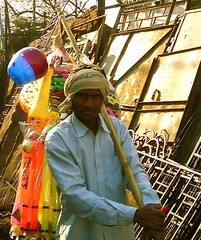
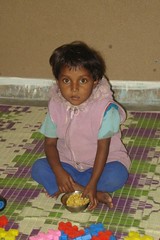
Yet here is an India just at our doorstep that has no option but to carry on irrespective of the sweltering heat. We do see them as we zip pass in our air conditioned cars and yet never look at them as one of us. Next time you take a trip in your car do take time to look through your window. You will see people who are out in the heat no mater what as if they were to stay home their families would go hungry: the construction workers, the ice cream vendor, the balloon vendor and his shrill whistle, the corner cobbler, the vegetable vendor pushing his cart on hot tared roads his feet protected by flimsy sandals and whose parched throat can barely call out, the water vendor who quenches other people’s thirst; the countless person who are daily wagers and cannot afford a single day off. The very ones that disturb us and that we want to wish away and hide behind walls.
And if you think that they do not concern you, think again many of them make our own lives more comfortable: the delivery boy who cycles in the heat to get you what you need at that very instant, the electrician or repair man who has to come by when your cooler stops working and s so many others who form part of that invisible India we chose to ignore and want to wish away.
a frightening common denominator
 The furore created of US President Bush’s recent tirade on the growing appetite of middle class India as the cause of the global food crisis is understandable as it is a blow well below the belt. And many will take up the gauntlet and give befitting answers. This post is not meant to do that.
The battle royale that is now splashed all over the media set me thinking in an entirely different direction. Pwhy has made me aware of many things that earlier did not hold my attention. One of them is the amount of food wasted be it in rich, middle class or poor India. Sadly it seems to be one of the few common denominators that bind all sections of urban India.
Peep into the garbage discarded after any wedding and you will find enough food to feed many hungry souls. Walk into any wedding, party or religious festival and you will find many half finished plates pushed under the tables or dropped into the big plastic containers kept for dirty plates. Look at any one serving him or herself at the buffet table and you will be astonished by the quantity of food piled up on their plate. We are a nation that almost prides ourselves at throwing food.
Every day as I walk the tiny lane of our centre there is food thrown on the street and in every garbage pile no matter how small. This how our very own Manu fed himself for many years: rummaging garbage piles.
In a land where food is equated to God and disrespect to it is considered a sin, this new found frenzy of throwing food is uncanny. Is it a way of asserting that one has finally arrived, reached, bettered one’s self? I wonder. As a child I was taught very early to respect food and not throw it away. My mother after numerous pleas and entreaties put a stop to my habit of leaving food in my plate in a rather harsh but effective manner: the leftover plate was put into a fridge and put in front of me at every subsequent meal. The battle of wits between a 6 year old and her mother lasted two and half days. The hunger oangs made me eat that congealed food as if it was manna from the Gods. Needless to say that since I have not thrown any food away.
Last week there was a party in the lane behind our house. The next morning we found vast quantities of food thrown in the lane. It could have fed over 100 kids. That was rich India. he same week I scolded one of the foster care kids for not finishing his plate. Pat came the answer: my mod allows me to throw what I do not finish. That is poor India.
And yet we all complain about the spiraling rise of food prices.
Food for thought….
where are you rakhee…
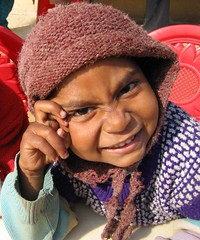
 Rakhee was one of our brightest little sparks. She had first come to us almost 4 years back when she was about 2 year old. Her story is one of total hopelessness and despair. When you hear it you may feel that is a one in a kind but sadly it is the story of many little girls in this land. It is also one that shows that in spite of our best efforts, there are times when we stand helpless.
Rakhee’s father is a construction labourer, one of the millions who flock into India’s capital in search of work. We first met her when her father got work on a site close to our project. They had pitched a small shack on the road and though we passed that way every morning we never saw her.
One day one of our teachers walked into the office quite agitated and told us about a pregnant woman who seemed to have a broken arm and yet carried heavy loads all the time. The woman was Asha; she was not more than 16. She was 8 months pregnant and her arm had been broken by her drunk husband and never attended to. It had just set on its own.
We did take her to the hospital but were told that nothing could be done.We looked after her and fed her emaciated body as best we could. Rakhee joiner our creche. A few weeks later Preeti was born. Asha told us her story: orphaned at a young age she was brought up in an uncle and aunt who married her off to the first man they found. He drank, gambled and beat her with obsessive regularity. He made her work too but there was never enough money to eat.
For some time we helped the family as best we could and even gave Asha a job but nothing truly changed. Preeti grew up in our creche and we got attached to her. But things remained the same in her home and no matter what we tried nothing changed.
One day the little girl stopped coming. We heard that they had shifted to another site. A few months later Asha came back carrying her two kids and told us hat her husband was in jail as he had been caught selling hooch. Once again we helped her and the little girls came back to project why. Rakhee was ready for class I and we were hoping to admit her to regular school. The husband was released and we even gave him some work hoping that it would bring some respite to the family. We were aghast when we heard that Asha was pregnant again but then did we not live in a land where everyone wanted a son. Blissfully the next child was a boy.
But the story did not end there. Once again the family disappeared. Another job on another site. Rakhee was never put in school. She joined the ranks of the thousands of kids that sit on road side while their parents work on the innumerable construction sites that have sprung in our city to make it world class!
Some time back we got news of the family via a surreptitious phone call made by Asha to one of the teachers. She was pregnant again and had been brutally beaten by the police and even kicked in her stomach, as she was caught selling hooch. Her husband made her do that forcibly while he gambled and drank.
We tried to call her to find out where she was but the wily husband had changed his phone number.
Little Rakhee and her siblings are somewhere in this city in state despair and misery and we have no way to reach out to them.
At timea like these I feel totally utterly powerless.
Butter would not melt….
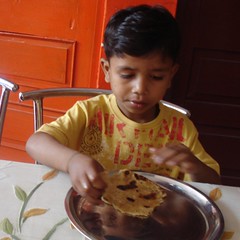
 If you look at Vicky you would think of him as a very quiet and obedient kid. Butter would not melt in his mouth as the saying goes. The reality is quite different as the teachers at the foster care discovered.
Vicky belongs to an extremely poor family and being the youngest boy and the only abled one he has been spoilt silly by a doting but totally illiterate mother. His father a rickshaw puller is barely at home and Vicky was often left to itself playing with older children in the slum, and learning all he wrong things.
It does not take long to change ways in the harsh reality of a slum. We have seen it happen with Babli’s brother Ramu, one of our brightest kids some time back when he was still in primary school. We had a lot of hopes riding on him but they all shattered as Ramu got into the wrong company. Today he barely attends school and has started gambling and other nefarious activities. It does not take long for the slums to take you down.
That is maybe one of the reasons that I held on to the foster care programme in spite of all the criticism and warnings. Maybe, if we took the kids at he right age we would be able to change their lives. Easily said than done.
Vicky the Angel with a halo when we are around turns into a unmanageable brat once our back turned. He has been driving the staff up the walls and also instigating his pals to rebellion. At night when all are meant to sleep, the double life of Mr V begins. Plans are whispered using words that would make a sailor blush. Mostly about what would be done to us once they grow up: I will plant a knife in them whispers Vicky while the others nod. Who do they think they are these ***** and so on. All this heard by he teacher pretending to sleep.
When we confronted Vicky, he just kept quiet, his head bowed, butter would not melt…
Next day we called his father to tell him that if Vicky’s attitude did not change we would be compelled to send him back as he also refused to study. It was heart breaking to see the father’s face as he implored us to keep his son. He simply said that were he to go back to the slums he would become even worse as the environment was not conducive to any child’s proper growth.
We have of course agreed to keep him for the time being. Could we do anything else.
think twice before…
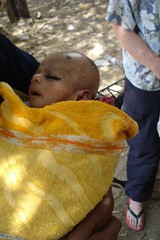
 Next time you see a woman clutching a baby pounding at your car window, pleading for a few rupees to save or feed her child, think twice before you roll the window down and hand them to her. The child may have been sold to a begging gang.
A baby sale racket was bust in Delhi a few days back. New born babies were being sold at prices ranging from 50 to 100 000 Rupees. These were often children of young unwed mothers, helped by a solicitous midwife the kingpin of the gang. Children were delivered in slums and hence no one was the wiser. The mother was paid a paltry sum. This is just the tip of the iceberg. Wonder how many such racket exist?
The racket is perfected to the T. The baby often drugged looks miserable. A filthy feeding bottle is often held by the so called mother, or at times the baby’s head is bandaged in ways that would beat the best make up artist. The mother delivers her rehearsed lines with the aplomb of an actor, facial expressions and whine in attendance. Have you ever thought why there is no maternal feeling in her eyes or body language? Have you ever wondered what the baby goes through under he scorching sun or in the biting cold
A few months back I had read an article that said that babies were hired to beggars in Mumbai at a hourly rate. Have you ever wondered what the baby goes through under the scorching sun or in the biting cold or pouring rain?
Yesterday in a very up market school in Delhi a whole class was punished for some misdemeanour. The punishment was to have them study two whole days in a classroom without fan or lights. The outside temperature was 42.6 degree Celsius. Needless to say everyone was up in arms: parents, activists and even the Chairperson of the National Commission for Children was seen on national TV defending the rights of children with vehemence. Wonder why she does not see the hundreds of children that are seen begging at every street light in Delhi or is it once against simply yet another tale of two Indias.
Next time you see a woman begging with a child, think twice before you dip into your pocket!
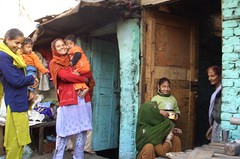
and never the twain shall meet
 A glittering report was aired yesterday about the new home of one of India’s richest man. Quite a home: 27 floors, 400 000 square feet of space, bathrooms as big as flats, private cinema theatre, gyms and juice bars, 4 floors for parking and all for one family! At a whopping two billion dollars it is the world’s most expensive home!
In another part of the same country Jyoti lives with her family and neighbours in a slum. Her home has 80 square feet and no bathroom or kitchen but is her home and she has made the best of what she has: a little shelf displaying some steel crockery- remains of her dowry-, few plastic decoration pieces bought at the local china bazaar, a little TV that brings the world into her home and lots of smiles and giggles as she proudly shows her dog eared photo album.
A few years back when we still were running a centre at the Lohar basti – the gypsy camp – little Ritu a spunky 3 year old whose house was one of the last ones of the camp was often given the task of showing her home to visitors. She lived in a shack covered by a tarpaulin where one corner was filled with rags as her father a ironmonger by trade often picked rags to supplement his income. The dwelling has one large bed piled with clothes, a small rickety cupboard and not much else. It was dark, dingy and humid. I remember a day when I asked her to show her ‘home’ to a friend who had come by. Ritu the ever confident kid, bearing the age old pride of her clan firmly took my friends hand in hers and holding on to her slipping pant with the other marched off. We followed her. As she reached the entrance of her home she said with the confidence of a queen in a loud and clear voice and a regal gesture: Yeh Hai! – This is it-, as if her home was a palace!
And what was heart warming and wrenching at the same time is that it was she felt. This was her home, a place she loved and where she had spent happy moments. The visit was not over. She invited us in, cleared the bed, made us sit and set out to give us a tour of the place. She opened the cupboard and showed off her clothes and those of her parents and then looking for her mom simply said: chai banao – make some tea!
Needless to say we were all moved to tears as millions of questions begging for answers ran through our mind begging for answers. Why were people still living like this in a country that boasted it was shining!
Strange that this incident should come back to my mind today after seeing images of the most expensive home in the world. I simply wonder whether the richest family can ever feel the same pride that the little gypsy girl.
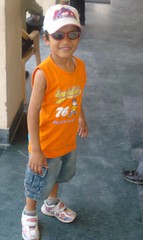
popples a true hero
 Had Popples not come into my life, Dear Popples would never have seen the light of day. The young man you see in the picture look nothing like the bundle swathed in bandages, his huge eyes filled in pain who walked into my heart on a March morning in 2002. This one looks more like the pasha – read hero – he wants to be.
Yet Popples changed my life in more ways than one. He taught me hope, love in its purest form, survival no matter how dark the hole you are in is, but above all he became the mirror that showed me who I was, what I had become, and how I could change with time.
Popples makes dreams come true, even very old ones, those you have forgotten or even relegated to some dark recess of your mind as they seem ludicrous and even absurd.
I must have been 15 or or so when I first read Bonjour Tristesse, by Francoise Sagan and as luck would have it I read it sitting on the terrace of a Latin Quarter in Paris. The book not only had the kind of story that would make any young girl swoon, but was written when the author was 17 and has failed her end of school exam. That was the time I think I first dreamt of writing a book!
But books need stories, the kind that wrench your heart and soul, the kind that ring true, the kind that touch others and my life seemed dull and almost jaded. And whatever creativity a young mind could have had, was quickly silenced by the monotony of life.
But dreams do not die. They just wait patiently for the right moment to resurface, even if the right moment is light years ahead. Popples was the catalyst that brought the discarded dream back to life.
My publishers have categorized it as fiction: inspirational and I am deeply grateful for dreams belong to that realm, or do they? I think Abhigyan and Mrinal have put in words as only they can, what I have always felf but never been able to say:
To accept the real is not to accept that it is perfect. Reality is like clay. It is the starting point and not the end of things. At the beginning of the race all runners are at zero. Reality. One goes on to win. He changes reality. Shapes reality. Those who fail – accept that reality and start again on a fresh race. Everyone is back on the starting block. Reality waits to be shaped again. The race is long. And it is continuous. Every moment reality awaits our turn to shape it. To deny it is to escape into wishful inaction. To simply accept it is to stay at the starting block forever. Only way forward is to run.
When our stories become ordinary and the ordinary becomes a virtue; then virtue itself becomes ordinary and the only extraordinary thing left is murder and mayhem. For it is easy to ignore daily goodness like helping someone cross the street but crushing someone on the same street under speeding wheels is bound to generate more interest. At least in these cynical times. Which is why it is the job of stories to exemplify and exaggerate goodness.
Goodness is not sticky when it is mundane. Murder is.
If we want a society of goodness, kindness, compassion, courage and excellence we must tell stories of extraordinary goodness, compassion and excellence. And the extraordinarily good, kind, compassionate and courageous is called a hero.
We are all ordinary but it is the stories of our heroes that inspire us to rise above the ordinary when the moment demands. Without heroes, with the ordinary grey protagonist, all we find are echoes of our own fallible, flawed selves and when the moment calls – the hero within us fails to stir because all he has experienced in life as well as imagination are defeat, despair, fallibility and flaws. When the forces of murder and mayhem confront us in their dark, blacker than Black colour, we are choked in our throats with grey balls of fear and apprehension while the white light of courage and conviction ebbs away from our heart like the blood from our veins.
There are no heroes in life when there are no heroes in our stories.
For life is a story. The story!
Anouradha & Popples’ is an extraordinary story. More so because they have lived it.
Abhigyan and Mrinal Jha

my dream catcher
 I must have been quite young when I first heard about dream catchers. As a kid it was comforting to believe that there was something that ensured that only good dreams came your way while bad ones slipped out. Someone had given me a dream catcher and I felt comforted having it hanging above my bed.
I soon grew up and the delicate dream catcher got lost as we moved from continent to continent and I forgot about it. It was only yesterday when I heard that Dear Popples was published that I suddenly remembered the dream catcher of my childhood.
The lore of the dream catcher is beautiful.
Long ago when the word was sound, an old Lakota spiritual leader was on a high mountain and had a vision. In his vision, Iktomi, the great trickster and searcher of wisdom, appeared in the form of a spider. Iktomi spoke to him in a sacred language. As he spoke, Iktomi the spider
took the elder’s willow hoop which had feathers, horse hairs, beads and offerings on it and began to spin a web. He spoke of the cycles of life….how we begin as infants and move on to childhood, and then to adulthood. Finally, we go to old age where we must be taken care of once again as infants, thereby completing the life cycle.
Iktomi said, “In each time of life there are many forces and choices made that can affect the harmony of nature, and interfere with the Great Spirit and all of his wonderful teachings.” Iktomi gave the web to the Lakota elder and said, “See, the web is a perfect circle but there is a hole in the center of the circle. If you believe in the Great Spirit, the web will catch your good dreams and ideas – – and the bad ones will go through the hole.
When I look back at the past few years I am sure that an invisible dream catcher hung over my life helping me make the right choices or how else would all that has come my way happen? But dream catchers are not just about choices and ideas; they are also about dreams. And though I hardly have dreams about myself, one seems to have got caught in some remote corner of the web: that of dear popples being published!
The Great Spirit thought otherwise and set his own wheel in motion and knowing that I would never find the time, the way, the force, the motivation to keep this dream alive, entrusted my dream to someone else. That was Abhigyan a true dream maker!
You do not thank Great Spirits and dream makers. You simply feel blessed that they came your way.

Dear Popples
 If two of you agree on earth about anything that they may ask, it shall be done for them by My Father who is in heaven. Matthew 18:19
Thus quotes the Bible and these words were sent to me by the one who made my dream come true. Dear Popples’s genesis began much before Popples himself came into this world. It actually began as a dream of a teenager growing in the sixties a time when everything seemed possible. It began in the head of a girl fed and overfed on books that were the sole form of escape of a lonely child growing up in different lands amidst too many adults. It began in the absurd dreams of a young girl sitting at cafe terraces in Paris imagining herself to be a writer.
Then life took over and decades went by but the dream did not. It sprung back on a summer day when the girl now an ageing woman came across a little child who was to redefine her life and stumble upon who she really was. The dream that had laid in waiting sprung up again and took the shape of a sheaf of haphazard paper where she poured out her heart and soul. But dreams as the Bible says need two people to make it come true as does creation. Where was the other half of the dream.
For many months the sheaf of papers lay in the recess of a drawer; it was sometimes taken out and shared with someone or the other but it quietly slid back into what seemed to have become its resting place. Then one day something impelled her to take it out, clean it up and begin the daunting task of finding the other half.
The rest is history. True that there were the needed string of rejections but those just made her more obstinate till the day someone miles away responded positively; the other half had been unearthed. Dear Popples had emerged from its dark abode into the light and the dream had come true.
I have never met Abhigyan Jha, my publisher, in person but somehow I feel I have known him for a stretch of time that transcends all spatial-temporal laws and defies logic and what I feel is not just gratitude but again something that cannot be expressed in words. I know he understands
Soon dear Popples will be for all to read and I must confess I am terrified.
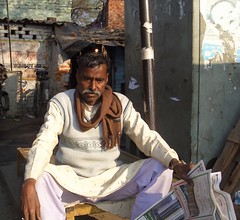
borrow a person
 I was recently sent a link by a friend about a new library fad: borrow not a book but a person and an interesting link to a comment on this new fad!
A lot of food for thought.
I sent this link to many friends and one of them said the following: we will soon begin to barter ideas and expertise on a peer to peer / person to person basis as that would be the only validation for being human and worthwhile.
you will not need a gardener to do the garden or mow the lawn – you will need him for his insight and creativity – the manual labor ill shift to robots and automatons.
which is all the more reason to educate our children about the conceptual reality if life. that we are nothing if we don’t create products of the mind. it can be values. it can be ideas, processes, products, advice, conscience, friendship, talk, coaching, teaching, storytelling, experience sharing – whatever but it has to come from the mind.
he goes on to add: we are human because we use our mind. period. the sooner we stop talking about the dignity of labor and start making it clear to everyone that there is no option to using our mind to create value which others might want to partake of – the better for everyone. otherwise we are going to see the kind of income inequality that we have never seen before.
Even in the parts of India where there is no food on the table – there is a mobile phone. and it’s almost free to use. Lifetime Free. and what do people do on the mobile phone – they talk. and why would the poorest need a mobile phone. because even for them talking, sharing, communicating is more important than just eating. the hunger of the mind is a bigger necessity than the hunger of the stomach.
His approach seem a little bewildering at first but of you stop a and think, what he says is true and what is alarming is that for once the two Indias’s hearts seem to be beating in unison. They are both spinning unconsciously towards a dystopic view of the world where the power of the mind is losing its importance.
When I was a young girl growing up in the mad sixties I saw Fahrenheit 451, a mind blowing movie by Francois Truffaut: a story about a society where books are banned and have to be burnt! A bunch of old men decide to memorise them so that they are not lost forever. The film end on a bitter sweet optimistic note: the said society is destroyed and a new one is about to be created: their first task is to build mirror factories, a literary allusion, to show people who they are, what they have become, and how they can change with time and knowledge.
Borrowing a person in a library seems akin to the Bradbury’s soft science fiction novella. And are we today slowly but surely moving towards the self destruction of our dystopic society.
On a more optimistic note I would love to borrow the idea and create a library where one could borrow people who still have in the recesses of their memories stories about the past, the traditions, the mores , the of forgotten and never documented anecdotes that threaten to be lost forever. A few years back DV Sridharan the creator of GoodnewsIndia began a series titled memory speaks. I remember having written a few pieces that had been told to me by my mother when I was still a child. Some were amusing others thought provoking and all in need to be preserved before memory failed. The series sadly stopped. Today’s new fad brought it back to me. I guess I too was a person that was once borrowed!
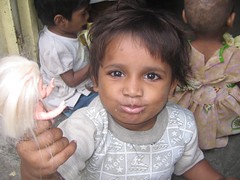
And motherhood dragging a doll by the foot
 If we Indians could take off our minds, eyes and ears from silly slaps by overpaid cricketing heroes and ensuing debates about the quantum of retribution; or stop debating about the appropriateness of the dresses imported and highly paid cheer leaders should or or should not wear – wonder who would pay for the new ones – ; or the inconvenience created by a new transport system, we would be compelled to see the horror that has been and is enfolding around us in the past few days.
Two baby girls are found abandoned in our own city, one barely a few hours old. A 12 year old is raped by a cop, a 5 year old by a so called uncle, a 36 months old by a relative and his friends, a 7 year old by another neighbour. 5 rapes of children and no one bats an eye lid.
Yesterday the prime Minister of India addressed a meeting on “save the girl child”. Time someone did: the latest figures are alarming, the sex ratio is declining: 927 to 1000 is the all India figure, 782 to 1000 is South Delhi’s figure. According to Nobel laureate Amartya Sen, there 100 million missing girls!
The PM made one valid comment: But it is not government alone that can address this problem. Though Government must be active in mobilizing public opinion in this regard. We need active civil society involvement in the national campaign to save the girl child.
This should make us stop and think. The startling figures of South Delhi are ample proof of the fact that we cannot any more brush the problem under the carpet and say that this only affects rural areas or the ‘poor’ as we like calling a large part of our own land. Rest assured we many not be guilty of throwing our new born baby in a dump or leaving her on a doorstep. We have the resources to beat he law and kill her before she is born.
I have often written about the plight of he girl child based on what I have seen around me. I remember a letter written to a child that died in the womb of her mother, or the post written on one of the days when India worships little girls. One must not forget that we are the greatest worshipers of the female form and energy and yet we kill, rape and abuse little girls with impunity. Is it not time to look at ourselves in a mirror with honesty. We all pay lip service to the save the girl child appeals, even make it our cocktail banter of the day and yet we are the ones that surreptitiously ask the name of the local doctor willing to perform a sex determination test for our pregnant daughter in law, whatever the cost!
The poor have another recipe: they keep producing daughters till the male child arrives or the mother stops being able to bear children. I have known of families where there are 11 girls and one boy! I am not going to go into the plight of the girl child, I think we all are aware of it. This post is meant to try and address the problem that is now alarming.
What is it that makes us abandon baby girls? This trend is of course more prevalent with the poor. The question is simple: a girl means marriage that means money in vast quantities. Boys are an investment they can bring all the coveted things; girls a drain because you are the one to pay for the coveted things. All laws banning dowry have failed. The demands are getting larger by the day. Even in slums people talk of cars. One of our teachers who is not very pretty and a bit plum and now 26 remains unmarried as her family cannot afford the Honda Accord that was asked! In states like Bihar it is hard cash. Our rickshaw driver married his daughter to a much older man because the dowry was only 100 000 rupees plus the cost of the wedding where there were 500 guests! The girl is just 18. So the simplistic solution would be rather than give the girls child cash incentives for her marriage as many of the proposed government schemes do, give cash incentives to those who spend little and give no dowry!
But things run much deeper: we are dealing with customs and mores and age long religious diktats and decrees that no politician would want to touch. And let us not forget the law applies to all so who wants to be deprived the right of a lavish wedding for his or her own child. Some of the latest trends are galling: helicopters for the bridegroom, international starts to perform and food imported from the world over and then thrown away as the display itself gives visual indigestion. So I ask are we really serious about saving the girl child.
As for child rape it is something beyond my comprehension in spite of the fact that child abuse is rampant even in he best of homes. Does it come from our so called prudish attitudes a legacy as was aptly said by someone of Victorian England as are we not the land of the Kama Sutra. And the only thing that could protect children – though maybe not 2 years old – would be a healthy sex education programme, but that is rabidly opposed by our politicians! Child abuse, far too often perpetrated within homes is protected by the code of silence and honour, something that has to stop.
Maybe it is time we looked at ourselves with honesty and bluntness and answered some disturbing questions even if it makes each one of us look pathetic and ask ourselves what we can do to save the girl child that leaves every moment of her life amidst unknown yet terrifying fears.
I will end this post with the words of Alan Beck:
Beauty standing on its head,
And motherhood dragging a doll by the foot.”
what have they done to the earth
 The world celebrated earth day this week. Wonder why as nothing seems to shake us from the state of catatonic stupor that makes us oblivious to the reality that surrounds us in spite of all media reports, activists’ pleas and terrifying figures thrown at us each day.
In recent days everyone has been harping about escalating food prices and a lot of government bashing has been going on. No one seems to realise that things are going to get worse and that the main culprit in this real life whodunit is each one of us.
A recent news report stated the following
Steady fall in food supply across the world due to stagnation in farm output.Climate change threatens to worsen food insecurity in the world’s poorest regions.
Rising temperatures will affect crop yields in 40 developing countries.
Global warming will increase food prices by 40 per cent.
But we still remain unconcerned and unaware. What is alarming is the quantum of food wasted in our country not only by the rich, but by the poor itself. In villages leftover food is fed to the cattle but in urban slums it is simply thrown on the streets! One of the hallmarks of success or status symbol seem to have become food wastage. Every garbage pile in the poorest of slums is always replete with left over food fit for consumption. People tend to pile up their plates and unabashedly throw what they cannot finish.
When we chided one of the children at the foster care about not finishing his plate, pat came the answer: I never finish it at home! What no one seems to understand is that food shortage is going to hit us sooner than we think. And it is not the government but we ourselves who are to blame. Our total neglect of the environment and hidden economic agendas are the real baddies here.
car. Feeble attempts at promoting common transport seem to go unheeded as it is Land once uses for food is now used for land depleting but pocket filling cash crops. The escalating number of farmer’s suicide in India seems to leave us cold as we are busy increasing our carbon footsteps with misplaced alacrity. Families have not one, not two but cars in double digits. Motorbikes have replaced cycles and will soon be replaced by the much heralded nano believed that almost 1500 cars are added each day on the already choking roads of Delhi!
Trees are felled to make place for these cars, open spaces converted to make way for concrete jungles. The show just goes on. Huge malls that are avid gobblers of energy are replacing smaller shops. India is in the move and the yet inaudible cried of the earth are quietened by the roars of the progress.
Every decision we make affects climate change and this moving documentary urges us to make the right choice.
As I see things around me, I a reminded of the words of Jim Morisson writen in the sixties but that seems so true in our times:
kids under a hot tin roof
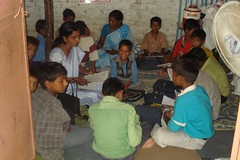
 Temperatures have almost touched 40 C this week. The heat is on. In many of our centres children sit in makeshift classes.
Okhla is one such centre. Normally the children sit in the outer place under a tent. But yesterday a bunch of drunks soiled the entire space and in spite of heavy cleaning a lots of phenol poured the smell was unbearable and the kids had to shift to the inside room under a hot tin roof. The fan blew hot air and the place was blistering. But this did not deter the kids for coming for class and studying.
I am always amazed at thirst for knowledge that the pwhy kids have. Nothing compels them to come to us and they already spent many hours in school. But come the appointed time and sometimes even before, they are at the door step, bag in hand rearing to go. Seems like they know that this is the only way they can accede to some education.
It is sad but nevertheless a reality that the present state run education is a total failure. The state of municipal and government schools is deplorable. In Delhi capital city many have no desks, no chairs, no fans, no teachers, no drinking water, no proper toilets! Wonder what they have?
Every Indian child has a right to free education till the age of 14 and yet again the government has failed them. Some like our Okhla kids know that the hot tin roof is at present their only option!