
Gypsy Souls #ThrowbackThursday
| If we exist then He exists; if we do not then how can He! (on the existence God) Tau Head of the Rana Pratap Lohar Camp |
“Have you ever met someone for the first time, but in your heart you feel as if you’ve met them before?” wrote JoAnne Kendrick. This is exactly the feeling Project Why had when it first saw the Lohars of Rana Pratap camp.
The Lohars are a nomadic Indian tribe of ironsmiths. They hail from Rajasthan (Chittorgarh) where they accompanied the ruler in battle to repair arms and shoe horses. When Maharana Pratap Singh lost the battle of Haldigath in 1576 and went into exile, the Gadia Lohars swore to wander and never settle. And they have been wandering ever since. After independence in 1947, about 100 clans came to Delhi and settled in different parts of the city, along roadsides where they continued to practice their trades and live under the sky. One such camp was located close to Project Why.
It was in 2005 that Project Why first saw the children of the camp and was completely bowled over. These were bright kids with sparkling, eager eyes and smiles to die for. Unlike other children they seemed fearless and eager to connect. Here was another Why that needed to be answered but there was a hitch: convince Tau, the Head of the Clan.
It took a few minutes for Anou to succumb to the wisdom and kindness of this gentle soul. An unlikely yet real friendship was born between them. For the 5 years the camp remained standing, Anou would often go missing to be found sipping tea and in deep conversation with Tau.
Life in these makeshift camps in not easy. The camp is located next to a red light where cars rev and the air is foul. And yet over 100 people, old and young lived there with utmost dignity. They never stopped smiling. Never mind if water had to be carried across a busy road; never mind if every so often the authorities came and destroyed the camp in a cat and mouse game that had its own rules; never mind the bitter cold or scorching heat that entered their flimsy homes. Life was a celebration and who better than gypsies to celebrate life to its fullest.
If the men beat the iron it is left to the women to sell the wares. The money collected would determine what would be eaten in the evening.
Project Why ran a creche and a primary centre for the children of this camp and it was a joy to teach these eager beavers.
That is not where it ends. The plight of these people and the discovery that there were promises made to them- as validated by the few scraps of official papers that had survived the many destructions of the camp- led Project Why to taken on its first activist challenge. A PIL (public interest litigation) was filed in the High Court. Sadly nothing came of it.
The Lohars of Rana Pratap camp survived many destructions but the Commonwealth Games in 2010 would be their nemesis, as the camp would be destroyed and the 30 odd families scattered across the city.
The stretch of road where they lived that was such a vibrant and happy place is now a stretch of sidewalk. Each time one drives past, one is overwhelmed by a feeling of loss and sadness. The Lohars are missed dearly by all at Project Why.
Nomads always move on, don’t they
You can share some glimpses of their lives in these images.
Mercury Rising #GivingTuesday
| waiting for water |
This picture was taken near the Project Why Okhla Centre at the time when the tanker delivers water for an entire community. This is when children dash out of class to reach the tanker in time, having already placed their buckets or cans well in advance. This is also when we do not interfere, as Project Why is no match for WATER!
In most slums in Delhi taps run dry in summer and water is supplied through tankers. You have to fill enough water for all household chores until the next tanker arrives. For those of us who have access to tap water and the means to create sufficient back up, it is impossible to imagine what it means to survive with a few pans of water.
The heat is on and the mercury is rising. It touched 44 C a few days back. A few moments in this scorching heat is enough to send your head spinning and make you long for an air conditioned room. Some of us have that luxury, but for those living in slums the story is different.
Many of the homes in the slums have corrugated iron or asbestos roofs and ceilings that are so low an adult cannot stand. The only opening is the door. There are no windows or any form of ventilation. The tiny space is often shared by five or six people.
In the day these tenements turn into ovens, making it impossible to sit inside them. This is when women sit outside their doors, the men simply go out, the children run around in the sun. The sky is better than an asbestos sheet.
Project Why is a place where children can come to stay cool. The space is large; we have fans and coolers to provide respite and a place to study. That is one of the reasons why from day one, Project Why decided to remain open during the summer holidays as that is a time when children need us most. Boys and girls come together and as many have gone to the villages, we are able to accommodate the ones who stayed behind.
Summer is another moment which requires the survival tactics of those who have so little. Complaints are few if any and smiles are ever present.
| a house in the slum |
| Durga’s home |
| welcome drink |
| cooling in the park |
| Ice cream man |
| orange juice to the rescue |
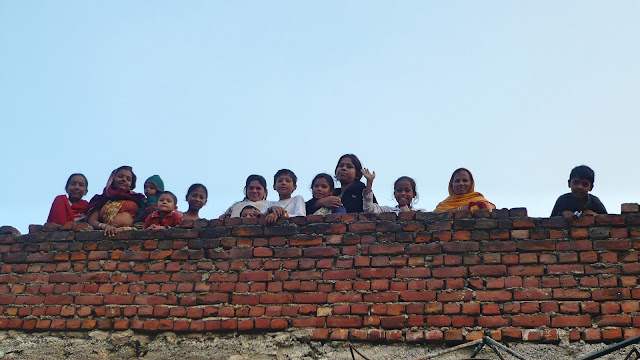
Project Why’s Women centre # Throwback Thursday

The Project Why Women and Children Centre saw the light of day to answer yet another deafening why. It was 2006 and we had two women in a desperate state who needed help. One woman was ready to get out of rehab and needed a safe place to stay, a kind of midway home. The other needed financial assistance for a hip surgery, but more than that, needed a place where she could stay during her recovery. And here began the story of the Project Why Women and Children Centre, one that grew organically like all else at Project Why.
The first hurdle was to find a place for these two women to stay. Easier said than done. In India women from the lower strata who drink and suffer from mental conditions or women who are HIV+ are not welcome anywhere, and in a land where nothing remains a secret you cannot hide reality for long. In the span of a few months we had to move three times! This could not continue. Our two ladies still needed help and a solution was critical.
After much thought we decided to alter the approach and expand the scope of our intervention. The only way to be accepted in a community was to answer a need and often children were the ones who helped get acceptance. The rest is history.
A quaint building was found where one wing was perfect for a residential programme and the other was ideal for a children’s centre akin to the ones Project Why already ran. It worked.
When the two ladies were ready to take leave and resume their lives, Project Why decided to again alter the women’s outreach and use the space vacated to run vocational programmes. Stitching and Beautician Training were the two skills Project Why chose, as they enabled women to work either outside or within their homes, as many come from traditional families.
For the children Project Why ran an after school programme.
The Project Why Women and Children Centre is a no-frills affair. Space is used judiciously and the terrace has been turned into a space where multiple classes are held simultaneously. On the children’s request computer classes were started and the computer section is also a big hit with some of the ladies.
The Project Why Women and Children Centre is a vibrant and spirited place where women and children are busy transforming their lives.
The Project Why Women Centre is a large family of 300 children, 150 women and 15 staff members under the patient but firm direction of Dharmendra.
Enjoy some glimpses of the Project Why Women and Children Centre.
 |
| Dharmendra in charge |
 |
| Classroom being set up |
 |
| Class in session |
 |
| Class in session |
 |
| Showtime |
 |
| Computer Class |
 |
| Stitching Class |
 |
| Learning to repair the sewing machine |
 |
| Pedicure |
 |
| Facial |
 |
| Women’s meeting |

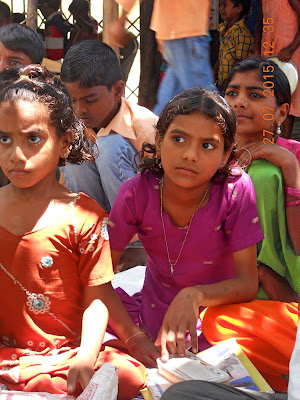
India’s shadow education cont #GivingTuesday #India # Education

Recently some of our secondary Govindpuri children informed us that they may have to stop coming. Why?
These were some of the brightest of the lot who attend government school. The reason they gave was shocking. Their school teacher had told them that unless they attend the tuition classes he gives, they would not pass in the subject. This of course costs 1000 Rs a month. The children are devastated and so are we. 1000 Rs multiplied by the large number of students in a state-run school classroom is good money.
And this too seems to be an accepted norm as we were told that in another government school 80% of the class failed a particular subject and were told that if they wanted to pass the supplementary examination at the end of the summer holiday the students HAD to attend the tuition the teacher would be giving during the holidays. The less said the better.
This shadow education is a true reflection of the social strata of India and hence it goes from über expensive teachers that come to über rich homes to expensive tuition given in the tutors’ home, to group tuitions in air conditioned swanky classrooms to spaces like Project Why. Every one has a commensurate price tag of course.
Children as young as 6 ‘go for tuition’ everyday, often to a local tutor. The price tag for such support is around 600 to 1000 Rs a month and if you have more than one child then it is often the boy who is sent and the girl kept back. As the child grows the tag becomes costlier as then you are charged per subject at a rate of 1000 or more Rs for 3 sessions a week.
What is worrying is that this ‘shadow’ system seems to be here to stay. The very basis on which it stands is faulty as it presumes that the hours spent in school are not sufficient if one wants to succeed. The hard day school hours are its cornerstone.
Education does not stop at academics but with this dual schooling there does not seem to be much time left for anything else. When does the child play, read books, meets friends or relax?All these are essential for wholesome growth.
One hopes that decision makers will look at this aspect when the next reforms are envisaged.
Project Why’s Neverland #ThrowbackThursday

We realised this was a daily routine: the mother would pull the charpoy outside the family’s jhuggi, lock the door, tie the toddler, kiss him fondly and leave. A few hours later she was back and would smother the baby with kisses as she untied him and carried him away. Something did not fit. The violence of the action (as we perceived it) did not match the love this young mum seemed to have for her child. There had to be a reason.
The mother worked and there was no safe place to leave her child. Any childcare cost more than her meagre salary and government-sponsored education only begins when the child is six. The mother had to find a solution and this was the best she had. It had its own logic. Tying the child with a scarf long enough for him to move around ensured that he would not stray away on busy streets. Placing the cot outside meant the child was watched as this was a street where people mostly live outside and there is always someone around. Hugging and kissing him was her way of showing him she cared.
What would you have done?
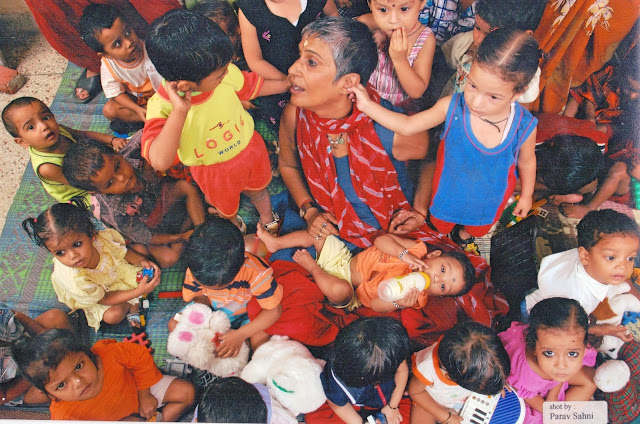
Needless to say this one incident was sufficient for Project Why to begin its early education programme and, like all else, the creche began with makeshift resources. The tiny space in front of the office where staff convened was emptied and turned into the first creche. A few mats, a few toys garnered from friends and a young local woman who was willing to teach: that was all we needed.


The Project Why creche is a wonderful place; even father Xmas knows that!

Over the years many children have “graduated” from the Project Why creche and entered school. Many come to one of our centres for after-school support. We feel a sense of pride at seeing all these little children ready to take on their future but at the same time feel sad because there are so many children who are not able to aspire to education and a better future. We wish we could do more.
The creche is Project Why’s Neverland. The children are eternally tiny and the moment any adults steps into the classroom, they too become children, filled by the laughter and joy the children share. It is the world of Peter Pan where smiles abound and laughter is ever-present.
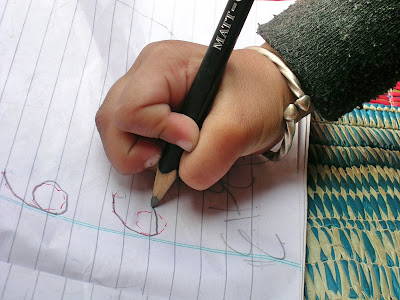
India’s Shadow Education Centre #GivingTuesday

Why is Project Why even necessary?
Sadly, this is a question we often get. There are many reasons, but the main reason is to provide shadow education to underprivileged children, an education that has become sine-qua-non to success in India.
Shadow education is a term coined to encompass all private coaching and tuition outside of but parallel to the mainstream education. The statistics are mind-boggling: over 71 million students take some form of outside coaching in India today, which comes at a staggering cost. The main reason given during a survey was to ‘augment basic education.’ Both rich and poor parents estimated that education given in school was not adequate. Supplementary education has become a requirement.
Parents from poorer homes are aware of the poor quality of education imparted by government schools with overcrowded classes and few resources. But not all are able to pay for supplementary education, which comes at a steep price. Very often boys are sent to private tuitions and girls are not. Education for girls is not considered important.
Project Why provides this supplementary education for free and, yes, this is extremely relevant and needed for slum communities. Children come to Project Why outside school hours and teachers ensure that they are taught everything that needs to be learnt. At Project Why, children are taught in small groups and the teachers make sure they understand and comprehend what they are learning. Project Why teachers are patient, caring and students feel confident and loved.
Interventions like Project Why are crucial. This is demonstrated by cases like a young class V student who could barely read or write when she came to us. This same girl topped her class VII.
In India education is marks-oriented and thus performing well makes all the difference in getting access to higher education. Private institutions of higher learning have proliferated in recent years but these come at a high cost and are not an option for slum children. Admission to state-run colleges is based on marks. The option available to underprivileged students if they do not meet the required cut offs are evening colleges or distance learning institutes. Not the ideal.
We need education reform that would introduce vocational skills in high school that would make entry into the job market easier. Till then all children, rich and poor, have to compete on a level playing field to get into University. The problem is, this level field doesn’t extend to the quality of primary and secondary education. Project Why allows our students to have a chance at succeeding.

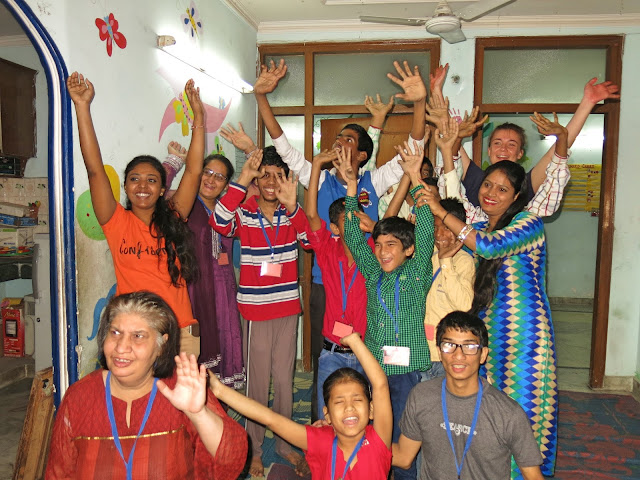
Project Why’s very special class #ThrowbackThursday

This is Project Why’s special class as it is today. And here is how it looked in earlier times.


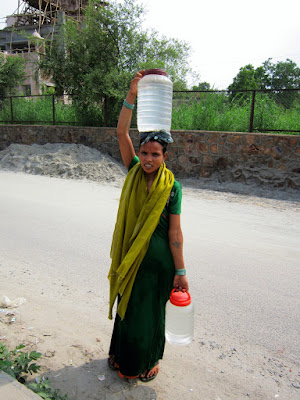
Project Why’s water warriors #GivingTuesday

Did you know that 5,000 children die everyday from water related diseases?
There is an odd phenomenon at Project Why where children, often girls, get up in the middle of a class and leave in a rush. Our teachers finally why and the answer they received was: “it is time for the water to come.” In many slums, water comes in a communal tank for a fixed amount of time so all abled bodied people- children included- are needed to fill as many receptacles a possible.
Different containers for different needs: drinking, cooking, cleaning, washing, etc. In some areas water comes on alternate days and so the need of keeping water clean is imperative. Sadly, the water does not often remain clean and that reason why so many children under the age of 5 die of water related disease.


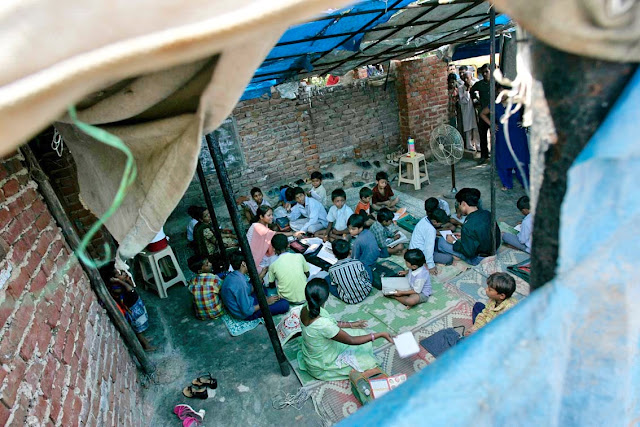
A picture is worth a thousand words, but a memory is priceless #ThrowbackThursday


She lived in the tiny tenements that are tucked away between factories in the industrial area of Okhla. In those areas most parents work long hours and children are left to their own devices, becoming targets for lurking predators who find them easy prey to steal and to push drugs.
Needless to say Project Why was on board! The problem was that in such areas there are no empty spaces to rent or use and it was left to the ladies to find space.
The two ladies were back the next day, huge smiles on their faces and the news that they had found a space and even got permission from the local cops and politician. It was a garbage dump close to the railway line. No problem. We would reclaim it.


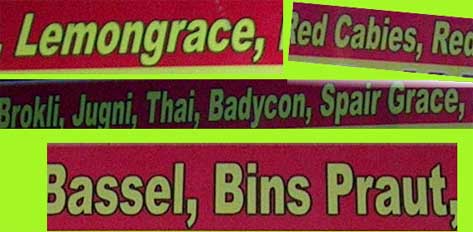
Spair Grace soup and Lemon Grace Tea #GivingTuesday
Spare Grace, Lemongrace, Red Cabies and Badycon were the words proudly displayed by the local vegetable shop now catering to the growing expat clientele. To the uninitiated this translates as asparagus, lemongrass, red cabbage and baby corn!
India is a land with a multitude of languages but English has become the administrative language and is quickly becoming a vernacular language as well. Today, even the poorest parents understand the necessity of English for their child to succeed, and as a result signs reading “ENGLISH MEDIUM” dot the city.
So do all Indians speak good English then? The answer is no.
English medium schools in poorer areas often do not employ teachers who speak English- at least not a form of English a fluent speaker would recognise.
The job market today requires a working knowledge of English and the students at Project Why rely on our resources for their English education. Project Why relies on the resources of our dedicated volunteers and on workshops.
Recently we bid farewell to Eva who taught the Okhla teachers and children for one year. Her intervention went a long way in building confidence in the teachers. The importance of volunteers able to teach English cannot be stressed enough.

n January 2016, Damyanti held a week-long spoken English workshop under the aegis of the Book Council of Singapore that culminated in a bi-lingual poetry and story reading event. The use of pod casting has helped us continue this venture and we have regular in-house reading events.

Project Why has adopted these measures to help teach our children English. What ideas do YOU have for expanding English literacy?
Do you think English is a skill that spells success?
Do you think children from deprived homes should learn English?
Can YOU come to Project Why to help teach our children?

Celebrating Project Why What have you celebrated this week #socialgood

Sometimes you do not have to look far to find things to celebrate. You simply have to look with your heart. I sometimes kick myself for not taking time to simply stop and savour things around me, more so because I’m blessed to have Project Why which is a constant source of celebration. This week I did just that by slowly browsing the pictures taken in the last seven days.

There was much to celebrate, from the birthday party of a young girl who has chosen to mark her special day year after year by giving a special treat to the students of our special section.
Let us shift gears and peek at the little ones. Silence please, kids at work. Some are creating,


Please join Project Why on its
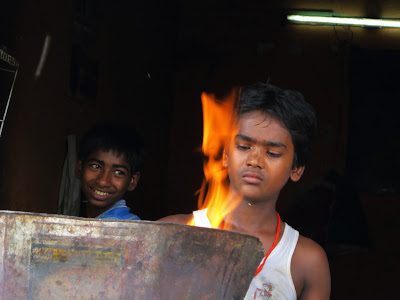
Do Indian Children have the right to dream? #GivingTuesday #India

Child labour is cheap. A child is submissive, and can be made to work under poorly lit and poorly ventilated spaces.
A child can be used for stitching, embroidering, weaving rugs and carpets, making matchsticks and firecrackers, and rolling beedis in backbreaking conditions.
The Child Labour (Prohibition and Regulation) Act, 1986 is being amended and is now in Parliament. According to Nobel Laureate Kailash Satyarthi, two of these amendments may defeat the very purpose of the Act.
The first is the one allows children below 14 to work in family enterprises.
Helping out after school is acceptable when it is truly a family business, but what stops anyone from exploiting this law? Anyone can claim a child as ‘family’ in the Indian poor classes, and even if a child is truly family, it is hard to ensure he or she will be sent to school once this amendment comes into force. Most of the children that land up in big cities are often brought by ‘uncles’ from the village who turn out to be middle men and traffickers. When Project Why opened our Yamuna centre we were faced with parents coming during class and asking for the child as she/he was needed to pluck vegetables. It took us a long time to get make the parents understand.
Another amendment is even more detrimental to child rights. At present, Child Labour law prohibits employment of a child in 18 occupations and 65 processes. The proposed new amendment reduces the prohibited occupations to three: Mines, Inflammable substances and Explosives. So the children under 15 working in ‘family-run’ businesses like domestic work, bead-making, carpet-weaving will be legal.
The question that needs to be asked is whether the child making beedis in his family business will be able to go to school? The only caveat one can think of is to define ‘family’ and limit it to parents and legal guardians, but in India, where the record of implementation is very low, that seems impossible. Children can help their families and even learn their skills but this should not come in the way of their health, education and leisure time. But these options aren’t available to the poorest of the poor.

Sanjay, a Project Why alumni, a gypsy ironsmith’s son, and a Project Why teacher, today walks the ramp in the world’s fashion capital, Paris. That was possible because his family allowed him to study and work in a trade other than theirs. Sanjay made his dream come true.
Project Why is a place where children are given the RIGHT TO DREAM.
Do you think that every child has the right to dream, and dream BIG? In a country like India, should children under 14 be allowed to help in family enterprises? Should any child, under or above 14 be allowed to work in factories making matchsticks or firecrackers or as domestic help?

Have You Heard about This Extraordinary Boy Named Utpal? #socialgood

There is so much to celebrate at Project Why each and every day, but this week was a very special celebration: Utpal’s 14th! To the uninitiated it would have looked like any birthday with cakes and candles and singing and cheering. However, Utpal is a very special child.


The women of Project Why #PledgeforParity #GivingTuesday
 |
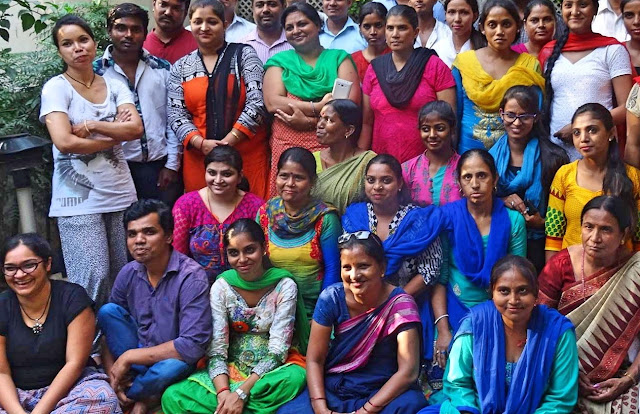
| The project Why Women |
Project Why is primarily a children’s organization yet right from the beginning, we instinctively reached out to women, the true game changers. No wonder then that it was a woman who helped me seed Project Why.

Mataji, the formidable local healer and Rani’s mom, whom I had gone to meet to ‘cure’ an everlasting depression post my parent’s demise did so with a few words: Do something your parents would be proud of. With those words, depression and accompanying backache flew out of the window and Project Why was born and so were the women of Project Why.
A slightly diffident and shy Rani jumped at the chance of working for Project Why and stayed on: a sterling leader of Porject Why. Today she runs a large part of the Project. When we needed teachers, we first looked at the women around us. We found many who had several years of schooling but had dropped out because of an early marriage.
It is sad but true that the parents in underprivileged homes in India want their daughters to marry, above all. After marriage, very few can continue with their education. Project Why gave many such women a second chance at education, and more than that, at employment– something they’d never dared dream of.
Some of these incredible ladies grabbed the opportunity with both hands and went on to complete their schooling and study further. Many obtained graduation degrees. Today, 30 women form part of our team. Some have been with us since day one.
Project Why believes that women should be financially independent, so vocational courses were started at the Women’s Centre in 2006. Today over 120 women attend our six-month course on beauty and tailoring. Several hundreds have benefited and are today gainfully employed either as small entrepreneurs or employed in factories and beauty parlors. We organize regular meetings with the women where we share our thoughts on social issues like child beating, gender equality, early marriage, nutrition, women’s rights etc.
 |
| adult literacy class |
We hold compulsory adult literacy classes for all women who register for our vocational courses. No one receives a certification unless they clear the adult literacy course. The literate women are given spoken-English classes.
Over the years, Project Why has reached out to women in a variety of ways. Nutrition for pregnant women and lactating mothers. Care for a woman who had contracted bone TB and would have become paraplegic unless she spent six months on a bed– today she works in a beauty parlour. Support for omen who suffered injuries and needed care, women undergoing rehab who needed a place to heal.
The women of Project Why come with different stories, but they have one thing in common: an indomitable spirit. Project Why encourages this spirit: women are given all the support they need in order to flourish in New Delhi, and this is our #PledgeforParity this year.

Would you consider helping these underprivileged women? Even a small amount goes a long way towards helping these women find a new life.
To donate follow this link!

What have you been grateful for this week? #socialgood


Will You Help these Children Go to School? #GivingTuesday #Nonprofit

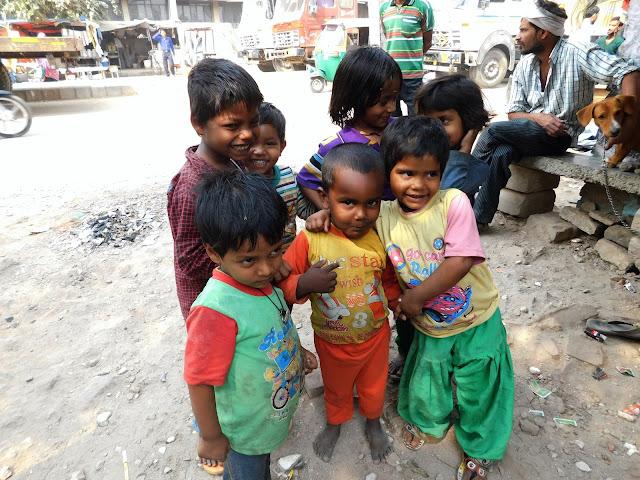
I came across this bunch of happy kids right in front of our Okhla centre at Project Why. They were shy at first, but then it took no time for them to smile and perform for the camera. They made faces and giggled, just being kids!
Street children break my heart: the happier they look the more downcast I feel. It is the sight of such children that inspired the setting up of Project Why 16 years ago. Children have a right to their own space and Project Why is just that: a space where children can be children.
You might wonder why these kids are not part of the Project Why family. The answer is simple: our classes are full to capacity though I couldn’t resist asking whether these few kids could be adjusted in our Govindpuri crèche, the only crèche we run.
But what about the others, the ones who are not seen in this picture?
Slum kids live in environments where everything is a danger: from the rabid street dog to the speeding vehicles, from the filthy water discharged by the factory next door into the drain that runs in front of their homes, to the lurking predators in search of little hands to steal, or push drugs. This is one of the reasons we set up the Project Why Okhla centre.
Malnutrition cannot be reversed passed age 5; you cannot enter a school after a certain age; social and other skills are best learnt in the formative years. The list is endless. The child today cannot wait for tomorrow. This is why we at Project Why try and squeeze as many kids as possible, doing away with frills like desks and chairs and opting for the mats where it is easy to pack in a few more.
It takes only 100 Dollars or 7000 Rupees to support a child at Project Why for an entire year.
Would you consider donating 100 Dollars or 7000 Rupees each year to help build these futures?
Could you give us a Like on the Project Why Facebook Page to help raise the numbers for our future Crowdfunding campaigns?
Or, if you stay in New Delhi, would you consider volunteering at Project Why to teach these kids anything from art, to English or Maths, or any other skill that you can share?
Will you help these kids claim their childhood back?

Should Street-kids go to Boarding School? #GivingTuesday #India

Is it possible for a child from the slums to shine at an exclusive boarding school?
It sounds like a rude question, but wait till you’ve heard about the Project Why Power Girls.
Meet Meher, Manisha and Babli.
 |
| Meher |
Meher, who topped her class is a third degree burn survivor born into a very poor family. The fingers in both her hands were fused as a result of her accident, which led to her being abandoned on the streets at the age of three. Project Why found her scavenging in discarded plates strewn next to the local sweetshop. Everyone fell in love with this bright, determined and impish child and her near-say-die attitude. A volunteer present at that time had contacts with doctors and access to funds, and was able to help with reconstructive surgery on Meher’s hands. Once she healed and got back the use of her hands, off she went to boarding school.
 |
| Babli |
Babli came to Project Why we realised she needed reconstructive cardiac surgery to mend a hole in her heart. A little woman of substance who dreamt big despite being barely able to breathe: Babli wanted to be a ‘police’! A magical network of volunteers and donors helped her to surgery. Upon recovery, she was put to work by her parents, a problem to which Project Why could find the one solution again, like Meher. The boarding school.
 |
| Manisha |
Manisha was a student of our crèche. She came from a very poor parents. Ragpicking and alcoholism meant they couldn’t give Manisha a good upbringing. One of our donors, having heard about our boarding school programme at the time, wanted to sponsor a little girl. Everyone at Project Why believed Manisha should be the one.
Project Why’s Boarding School Programme symbolises everything Project Why stands for and believes in: every child’s right to quality education in an enabling environment. A proponent of the neighbourhood common school, Project Why believes that children form different social and economic backgrounds should study together, each one learning from the other.
Sending these girls to boarding school ensured just that.
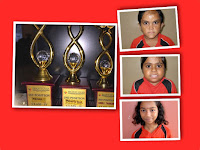
Last week at their school’s Annual Day, Meher, Babli and Manisha, our Power Girls stood 1st, 2nd and 3rd in their respective classes.
For us, it was a dual celebration.
We saw the usual luminaries and guests, the speeches, the cultural programme and everything that happens on such occasions, but also two very special moments: the prize distribution and the dinner.
During these, a bunch of proud parents belonging to the poorest strata of society not only shared the space with the high and mighty but were the parents of three incredible, prize-winning girls.
For that instant, all barriers fell, all lines were obliterated and it did not matter who you were or where you came from. It was magical.
Do you think education should be equal for all children? What would you say to Meher, Babli and Manisha? Would you like to sponsor a child to go to boarding school?
 |
| Meher Manisha Babli |
To know more about these girls:
Life on a planet is born of woman
A tiny woman of substance
A perfect day
My never fail feel good shot
Huge eyes in a scarred face
The key to her morrows
I am here to stay
Please join Project Why on its Facebook Page.
You can also follow us on Twitter
Even the smallest donation makes a difference. Support Project Why here

What is the secret to happiness #GivingTuesday #India

We all want to be happy; the question is whether or not we achieve this goal. In a recent post Damyanti Biswas, an Indian writer based in Singapore and friend of Project Why, shares how a bunch of very special souls gave her an insight into how to find happiness. She writes: “These people know how to find happiness in the smallest of things, and if you spend some time with them, they’ll teach you, too. I felt much lighter for having spent some time with them.” She then goes on to ask, “What is the secret to happiness? Is it outside of you, or is it your choice?”
Is happiness as elusive as we think?
In a delightful and touching fable, The Little Prince, St Exupery gives us a formula to happiness: “It is only with the heart that one can see rightly; what is essential is invisible to the eye. Happiness is only visible to the heart.”
Seeing with the heart is Project Why’s maxim and over the years we have always abided by this rule. We go beyond definitions and mission statements to craft our own unique ways of looking at challenges and then surmounting the challenges.
When you are with the children time and space take on a different meaning. As you share their laughter you forget the yesterdays and tomorrows and savour pure unadulterated joy as time stands still. But more than that you experience an under valued feeling: gratitude. The children of Project Why’s special section symbolise gratitude; they are grateful to exist. And that is why there is not a single mean bone in their bodies.
To be truly happy, you have to be grateful, something we tend to be forget.
The secret of happiness lies both inside and outside of you. As you open the eyes of your heart and view every day events through your new eyes, your ability to be happy and joyful seem to increase by quantum leaps.
Happiness is in the smallest of things: in the smile of a child as she greets you; in the report card proudly presented by a child who had earlier failed; in the English poem recited with flair; in the first word uttered by a child who could not speak. The list is endless. You just have to know where to look.
At Project Why we are busy being grateful and thus happy.
How do YOU think gratitude and happiness are connected?
What is your personal experience?
You can also follow us on Twitter
Even the smallest donation makes a difference. Support Project Why here
Legislating Change #GivingTuesday #India
 |
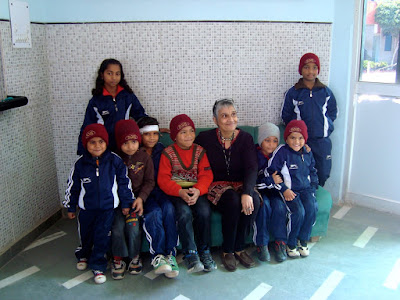
| Anna Ma’am and her boarding school stars: from left to right Manisha, Aditya, Vicky, Utpal and Yash standing: Babli and Nikhil |
The quota debate is back. A statutory government panel has advised enacting legislation that would make it mandatory for private companies to reserve 27% of all jobs for marginalised communities. The quota system is affirmative action to help people from deprived backgrounds and is used in education and government employment. The proposed law aims at extending affirmative action to private businesses, including philanthropic organisations.
But what happens when a young woman whose father is a senior diplomat and who has studied in Ivy League colleges applies for a job under the reserved category?
In our own experience when Project Why took the decision to source all of our staff from within the community we never gave a thought to affirmative action or quotas; we were looking at skills and talent. We have never regretted this choice. They have walked the extra mile and proved their worth. All our teachers needed was the opportunity; they did the rest. Project Why’s achievements are proof of that.
Is affirmative action that same as sourcing from the community?
When Project WHY decided to send eight extremely deprived children to a English medium boarding school; that was a form of affirmative action. However, we did not throw them into the lion’s den. We rented a flat and kept them with us for one year. We registered them in an English medium pre-school where they learned basic English. At the flat we gave them the skills they would need: eating on a dining table with cutlery, sleeping alone in a bed, manners, using a bathroom and so on. And, in order to make sure they would not feel alienated we also introduced them to all that a boarding school kid would love: pizza, hamburgers, GI Joes, Barbies and what not.
When the day came, these little souls walked into their new world confident and sure of themselves. Today they are admired for who they have become; they are at the top of their classes, excel in sports, and love creative activities. There has been no looking back. Their caste and class does not matter anymore.
Was affirmative action the right choice for us to make?
Will the quota system really support those in need?
Will the quotas create a larger divide?
What are your thoughts on the quota issue? Should there be affirmative action beyond education?

Please join Project Why on its Facebook Page.
You can also follow us on Twitter
Even the smallest donation makes a difference. Support Project Why here

How do we raise our Children to have Compassion and Empathy? #GivingTuesday #India

Recently, Project Why received a donation from a school in broken cartons and torn plastic bags.
We received books with pages missing, copybooks with not a single blank page, and unwearable clothes. The clothes were not washed let alone ironed and some were torn.
Students had been asked to donate what they didn’t use anymore: school books, bags and clothes gone too small. The children gave abundantly, because children are generous by nature, a feature that needs to be fostered by positive example.
Our questions can be very simple: should this have happened?
Did the school staff and the parents step back to imagine how a child receiving these would feel?
This was an opportunity the parents and the school could have used to demonstrate to their children how an act of charity should be made. What is certain is that charity is a two way street. When you give something you also need to give a bit of yourself. The children from both sides lost an opportunity to experience giving and generosity.
If all the clothes were wearable and folded, all the books and notebooks usable and intact, the cartons taped and the bags sealed, what would the children at that school have learnt? Was this a missed opportunity here to educate our children, on both sides of the divide?
Do you have any ideas about how this could be done? How do you teach compassion to your kids? How did your parents teach you? Share your stories and comments.

Please join Project Why on its Facebook Page.
You can also follow us on Twitter
Even the smallest donation makes a difference. Support Project Why here