and the rapes go on

and the rapes go on

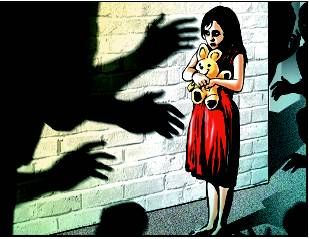
A 3 year old was raped in Kerala. She was sleeping on the pavement next to her mother, a homeless rag picker. She was brutalised with a blunt object. When she was found. she had high fever and ants crawling all over her tiny body.  She will take a long time to recover from her physical injuries. I wonder whether she will ever recover from the scars on her tiny soul. Her mother, almost a child herself sits by her bed. I cannot begin to fathom what goes on in her mind. She has another older child and is carrying her third one. She is part of what Harsh Mander callas the invisible poor. Umpteen questions come to mind. What will happen to the little 3 year old? What is the future of the family? Will someone get moved by their plight and help them?

Two days back a class XII student went to meet a friend at a Mall. Is this not what all kids do today! When it was time to go home she took a shared auto rickshaw. The ride turned out to be a nightmare as she was driven around for 2 hours, raped and robbed before being thrown out of the vehicle. Does this not remind you of the one called braveheart who was raped on a December night? The country was on its feet to demand justice, albeit for a limited time. Had our slumbering consciences awoken for a nano moment.

The state went into damage control mode as it often does when faced with an inevitable situation. When water canons and tear gas shells failed, it constituted a committee to suggest amendments to the existing laws. The committee did surprisingly well and gave us a comprehensive report. The government went in knee jerk mode and promulgated an ordinance knowing very well that it was a short term solution as it needed to be ratified by the Parliament. The proposed bill has now been put on the back burner. The reason: nitpicking over small issues like the lowering of age of consent. If you ask my opinion, I would say that lowering the age of consent has nothing to do with rape! I am one of those who believe that marital rape should also be punished. The state is not a guardian of morality though it often steps into that space. First perhaps, our law makers and enforcers should ensure that no child mariage takes place and the law that states that girls cannot be married before 18 should be implemented. One cannot hide behind social mores and tradition and let people brake laws. Mindsets to need to be changed.

Rapes are a crime, a violation of a women’s body irrespective of her age. We are all too well aware of this fact. Turn on the TV, scan the morning paper and you will have your fill of rapes: 8 months old, 3 years old, 12 years old, 50 years old and so on. From January to mid February 181 rape cases have been reported in our city, that is 4 rapes a day! Seems like the perpetrators know that they rape with impunity. And they are right if we are to believe a report aired of CNN IBN this morning where law enforcers are caught on camera stating aberrations like only 1 to 2 % are real rapes rest are consensual; only women in western clothes are raped and so on. Till this CHANGES no ordinance, law or more of the same can make any difference. And the rapists know that.

Today is International Women’s Day. I would suggest you read Shobha De’s article. In our land Vaginas are for violating.
Hunger Games

Hunger Games

I have just started reading Ash in the Belly by Harsh Mander. A few pages down it is my belly that is knotted and and on fire. The last time this happened to me was when I read Bitter Chocolate, Pinki Virani’s shocking and disquieting account of child sexual abuse in India. The first pages of Mander’s book brought to life the spectre of hunger and malnutrition I have often written about in this blog. How many times  have I not spouted statistics hoping against hope that they would awaken our far too numbed consciences. I speak of you and I who have so often stood with an empty plate in front of a lavish if not gross display of food at upmarket weddings, wondering what to put on our plate? Will it be Italian or Kashmiri? Thai or French? The sight of so much food can even give you visual indigestion and let us not forget that this happens after we have gorged ourselves with snacks and glasses of bubbly! And then, armed with our over laden plates, half of which we will ultimately throw, we have sat at a table with our peers chatting about the Foreign University our child is or will be attending, or the latest outrageously priced bag just come in at a luxury store? I guess many of us would have experienced some shade of the above.

Maybe we think we belong to the slightly more intellectual variety and would be discussing the latest film or best seller. Perhaps the Hunger Games by Suzanne Collins which does give a rather believable scenario of what might happen to humanity in times to come.

Today I am going to talk to you about real Hunger Games played by real people who are our brethren. The First Chapter of Ash in the Belly is entitled: Living with Hunger. Women in a small village of Uttar Pradesh talk about their lives and about the lessons they have to teach their children. Unlike us they do not teach alphabets, numbers or colour recognition. The one and only terrifying lesson their children have to learn is: how to sleep hungry! To avoid their children having to sleep hungry they do the unimaginable. Brace yourself before reading what I write now. It is from page 6 of Ash in the Belly: On days where there is no food in the house the whole family sets out to find food. They scour the harvested fields of the landlords with brooms to garner the gleaning of the stray grains of wheat and paddy… they follow field rats to their burrows and are skilled in scrapping out the grains stolen and stored underground by the rodents…after each weekly market ends, they collect in their sari edges, grain  spilled inadvertently by traders or rotting waste vegetable… they even sift through cow dung for undigested grain. (Ash in the Belly page 6). The grain thus collected is cooked with water, salt and turmeric to quell the hunger pangs of their children. And if there is still no food then the little ones are given cannabis or cheap tobacco to soothe them to sleep.

I do not know how you feel after reading these lines, but I felt ashamed and guilt ridden for every grain I would have wasted in the six decades of my life. Go to your rubbish bin now and just look at the all the things that could have allowed children to not sleep hungry. But as Mander says in his book that the poor do not matter anymore. They have disappeared from our lives: from our films, our songs, our poetry, our literature. They have become invisible. They are assassinated everyday because of our indifference.

People are starving across the length and breadth of India. Unlike us who ponder about what kind of food we will eat today, these people’s menu is restricted to ‘delicacies’ that never appear on the lavish and vulgar display we are used to. Have you tasted basi (fermented rice water) laced with leaves gathered from the forest; have you eaten a paste made of young bamboo or kaddi a poisonous wild plant immersed in the river water to get rid of some of the poison and then laced with jaggery to mask its bitterness? And yet this is what millions of people in our country eat to survive.

The book has revealing chapters: living with hunger, hunger amidst plenty, ways of coping. I have not read them yet but know that each will reveal another tragic aspect of a reality we refuse to acknowledge. The data given in the book is frightening: 230 million men, women and children go to sleep hungry every night; 76% of India’s household are calorie deficient; 42% of the world’s underweight children live in India. Need I say more.

The book also gives us a list of schemes launched by the Government to supposedly tackle this problem. I counted 12 with fancy acronyms using a wide range of letters from the alphabet. Each sounds fancy and a panacea to all problems ailing the poor. Some go back to 1975. But nothing has changed. These fancy schemes with huge allocations seem to benefit everyone except the stated beneficiaries. We who have a voice and could ensure that things worked as they should keep mute as always. It is not our kids who have to sleep hungry. At most we grumble because such schemes affect our taxes.

We have time and again heard about the humongous quantities of grain rotting in different parts of the country. Have we ever raised our voices? Why should we? We all suffer from a syndrome called indifference.

Next time you throw or waste food, think of the child who has sleep hungry? Will you?

I for one intend to keep on raising this issue in my writing with the hope that perhaps one person will hear the cries of the invisible millions.

I am now bracing myself to read the next pages.

Papa did you not earn enough money today!

Papa did you not earn enough money today!

Of late, I hold my breath each time I go to Greater Kailash 1 M Block Market. Wonder why? Well it is because I shudder to think which shop will have pulled down its shutters and closed and whether it will yet again be replaced by a new jewelery shop. Over the past years we have seen this happen time and again. I have lost count of how many gold and silver shops there are in this market. I would not be surprised if the market score a century in the very near future. Last week I wanted to buy a pair of jeans from the Levis store and to my utter dismay I found the shutter down! I can bet we will have a new gold and diamond store. Once upon a very long time GK M block was your regular market where you found all your needs. We had meat shops, grocery shops, pastry shops, Indian sweet shops, a haberdasher, paint shops, book shops and so on. All of these have disappeared. I was also saddened that my favourite coffe and tea shop is now closed. I have heard we are on the way to getting a Starbucks.

The reason for all this change is of course the exponential rise of rents. The rents are so high that simply selling a couple of pair of shoes or branded clothes cannot meet the rent and running costs. The only ones who are still there are those who won their premises and have judiciously managed to rent part of the space at an astronomical amount and tucked themselves away in a corner. Others have preferred renting the entire building and living a more than comfortable early retirement. For me, GK Market has become and extremely restricted space with only a few of the old hands with whom I find myself reminiscing about the good old days.
For quite some time now I have been buying my ‘foreign’ groceries from a shop in another so called up market market. The place is run by a father and son duo whom I have got to know over the years. I like going there as it is not only a pleasant and personalised shopping experience but also the occasion of having a chat. Last time I went, I was surprised to see a lot of construction and remodelling. You see the basement had once been rented and the upper floor were used for storage. I asked the son what was happening and we answered that they had decided to redo the store and use the whole building. A brave move in the times of super markets and malls but I am confident that they will succeed. The son however told me that his father had toyed with the idea of renting the entire space and the option of a lucrative retirement. The son however felt that he did not want an easy life but one with challenges and hard work. This was because he felt, and I totally agreed, that it was important to set the right example to  one’s children. A father that ambles and wastes his time is no role model to his child. And yet this is what is happening among the rich and richer. 
The son recounted and incident that happened in his shop a few days back. A father brought his son to the store and the child demanded a candy that was quite expensive. The father resisted and chided the child. After some negotiation the son quipped: Papa did you not earn enough money today! The shop owner was shocked and just retained himself from reacting, noblesse oblige! Needless to say, the father buckled under. Sadly this is the rule, not the exception. On a lighter note, my grand son, all of four
An old doctor friend from the rich and famous tribe was recently in Goa. He came across a group of lads busy gambling. The combined loss of the rich father’s progeny was 1 crore or 10 Million rupees. But they laughed it off by saying that anyway it was papa’s money and papa will give more.

This is nothing short of frightening! A whole generation of supposedly educated children who will never learn the importance of hard work and the pleasure of its rewards. I can never forget how my attitude to money changed when I got my first pay packet. In spite of having been brought up in extreme luxury and overabundant love, my parents were the first ones to push me to start earning soon after my 18th birthday. being proficient in French, I found casual employment at the French Section of All India Radio. The broadcast was from 12.20 am to 1 am. I had to reach by 9pm to translate the news and then read it past midnight. With the rather lackadaisical running of the AIR transport system I was fetched around 8pm and then driven around the city and dropped back around 2 am after another session of Delhi by night! The next morning I had to be at JNU at 8 am for my MA classes. For each news bulletin translated we got the princely sum of 50 rupees. I must admit that after this I never took money from my parents, something I so easily did earlier. In the western world that we so like to emulate, children leave their parental homes after they are 18. I can never forget the ‘philosophy’ of very dear friends of my parents who were very rich and have their children all they wanted. But come 18, you had to leave home and learn to fend for yourself. Any money you needed was lent to you with interest. If you did decide to stay home longer, then you paid for your stay. Even children of the richest families abroad babysit, clean homes, work at petrol stations and so on. I guess for rich Indian parents it would be infradig to have their kids do such menial tasks. We are prisoners to too many hand up and social taboos. So we are bringing up overgrown kids we feel we have to pamper and cosset for heaven knows how long. And they squander our money with impunity.

It is time things changed.

Use a fan instead of a cooler

Use a fan instead of a cooler

The CEO of our city has always astounded me with her knee jerk solutions to disturbing issues. One can never forget how, in the wake of a young journalist being murdered whilst coming back home from work, she quipped: All by herself till 3 am at night in a city where people believe…you know…you should not be so adventurous. I wonder what she meant? Was it that women should stay indoors after a certain time? Going home from work is in no way adventurous. I remember having to come home post 1.30 am way back in the seventies when I worked at the radio station French services and had a live transmission from till 1am. Cars were provided by the office but sometimes we had to take circuitous routes and as I lived the farthest, I often was alone for the last leg of the journey. The cars were old and often broke down but somehow one was never scared. In the 80s I worked in International Conferences and again such conferences have the uncanny habit of going late into the night and one had to come home alone. It was not a matter of choice and in no way an adventure.

A few days back our esteemed lady came up with another gem. When attacked for the exponential rise in power tariffs, something we are all experiencing, she retorted: If somebody is finding it difficult to pay the bill then he can use a fan instead of a cooler. So if I understand well, whatever our grievance, it is never the State’s fault, it is ours for not making the needed adjustments. If water is too costly have a weekly bath, if food is too expensive eat a meal a day and so on. Strange interpretation of democracy! We elect you presumably to care for our needs, but once you are in power you can do anything.

Coincidentally to this latest chief ministerial blooper, or maybe it is synchronicity, an article appeared in a serious weekly entitled: The take it to easy polity. The article begins with a quote of our PM: Reforms are needed, I have always said that, but economic reforms with a human face will give India’s common man real hope. However 9 years down the road we are all waiting our the basic amenities. What is worse is that we have to pay more for what we do not get! What we are seeing is an insidious plan to hand over public services to private players and the way to do that is simply to mismanage these services and ultimately plead incompetence allowing the private boys to take over. Since electricity has been privatised bills have escalated and many of us in Delhi have received water bills in 5 figures! Even  Project Why which operates from a minuscule building for 8 hours a day receives electricity and water bills in tens of thousands.

I would like to highlight two very different aspects of all that has been said. The first one pertains to the abdication of the state of all its responsibilities. To illustrate this I will share a personal experience. A few years ago I was approached by a senior MCD official and friend. He asked me whether I would be interested in ‘taking over’ the local municipal school. This was the very beginning of the privatisation saga. I was somewhat horrified but wanting to know more I played on. The bottom line was that one would get the school, the kids, the teacher’s et al. Only the teachers – and you could not select them – would be paid by the MCD. All other expenses were yours! Needless to say that being an organisation seeking funds to educate slum children, I could not use pwhy funds to do work of the sate, and hence if the concept was to work the only recourse was to seek fees. Exit all the poor kids! If of course immediately refused the idea. Education as per the Constitution has to be free and equitable! The State must run proper schools. But that is pure chimera. It is not because they cannot – ie Central Schools – but because they want not. The reason: plenty on offer. One maybe because they want to ensure that a large part of society remains illiterate or at best semi literate. Better to manipulate you! Vote bank politics! Soon we may hear something like: if you do not like our schools go to private ones.

The other aspect I wanted to focus on was the ‘wants’of the urban poor. It is easy for our city boss to suggest people use fans instead of coolers but that is not how it works. When people move to the city they do so for a better life. They have needs to fulfil but once these are met come the needs. I will tell you the story of one family whose home I have been going to for over a decade now. When I first met them, they told me that they had come to the city after Mrs Gandhis death having had to leave Punjab. At that time their kids were small and in the little plot of land they managed to ‘purchase’ they built a mud structure with a tin roof. Over the years they managed to educate the children as that was their first priority. When I came into their lives, the mud walls had been replaced by brick ones, the tin roof by a concrete one and they had just purchased a refrigerator. A small black and white TV occupied a place of honour. Today they have 2 colour TVs, coolers, mixers and grinders and a washing machine. The kids go to good public schools and they have new dreams they want to realise. Their wants are not illogical or absurd. They are the culmination of long difficult years. They are willing to pay for public services provided the bills are fair. They have not come all this way to go back to mud walls and tin roofs. They do not want to use a fan now that they have a cooler.

The kind of remarks politicians make shows the complete disconnect between the rules and their people. It is time things changed!

Through their eyes

Through their eyes

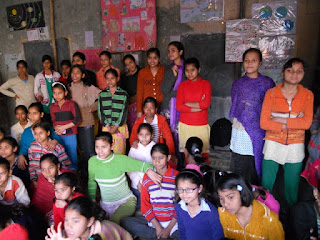
Till date, I have shared the on goings of Project Why based on what I saw, or what my staff shared or what well wishers, supporters and funders wrote in reports, blogs or on social networks. Some how it never cross my mind to get the children to share their thoughts. And yet they are the ones who should have been given that opportunity. So I was delighted when the coordinator of our women centre decided to give pen and paper to students and ask them to write what they felt. All teachers were asked to leave the premise and the security guard and housekeeper where the ones supervising the exercise.

I was given a report and I would like to share with you Project Why through the eyes of those who matter most. The children participating were from class III to IX.

One child thought that Pwhy was great because it has toilets, drinking water and free education. Another one was touched by the fact that the organisation helped her parents when they had lost their jobs and were desperate and also because many volunteers come to the Project and she can talk to them in English and improve her knowledge. A young class V girl likes Project Why because it does not make a difference between boys and girls and she loves the Sunday classes when all kids come together. A little girl likes the Saturday hand washing and  a young boy likes the fact that there are no more than 15 students per class. For some students what makes Pwhy special is the dancing, singing and art activities, for others it is the fact that teachers are patient and do not beat children. Some like the fact that there is a big library with good books and that there are spoken English classes. And many simply felt that pwhy gave them an enabling environment to study in all seasons.

Some kids like the camaraderie that exists in the Project Why and that all children are treated equally, irrespective of their caste or creed. One class IX student candidly admits that when he came to Pwhy he was not good at studies but that now he has improved a lot. A class VII student appreciated the photography workshop and the fact that he and his friends are given cameras to take pictures regularly.

Many students appreciated the fact that they were not chastised for their bad habits. On the contrary teachers took time to understand their problems and help them get over their bad habit. Teachers were more like friends and mentors and went out of their way to help students.

And a class VII student simply said that Project Why is like her family.

To many, all these statements may seem innocuous and commonplace, simple ramblings of students wanting to say the right thing. But it is not so. When I read them I felt overwhelmed and humbled. These seemingly anodyne words actually reveal the reality of children who are not understood and appreciated by the adults in their world, be it their parents or school teachers and for whom pwhy is the support they so need. A place where they are considered as individuals who matter. The words also reveal how things that are taken for granted by the likes of us, are luxury to urban slum kids be it a clean toilet, drinking water or the pleasure of washing one’s hands. The thoughts shared by these children go along way in proving that we have failed as a society in ensuring that all children what is rightfully theirs.

The question I ask myself is: are we doing enough?

The only true crime… the journey of an ordinance

The only true crime… the journey of an ordinance

Two months ago, India was on its feet expressing its outrage at the barbaric rape and subsequent murder of a young woman in a Delhi bus. We were angry and ashamed and swore to not give up the fight till justice was done. We decided to wear black bands and keep up the fight. The media was replete with stories on women’s safety. Brought to its knees the state constituted a committee meant to look at women related issues and the said committee worked relentlessly to bring about a report many of us were thrilled out. For the first time, issues that are normally brushed under carpets were highlighted. We were all on a high. But then surreptitiously, the dark forces set to work. A hurried ordinance which diluted many of the main issues was promulgated leaving us all perplexed. Why the hurry? In the mean time, the media found greener pastures (the death and beheading of soldiers, the much awaited hanging of a terrorist, the curious case of a Party President, and now blasts in a southern city) and even the tiny news item that informed us of the daily hearings of the case of the accused in the Delhi rape, stopped. Our black bands faded and I wonder how many of us replaced them.

But atrocities against women did not stop. Rapes continued with alacrity and seeming impunity. But we remain silent. The Delhi rape is undoubtedly horrific but what about the recent rape of 3 little sisters in Bhandara. Why have we not felt outraged as we did a few months ago? Is it because these 3 little souls belong to a social background we cannot identify with? Imagine three little girls, between the age of 5 and 11, waking up in the morning as they do each school day, wearing their uniforms, hurriedly gulping a breakfast lovingly prepared by their mother, picking up their bags and setting off for school. Only on that day they never came home. A predator was lurking on the way; he may have enticed them with some treat or the other and then hijacked and destroyed their dreams in a flash. I shudder to imagine what  their last moments on earth were like. The confusion, the bewilderment, the helplessness, the pain and the realisation that it was all over. Their journey from home to school ended in a dark well. Were they still alive when they were pushed in? And imagine the plight of the mother, widowed a few years back and who  now loses her children. No amount of compensation can begin to heal her agony.

What is worse is that the police did nothing for two days. The investigation was shoddy and truly began only after the enraged villagers resorted to violent protest. According to the latest news the Principal of the school they studied in has been suspended for not having reported that the girls were missing. The question that begs to be answered is whether the police would have acted had the principal reported the incident? Sadly this is not the only incident. Rapes have been committed with alacrity and impunity every single day since the terrible Delhi rape. But we seem to have lost our voice yet again.

The Delhi case has resulted in an ordinance that needs to be passed by Parliament but trends indicate that though it seemed that everyone once agreed, it may lapse for want of time! And there is more. It also seems that some of our esteemed politicians have raised some doubts. One of these seems to be that if stalking is included then it could be misused. Others objections have been against voyeurism and even sexual harassment at the work place. All this augurs well for the Government who can then allow the ordinance to lapse. The existing laws will remain and nothing would have changed.

What is frightening is that the ‘doubts’ expressed reek of patriarchy and seem to condone the conspiracy of silence that has prevailed. It seems that the only true ‘crime’ against women that all are willing to address and condemn is rape. But rape is the culmination of a series of albeit smaller crimes that embolden perpetrators. Perpetrators are often misguided youth who begin their descent with crimes like teasing, stalking, groping etc. If these will be smiled upon benignly by a patriarchal society that considers women as second class beings, possessions and objects then women will never get justice. Men will never understand the rage and hurt felt by a woman who is leered at or groped. In every way it is a violation of her being. If crime against women is to be addressed then every from of crime has to come under the ambit of law. By objecting to stalking, voyeurism and any form of harassment, men want to retain the right of indulging in such low games with impunity. Diluting any law is as good as discarding it.

Is there no hope then. One would be tempted to say yes. Since time immemorial women have learnt to live with such aberrations and build defenses. The Delhi rape did shake us out of our immobility and we would have liked to believe that our rage would bring about change. But the enemy is wily and strong. It will require subtle tactics and a long war. Delhi was just the first battle and we still have not won it. The Bhandara culprits roam free. The Suryanelli survivor has still not got justice even after 17 long years. To bring about change we need to raise our voices in each and every case; we need to convey our outrage each time a crime is committed against women and children. We need to refuse to accept aberrations and stop building defenses. But will we? Every day children and are abused within the so called safety of their homes but no one says a word. If the child garners the courage to share her/his hurt with an elder, (s)he is sworn to the code of silence, a code meant to protect the patriarchal equilibrium. A girl his told not to talk about sexual assault she may have incurred because it ‘may ruin her chances on the marriage market’. What is this society where the victim is criminalised and the perpetrator roams free. I am sure than men who may be guilty of stalking or groping asre still good marriage market material.

True men need to be sensitized, but more than them, it is we women who have to be freed from patriarcal mindsets and learn to respect ourselves and other women. When will that day dawn?