a meeting to remember

a meeting to remember

Today’s staff meeting was a watershed in the history of project why. It was a meeting I had delayed for long as in some ways I knew it would change things forever, at least for me. It something to think about a situation and its possible aftermath and keep your thoughts to yourself. It is something else when you share them with the ones who have made your dreams possible and stood by you at every step you think. All the kudos I have got past decade or so, all the respect and esteem that has come my way, all the people who have come into my life because of what I have achieved would never have happened without the support, hard work, commitment and love of an incredible team. I had a dream. It was more than a dream. It was a debt to pay for a over privileged life that I was given on a silver plate. It was a way of bring some meaning to my life. I often thought of it as my magnum opus and swan song. I guess the swan song bit has changed a little with present circumstances beyond my control but it is still the one thing I would like to be remembered by. Sorry for the digressing but it sets the stage for what is to come.

For the past 13 years my life evolved around project why. Every thing else had to fit around it. For me it was no ordinary work but a mission and a challenge. It was also my redemption. The hitch was that the dream was so big that I could not have done it alone. It needed people who were willing to run an obstacle race with their eyes blindfolded and the hurdles a mystery. It was my magical mystical tour! A course where reason takes a back seat and only the heart is allowed to lead. What made it somewhat exasperating for those who had to execute it was the poor if not non-existent understanding of the ground realities of the one who made the rules: me! So all the esteem, kudos, recognition etc should not go to one ageing woman and her dreams. They go to the ones who not only followed my dreams, but made the need corrections and fulfilled every one of them.

Imagine you take up a position in what looks like an ‘organisation’. You rightly believe that you will be given instructions and a way to execute them and that they would be reasonable and stand the test of time. Not at all. If I were to give you a quick tour of project why’s history it would go something like this: woman meets beggar man (Manu), decides to change his life. Sets up spoken English classes for two scores of kids and adults; sees welt marks on a boy’s arm – corporal punishment – marches to government school, decides to ensure 10 lads pass their Xth in 3 months; finds 2 young men to do so on a road side; enters a lady with a few disabled kids; the woman decides to start a a special class. (one common strand in all this: scarce funds and no staff). Sees the results of some kids, decides to run primary and secondary support; finds destitute women starts a residential woman centre; finds third degree burnt kid with alcoholic mom, decides to change his life; finds one man needing help for his child’s heart surgery manages to sponsor 20. The list is endless and leaves you breathless but every one of these heart steered decision was fulfilled with love. At the end of the day over 1000 people benefitted from these impossible dreams lovingly fulfilled by a team of incredible people with no fancy bio datas and resumes but with huge huge hearts. I salute them all!

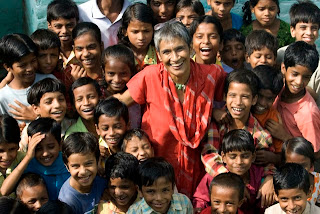
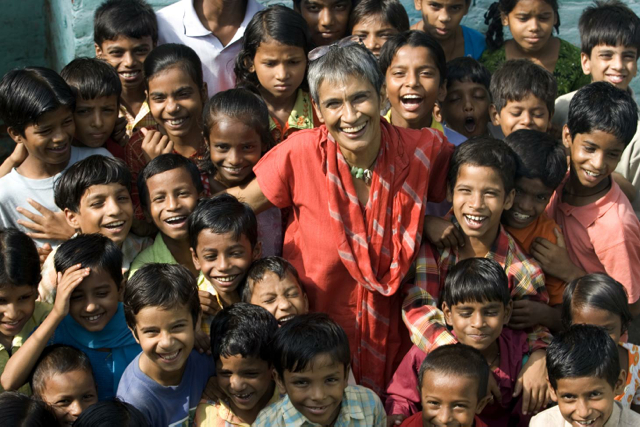
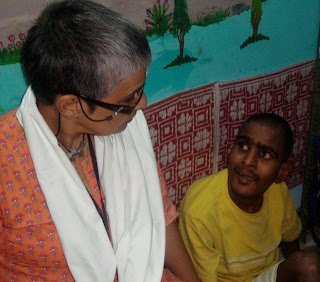
For the past months while we tried to figure out what ailed Ranjan, I hoped that things would fall in place and nothing or little would change in my life. But that was not to be, and though I pushed it as far as I could, it would be unfair to keep my team in the dark anymore. So yesterday in a short meeting, where I held on to my tears, I informed my team about Ranjan’s cancer and about putting my life on hold for a few months. The people sitting around me were one of a kind: there was those who had been with me right from day one; there was also those who had been with me from day one but as students in class I or even the first creche and today were teaching! My heart was filled with love, gratitude and emotion. But I could not let the flood gates open. I said my piece and quickly walked out.

It was a meeting to remember.
Sharing a bench with your child

Sharing a bench with your child

I am reading An Uncertain Glory by Amartya Sen and Jean Dreze. I first read some excerpts in a magazine. The fact that these eminent authors said what I have been clamouring for years was somewhat comforting. I am stilling reading the book as it is not an easy read for me who is a greenhorn in Economics. However I would like to quote to comments that jumped at me as I was skimmed through the book. What makes these quotes interesting is that I can put them in a context I have experienced.

The first quote is about health. It says: the commitment to universal health coverage would require a major transformation in Indian health care in at least two respects. The first is to stop believing against all empirical evidence that India’s transition from poor health to good health could easily be achieved through private health care and insurance. Two real life incidents have just occurred in my life and they cover the present scenario of health in our times. When husband was diagnosed of cancer it was a blow to all of us. Our family’s health issues have till date been dealt with by our family Doc who is all our specialists rolled in one! But this was a big one because biopsies and then chemo was involved and needed specialised care. Doc P, as I affectionately call him gave us the names of a specialist and we managed the first testings ‘in house’. The bills were steep but still doable. But then I realised that this was not a 100m sprint but a marathon and had to tiptoe into the much heralded insurance panacea. Thankfully my husband has an Insurance from the PSU he worked in for more than 3 decades. It is not a cashless card but a perfect example of the maxim: why make it simple when you can make it complicated. For every consultation, test, investigation, surgery, medicine someone has to make a trip to the airport, wait for hours and then get a printed piece of paper with a carbon copy attached. Now the paper is valid for 3 days only and if for someone reason, like a low blood count, your chemo is postponed as may be the case tomorrow, then someone has to make the trip to the airport to get a new paper. I cannot begin the count how many trips poor Mamaji has already made and how many more he will have to!

 But now let us talk about the famous insurance + private care which is suppose, according to the powers that be, to solve India’s health problems. I do not know how the medical insurance for the poor (RSBY) works. I understand it does for BPL families but then we fall into the whole saga of who is BPL and whether the poorest of the poor have the knowledge, accessibility and targets all the beneficiaries. Or will it, like many other projects that begin well, wither away from neglect. The people covered seem far and few. What it gives is 30 000 Rs for hospitalisation! I can tell you from first hand experience that none of the BPL and lower families we work with have access to this scheme. Do have a look at the success stories page of the official website of the scheme!

Medical Insurance is for hospitalisation, be you rich or poor. All other health issues are covered either by the state run dispensaries and hospitals which can be excellent but are overcrowded and you could die waiting for your turn. One of our kids needed a brain surgery. We went to the prime medical institute in India (AIIMS) and were told of two options: one where we needed to pay and one free. We chose the first one and got a date 6 months later. The child passed away before his turn came.

But health is not only hospitalisation. There are some who would never need to be hospitalised and yet need health care. The rich have a wide choice of good doctors and specialists and go there even if the fees increase exponentially. The poor have quacks some better than others, often recycled compounders who have open shop as doctors. One has to say they are able to deal with every day issues having watched their erstwhile employers for long. Some of these quack-cum-doctor even give medicine! One wonders how good they are when one knows the price of medicines in India. Oops I forgot, just like with education, a certain number of beds are reserved – how we love reservation – for BPL card holders in swanky hospitals, but then how many people does that cover!

The one field that is totally neglected is that of social and preventive health. A sound preventive health programme could being the health bill down and make a huge difference in the lives of many, even avoiding unnecessary deaths. Access to clean water, hygiene campaigns, importance of washing hands, storing food etc could rid us of many ailments that proliferate across the land.

Insurance is a money maker for big players and not the means of transition from poor to good health.

The other quote from An uncertain Glory is about education, my pet subject and bete noire. The authors state: Perhaps the most hidden penalty of greater reliance on private schools is that it tends to take away from state schools the children of precisely those parents who are likely to contribute most to the critiques and demands that could make state schools more responsible and accountable. (An Uncertain Glory Amartya Sen – Jean Dreze) says exactly what I have been saying for years. The death knell of state run schools rang the day education became a business with the entry of private stakeholders. If you stole a glance at the CVs of most of our senior bureaucrats and other professionals of above a certain age you will find that they have all been educated in state run schools. Government schools were at one time the only choice you had. Other than that, for the elite, they were boarding schools that had been set up by the British for their children and somehow continued with  Indian children replacing the fairer ones.

If you look around you in our very city, you will see at least one Government school at walking distance from your home. They are all on prime land. It is another matter that they are dilapidated, often shacks with tin roofs and sometimes just a tent in the middle of a large plot of land. Some schools have good buildings and still impart sound education. These are the ones located in colonies that still send their kids to state run schools. I do not when, but it was a sad moment for education, greed took over and the privatisation saga began. Government run schools were neglected and all shades and hues of English Medium schools began mushrooming everywhere. Slowly, even lower middle class parents were seduced by this new motley crew that offers education @ of 300 rs per month to 10 000 rs per month! The magic words are ‘English Medium’, even if no one speaks English in the entire staff. This is not baloney but something I experienced in a school a few years ago.

Government schools today, particularly those that are located near slums and resettlement colonies where most parents are illiterate or at best semi literate and in awe of authorities and unaware of their rights, run almost amok. Overcrowded classes, no facilities, corporal punishment, teacher absenteeism and more as they know that the parents of the children can never be a pressure group and hold them responsible. This is something I have written about time and again.

In my humble opinion privatising education and reserving a few seats in swanky school that anyway are usurped by clever middle class parents is never going to give a fair Right to Education to every child. What is needed are good quality neighbourhood schools, run by the State with a mixed social profile of kids. But then the question is: will you accept your driver’s kid sharing a bench with your child!

760 million young and restless

760 million young and restless

A pertinent article on the state of our Youth appeared in a magazine this week. The article entitled Youth Bulge, Youth Bilge draws an almost apocalyptic image of the 706 million of youth we love quoting to one and all as our greatest force. But as the author says in the article: unless we provide this youth bulge with education, employment, health, safety and liberty, we will soon have 706 million extremely pissed-off, marginalised, restless young people on our hands. That’s the largest any nation has ever had to handle in human history. The article makes an interesting read particularly the take on Delhi Police. I leave you to discover it!

I am more worried about the morrows of these 706 million who may just become extremely pissed-off, marginalised, restless young people. And extremely pissed off people may do extremely violent things. We all saw what happened that fateful December night. The recent grudge we have against these extremely pissed off people is the motorcycle rodeos we are subjected to time and again. My home is located next to a Secondary Government School and a well known private school and let me tell you young lads from both these schools perform bike stunts. Even this morning while taking mu husband to the doctor, we were overtaken by five screaming young guys on a motorbike in their school uniform.

Let us just take a little time and see what our society has on offer for these kids. Let us start with those born on the wrong side of the fence as I know them well having been working with them for over a decade now. First of all they are regular kids who have the same dreams as any other child. But they are treated differently right from the word go. First of all in India’s capital city boys go to school in the afternoon. This city has not even been able to provide adequate number of schools for their children, as all children should go to school in the morning and play or pursue sports or creative activities in the afternoon. And school for many of them is an overcrowded classroom, with scant teaching, lack of basic facilities. At the end of it all they get a school leaving certificate with low marks that does not open many doors to them. I still cannot understand why 33% is the pass percentage for our exams when access to a good and affordable university is 99%! This is all too suspect.

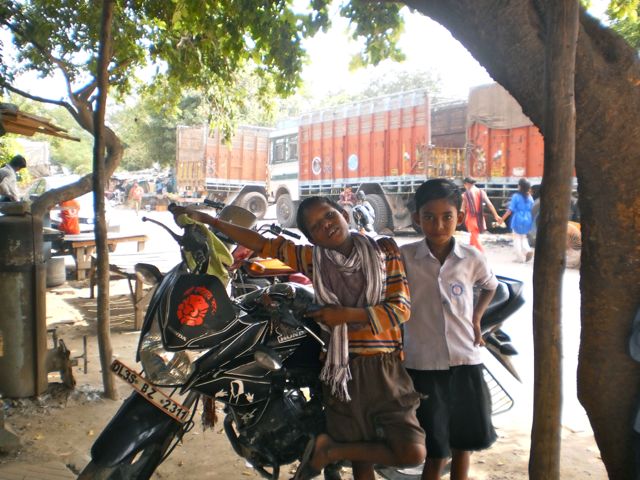
The boys born on the wrong side of the fence spend their morning loitering around. The city lads have dreams that are based on what they see around them and on TV which is an asset every home, however poor has. So these kids dream big. One of the most desired object is a motorbike and with the advent of credit, the dream becomes closer. There is no one to temper their dreams and wants with wisdom and values. No teachers to emulate; no parents to counsel. The slum kids live surrounded by violence: corporal punishment in schools and alcohol induced violence at home. Needless to say they too will repeat what they see when they grow up and see that their dreams can never become reality and find themselves condemned to a second class life. Their education is a non starter and thus their employment options bleak. The state has failed them in every which way possible.

Their counterpart on the other side of the fence may look to be in a better place but there too the absence of values, the lack of good parenting and the over abundance of money is turning our so called educated youth into an irresponsible, arrogant and uncaring lot. Their options are so prolific that they know they will succeed in some way or the other. Money power makes a heady cocktail for children who have not been inculcated with the right values and a sense of responsibility. If it is stunts on motorbikes for one lot, the others know that they can drive their father’s expensive machines and get away with murder quite literally.

These 760 million have no role models. How long can a Mahatma Gandhi or an Ambedkar be the ones doled out as role models for a XXIst century kid! The role models these youngsters  chose are Bollywood or sports stars. What they see is corruption as a way of life and crime rarely punished.

There is a bomb ticking. It needs to be defused before it blows in our faces.

How our brethren live

How our brethren live

An article appeared in a leading magazine this week. I am sure many have or will be reading it at some point of time, if not at home, then while waiting for your turn at the doctor’s or dentist, while travelling in a plane or maybe at your beauty parlour. The article or rather photo essay isn simply entitled: Life below the poverty line! Poverty line is the news ad nauseum recently. What should the base figure be, 27 or 32? And endless and futile debates appear on the box, with people shouting and procrastinating. Anchors as masters at pushing invitees to answer uncomfortable questions with the inane phrase: India wants to know? After the debate everyone, including the anchors will go home, have a large one, eat and waste some food and go to sleep in a cool room.

Please read the article and look at the pictures. If you still have some heart you will be deeply disturbed. Not just by some moving photographs but by the resilience and quiet and dignified endurance of people who just like us are Citizens of this country and thus come under the ambit of our Constitution and its rights. The villages that are subject of this disturbing essay are invisible, even if one of them is in the Constitution once represented by our First Citizen!

Life is a constant struggle and no one ever sleeps with his bellyful. Though there main concern is getting enough to it, some want their children to learn and hence send them school in the hope that an educated child may change things for them. Till then they survive with rare dignity. In the answers they gave the journalist, I could not sense any anger. Just acceptance. And faith. Yes faith which here validates more than ever the marxist view that religion is the opium of the masses. For them 24 or 27 or even 39 are useless statistics. “Allah is looking out for us. There can be no other earthly reason that my children and I are still alive” says a young mother. Fatalism at its best and loudest.

On the other end of the spectrum the rants and raves of debates sound empty and false. No one cares about these people. They are so remote that they seem to belong to another celestial body altogether. The questions and answers that play with regularity the days on which poverty is the flavour of the moment are futile. India does not want to know, India does not care, India has lost its heart.

The Food Security Bill that is now being tabled and pushed by the ruling party is nothing but another election ploy. I would like to ask our First Citizen whether he even knows where Lalkoop and how its inhabitants live. I would also like to know if the MLA or any other elected leader has ever visited them and told them about their rights? I also would like to know how these families will ever get the benefits of this Bill? I know the answer: Never. They have fallen off the map. And yet they are the ones who should benefit from such legislatures? Did the malnourished 14 year old mother who delivered a 600 grams baby get the so called supplements and meals that existing programmes ensure? The answer is another deafening NO!

And the answers will continue to be louder NOs till the (ill)famous: India wants to know becomes a reality,

Project Why in the time of Cancer

Project Why in the time of Cancer

Am borrowing a modified version of  Gabriel Garcia Marquez’s book for the title of this post. My world has been turned topsy turvy by a word it took me a nano second to read, a word preceded by a question mark at the end of a text in a incomprehensible medical jargon:? lymphoma. The word was followed by a full stop. This full stop changed my life if not forever, at least for the days to come. In simpler terms, my husband has cancer and has begun his chemo therapy so I will have to give him all the time he needs. As you know chemo gets worse each session and hence at least for the next 6 months, I will not be able to devote as much time as I did to project why. The flip side is that this may be the right time to write the project why story I started a few months back but had left in the middle when my husband felt sick a year back.

After running from pillar to post the diagnosis has now been confirmed and the road ahead charted and though it is a never travelled, it is at least one that can be ‘imagined’ and charted. What I foresee is having do be in the house, on call and thus not able to visit the project as before. Though I must say that I had withdrawn from day to day activities to give the team I had so lovingly trained a chance to prove themselves. They passed all tests with flying colours and I must admit, at times I almost felt almost redundant. From the bazillion calls I use to get when I first stopped sitting at the project office daily, within a few months at most, it was I had to call to know how things were. At 4pm each day, I would be debriefed and problems, if any discussed.

I would still go every morning for my cup of tea at Mataji’s which has always been my special was to remain grounded and then sped some time in the main centre, where I met the staff, heard my children’s lilting good mornings. It was my daily feel good shot!

I still toiled for project why! Wrote my blogs, updated the site (though I have not been great at that and looks like will have more time to do now), and of course wrote the reports, answered mails and kept up the funding. I still was the face of project why.

My husband’s cancer has been a wake up call in another way too! Someone I always felt was indestructible, for want of a better word, could be hit by a malady in the most unexpected way, then it could happen to me too, any day. So maybe this is the silver lining of the situation I find myself in. A litmus test for my staff. The little things I was still doing are now handled by them: reports etc. I will jealously hold on to my writing as without it I would fade away quicker than imaginable.

For the next 6 to 8 months at least, the time the chemotherapy will take and the rebuilding of a devastated immune system, I will have to give up my regular morning teas and good mornings. There are days when we have to reach the hospital at 7 am!  I will be unable to plan anything that requires my presence at a given time, as the vagaries of chemotherapy are legendary and unexpected. So there will be days when there will be no tea, and no smiles!

My biggest challenge during the forthcoming months is to ensure that all the things I still had a hold on are passed on. My biggest hope is that my incredible staff finds the their own way of meeting these challenges, ways they are comfortable with as I am sure they must have at times not quite liked my ways and followed them because they respected me. My biggest dream would be that they become empowered enough to take on the funding of the project.

So life at Project Why in the time of Cancer is going to be a challenge for everyone. I will have to test my ability to stay away and keep my mouth shut; my staff will have to taken on independently all tasks, however trying and bear full responsibility and project why will have to prove that it can withstand all odds and still soar in the sky.

upward mobility

upward mobility

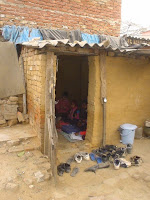
I have been working in the same slum(s) for over a decade now. In some more than a decade! I have seen the slow yet significant changes in the families I work with and of course in the environment. The story of upward mobility is not quite as we would imagine it to be sitting in the comfort of our homes. When we first began our work in Giri Nagar, the street where we worked consisted mainly of a series of mud houses with tin roofs, like the one you see in the picture and which was one of her classrooms. There only a few ‘homes’ which had a proper brick and mortar construction with roofing. What is now our secondary class was probably the only proper construction barring Rani’s home. Ten years later our secondary class has shrunk in perspective as every single mud hut has become a proper brick and mortar structure of up to 3 stories, with proper roofs and often painted in bright colours: blue, brick, yellow, green even orange! Each Diwali, when houses are repainted the street looks lovely. A few geranium pots on the window sills, the sounds muted and you would think you are in a French village on the Riviera!

On the other side of the road you do not have the erstwhile brick structures that were the toilets. Those have been removed by the authorities and everyone now has a toilet within the home, however basic! In its place there are bikes and more bikes and even cars and vans. This change happened with the arrival of purchase on credit, something that was not there when we began. All this is kosher and well deserved. I agree. But there is one failing in each one of us and that is that we are never satisfied. And this unnecessary greed is copiously fed by the ad campaigns played with obsessive regularity on the idiot box. The other human weakness is our need for more and our propensity to waste  and nothing is more true in the upwards mobility saga.

I would  concede that the first generation migrants still retain some measure of discipline and thrift and often chide their younger ones for their wasteful habits, but they are ageing and the reins are now held by the second and even third generation who consider themselves, and quite rightly so, as city folk! So with the advent of credit purchases offered by shops and credit cards almost thrust down their throats by bank agents who often, for a few rupees, authorise the card even if the paperwork is not complete. This has enabled slum folks to become consumers and fall into the debt trap. I have seen many a cars vanishing after being parked for a few months.

Homes having spruced up, floors added and though all the construction as well as the space itself is illegal, bribes to the police and protection from politicians as these are precious and easily manipulated vote banks have bestowed a sense of legality and continuity to the settlements. And though the Damocles sword of being raze does hand loosely over their heads, slum folks know that there will always be a way out.

Within homes the women fold too have become hardcore consumers: mixers and grinders, juicers, toasters, fridges are seen in many homes. Many even have washing machines. I was surprised to know, and rather impressed when I could not but ask how certain women I know were able to buy new clothes as and when they wanted. The answer was breath taking. There are middle class women who buy clothes and other garments in large quantity, and you can buy them on credit. No card required. It  all works on trust and makes good business sense.

Upward mobility has come to stay. But it also has a flip side and one that can be scary. First of all the fact that these people have recently acquired the right to consume, they are absolutely unwilling and even vexed when you check them on certain matters, often relating to waste. One would think that food is not wasted in slum families. Not at all. Wasting food seems to have become a way to show that you have arrived. Even my staff wastes food! If you try and suggest to them that the packed junk food they give their kids is not good for them, they get ballistic. It is as if we (I mean the ‘rich’) were grudging them their newly acquired rights. If you tell them that the umpteen non degradable pouches they buy (multi national made goods: nescafe, jams, shampoo, shaving cream, you name it) is bad for the environment and dare to suggest that the good old soap bar is much better, it is the same reaction. What they forget is that we have experienced the ills of all these and do not believe that we are saying these things for their own good. You quickly learn to keep shut!

So you watch the lights kept on in empty rooms, the taps running, the 3 TVs blaring in the same home, often the same programme, the chips or gooey candy the two year old has for breakfast, and the sticky 2 minutes noodles that make up the lunch box of our children. It will take at least another generation to see the negative side. At present they are enjoying their newly gained social status. The best you can do is teach the children. Some respond quite well!

You watch them waste their money helplessly. One thing that the new status entails is a abhorrence of state run institutions. A government job is the only thing that is still coveted. Otherwise be it education or health, if you have arrived to have to shun them. This mean sound business for commercial education and hospitals. Even a pathetic private school that boasts of the words English Medium in its name is better than the local state run school. This in many ways, has spelt the doom of state run schools by lowering their social profile and freeing them of any responsibility.

Quacks are better than dispensaries, and private hospitals better than the big hospitals, however modern. Somehow taking your loved to a Government hospital would cast a shadow on your status. Private hospitals then take you for a ride and you land up paying tens of thousands that you often need to borrow.

Social mobility comes at a price!