The past days have seen many Indian dreams smothered before time.
Three young girls ended their lives by jumping in a well. A young Dalit scholar ended his life in the hope of rekindling his battle. These lives were sacrificed at the altar of our indifference to the plight of those who live on the other side of the fence we call the ‘poor.’ These include the economically, socially and otherwise challenged or those who we feel are different from us. You simply do not see, hear or speak about them.
To be merely acknowledged they have to scream themselves hoarse till the day they realise that nothing falls on deaf ears and they need to take the ultimate step to tell us they exist.
Rohith the young scholar and Saranya (18), Priyanka (18) and Monisha (19) did just that. They had enough of screaming. They hoped their deaths would talk in their place. They left suicide letters to convey what they could not in their lifetime.
What were they asking for: teachers to teach them, humane living conditions and to be treated as students and not slaves. Rohith in his last heart-rending letter simply states: my birth is my fatal accident. I can never recover from my childhood loneliness, the unappreciated child from my past.
Nothing can help shed the cloak of poverty that sticks to you by virtue of your birth. The young girls paid a humongous fee to fulfill their dreams in the hope that money could buy them the freedom to aspire to better morrows, but that was not enough.
Rohith was born in the wrong caste. Does a child ask to be born in a particular family? Aren’t all children conceived and born the same way? So why these labels that stick to you before you utter your first cry, labels that never leave you no matter how hard you try to escape them?
To know of the plight young students of the wrong caste suffer and read this article. Students from Dalit and other backward communities have a raw deal. They have to survive in an environment where they are always considered inferior. Anything they do is viewed with suspicion by the elite class and the administration. They live with a Damocles sword hanging on their heads. One research student complained about the fact that she doesn’t even have a chair and is often locked out of the lab. And that is not all, should these students raise their voices or complain, they could even be labelled terrorists! On a daily basis they suffer barbs and snide remarks. Never ending. Relentless.
A young Dalit student says it all when she recounts an incident when a fellow student told her: “But you don’t look like an SC, you don’t dress like an SC!” On that day she was wearing a Nike T shirt. Brands are the prerogative of the upper lot; reserved categories are branded at birth for life.
When I look back at my early years I realise that never did my parents make me feel that I was in anyway different from those who lived with us be they family or staff. They were like me; individual human beings.
The most significant lesson my parents could conjure to ensure that this was seared on my soul was a yearly ritual I performed after Diwali prayer. Once the prayer over my father would ask me to go and touch the feet of everyone elder than me in the house. When you are five or six or even ten that literally means everyone: my parents of course, any guests present and the entire staff. In my case it often also meant people of different faiths and nationalities.
With this masterstroke they had shattered all barriers!
The way some people treat those who work for them sometimes defies comprehension. What is sad is that this sets the tone for children forever. Children follow their role models.
Education can be the answer provided it remains on a level playing ground. Schools should remove all barriers, make all labels irrelevant except for those you earn by your deeds in school.
But today we have schools for the rich and schools for the poor and if that is not enough the Government’s Education Policy compels the schools for the rich to ‘reserve’ 25% seats for the poor. The new policy still on the anvil furthers this by decreeing that schools for the rich should take schools for the poor under their wings. Far from an even playing field. What is sad is that it seems that it seems that the Government seems to have chosen this way.
Should education be privatized at all? If we were to follow the true spirit of the Constitutional Right to Quality Education then the best approach would be good quality neighbourhood schools where children from diverse social backgrounds could learn together to learn, be, do and live with others, in the words of Jacques Delors.. This would allow children to break all barriers and bond with children of all caste, creed, and social profile.
But that is not the case as we have seen, and children from so called lower classes and castes – have to run the race of life with a label stuck to their foreheads that grows larger as the forehead grows. What is frightening is that the labels have insidiously taken on many hues: clothing, language, demeanour and so on, hence the remark: you don’t look like a ..! We have let the schism percolate to every walk of life.
It need not be so.
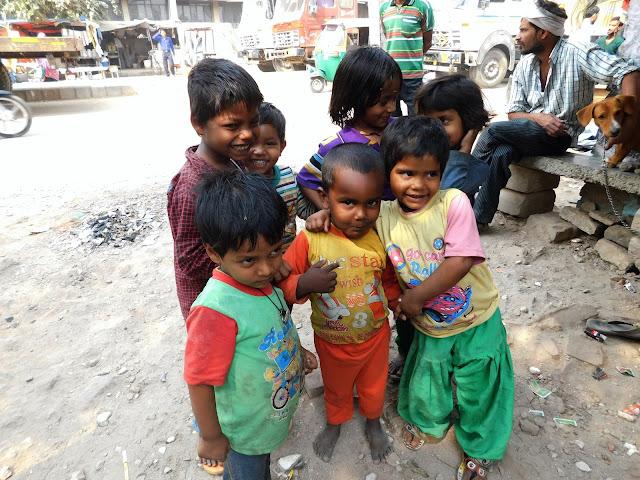
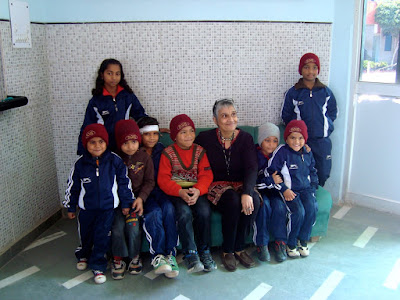
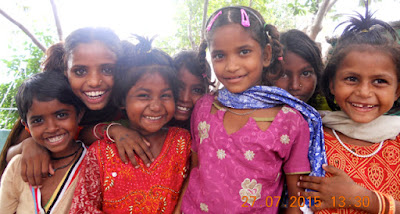
I talk from experience as more than 5 years ago I sent a bunch of deprived children of diverge castes and creeds to an upmarket boarding school. These kids have not only done exceedingly well in all fields, many topping their classes, but have managed to shed the labels they were born with and create their own. Imagine what India would be if we could do that for all kids.
My staff has a large number of people from ‘these’ castes and from top to bottom. I employed them for their ability and skills. I did not know what caste they belonged to and did not care.
One my senior staff members shared the plight of his community : his village is a few kilometres from India’s capital but till date no person from his community can ride a bicycle in front of the house of a higher caste person, or smoke in front of them. And that is not all.
At weddings, all music and bands have to be played outside the village. When the marriage party enters the village it has to do so silently. Even their right to celebrate has been taken away.
But on the other hand it does not take much to change things.
When we began Project Why, I was insistent on the staff eating lunch together, a lunch that would be cooked in-house and served by teachers according to a schedule. I must admit that in the beginning when ‘certain’ teachers served ‘others’ did not eat. I watched in silence, not reacting. I simply ensured that I ate everyday notwithstanding ‘who’ served. I cannot tell you how long it took but the day came when everyone was eating no matter who served and not only that but everyone even began inviting each other to their homes!
Being an example is the best way to teach. This is the role parents and teacher should play but unfortunately do not any more. It is imperative to fill in this space and education alone can do that. There must have been a reason for Jacques Delors to expand the definition of education and include ‘learning to be’ and more so ‘learning to live with others’.
It is time we taught our children the Art of Living with Others.
Do we want our children to be branded by birth? Shouldn’t every child have the right to create her of his own label and wear it with pride? Have you seen examples of such inequity around you? Share your stories in the comments!
Please join Project Why on its Facebook Page
You can also follow us on Twitter
Even the smallest donation makes a difference. Support Project Why here