by Anuradha Bakshi | Feb 23, 2007 | Uncategorized
When you think you have seen it all, and feel smug in the false notion that you have created the required roadmaps, in a land where women are dispensable you are least prepared for Act II of what you believed was a one Act play with a doable denouement!
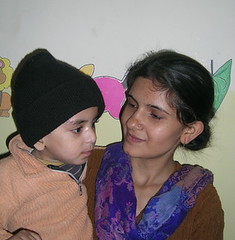
Yesterday I watched little Manoj dance and even gave my self a tiny pat in the back as memories of him flashed in my mind. A phone call brought me back to reality as I was told that Manoj’s mom 7 months into a unwanted pregnancy had landed at home with a swollen face and broken lip. The abuser was none other than her husband.
An article I recently read caught my attention as the author stated: 0ften a girl is brainwashed from infancy.. and I guess she is right, but there comes a moment when all the brainwashing and conditioning pales under the ignobility of the abuse suffered. That day the battering of her over abused body was the last straw, and the tears that welled Manoj’s mom’s sunken and anemic eyes were ones of anger and rage.
The story withheld till now poured out in chilling words, and that story was not just hers but the story of many women in India. She was barely 16, when she was married to this man, by a widowed mother who had the use of only one arm and three younger children to bring up. She had no option but to agree to the road map set for her. The rest is predictable a child before she attains the age of 17, an alcoholic man who is more abuser than husband or father. A weak child who can barely walk or stand at 2, and an unwanted pregnancy that she is forbidden to abort by the one who owns her body and soul all this laced with brutal beatings that dot her life with obsessive regularity. Days where she and her child go hungry, when rent being not paid lead to changing rooms constantly till you find yourself in an airless hole. No home to go back to, no family no friends.
You get a job and you work with a smile so genuine that even the most sensitive does not see your pain. You hide the unwanted pregnancy from fear of losing your job till it shows and you are exposed! You still try and whitewash the abuser as you have been conditioned to do but then all that was possible when there was no love and support around you. But when you see someone is listening your crushed spirit hidden in the deep recesses of your soul decides to break all the carefully built walls and set itself free.
However what are your options in a land where a single woman let alone a single parent is anathema. Where with a small child an an unborn one you have nowhere to go and are not coward enough to end your life.
Manoj’s mom is not an individual case, it is the story of many women in a land where in spite of venerating Goddesses we have forgotten the Goddess that lies in the scarred soul of each woman. And I am not talking of poor women only.
We may be able to help Manoj’s mom but the question that arises is what do you for the millions others.
by Anuradha Bakshi | Feb 19, 2007 | Uncategorized
In my quest to get pwhy kids and heir families the required caste and OBC certificates I set about finding out the procedure set out by our government. A quick perusal of the Delhi government website is sufficient to show that the modus operandi proposed is almost impossible to meet.
For Scs and Sts whereas the application can be signed by the local elected representative, someone that can be acceded to, the remaining papers require the signature of two class I gazetted officer, something that even i would have difficulty in finding.
In case of OBCs a new para has been added which states: I certify that to the best of my knowledge and belief that i do not belong to the creamy layer of the OBC… (para 14 of application form), However no definition has been given of the creamy layer!
It does not end here. To get a handicapped certificate you need to be 40% physically handicapped and 35% mentally challenged. Wonder what happens to those who are under! And in a city where the minimum wage for unskilled labour is about 3000 rs a month, the website states : He or she should be domiciled in Delhi for more than 5 years and their monthly income should not exceeds. 400/- and if unemployed their family income should not exceed Rs.600/
I think one would be justified to say that their seems to be a concerted effort to ensure that good schemes do not reach the true beneficiary. One would be justified in thinking that if we as civil society armed with a powerful tool like the Right to Information, set out to redress torts and ensure that existing schemes functioned this country would be a better place for all!
by Anuradha Bakshi | Feb 18, 2007 | Uncategorized
Today’s TV news brought pictures of 390 little bones buried near a hospital in Ratlam. Experts say they are the remains of babies. Today’s newspaper reported that there were thousands of missing children in our own Silicon valley a.k.a Bengaluru!
Post Nithari, the NHRC has asked for an update of missing children in UP. A website has been launched to keep track of missing children. Many questions come to mind and find no answers. The entire administrative setup seems to have forsaken the children of India in every way imaginable.
There are another little forsaken group of missing children, those that came for unknown reasons to seek shelter at the Baba Balnath Ashram since its inception in 1975. The present lot were rescued in early December 2006 though they too seem lost in complex administrative and judicial mazes. But what about all the others that transited this hell hole for 30 long years. Some should be almost middle aged women.
Will anyone give them a voice. What will it take to get civil society to ask these disturbing questions and seek answers so that they may get the justice they deserve? We have seen many a campaign in recent months that have brought closure to several cases. However these girls are invisible, yet they too are victims of the society we live in.
It is time to wake up and redeem ourselves if redemption there is!
by Anuradha Bakshi | Feb 18, 2007 | Uncategorized
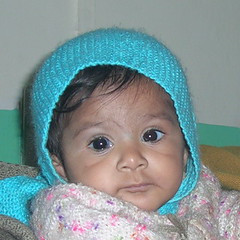
Anisha lies in a hospital bed. She dropped by pwhy yesterday morning and I was shocked to see her gasping breath. The forlorn parents told me that the hospital had refused to give a date as they had not deposited 4 units of blood and in spite of the fact that the 55 000 Rs required for her surgery had been paid more than a week back.
Knowing the attitude of the AAIMS’s blood bank that only wanted relatives as donors, I knew it was time to act. I told the mother to immediately take the child to the emergency room and that i would follow.
I mouthed a silent prayer to the God of lesser beings when I reached the hospital as any delay would have been fatal. Anisha lay under an oxygen bell while a nurse was desperately tyring to find a vein on the child’s emaciated body. Anisha weighs under 4 kilos at 9 months.
The family was desperate as they were told that there were no beds in AIIMS and the child may have to be taken to Safdurjung across the road. I told them to do what was said and had to resort to what works in India: contacts. After a long trudge and many misses I located a friend doctor in another department and asked him to intervene.
Now we wait with crossed fingers and bated breath for a little miracle: that of getting a bed and a date for the much needed life saving surgery.
I later googled for the meaning of Anisha: it means continuous…
by Anuradha Bakshi | Feb 17, 2007 | Uncategorized
A middle aged woman pushing her vegetable cart in the chilly evening rain set me thinking about the life of an ordinary citizen in India’s capital city.
The heap of vegetables still lying unsold on her cart was proof that it had not been a good day. I wondered why she and not a man was pushing the cart. A widow maybe, or a woman abandoned for another. Who knows? She must got up long before the sun rose and gone to the wholesale market in spite of the torrential rain. Then she must have carefully arranged all her different vegetables on her cart ready to walk her beat calling out people to buy her goods.
Her mind may have gone back to times gone by where no gates existed in residential colonies and no permission and ID were needed, a time where smart shops did not sell vegetables in neat packets glowing under an artificial green light, a time where the local pheri wallah was the obvious option was the only viable option for many a housewife. But those days were gone… yet she carried on.
Our city is filled with such people who set out every morning to sell a plethora of goods and depend on the day’s income to feed their waiting family. We have many such people in our area, some even parents of pwhy children. I have seen many mothers sitting at the doorstep and waiting for the bread earner to come back so that she can set about cooking the evening meal, mouthing a silent prayer that he has not stopped by the watering hole.
These are brave ordinary Indians who left their homes in the hope of finding a better life in the city, and in the hope of carving out a better life for their children. They are your vegetable and fruit vendors, your corner cobbler, your scooter repair man, your street food vendor.. They are the likes of Nanhe’s mom whose family grows hungry when she sits by the side of her child in the hospital.
They are ordinary Indians who have created an invisible support system that we have gotten used to and depend on without quite knowing it. Just like us they have families to feed, children to educate, lives to run. Still embedded in the Indianness they keep many of our traditions and rites alive, those we have forgotten and forsaken.
Yet they disturb and are often as they are considered ungainly and not in sync with modern India. They are held responsible for polluting the city as we forgot about them in our planning and they just had to place themselves somehow and anyhow. And yet they were never pushed away as politicians looked at them as votes and promptly gave them voters ID cards thus making them legit.
While law makes and executors are trying to fix things in time for the nest election, these ordinary Indians are busy surviving one day at a time, not aware of the Damocles’s sword that hangs on their heads.
by Anuradha Bakshi | Feb 16, 2007 | Uncategorized
A recent post of mine which was a simple chapeau bas to true Indian led to a rabid diatribe on St V day and Indianess. The commentator says:.. this Indian identity includes, as an essential character, not celebrating a festival of the type that Valentines day really is.
I will not waste any one’s time in defending St V’s day but look at the deeper meaning of such a reaction which comes from an educated Indian. First of all I wonder whether an issue like V day deserves all the attention it gets, when there are so many ills that plague this country and need to be addressed by any self respecting Indian. To name just one we are a land where millions of children sleep hungry while thousands of others waste food.
It is sad to see that our politicians and law makers find time to waste their energy and time on such trivia where they could maybe for once forget their differences and address such basic issues like giving to every Indian child what was promised in our constitution.
Why can we not look at V day as one more day that will give the flower seller a few more rupees. And forget V day, over the years religious festivals too have been exploited – if that is the word one likes to chose – in a analogous manner. Many years ago rakhsa bhandhan or such festivals were celebrated without cards and fancy rakhis. I still remember when we use to make ours at home with a simple thread! Today everything is commercialised and there are even websites which allow you in-house pilgrimage and allow you to worship your God in the comfort of your home! So if there has to be a litany of protest let it be against everything that has been commercialised.
V day does not have to be simply viewed as a illicit boy-girl affair but can also be looked at as a day of acknowledging love in its wider form and that exactly what my post was about.
The Indians in India must retain their identity says the commentator and I agree. But our identity lies in celebrating our ability to accept and reach out, our ability to bridge the now frightening gap between the have and have nots, in our ability to celebrate tolerance and reach out to those in need.
Amit Bhaiyya did just that!