by Anuradha Bakshi | Oct 6, 2011 | Uncategorized
 Sometimes life hits you in the head with a brick. Don’t lose faith. I’m convinced that the only thing that kept me going was that I loved what I did. You’ve got to find what you love. And that is as true for your work as it is for your lovers. Your work is going to fill a large part of your life, and the only way to be truly satisfied is to do what you believe is great work. And the only way to do great work is to love what you do. If you haven’t found it yet, keep looking. Don’t settle. As with all matters of the heart, you’ll know when you find it. And, like any great relationship, it just gets better and better as the years roll on. So keep looking until you find it. Don’t settle wrote Steve Jobs.
I first heard this words from Steve Jobs a few years back at a time when I was going through a bad patch. These words were from the famous speech he gave at Stanford University in 2005. His words made me sit back and look at my life with different eyes. Project why was five years old and despite minor hiccups was doing great. That was also the year we got public recognition for our work. I pondered a long time on the thoughts proffered and realised that they in more ways than one chronicled my journey. For many years people had chided me on not settling, as I moved from one pasture to another. I had shunned a career in the government, dabbled with a radio job, taught in a university, worked an an interpretor, run my own conference business and yet never settled. It is only when I decided to do something for the elusive other that I sank roots. I finally settled and each year got better and better in spite of small impediments.
Jobs’s personal story recounted in the same speech was also an eye opener as it proved beyond doubt that nothing was impossible. And somehow the maxim that we followed was the quite similar. It did not matter if you were born poor or if you could not access the best education the sky could be the limit if you wanted it to be. That is what we believe in too.
Your time is limited, so don’t waste it living someone else’s life. Don’t be trapped by dogma — which is living with the results of other people’s thinking. Don’t let the noise of others’ opinions drown out your own inner voice. And most important, have the courage to follow your heart and intuition. They somehow already know what you truly want to become. Everything else is secondary added Jobs.
In this one speech Steve Jobs has given us a great Art of Living. He leads by example. We all feel the loss of this endearing human being. May he rest in peace.
by Anuradha Bakshi | Oct 6, 2011 | Uncategorized
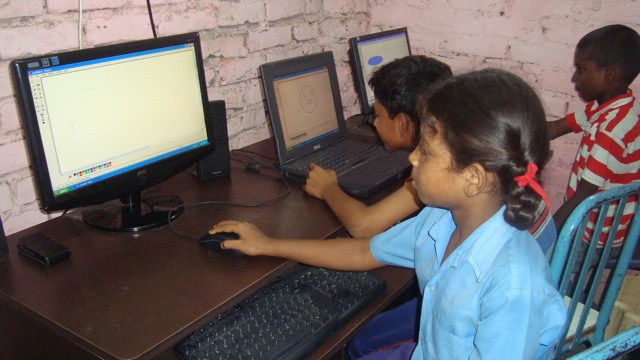
 Though the Right to Education is in place there is still along way to go according to 15 activists who visited 60 schools. Provisions of the Right to education Act notwithstanding, dirty toilets, shortage of books and staff, broken benches, no playground and absenteeism are still the major issues in many Delhi government schools is the conclusion drawn by those who visited the schools in our capital city. In a school located in the constituency of our present education minister the computer lab lies shut as there are no teachers to teach the subject. Such is the state of education in a country where Education is now a Constitutional Right.
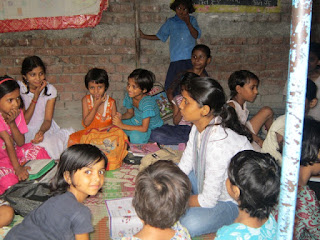
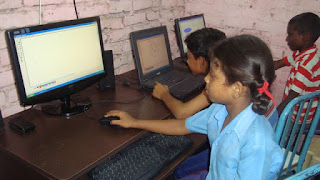 What makes me see red is the fact that it is once again children who are at the receiving end. Children who have enormous potential and scant resources. Children who can excel if give a tiny chance. I more than anyone else can say this with conviction as for the past 11 years I have been helping such kids. In a reclaimed garbage dump or under a hot tun roof we have been able to remedy to the lacunae of the government schools and teach hundreds of children who have done us proud. Our children have mastered computers and learnt dance and sing over and above learning their school lessons. Many of them now have good jobs and have broken the cycle of poverty in which they were born. Why have we succeeded: simply because we wanted to, notwithstanding anything.
Where there is a will there is a way goes the saying. By this adage one could infer that the Government has no real will to implement the Right to Education. How can we forget that children are not vote banks and are voiceless and that giving them education is also perhaps running the risk of giving them a voice. A look at published statistics tells its own story: In absolute numbers there are 1.5 million children who are dropouts or have never gone to school. There are in total 5,442 schools in Delhi.3 The enrolment figures amount to 1.7 million (17.5% of the population). The gross dropout rate is 69.06%. This does not leave much to be said about the levels of retention in schools across the capital city.In absolute numbers there are 1.5 million children who are dropouts or have never gone to school.Eighty percent of the class 5 pass outs from MCD schools do not know how to read and write their names. Only 14% of the students who enter a govt school in class 1 make it to class 10 and just 4% manage to pass class 10 says a report of the Centre for Civil Society
It is time we woke up and did something!
by Anuradha Bakshi | Oct 3, 2011 | Uncategorized
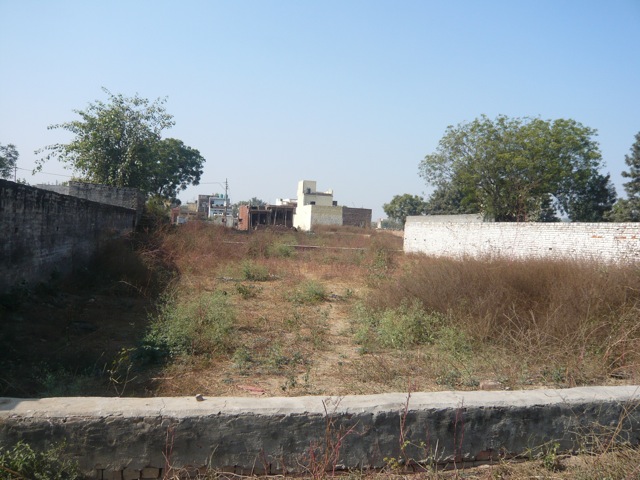
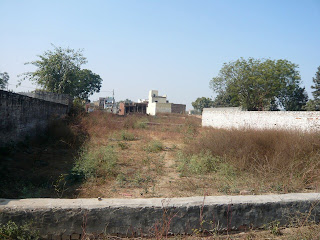
 This is, to me, the loveliest and saddest landscape in the world. It is here that the little prince appeared on Earth, and disappeared wrote St Exupery. I am reminded of these words as I look a this picture. This is a picture of land where Planet Why is/was to be. There are moments when the picture comes alive and I can imagine planet why just I want it to be: a beautiful green guest house filled to capacity with happy clients and a wonderful children centre buzzing with activity. I can visualise the place to the last detail, see the smiles and hear the laughter. Then the image changes and the land remains as it is: barren and sad.
If I am true to my words then we have just three months to conjure a miracle, failing which planet why and all it stood for will be laid to rest. To quote St Exupery again: a rock pile ceases to be a rock pile the moment a single man contemplates it, bearing within him the image of a cathedral, I have contemplated my barren land it time and again with the image of my cathedral but till now nothing has happened. My prayers and pleas to gods and men have remained unheard. Now I have under hundred days to offer my ultimate entreaty.
So let me take it from the top one last time. The challenge of every self respecting not for profit is sustainability: how to ensure that it generates its own resources and thus can carry on its work unheeded. Needless to say it is and has always been up most in my mind. Our sustainability story began way back with a series of naive attempts: candle making, chocolate makings, card and bags production. It goes without saying that these not only failed miserably but also burnt a hole in our lean pockets. We quickly realised that this was not the way to go. Then came the one rupee a day a project. This was something we truly believed in! Somehow it seems in sync with who we were: a grassroots project with a grassroots team and this approach seemed eminently doable. The idea was to contact a wide cross section people and ask them to give us one rupee a day! This would be something any one could do, or so we thought. To cut a long story short the whole idea fell flat: people did not warm up to it believing that one rupee could not make a difference and many of my won staff found thought it was infra dig to ask for such a tiny sum. The whole idea had to be shelved though I somehow still believe in it.
The quest for our elusive grail continued. We flirted with the idea of making clothes for children, of running a nursery for oil seeds, of Diwali hampers and so on. Needless to say they all boomeranged! Sustainability had never seemed so elusive. Time passed till the fateful day when someone mentioned the Ninos Hotel in Cusco. It was an ah ha moment; the grail seemed within reach. Our sustainability would be through hospitality. A guest house would be our way of raising funds. The idea looked so perfect. It was almost scary. There were many false starts and hiccups but we managed to purchase the land and begin planning in earnest: architectural plans, costings, 3D model and to crown it all a validation of the business plan by renowned consultants. We just had to raise the funds and we would be in clover! Alas things did not turn out as we would have hoped. The figures and numbers were huge. Our contacts into the world of the rich and endowed non existent. Our network inadequate. Many did try and help and at one time we even thought we had succeeded. But it was not to be. The end result is that we are today exactly where we were a year back.
The problem I think is that project why is where you see with your heart, something very few people still do. When you pitch a proposal like planet why which requires people to dig deep into your pockets you have to come up with cold statistics to convince them. We do not have such figures. What we have is intangible yet precious: dignity, care, compassion. Your return on investment is measured in smiles, success in examinations, better opportunities for those who have none and so on. These don’t cut any ice when you are on the market for big bucks.
31 December 2011 is the day we plan to lay planer why to rest if nothing happens. We have less than 100 days to make it happen. So help me God!
by Anuradha Bakshi | Oct 2, 2011 | Uncategorized
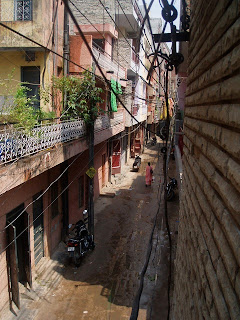
 Gali No 3, Govindpuri is where our main centre is located. It is also the street that houses our flat share for volunteers. To the uninitiated it may look like cramped, dirty, messy, chaotic, congested place. And in many ways it is: tiny lanes that once housed single story units now have been remodelled to include multi storied flats for rent; lanes that once only say bicycles or at best scooter are now crammed with cars and motorbikes courtesy the arrival of credit cards; for want of fresh air in their houses which have no natural light people tend to bring out stools and chairs and sit on the street; hawkers ply the lanes peddling their war. You can buy almost every and anything you want: vegetables, fruit, clothes, kitchenware, cleaning implements, snacks and ice lollies: you name it they have it.
The place brims buzzes with activity. On our street ground floors have often been converted to tiny shops and businesses: you have small grocers, repair shops, photocopying facility, a shoe vendor, restaurants, juice vendors and even a flour mill. Old women are employed by the mill owner to clean the grain before milling. These ladies often sit on the street itself and each time we need to pass in our three wheeler they have to gather their grain to make way! The tiny lane sees many traffic jams that get nightmarish when any building activity is going on.
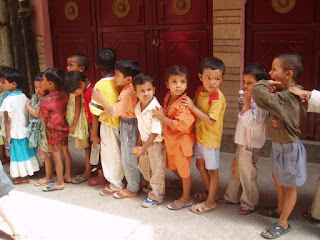 Twice a day we too add to the traffic in our own way: that is when our creche children are dropped by the school transport at the top of the street and need to walk to the centre and vice versa when it is time to go home. It is all part of the daily humdrum of life in our street. What is amazing is that no one complains: one just tries to find the best alternative possible so if a delivery van blocks the street for instance, you simply tun around and take another one. At times you come in the morning and see a tent erected in the middle of the street: it could be a wedding, a religious ceremony or a funeral. You simply park your vehicle on the main road and walk to your destination.
All the lanes give onto a main road which though large always seems congested. It is a main bus route and hence many buses ply on it. Add to it cars, auto rickshaws, cycles, motorbikes, and all other imaginable vehicles and you have a huge mess. But that is not all we still have to add all the hawkers, street vendors to make it a colourful vibrant chaos. The place is teeming with people whatever the time of the day. It is an aggression on all your senses though not an unpleasant one. Not to forget the local vegetable and fruit market and the weekly Wednesday market that commandeers the whole road making traffic a real nightmare.
For the past two years now it is also home to the project why volunteers. I must admit that when we took the decision of housing the volunteers in this street we were a little concerned about what their reaction would be. It was a pleasant surprise to learn that all of them loved the area with its sounds and smells. And above all, all of them felt safe unlike in other parts of the city deemed touristic.
Govindpuri is truly a slice of real India.
by Anuradha Bakshi | Sep 21, 2011 | Uncategorized
 To be poor in India you need, according to the Planning Commission to spend less than 32 Rs a day or 965 Rs a month if you live in a city! The Planning Commission (PC) suggests that spending Rs 5.5 on cereals per day is good enough to keep people healthy. Similarly, a daily spend of Rs 1.02 on pulses, Rs 2.33 on milk and Rs 1.55 on edible oil should be enough to provide adequate nutrition and keep people above the poverty line without the need of subsidized rations from the government. It further suggests that just Rs 1.95 on vegetables a day would be adequate. A bit more, and one might end up outside the social security net. For health you need to spend not more than 39.70 a month and only 99 paise a day on education. What is strange in all the numbers proffered by the PC is that they do not consider habitat as a necessary expenditure for the poor. Wonder where they are supposed to live. No this is not April Fool’s day and not a joke. Spend a penny more and you cannot benefit from welfare scheme, or get the famous below poverty line line (BPL) card! What are we trying to do: show the world that we are not poor?
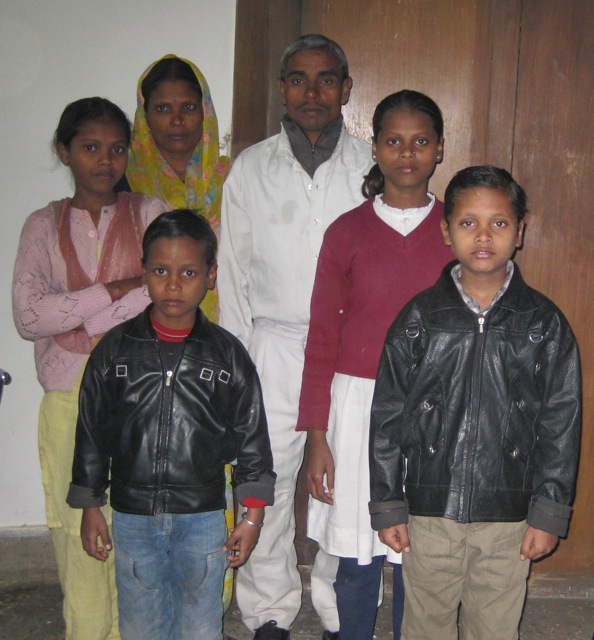
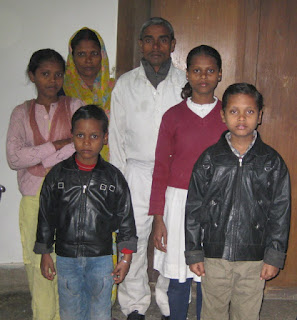
Even the beggar who sleeps under a bridge spend more than the stipulated 32 rs. But let us get serious. If you are a family of 6 and you spend more than rs 5790 then you are not poor. Let me put this sum that may look large to the uninitiated into context. Ram Bachhan the guard at our women centre has four school going children and a wife thus making them a family of six. He used to work for a company but then got severely ill and lost his job. Till quite recently they were considered poor and had a BPL card. But the card was not renewed for reasons known only to the powers that be. They live in a rented room for which they pay 15oo rs, or 50 rs a day. On any given day they buy at least half a liter of milk for their tea at the cost of 16 rs, 2 kilo of rice at 20 rs a kilo, 20 Rs worth of vegetable per meal that is 40 Rs, 20 rs for pulses, 10 rs worth of flour, let us say that their daily cost on tea, spices, oil etc comes to 20 rs, 20 rs for fuel, and 20 rs for toiletries. All this comes to 238 way above the 32×6=192 stipulated to be poor. This is the bare minimum. It does not include illness, education, shoes, clothes etc. And talking of shoes the Planning Commission stipulates 9.9 rs a month for shoes or less than 120 rs a year. We all know the price of shoes and with 4 growing school going children one does need more than a pair per year! As for health, well if you spend more than 39 rs a month you are not poor! A quack in the slums charges 50 to 100 rs a visit and then there is the cost of medicine. We all know how much medicines cost!
You will agree that the figures are ludicrous. In urban India a cup of tea costs 5 rs and a meal at a road side cart 20rs. So if you have 2 cups of tea and one meal then 32 rs does not take you very far. You will agree that the figures are ludicrous and makes us wonder what goes behind the scene. At best it shows that those who make rules and laws are completely divorced from reality. Maybe the members of the commission should try and live on 32rs a day for a month. One should maybe suggest a new TV reality show in this vein. I wonder whether this is our government new way of saying that we are not that poor, or maybe simply on saving on welfare schemes. All I can say with confidence is that this is outrageous.
Ram Bacchan earns 4000 rs and his wife 1500 rs. You can see by just doing some simple maths that the earnings barely cover their expenses. Forget about saving even though they have two girls that will one day need to be married. The BPL scheme enabled people like Ram Bacchan to survive. Today he is struggling to keep life going. Saving is a word that is not in his dictionary. I wonder what will happen to him when prices rise again. Will a child be withdrawn from school to go to work? That would be terrible as all his children are exceptionally bright and doing very well in their studies and could if given a chance aim for a better future.
One never grudges the extra taxes imposed on us for welfare schemes. I suppose no one grudges such schemes as long as they reach the beneficiary but alas that is not the case. For a government that professes to be pro poor such statistics are out of sync. By no means would you call Ram Bacchan and his family ‘rich’. One would not resent it if they received any aid. Actually one would welcome it as it could possibly ensure that his children manage to break the cycle of poverty and maybe become teachers or IT professionals. They have the wherewithal to aspire to this. His daughters often top their classes. But he has lost his BPL card and looking at his expenditure he now does qualify as poor.
There are many like him and I hope that civil society that finds its voice to espouse causes dear to it – we saw it recently during the Hazare campaign – will rise to defend the voiceless poor. We at pwhy intend to take up Ram Bacchan’s case by filing an RTI to find out why he was denied renewal of his BPL card. We plan to do this as a project with the senior children of the women centre so that they can learn to be active and good citizens. Will keep everyone posted.
by Anuradha Bakshi | Sep 20, 2011 | Uncategorized
 Ever since I received a mail about the house of the richest Indian, I have been plagued by the facts and figures of this unthinkable mansion: three helipads, parking space for the owners 200 odd cars, a floor for maintenance of the same, two floor health centre, a movie theater, a ballroom, elevated gardens and 4700 m2 per person. It was built at the whopping cost of one billion dollars, making it one if not the most expensive house in the world! In it will live a family of five who will be cared for by a staff of 600. The monthly electricity bill is a whopping 700 000 Rs. It is all mind boggling and for me it is difficult to begin to understand how a family can call this a home. The building looks ugly and the pictures of the interior remind me of a museum and not a home. It looks more as if its owner is trying to make a statement if one is to beleive McDonald who writes : perhaps he (Mukesh Ambani) has been stung by his portrayal in the media as an introvert. Maybe he is making the point that he is a tycoon in his own right.
I am reminded of a quote by Lisa Edmondson who says : he who is humble is confident and wise. He who brags is insecure and lacking. It seems that the richest are the most insecure. Many of the homes of my richer friends (not in Mr A’s league of course) have always seemed empty and soulless to me, even though they are fit for any home and decor magazine. I have found the true meaning of homes at the other end of the spectrum in the dwellings of people one could name the poorest in India: in Utpal’s home when he had one, in Babli’s home, in Munna’s home, in Manisha’s home and not to forget in the homes of all my Lohar (gypsy) friends before they were bulldozed to make the city beautiful for foreign guests. The one common factor of all these homes is that they have an open door quite literally so. You do not even need to knock. A simple koi hai (anyone there ) is ample. (Try entering Mr A’s home, you will probably land up at the cop station.)
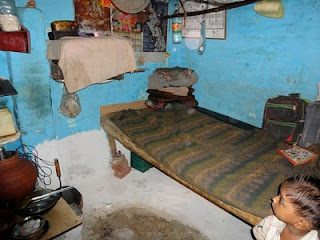
In the homes of the so called poor you are immediately greeted with warm smiles and offered the best place to sit. You are a guest in the true Indian tradition. You are offered the best place to sit, often the sole bed, and before you know it a cool drink or warm cuppa is in your hand. There are smiles on every face and you feel at ease and welcome. You soon forget how dilapidated the surroundings are or how hot or cold it is. True that the first time you encounter such homes you are a little puzzled as they resemble nothing you have seen before, but after some time you get the courage of looking around and you realise the love and care that has gone into making a hole a home. The sole room is a bedroom cum sitting room cum kitchen cum kids room in one and yet you soon see personal touches: a picture hanging, a shelf with some decoration pieces, another one with the few good cups, kitchen ware neatly arranged in one corner and so on and surprisingly in spite of the squalor that surrounds it there is an almost pristine feel around. Once the initial shock over, you realise that the place is filled with warmth and life. And wonders of wonders you feel good and welcome.
What astounded me was the fact that I have never got the feeling that any owner of such homes is embarrassed or ashamed. I remember when I use to visit Utpal in his sordid home, he must have been three at that time, he often walked ahead of me and then climbed on a rickety plastic stool and with is pudgy hands caught hold of two hanging wires and plugged them in a dangling socket to get the sole fan going. At first I was horrified but soon realised that this was the way it was done and like all slum children, Utpal was wise beyond his years. Or can I ever forget how little Ritu the tiny lohar girl use to drag me into her home and make place for me on the bed before she marched on to find her mom and ask her to make me a cup of tea. And believe you me, I never wanted to leave these places as they were filled with all that was good. In learning to survive the poor had mastered the art of living. They were humble true, but confident and wise. They did not need more than the tiny space assigned to them to be who they were.
Entering the intimate world of the poor has been the most uplifting experience of my life. I have learnt many lessons in humility and courage, in fortitude and patience. But what has been the most valuable was the fact that these people were the repository of traditions and mores even though sometimes their tenacious belief in them could be infuriating.
The poor live with dignity and wisdom; maybe there are lessons for all to learn.

 Sometimes life hits you in the head with a brick. Don’t lose faith. I’m convinced that the only thing that kept me going was that I loved what I did. You’ve got to find what you love. And that is as true for your work as it is for your lovers. Your work is going to fill a large part of your life, and the only way to be truly satisfied is to do what you believe is great work. And the only way to do great work is to love what you do. If you haven’t found it yet, keep looking. Don’t settle. As with all matters of the heart, you’ll know when you find it. And, like any great relationship, it just gets better and better as the years roll on. So keep looking until you find it. Don’t settle wrote Steve Jobs.