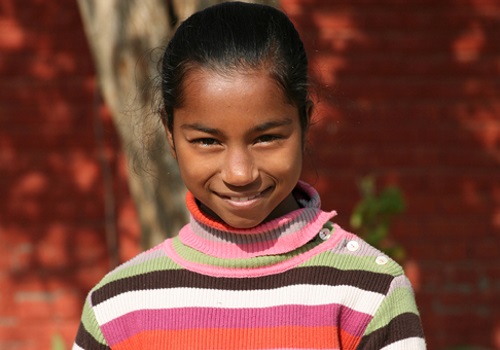
Shehnaz: In pursuit of education

Shehnaz: In pursuit of education

Whilst literacy is essential to breaking social barriers, the problems faced by Muslim women in India extend beyond this. A quality, broad education is required to combat the issues of poverty and political marginalization faced by these girls, and it is essential that parents encourage this. It has been observed that after the first few years of the primary education afforded to the Muslim girl, one of two things usually happens. Either the girl is plucked out of formal education by the time she reaches puberty and for all practical purposes lapses into virtual illiteracy, or she continues in school but does climb up the education ladder due to virtual exclusion.

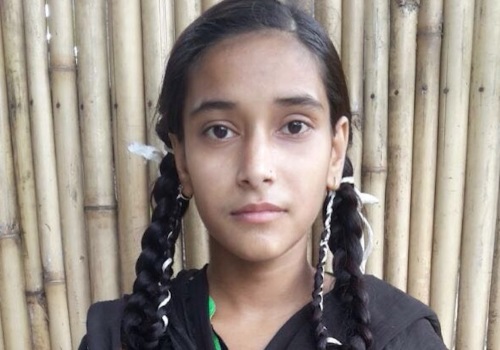
Shehnaz’s story shows how a young girl came looking for that quality support in her pursuit of an education and she found it at Project WHY.

Shehnaz lived in Bihar with her two sisters, her brother and their parents. Unfortunately, when Shehnaz was just two years old, her mother passed away. Her father soon remarried and got a job in a factory in Okhla, not far from where the family lived. Shehnaz was therefore stuck at home with her stepmother, who was abusive, unpleasant and wholly unsupportive.

Shehnaz was keen to attend a government school but, by 2015, she was well behind on the syllabus. Her father did not believe in education for women and refused to pay for any kind of tuition. Rinka, a friend of Shehnaz, told her about Project WHY, which she had been attending since 2013, and Shehnaz was immediately keen on the idea. She approached us on her own, as her father was too busy to help her, and explained that she had missed out on a school career and wanted to catch up. We were happy to take her on, encourage her, and prepare her to return to school.

Through her own determination, Shehnaz has now taken admission to the local government school and continues to attend Project WHY. Her stepmother was not happy with these decisions, but simply sees it as an inconvenience. With no help or support, Shehnaz walks two kilometers to and from school every morning. She spends the evenings doing chores, which she says keeps her father happy. This way, she is able to avoid being taken out of school and forced into marriage.

“I feel comfortable and happy at the Project WHY, this is the only place where I can be myself and express my feelings,” says Shehnaz. Her dream is to complete her studies and become a teacher like the Project WHY resource persons who have helped change her life. She wants to go on to help change the lives of similar children in her community. Every day is a struggle for Shehnaz, but she is slowly catching up with the other children. With her appetite for knowledge, we are convinced that she will be successful.

Munna: Passion for Life

Munna: Passion for Life

Indian society continues to treat disability with indifference, pity or revulsion. Low literacy, school enrolment and employment rates are making mentally disabled people among the most excluded in Indian society. These people are deterred from taking an active part in most families or even communities. Moreover, there is a stigma attached to children with disabilities, especially in rural India, and often even loving parents can do nothing to help their disabled child because they themselves are not aware of the disease or how to take care of the child.

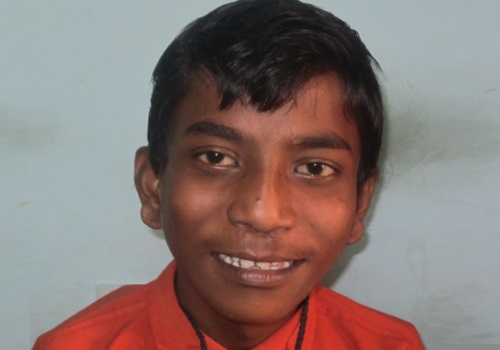
The story of Muna therefore begins in 2005, when he first arrived at Project WHY. It was clear that he had never been adequately looked after. Upon further investigation, it was revealed that, whilst his parents cared about him dearly, they simply did not understand his intellectual impairments. Muna’s parents did not have the time nor the resources to give him due attention, as they had to care for his other four siblings.

Interacting with Muna, Project WHY found that he had little concept of personal hygiene. He would regularly soil himself and had never been taught to have a shower/bath. He had no understanding of social interaction and rules of engagement. This was demonstrated in 2014 when Muna left a shop without realising he needed to pay for his juice and was severely beaten by the shopkeeper.

Having grown up in the industrial neighbourhood of Okhla, Muna would spend his days begging outside temples, occasionally stealing when money was unavailable. Residents of the neighbourhood would befriend him simply to bully and take advantage of his simple mind. Without the ability to communicate clearly, he was reduced to performing illegal errands around the community such as collecting and selling alcohol for under-aged children.

Project WHY began by teaching Muna the basic concepts of hygiene and to be self-reliant. He was taught to use a lavatory, to dress himself and to shower regularly. From there, we were able to build his confidence through speech therapy classes and develop his basic social interaction skills. Project WHY also initiated the process of educating Muna’s parents, who now understand his disability and the kind of care that he requires. They acknowledge his kind heart and sense of compassion even if he cannot communicate this in the same way as other children.

Today, at the age of 19 years, Muna is one of the stars of Project WHY’s special needs class. He is the first to welcome and befriend any new volunteers, including foreign students who do not speak the Indian language. He is very fond of activities such as art, ball games and dancing and, in spite of his difficult childhood, he shows an overall passion for life.

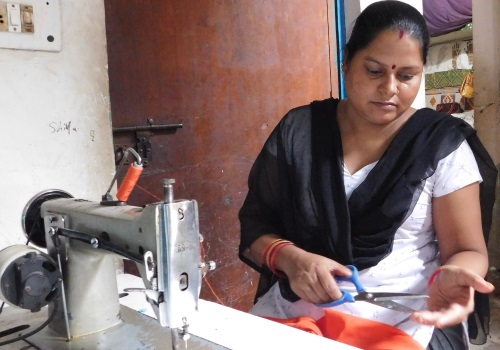
Sehroonisha – Breaking Barriers

Sehroonisha – Breaking Barriers


Muslim women are among the most educationally disenfranchised, economically vulnerable, and politically marginalized group in India. Their poor socio-economic status reflects a lack of social opportunity that, though not a feature exclusive to Muslim women, is exacerbated by their marginal status within an overall context for most Indian women.

Muslim women in India have a low literacy rate compared to the Hindu women. About 59 per cent of Muslim women have never attended school. A relatively low male education amongst the Muslims in rural India creates a pressure to impose ceilings on girls’ education, so as not to render them “unmarriageable”. In addition, the low age of marriage is a major inhibiting factor, which reduces women’s autonomy and agency in the marital home and creates conditions of patriarchal subservience that get perpetuated through life. This thereby reduces a woman’s self-worth.

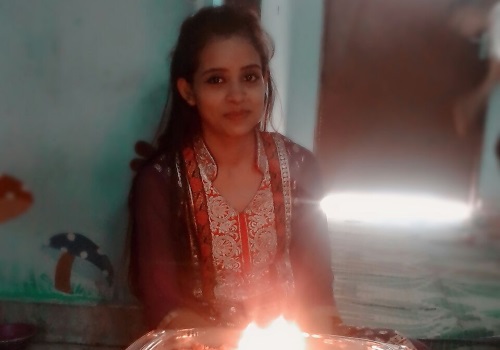
This point is well illustrated by the story of Sehroonisha, a teacher in the special needs section of Project WHY, Govindpuri. Sehroonisha, has always been interested in education. From a very young age she would love going to school. Her dream was to pursue higher education and to have a good stable profession. However, her father did not share this vision and was against her pursuing higher studies as he thought it was a waste to spend money educating girls.

Before her marriage, Sehroonisha lived near Connaught place with her parents, two sisters and three brothers. In spite of her father’s attitude, her mother was supportive of her and would work in people’s homes doing dishes in order to contribute to her education. Sehroonisha eventually graduated with a Bachelor of Arts degree in 2009.

Upon graduation in 2009, Sehroonisha’s father got her married at the age of 20 years to a man who had only been educated until Class 3. “I had to accept my father’s decision at the time” rues Sehroonisha. She held out hope that, through marriage, she could improve her life and explain her interests to her husband. However, her husband did not share the same passion for education and she found that his thinking was on similar lines to her father’s – that is, education is a waste for women.

Sehroonisha had a daughter and a son through the marriage, and soon realised she was the sole provider for them. In spite of her difficulties, she wanted to do something different in her life and stand on her own two feet. She came to know about Project WHY as we had put up a requirement for teachers; it seemed like the perfect platform to change her life. Today she emphasises the impact that the Project has had on her life, saying “Project WHY gave me an opportunity to teach and slowly I was able to rebuild my confidence and take my own decisions with their support.”

With the conducive environment of Project WHY, Sehroonisha has been able to articulate and define her dreams. She acknowledges “All my problems are yet not solved but Project WHY has taught me how to address them with my own abilities”. Today, Sehroonisha enjoys her role as a teacher at the special section of Project WHY, Govindpuri. She has been with us since 2015 and has now taken on the responsibility of looking after the children’s daily activities.

Priya – Hungry for Education

Priya – Hungry for Education

Priya is a 5-year-old girl who lives on the Yamuna Floodplain. Her parents, like the majority of those living on the plain, have no skills other than farming. Priya lives with her parents, two brothers and two sisters. Nobody in the family has received any education, as the expectation is that they will join the family farming business. As soon as they are of age, they will learn to harvest vegetables, which their parents will sell in town. The closest school is over three kilometres away; over a dangerous road, and these children do not feature on the government radar so would be unable to join.

Priya loves to explore the local area and now knows the Yamuna well. When she discovered our centre, which at that time served only higher-level students, she began to come every day and watch the children from a distance. The children of the Yamuna, unlike those of the other centres, are served a full lunch that is generously donated by one of Project WHY’s sponsors. This allows us to provide the children with proper nutrition, and also frees their parents to spend the day on the farm. Priya would watch the secondary students get served every day with wide and envious eyes. Rajesh, a teacher at the centre, one day decided to bring her into the centre and offer her a meal, which she was delighted to accept.

Rajesh started talking to Priya and asked her if she would like to study. She explained that she knows only farming techniques, but she doesn’t enjoy such work and would like to be able to read and write. It was this conversation that inspired us to create the Yamuna primary programme, through which we now teach eighty-four students. Without birth certificates, these students rely on Project WHY for all of their education. We therefore run the centre as a full-time school, following closely the Government syllabus and giving the children the basic skills of literacy that they deserve. As for Priya, she now dreams of being a teacher, and in fact loves her studies so much that she tried to come to school on a Sunday!

Meher – With a little Help from Our Friends

Meher – With a little Help from Our Friends

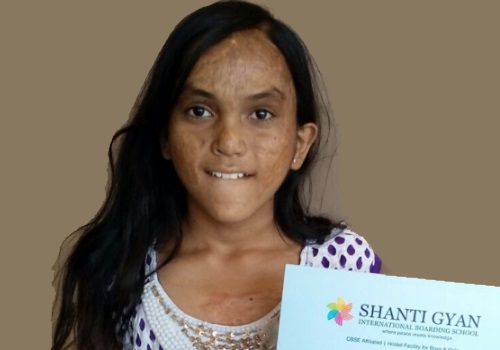
At the time of this photo, in January 2009, Meher was three years old and lived in Khader, near the outskirts of New Delhi. Her father was a migrant worker who came to New Delhi to work part of the year, and her family spent the rest of the year in their village in Nepal.

When Meher was eight or nine months old, a mosquito net over her bed caught on fire. Miraculously, she survived the terrible burns, but the experience left her face and scalp badly scarred and her left hand permanently closed and deformed. Meher’s father is a daily wage labourer. Her family could not afford to seek additional treatment for her, although they were concerned about her future prospects in Indian society.

Meher had been enrolled in Project WHY from a young age. She is extremely bright, verbal, and social and had picked up a little English from her time at Khader. She interacts confidently with visitors from all over the world. When an American elementary school teacher, Nina Sethi, came to give our staff some training, she took an immediate liking to Meher. We explained to her the social issues that plague a girl with such burns in Indian society and Nina was keen to help. Whenever Nina would arrive to work with the teachers, Meher would greet her and help to oversee her English class. Nina describes an “immediate connection and a special bond,” and notes that she “recognised something in Meher: a great capacity for leadership and an amazing spirit.”

In January of 2009, Nina asked her friends and family and a non-profit organisation in the United States, Chess Without Borders, to help her raise enough money to cover the cost of reconstructive plastic surgery on Meher’s hand and face. This would have to include staying in the hospital, multiple operations, medicine, physical therapy, and much more. She was also keen to extend the fund to raise money for Meher’s education, as she is very intelligent and had had limited opportunities in her past.

The response that Nina received was overwhelming. Through her dedication and commitment, she was able to raise over $45,000 (USD), which was more than enough money for Meher’s surgeries and education, and is likely to last her until her higher education. Thankfully, her surgeries were completed successfully at a private hospital near her home.

Meher now attends Shanti Gyam International School in New Delhi with some other children she knows from Project WHY. She is flourishing and is consistently the top student in her class. Nina often visits her in New Delhi and enjoys speaking to Meher in English. Meher is now outgoing, confident and intelligent and loves Nina like family!