the project why bugle

the project why bugle

Normally it is left to me to blow the project bugle and list its achievements. Not an easy task I must confess. A few days back Megha our Asha stewart was here for the yearly mandatory site visit. She spent a few days at pwhy interacting with staff and children. When she sent me a copy of the report I felt I was looking at pwhy through fresh, candid and honest eyes and was vindicated in many ways and truly overwhelmed. I share the report with all of you.

Project Overview:

Project Why (pwhy) runs a number of centres that provide after school education for children from slums. They also have creches, a centre for disabled children and adults, and a women centre. We supported about half their budget in FY 2007-2008. They have recently begun an initiative, Planet Why to generate income that could be used to support the activities of Project Why.

Site Visit

PWHY was started by Mrs Anouradha Bakshi in 1998 as an endeavour to return her debt to society. It started with English classes for kids from the Govindpuri slums. In a decade they have grown to 13 different centres reaching out to approximately 600 children in three low income/slum areas of New Delhi. The field coordinators are Shamika (her daughter) and Rani (a resident of Govindpuri). Mrs Bakshi is the big picture person and chief fundraiser. Shamika and Rani handle the day to day logistics of pwhy which includes speaking with students, parents, managing teachers and resolving any type of community issue that crops up in their classes. Shamika has trained to work with autistic children and Rani has a degree in nursing. Rani is in fact a product of pwhy, having been one of its first students.

My site visit was spread over a period of one week where I was very cordially taken around the various centres, introduced to teachers and was able to have exhaustive discussions with Anou, Rani, Shamika, Barbara (a visiting volunteer from UK who worked with the British civil services) and Mr. Dharmendra (who runs the women’s centre).

Visit to centres

Pwhy office is located in Govindpuri, gali no 3. A narrow lane leads up to a three story building that the project owns. The ground floor is for mentally and physically challenged children and adults. They are divided into three groups based on the level of their disability. The first floor is a creche for children from 1.5 to 3.5 yrs of age. The disabled children and creche babies are picked up from their homes and dropped off to the centre each morning. The second floor is a primary after school centre and the final landing has an office and small kitchen. Across this building is the foster home and another primary after school centre in a rented accommodation. In Govindpuri, gali no 1 is another creche where I was treated to nursery rhymes and number recitation. Many kids were absent due to a flu that was making the rounds.

A five minutes ride away is a primary after school centre located in the very heart of the Govindpuri slums. A labyrinth of narrow lanes, criss-crossing many homes, kirana shops and recycling businesses leads to a single storey rented accommodation. A gutter along the homes was chock full of unhealthy and smelly sewage. In spite of this I landed into a neat, clean and odor free classroom with children bent over their books and two teachers administrating over 3rd and 4th standard boys. Teacher: student ratios were about 1:10 but this fluctuates with time as the after school program is voluntarily attended by children. I doubt if I would find this classroom without Shamika and Rani seeing as a dizzying circuitous route is needed to reach it!

A ten minutes ride away is the Okhla primary after school centre. This centre has an interesting history. Ms. Sophiya, one of the teachers who has been with pwhy for 7 years urged Anou to start a centre in Okhla slums because the Govindpuri centre was too far for the children and could not in fact accommodate more children. After much debate with the community, one room brick building (10’ X 20’) was built. This structure was repeatedly broken by miscreants from the locality over a period of one year. In Shamika’s words – “Saturday we would lock the room and on Monday nothing would remain.” Pwhy remained persistent and by focusing on their educational activities they were able to convince the community to embrace the learning centre. Today, outside the room a boundary wall has been erected and children sit out here, under a canopy, since they are too many to be accommodated into the room. The roof leaks, there’s a rudimentary toilet since the slum has no plumbing and the kids have to sit through hot summer months under one fan or huddle together in the one room during cold winters. In spite of this the teachers remain resilient and kids look very happy.

Located in the Sanjay colony slums, a five minutes ride from Okhla is another primary education centre. Situated on the first floor, this primary centre has three teachers who were busy with their charges when we visited. The door was locked because dogs were using the ground floor as a sleeping area and bothering the children.

The furthest away is the women’s centre located a twenty-minute ride away from pwhy office, in the Sarita vihar village. This centre runs independently solely due the perseverance of Mr Dharmender, the manager of this centre. Dharmenderji has been with pwhy for 8 years and started as a teacher. Realizing his potential and interest in taking on a bigger role Anou has made him sole in charge for the women’s centre. His commitment and passion are evident by the amount of progress he has made in just 8 months since the inception of this centre. It took several months for him to find the right space and convince a landlord to rent it to an NGO. The interior was then re- designed to accommodate a creche, sewing class room, beautician’s class room, library, room to house women, a kitchen and, a primary as well as middle level after school program. The after school kids occupy space on the terrace under a canopy bravely withstanding the heat (they have only two coolers so children sit close to it by rotation – another innovation by Dharmenderji). Not only does he run the entire outfit but he’s also called on each day to resolve the myriad problems of his students and parents. The after school programs are so successful that he has started a waiting list!

He’s also done a remarkable job with the women who stay at the residential centre. Junoon, who was diagnosed with bipolar disorder was ably handled each time to calm down. She was in rehab when I visited. Having querulous women is also a problem with the neighbouring community who will not tolerate this type of behaviour making his negotiation and diplomatic skills all the more valuable. Dharmenderji is grooming the centre to function independently from him by setting up processes that encourages the various teachers to take more initiative and ownership in their endeavours. Dharmenderji will take over the administrative running of planet why and is wholly committed to making it a reality. Meanwhile his thoughtful, humble and intelligent manner have greatly distinguished his contribution to pwhy and I can’t think of a better manager for planet why.
The women’s centre was also a pilot program to see how project why can run a centre far away from the main office as well as one that ran numerous activities. So far the pilot has been successful and the problems they have had to set it up have provided valuable lessons that they can apply to planet why.

At the Girinagar slums is another rented accommodation. This is located 10 minutes from the main office. The ground floor contains a computer centre that is open to the public. Internet is available at a nominal rate of Rs. 10 per hour and computer classes are also administered here. The first floor is the domain of Mr Naresh perhaps, the most beloved of teachers at pwhy. He teaches maths to the senior secondary students andserves as a valuable role model to all his students. There’s also a library here. From the last batch a student called Janaki ranked 13th in the Delhi CBSE board exams. There aren’t as many senior maths teachers so his role is invaluable. It has been difficult to expand high school after school programs since there are too few maths teachers who can teach in Hindi at that level.

General comments and observations

All centres and classrooms are spotlessly clean. Students are responsible for cleaning them after class. The walls are decorated with charts and the children’s handicrafts. There’s a white board in each centre that is being used as per need – in some they have taken the place of blackboards and in some they are activity boards while in others they have a timetable. It’s particularly nice to have these instead of chalkboards because in the crowded small classrooms chalk dust causes discomfort.

All teachers (except from women’s centre) meet during noon to partake in the daily lunch together. The lunch is provided by pwhy in the terrace of the Govindpuri office. This ritual is very useful as it serves as a forum for the teachers to discuss their problems with Shamika and Rani and between themselves. They exchange stories and solutions. A valuable bonding time has been established.

All pwhy’s transport is taken care of by three autos that are driven by parents of children that attend the schools. They are full time employees of the NGO and they are indispensable. They cart children from various homes in slums to the creche ensuring that the children come to school and ferry Shamika and Rani, and their daily rounds of various centres.

  1. An unusual feature of pwhy is that teacher retention is high. Two contributing factors to this are All teachers are local i.e., they live in or very close to the slums where they teach
  2. Teaching provides employment to people who would otherwise have to do manual labour.

One example is Ms Sophiya of the okhla centre who is belongs to the SC/ST class and was unable to get employment as a teacher although qualified for it. Since pwhy doesn’t run schools it can employ people who don’t have teaching degrees but have had an education such as the two brothers Sanjay and Vikki who are lohars (migrants from the blacksmith gypsy community) and lived in a slum that was broken down. They teach the primary classes and if not for pwhy they would not have been able to get good jobs that would use their education.

Over all teachers at pwhy are very proud oftheir work and derive satisfaction from the respect and adoration they receive from the parents and children. Indeed, they are looked upon gratuitously byparents who otherwise, would have treated them with contempt just because of their caste!

There have been exceptions. A few years ago one centre had to be closed because teachers were taking extra tuitions for the children who attended their classes and charged them for the service; essentially they used pwhy for recruitment and space to further their tuition business.

  • Except for the foster children and staff no child is explicitly provided with lunch.Most children eat their meal at the govt school under the mid day meal scheme. Children who come to the creche bring their own lunch. I was surprised by this, but Shamika gave me the reason – pwhy feels that parents need to take some responsibility towards the care of their children. The 9-5pm creche provides a safe environment for children of families where both parents work and no one can stay behind to take care of the child. Since pwhy takes a nominal Rs 1/ day per family the lunch acts as an alternate reminder to the parents that they too are participants in the child’s upbringing and not to take pwhy’s role for granted. Of course children who do not bring their lunch are given a portion from the staff lunch.
  • Teachers are keen to learn English. An English teacher from US, Ms. Nina plans to work with them to improve their English as well as their teaching methods to grasp the language. Speaking good English is perhaps the best confidence that we can give these children.
  • The foster home was an inadvertent addition to pwhy. Encouraged by the donor who was to fund planet why these children were taken in as the first batch of entrants to planet why. When the donor quite abruptly pwhy decided that they had given too many dreams to these children to send them back to their homes (if they had any!) and has continued to take care of them. All except the disabled children will be placed in a boarding school next year. Many are older than they appear but were malnourished and with no education when they were brought in. They have been attending a kindergarten and have caught up to Std 1 education. These children would be a good match for the Support-A-Child program. Anou has already identified an appropriate boarding school for them.
  • The boy’s come to school in the morning and girls in the afternoon because the govt school is open for girls in the morning and boys in the afternoon.
  • Pwhy attempts to provide a little more than after school education; they are very careful not to refer to their centres as tuition centres as they try and provide a holistic and not just academic education. They have sponsored various open heart surgeries.
  • Another nice thing about their processes is that it is very open to change. The organization has a constant influx of volunteers – mostly foreign who spend time here in various capacities. They also interact with other NGOs, most recently with Praxis that carried out a SWOT (Strength, Weakness, opportunities, threats) on their employees.

Overall impressions

Project Why is a vibrant, dynamic organization that works with flexibility and love in the community that they serve. Their teachers are passionate and committed. Ithas a flat organizational structure encouraging its teachers to innovate and share their ideas. The strongest fear the teachers have is what happens if Anou passes away. Although Rani and Shamika are the logistical branches of pwhy it’s Anou’s unflagging spirit and fundraising effort that keeps pwhy running. Her energy is the strength of her teachers. Anou recognizes this and is trying to work towards a model where all her centres are community owned and run. This might take a while to be realized given that some parents are so overwhelmed that even the nominal Rs 1/ day is out of their reach or sometimes they are unwilling to be equal partners because they want things for free. Rani and Shamika are being encouraged to participate in fundraisingactivity. So far their small efforts ( selling raffles in the community or at a college fest)have been resource intensive and without good returns. India being the land of judging a
book by its cover has led them to feel under confident in corporate settings. It’s ironic since these two girls are the ones who interact with each child, parent and teacher in pwhy! I’m sure given the right impetus they will soon take a more proactive role in fundraising.

Asha-Seattle currently supports approximately half of pwhy’s budget and I certainly felt our project partner had exceeded their mission statement and our donor money is going towards building a more educated society.

Project Why
Location: New Delhi
Site Visit Report
25th – 3rd Oct 2008
big bang and the power of TV

big bang and the power of TV

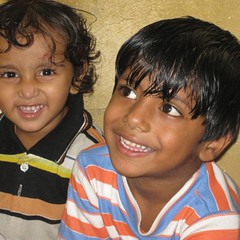
Little Babu and his pal Shankar did not come to pwhy yesterday. It is not because they did not want to, quite the contrary: the love pwhy. They did not come because their parents, simple illiterate folks, fell prey to to the misinformation and fear spread by vernacular TV channels about the outcome of the CERN experiment.

We were aghast when Sitaram called to inform that no parent from the Okhla slum was willing to send their children to the project. They were convinced that the world would come to an end at 12 pm and thus did not want to send their kids away. We were also informed that many menfolk had not gone to work and decided to stay home. The Okhla slum where these kids come from is home to migrant labour most of them illiterate and extremely naive, being recent arrivals in the city. Nevertheless most if not all have acquired TV sets, their only lifeline in their abysmal lives. For the past few days some TV channels catering primarily to such people have been running doomsday stories in graphic and dramatised ways that have succeeded in scaring naive viewers to the point of panic. Talks of tsunamis and earthquakes, black holes that would suck in the entire world and such horrors created a fear psychosis in the simple minds and hence children were not sent to school. Though the maximum absentees were in the creche, attendance was very poor in all classes. Fear was visible on the face of our hearing impaired girls who hugged each other with tears in their eyes.

I must confess that I saw red. I have always feared the power TV hodls on simple minds and seen time and again how it affects their lives. The quest for TRPs is acceptable to a point but when the result is the kind one saw yesterday one has to question things particularly when nothing of what was said or shown has any scientific basis. What is worst is that people believe what is shown without an iota of doubt. No matter how much we explained that a tsunami for example was not possible in Delhi, our logic was pooh poohed away as the TV had said it!

The other question that came to mind was the disturbing yet indubitable reality that people are always willing to believe bad and negative things and rarely positive ones. This probably stems from a feeling of deep insecurity. And nothing you can do or say can free them. The issues are too deep seated. And sadly this is what soothsayers, dubious astrologers and other such people play on, something that TRP seekers have understood and mastered.

dinosaurs, escalators and 3D films

dinosaurs, escalators and 3D films

About 40 pwhy kids were in for a huge treat last week. Our very special Sari Kids had planned an outing for them and they were all to visit the science centre. A big bus had been booked and kids from the Okhla centre and the women centre were the chosen ones. They were a motley crew of primary kids and giggly teenagers. A handful to say the least!

The bus left pwhy at the appointed time with the 20 odd primary. First stop Madanpur Khader to pick up the women centre’s kids. Then destination was to be the science museum at Bengali Market but by some quirk of fate the party landed at the science centre in Pragati Maidan. The day as described by the Sari kids in their blog seemed worthy of a Marx Brothers film!

It was a day of discovery for everyone. The normally quiet secondary girls of the women centre suddenly got morphed into giggly and pesky teenagers as soon as they boarded the bus in their Sunday clothes and high heels on which they would wobble the whole day. The first hurdle was the ride up the escalator. It was a mild shock for their hosts who come from a land where escalators are as normal as the air you breathe. Here it was a yeoman’s task to get these kids to take it, and though some managed with a little help from their sari pals, for the others the escalator had to be stopped. Blissfully we were in India where this can still be done.

Next stop the 3 D film with its snakes, rats and skeletons that have the required effect: shrieks and violent gesticulating from all. Tome for a few science experiments that all enjoy and then it is lunch time. The cafeteria offers only a limited choice. The smaller kids eat to their hearts content but the pesky ladies perk their nose up live their hosts flummoxed. Ultimately after a little coaxing, they are left to their antics. Needless to say they got reprimanded later and did apologise for their abysmal behaviour.

Sated with images and experiences an exhausted lot takes the long ride back. But there is more in store. Just as the bus is about to reach the women centre the skies open and a huge downpour greets them. Every one returns to base drenched in water and emotions that will be awhile going.

You can share some of the moments of this memorable trip.

www.flickr.com

they came, they saw, they conquered

they came, they saw, they conquered

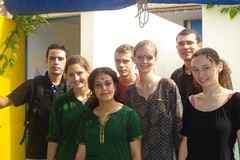
For almost a month now, project why has been touched a very special brand of love. Almost a month ago seven bright students from a leading business school in Paris landed on our planet brimming with enthusiasm and energy. Sofia, Aude, Anais, Matthieu, Aymeric, Jessica and Carlos are members of SARI, an association aimed at extending support to organisations in India. This year project why was the chosen one!

I must confess that I was a little apprehensive at first as this was the very first time we were hosting not one, not two but seven volunteers at a time. But somehow the warmth of the emails they sent and their deep commitment was enough to bowl us over.

This unique bunch of kids is not your run of the mill business school scholar. They are kids who have learnt to see with their hearts at an age when most of their peers are busy with mundane pursuits. For the past months they have been busy preparing their trip and have spent many a week ends and holidays fund raising for us: baking cakes and Indian pies or taking up sundry chores, they just did everything they could think of.

For the past month these incredible kids have been battling the odds that awaited them with grit and determination: the heat an dust, the mosquitoes, the power cuts, the over spiced food, the language problem and above all the cultural shock. And frankly nothing can prepare anyone for slum India! I guess many of our own people would find it difficult of not impossible to spend one or even half a day there. But these brave kids soldiered on and after a difficult first week each one of them found their place in project why. And what was even more remarkable was the fact that they even slept in turns at the foster care where life is rudimentary by all standards, a place where I must confess, I would not find it easy to stay.

In the day they each went their way, some to teach at the women centre, others to play with the kids in the creche and still others to Okhla which is by far our most forbidding centre. Questions abounded in their minds and perhaps we were not able to answer them all. It is much easier to deal with an individual than a group and we realised we too had a lot of learning to do. Many things remained unsaid though they were deeply felt by all of us. We would have liked to be able to reach out and interact much more than we actually could.

By the time they leave, the SARI group as we fondly called them, would have left their indelible mark in our hearts. But that was not enough for them. The last week was spent on a huge shopping spree: school bags for the kids at the women centre who use plastic bags in lieu, oodles of mats to replace the threadbare ones, white boards and even clothes for little GyaniChu. But the biggest gift all is the money given to rebuild our Okhla centre that was literally blown apart. The SARI kids will be fondly remembered by each one of us. They conquered our hearts in their own way.

I have often said that I am busy being grateful. And once again I find myself filled with the same overwhelming sense of gratitude. I realise that I often fall short of saying the two sated words: thank you as they cannot even begin to express the depth of my feelings. Perhaps I should use them more often.

There is another thing that the SARI kids have done and that they not are even aware of. They have vindicated a dream of mine, one that I wish I could see happen with their peers in India. I am convinced that India could change for the better if young people from good homes and leading institutions found the time and the commitment to reach out to the less privileged. I wonder whether that day will dawn while I am still around.

Yes our SARI kids will be in our hearts for a long time. I hope they too will remember us and forgive our shortcomings if any. What they did is something they can truly be proud of. And in a land where the divine rules, we will pray that God grants them all that their heart desires.

You can share some of the special moments of their visit here:

www.flickr.com

A single day is enough

A single day is enough

A single day is enough to make us a little larger or, another time, a little smaller said Paul Klee. We must be blessed as each day at pwhy make us feel more than a little larger though we sometimes do not take time to realise this. I often get emails reminding me that I have not shared the day-to-day happenings of project why and I must admit I stand guilty.

The past months have been hectic in more ways than one and somehow one simply forgot to pause and savour the incredible satisfaction that comes from just watching the on goings of a day at project why. Today let us do just that

Come 8.30 am and pwhy is already buzzing with activity. It is the time when staff drops by the tiny office perched on the second floor of our little building. Time to sign the attendance register and say a quick hello before rushing to the workplace. For some it is simply a few steps away, for others a walk or even a bus ride. It is immensely satisfying to watch our little team take off with confidence and purpose and to remember that once not so long go most of them were barely surviving. These days are a tad special as we have lots of volunteers, each assigned to various posts and thus each teacher also takes his or her volunteer along. Another occasion to give one a pat on the back as one sees people that nothing links together – neither land, nor language- walk off together often deep in conversation. I would give a hand and a foot to be privy to those instants.

While all this is going on the shrill horn of the first three wheeler bringing the children is heard. It is the merry band of the special section that has arrived. Its is heartwarming to watch them as they scuttle out of the tiny vehicle, each one helping the other. Soon the room on the ground floor is buzzing with activity as bags are kept away and mats set out for the first activity of the morning: exercises. Very often the children of the special section launch their day themselves as their routine is well set and they are a very independent lot.

A wail is heard on the first floor heralding the arrival of some tiny tot in the creche. It is amusing to see some kids insisting on crying their hearts out as they are parted form their parent not matter how long they have been attending the creche. Needless to say that the wail turns into a huge giggle moments later as they find their friends and toys. The next hour or so sees the same pattern as kids keep arriving. Soon the second three wheeler reaches and over twenty toddlers spill out of the small vehicle. It is always a delight to watch them as they patiently wait for their bags or for the lost shoe! Some time later the air is filed with song as the little ones settle to their morning routine.

Across the street in the two tiny rooms we have hired the older toddlers begin their day too. Their little desks and chairs are laid out and they soon are busy pencil in hand and tongues poking mastering the letter of the day. In the room next door the boys of the junior secondary have also arrived and are intently following the subject of the day.

At some distance the three primary centres of Okhla, Govinpuri and Sanjay Colony have also begun their activities each following a well set routine under the guidance of their set of teachers. And still further away the creche and primary and secondary classes of the women centre are also underway as are the secondary classes and the computer centre. Morning has begun at project why.

All this may seem terribly unremarkable and one could wonder why one is making such a fuss about it. I agree that at first sight there is nothing extraordinary about a bunch of teachers teaching a bunch of kids. But here again I ask you to see with your hart and not your eyes. Most of the kids you see be it in the special section, or in the creche or even in other classes are not your regular kid next door. They come from extremely deprived backgrounds and for them pwhy is a haven in more ways than one. It is perhaps the only space where for a few hours they can be just children.

For the older children pwhy is the place where they can actually learn all that is left untaught in school and thus aspire to make it to the next class and then the next and thus one day be able to get the much needed school leaving certificate and maybe aspire to a life a tad better than the one lived by their parents.

And thus as a seemingly commonplace day goes by, lives are being slowly and quietly transformed.

education for all

education for all

Sarva Siksha Abhyan, Education for All, Right to Education Bill are all lofty projects. Sadly none of them have truly helped the children of India get what is rightfully theirs: a sound education that would help them become part of shining India! They all seem to be half baked attempts that seem to be politically motivated and not children friendly. They are good meat for heated debates and often lie in wait while adults debate their commas, and full stops. Their huge budgets help line many a pocket.

And while this happens children grow and miss the boat altogether. And as many cores issues are never dealt with, some children fall out of the net. Seema is little Radha‘ sister. She is 9 and should be in school yet she has never been to one. Her parents are too poor to think of sending their children to school and anyway someone is needed to look after Radha and her brittle bones! Seema is just mother’s little helper.

We have a handful of Seema’s in our believe it or not creche! They all belong to the Okhla slums where families are extremely poor and barely survive. It is our very own Sitaram who ferrets these kids from the darkest holes and brings them to project why. Most of not all of them are girls. We now have a handful of them and have decided to run a class for them where we will try and teach them basic reading and writing to start with and seeing their motivation maybe steered them towards and open school option. We will also try and teach them some useful skills so that they can become capable of earning. We know that putting them in a school would be close to impossible so this in our opinion is the best we can do for them.

We sincerely hope this works.