by Anuradha Bakshi | Sep 21, 2010 | commonwealth games
Just a few days back an official made this shocking statement: They cannot be allowed to remain on the main road since they will spoil the image of the city we are trying to portray. The they were poor slum dwellers displaced by the floods and camping on a road side. For the past months or more we have seen destruction of homes, displacement of people, elimination of sources of livelihood all in the name of the so called image of the city. It seemed that the presence of street vendors, visible slum dwellers, road side cobblers etc would damage the image of our city.
Today we are a nation that has been humiliated and shamed not because of the so called they but thanks to the official and his ilk. Every news channel worldwide is talking about the state of the Games village which is in their words filthy, unlivable, disgusting an more. And this expletives dear Sirs, are not for the they you so ruthlessly did away with, but for the Village that was, in the words of the leader of your pack, to be better than Beijing! So what happened? We need to know. You plundered our pockets unabashedly and we at least hoped that you would deliver. But we are not prepared to accept this international humiliation silently. We demand answers. Someone has to be made responsible. And the answers you give are unacceptable. How can you say : Everyone has different standards about cleanliness. The Westerners have different standards while we have different standards. How can you talk of different perceptions of hygiene. Even the poorest of the poor does not accept a dog pooing on his bed! Please do not include us in your cover up game. And stop blaming the weather, the stray dogs or God knows who!
And if that was not enough as I write these words the clean up is going on with impunity. And I do not refer to the cleaning of the Games village but to the removal of people’s livelihood. Yes businesses that have been operating for years are being razed if they happen to be on the route of a games event. You see they spoil the image! I wonder how people having tea at a tea stall or sipping a glass of juice at a juice stall spoil the image of a city. But then I guess I do not have the same principles of aesthetic as those in the seat of power.
Everything seems to be falling apart and I really do not see how it can all be put together again. Even God would be unable to do so but then God does not seem to be on your side, if he were maybe he would have at least stopped the rain.
As I watch all this in total bewilderment I am reminded of a rhyme I sing to my grandchild:
Humpty Dumpty sat on a wall,Humpty Dumpty had a great fall.All the King’s horses, And all the King’s menCouldn’t put Humpty together again!
Note: the commonwealth games are being inaugurated during the Pitr Paksha or Shraad – or days of the year dedicated to the dead – considered inauspicious. Wonder who decided on the dates.
by Anuradha Bakshi | Sep 21, 2010 | manu
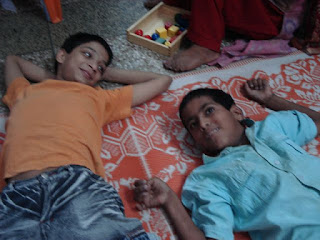
 I first dreamt of planet why more than a thousand nights ago! It was almost a magical moment where fact and fiction coalesced under the watchful eyes of a little prince. Like in all dreams everything was in the realm of the possible and I allowed the dream to seed first in my own mind and then in that of others. At that time planet why to me was: a happy place where those with no hope could seek not only refuge but find meaning, where no one’s children would study just like others, where skills would be taught, where days and would filled with laughter and happiness and childhoods would be reconquered with renewed assurance watched by my smiling little prince.
Please bear with me as I travel down memory lane and unravel this puzzle of dream and reality. The need for planet why stemmed from a complex web of emotions and feelings the biggest one being worry. As I watched project why grow and flourish I also started sensing its fragility as its existence was deeply entwined in mine. Many a times I imagined what would happen if I were to exit unexpectedly and what came to mind was indeed frightening. Would Manu have to roam the streets and rummage in dustbins for food? Would Utpal be compelled to leave school as no one would pay his fees? And where would would Champa, Anjali, Radha, Munna and their pals go? In those moments my blood would run cold and I would break in a cold sweat. I could not allow this to happen, pwhy had to live beyond me in some new avatar. The umbilical cord had to be severed. But how: that was the question. How would this dream become reality.
I did not know. I simply held on to my dream with both hands and all my heart. I could see the happy place and knew I had to make it happen. For a long time my dream lived in my mind. I use to conjure it at will and spend hours fine tuning it: I could see it live and thrive. And yet if dreams are to become reality you have to muster the courage to address the uncomfortable questions and the one that plagued me the most was how would my happy place sustain itself if I was not there to hold its hand. That is when my friend the God of lesser beings decided to enter my dream and lend a little help. It came in the form of a person telling me about how another dream had come true thousands of miles away. She told me about Cusco and the Ninos Hotel. Don’t ask me why but I knew that was the way to go. My happy place would not only be a home for my loved ones but also a guest house that would sustain it.
The dream became stronger. I would not only be able to help my lost souls but also ensure that pwhy lived on, albeit in a new manifestation. It was time to share the dream no matter how impossible it seemed. And I did and believe me it did not go down well initially. Many found it preposterous. But I persisted. Somehow I knew deep inside me that it was the right way to go. There were many false starts, times when we actually believed that dream would become reality but then it all came down like a house of cards leaving me hurting and bewildered but I held on to my dream even when it looked improbable to all and even if the hurt seemed too much to bear.
I guess the God of Lesser Beings must have taken pity on the old biddy as he sent one of his timely miracles and we were able to purchase a plot of land, making planet why shift from the realm of fantasy to that of reality. And the soon the rock pile ceased to be one as St Exupery’s words came back to me: A rock pile ceases to be a rock pile the moment a single man contemplates it, bearing within him the image of a cathedral . The next step was to secure funding to build my cathedral. Naively as always I copied what was written on my heart to paper and credulously believed that others would embrace my way. It sounded so simple. But then the world shook as markets tumbled. There was nothing one could do but watch helplessly and tuck away the dream in the recesses of ones’ mind before someone broke it.
Time passed. The fears returned as the fragility of pwhy became even more apparent with each new grey hair or creaking knee. I could not keep watching, I had to act. I prayed for another miracle but none was forthcoming. I shared my angst with the few I trusted seeking help. Some one suggested a more business like approach; candid and passionate appeals had no place in today’s hard hitting world. The proposal needed to be vetted, but all that cost money and we had none. But when all doors seemed closed, God does open a window. An Angel appeared and agreed to do the much needed feasibility study of planet why. What followed were weeks of nail biting and furious pacing. But the God of Lesser Beings decided to be extra benevolent and the study was completed and ended with the words: In our opinion, the proposed development at Planet Why is a lucrative and financially feasible and one which would be able to generate much higher returns than are typically found in guest houses operating across Delhi. This was sheer music to my ageing years. But it also meant that the dream needed to be actualised and the search for funds begin all over again. This was nothing short of terrifying. Would I be able to achieve this? I knew I had no choice and I also knew that the God of Lesser Beings would be with me. And moreover planet why would take time as no cathedral is built in a day! That meant that funds would be needed to carry on our daily work.
As I write these words, many the world over have come forward to hold my hand and help me make my dream come true. What we need is a huge miracle, is the God of Lesser Beings listening?
by Anuradha Bakshi | Sep 17, 2010 | commonwealth games, women centre
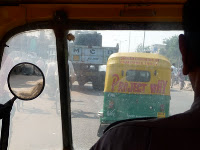
 Brace your self.. it will be a rough ride. Life in Delhi till the ides of October will not quite be the same and we need to prepare for it. An article in today’s paper entitled Life will not be the same from Oct 3 spells out some of the trials and tribulations we the common citizens will face: if you plan to enter the city from one of the neighbouring states then be prepared to wait at the entry points and then if by any chance you need to travel on the hallowed routes where CWG guests will tread then be prepared for huge traffic snarls. You see you are only allowed to ply on half the road. In many cases there are only 2 lanes so you see what I mean. And should you dare venture on the reserved lane be prepared to pay a 2 K Rs fine! If you ride a bus then beware there will be 5000 less available to the likes of us. You can imagine what that means. The 3rd and 14th will be public holidays: they are the opening and closing day of the Games but don’t think you can spend them shopping: most shops will be closed. Schools and colleges will be closed so better think of ways to entertain your kids at home. Vegetable vendors, hawkers, tea stalls, cobblers, press wallahs et al will not be allowed to trade: do remember this!
This is what the article says but now let us elaborate a little. A friend dropped by this morning. She told me that a few of days back the couple who worked for her asked her for 400 rs. This was the money needed to get a Commonwealth permit, whatever that means, that would allow them to stay on during the Games. Two days later their basti – cluster of shanks- was raised to the ground and they were asked to return to their village. The 400 s bribe was of course lost. They had no option as they had nowhere to stay. My friend of course is busy washing clothes and dishes, and mopping her home notwithstanding her arthritic knees! Anyway I guess this plight will befall on many!
But that is not where it ends. I had decided long back that we would remain open during the Games! I did not see why our kids should be deprived of their time at the centre. Anyway with schools closed they would be running on the streets. Moreover we were not, or so I thought, on any of the hallowed roads. But to my horror I realised that one of the main roads we use to fetch the kids was a hallowed one. It was the road on which the Lohar camp was located and was the access to the shooting range. Anyway we were prepared for the worst and were working out alternatives. A few days back some parents from the women centre came to us and told us that they were moving back to the village for a month as with all the new stipulations they would not get any work and hence would not be able to earn and so would not be able to pay their rents. They did not even know if they would come back! I was speechless. That meant that some of our children would be denied education just because of the Games! This was worse than I had thought. But what could we do. Most of our parents are daily wage workers, or have tea stalls, vegetable carts etc. With no money how would they survive? The best option was to give up their rented homes and move back to the village. And if they did come back, there was no guarantee they would find a room to rent in the same location. That would mean that their kids would not come back to pwhy!
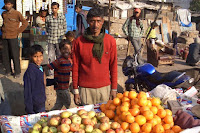
There was more. I just learnt that the vegetable wholesale market located close to us would be closed for the 15 days of the Games. This is where we buy our vegetables for home and for our foster care and different centres. Now that meant we would have to stock up and though it is tiresome, it is still possible. But this is only a tiny side of the problem. Read on. The wholesale market or subzi mandi as it is called, is where all the local vegetable vendors go every morning to buy what they then sell either on a cart or on the smaller markets.The closing of the mandi simply means that they will be unable to do so. This translates into the simple fact that there will be no vegetables available to those who cannot afford to hoard. This also means that the small vendors will be unable to earn anything. Moreover the mandi gives work to hordes of daily wagers who will go hungry or have to leave town. What a clever way to ensure that the poor leave the city, remember they are those who spoil the image!
Many of the poor, or those I call small entrepreneurs, be they the vegetable vendors, the tea stall owners, the corner samosa man etc will not be able to trade as either they would have been forcibly moved or they would not be able to access their raw material. I wonder what they will do. I guess go back to their villages or simply tighten their belt till it hurts and wait patiently and with the resilience only the poor have.
Many of the rich are also leaving the city for greener pastures. Others like us will simply try and survive till the ides of October. So help us God!
by Anuradha Bakshi | Sep 15, 2010 | commonwealth games
 I thought that nothing could hurt, anger, sadden and enrage me more then the destruction of the homes of my Lohar friends courtesy the Commonwealth Games. But that was not to be. The next morning an article tucked away in the inside page of a leading newspaper bore this headline: Flood victims camping near Village to be moved soon. Needless to say I began to read and saw it referred to the destruction of a slum school on the river bed close to the d***** Games village, something that had been written about even in a leading British daily. To put things in context the flood plain of the Yamuna river, where the Games Village has been constructed in spite of much opposition, is home to many families from time immemorial. Normally when the monsoons come and the plain gets flooded, they move their meagre belongings and camp on the main road waiting for the waters to recede. This year however the rains have been abundant and the place waterlogged and not likely to dry up soon. Some days back the little school that had been set up for the children of these families was raised citing security as the reason for such an aberration. Wonder what threat a handful of slum kids studying in a school could pose? Now it has been decided by the powers that be that these families cannot move back into their homes, even if the water recede as the whole place has been sanitised for the Games. Infuriating enough, isn’t it?
Wait a little, this is still not what made me see red. The article also quotes an official of our city and I will reproduce the quote verbatim: The Yamuna is showing no signs of ebbing and water in the flooded areas will not go down till the river recedes. This timer however we cannot wait for the water to go down so that the residents are able to go back since that will pose a security threat, They also cannot be allowed to remain on the main road since they will spoil the image of the city we are trying to portray.
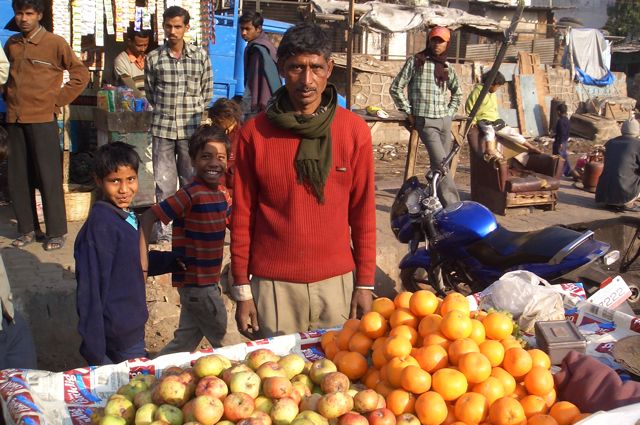
Enough is enough, at least for me. I wonder though how long will civil society take to finally react and express their outrage. That a school is destroyed presumably because it poses a security threat to a highly protected area is bad enough but that citizens of this city are branded as party poopers is shocking. The people the official mentions with such disdain and contempt probably helped build the games extravaganza or grow the vegetables you and I relish every day. Today they are branded as outcasts and have become non grata like the beggars, the roadside cobblers, the street vendors, the horse cart owners, in a word like all the little people who are the real heart and soul of our city. The official at least had the honesty to spout the truth: they spoil the image of the city that he and his ilk are trying to portray.
Off with their heads or let us brush them under the carpet have been the real motto of these Games. But how can one do away with reality. It is an accepted fact, even by the officials and their ilk, that over 40% of our country is poor. So I ask how much of them can you hide. And if you are so embarrassed by them, then why have you not done anything till now to better their lot starting with providing them let us say better housing, better schools, better health care. Need I remind you that they too are protected by the same Constitution as you, and enjoy the same rights. The school you destroyed had been set up by a farmer couple for the 200 odd kids of the area as the closest state run school was 3 kilometers away! The couple was simply restoring the usurped rights of these children.
They will spoil the image of the city we are trying to portray are words that I cannot swallow. Who is the they! The answer is simple it is over 40 % of our fellow country men. As an activist said in the mentioned article: The urban development model followed in Delhi is all about the entitlements of the rich and not the poor since it is heavily loaded in favour of the propertied and the salaried classes, before sarcastically adding: Those who do not own property have been completely excluded from Delhi’s Master Plan. Let me take the sarcasm further and ask whether we are reay and willing to iron our own clothes, wash our laundry, repair our fuse istead of rushing to call the local electrician and so on, because the they we are treating with such contempt are the very ones who make our lives easier! Where are we going, can anyone tell me?
by Anuradha Bakshi | Sep 13, 2010 | commonwealth games, women centre
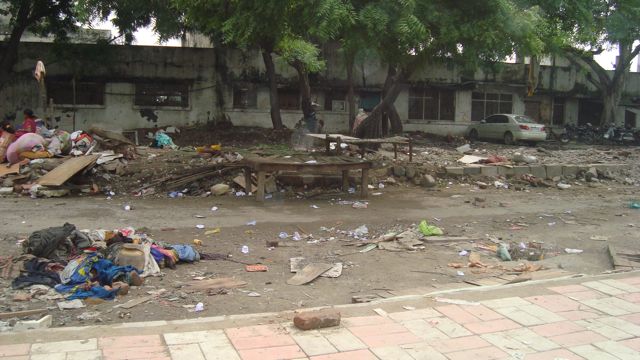
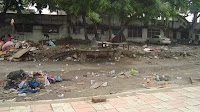
 Memory is a way of holding on to the things you love, the things you are, the things you never want to lose wrote Kevin Arnold. I was reminded of these words yesterday when I finally mustered the courage to go and see what was left of the homes of my dear Lohar friends. Nothing could have prepared me for what I saw: a desolate stretch of road strewed with the last vestiges of what once was a vibrant and happy place.
I walked along the remnants of over three decades of life of more than thirty families I had learnt to know, love and respect, careful not to tread on anything. You see I was privy to what the scattered plastic bags, the lone table and bed left in a hurry, the bits of cardboard that littered the ground, the broken pot, the bricks actually were. They were what remained of the trials and tribulations of a proud people who had valiantly refused to let go of their heritage. I could not hold the tears that poured unabashedly from my tired eyes. All that lay helter skelter on the ground was also past of 10 years of my own life.
There were things in this almost hallowed ground that I never wanted to lose. I sat on the lone discarded charpoy – rope strung bed – and let memories flood my mind. I remembered the day when I first visited the Lohar camp. I had come to meet the head of the clan in the hope that he would agree to our opening a small class for the children. I did not know what to expect. I was made to sit on a charpoy – was it the one I was sitting on today? – and a few minutes later a diminutive man came and sat next to me and asked me what I wanted. I looked into his eyes and was immediately touched by the gentleness and serenity that emanated from him. He was the tallest small man I had ever met! The rest is history: we began our classes the very next day. There was no real reason for my coming to the camp again but that was not to be. For the next months, years and more I found myself coming back with almost obsessive regularity.
Whenever I had a problem that plagued me or felt under the weather and in need of a shot of optimism, I found myself walking to the Lohar camp and spending time with Tau and his people. Very soon they knew I did not drink fizzy drinks but had my tea black, and before I could even catch my breath a warm syrupy glass of black tea was in my hand. We talked of everything and nothing and got to know and respect each other in no time. I always found answers to my concerns and they shared their angst. And that is how I came to know about their plight and how they had been let down by the authorities. Soon we were ready to file our PIL in Court. I remember the day when the matter came up for admission. I had been too chicken to go to Court and had decided to wait for the outcome at the Camp with Tau. As I paced up and down, Tau came up to me and told me to stop worrying. Had they not waited for 400 years, they would for a few more if need be. I was stunned. How could anyone have such resilience in the wake of so much abuse. I must admit I felt very small.
I remember the day when I had taken Tau to the Habitat Centre for a conference on nomadic tribes. As we walked towards the hall, there was another meet going on. Tau asked me what it was and I told him it was a talk on the existence of God. He looked at me with a bemused smile and said agar hum hain to woh hai, agar hum nahin to woh kahan – if we exist then so does He, and we do not then how can He -. I was speechless. What a beautiful and logical way of resolving the age old debate of God’s existence! Wished Tau could have been a speaker at the very upmarket talk. I could go on about the moments spent with Tau, he puffing on his hookah a benign smile on his wizened face, his eyes filled with tender concern, and me rattling on about my problems which in hindsight seem so inconsequential. He would sometimes say something but most of the times just being able to pour out all my angst was enough to make me come alive.
So many memories crowd my hurting mind as I walk this desolate road. And no just of Tau but of so many others. How can I forget little Ritu, a bonny three year old with a mop of curly hair, a burnt copper complexion and two huge eyes that twinkled all the time. She was our little guide when anyone came visiting. All I had to tell her was to show her house and she would take the person’s hand in her little chubby one and march off in the direction of her home which was the last tent on the far side of the camp. When she reached her tent she would enter it with aplomb and then with an almost regal gesture proclaim yeh hai – this is it – as if she was showing a palace. She would then ask you to sit on the bed and march off looking for her mom. Soon the tent would be full of neighbours and the inevitable bottle of coke would appear from nowhere. Such was the generosity of this proud people.
Then there was Geeta and Sarika our two creche teachers. They were so beautiful that it took your breath away and made you remember all the tales about the beauty of Gypsy women. What never ceased to amaze me was the fact that they and all the other young girls of the camp were always impeccably turned out, their hands and toe nails painted bright and never chipped. Now imagine achieving this when you live on the street with no running water and in the midst of coal dust and car fumes. Quite a feat! But that was not all, each of these waif like women were able to beat iron wielding a hammer so heavy that you would barely be able to lift it off the ground. They did that with such grace that it almost looked like the steps of an intricate ballet. I often looked at my shabby self and wished I too was born with such grace.
As I stepped across a broken chullah – earth stove – I could almost smell the aroma of the hand slapped rotis – bread – that I had so often shared with the ladies. I must admit I was so fond of them that I timed my visits accordingly. But it was not just the rotis that enticed me, but the women themselves as they were true free spirits and it was always a delight to spend time with them. We laughed and giggled as old friends would and I realised that we were so alike. I could go on about my Lohar friends but it hurts too much. Soon the last remains of their lives will be blown by the wind or simply swept away to make the stretch of road worthy of the passing glance of the Commonwealth Games participants’ cavalcade. I wonder how anyone would have been disturbed by the sight of women beating iron or selling their ware, children playing around or wizend men quitely smoking their hookas in the shade. But the powers that are, know better I guess. To me though the Lohars are a tiny bit of India we can truly be proud of and not desperate to hide away.
I miss my friends.