
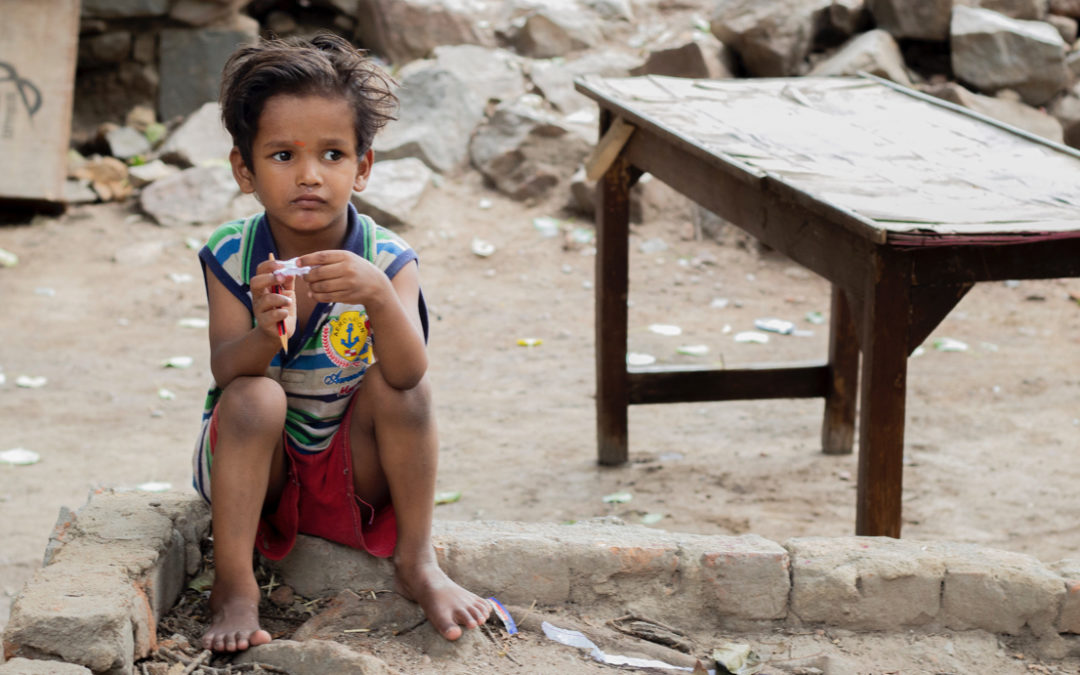
Three little girls, aged two, four and eight, died of hunger in India’s capital. Their autopsies found no trace of food in their stomachs. They had most likely gone without eating for more than a week. Their deaths shocked the nation, filled television screens for a few days, sparked the inevitable political blame game—and then, like so many tragedies before them, began to fade from public memory.
The three sisters made headlines because they died in Delhi. Yet every day, an estimated 5,000 children under the age of five die from causes linked to malnutrition. That is about 200 every hour—more than three every minute. I have written about this terrifying statistic for years, but numbers, however shocking, rarely stir us in the way that three little faces do.
I have been writing about this terrifying statistic for years now, but somehow it has never elicited the anger and outrage one would have expected. Perhaps that is because numbers, however shocking, remain just numbers—remote from our daily lives.
But Mansi, Shikha and Parul died in our very own city, a city where we throw food with impunity; a city where garbage cans are replete with perfectly edible fare; where food is thrown with alacrity at parties and religious festivals; a city where neighbours remain aloof; a city that seems to have lost its heart forever.
Will the deaths of these little girls go beyond the political slugfest and make us open not only our eyes but also our hearts? There are individuals and organisations across India who quietly feed the hungry with love and compassion. Their work reminds us that hunger is not inevitable. What is missing is not the capacity to act, but the collective will.
No one should die of starvation in any self respecting society, let alone a child. Even one child is one too many!
Will the deaths of these little girls go beyond the political slugfest and make us open not only our eyes but also our hearts? There are individuals and organisations across India who quietly feed the hungry with love and compassion. Their work reminds us that hunger is not inevitable. What is missing is not the capacity to act, but the collective will.
The three little girls were part of a migrant family. Their father had come to Delhi in search of work, hoping to build a better future. Like countless others who arrive in our cities every year, the family lived from one day’s wage to the next. They had no savings to fall back on and, often, no access to welfare schemes because they lacked the necessary documents. For families living on the edge, losing even a single day’s income can be the difference between survival and hunger.
Delhi is ‘home’ to thousands of homeless people, many of them migrants. Many find work and manage to survive, some like the family of the little girls slip through the cracks.
It is time, as individuals, as citizens and as a society, that we acknowledged this stark reality. Hunger is not someone else’s problem. It is ours. If we can open our hearts as readily as we open our wallets for celebrations, no child need go to bed hungry. Is that really asking too much?
Is this asking too much!